 Blaine
 Roofing for California Creek's Particular Climate
California Creek sits close enough to the water that homes here take on a different kind of weather than roofs just a few miles inland in Blaine or unincorporated Whatcom County. Salt-laden air off the Strait works on fasteners and flashing year-round, driving rain off Boundary Bay finds every weak seam during winter storms, and the long gray stretch from fall through spring keeps roofs wet enough, long enough, for moss to take hold almost anywhere there's shade or a north-facing slope. None of that is unusual for this part of Washington — but it does mean a roof spec'd for a drier, calmer climate won't hold up the same way here.
Metal roofing, done correctly, handles this combination better than most other materials available at a comparable price point. It sheds water fast, doesn't give moss the organic surface it needs to colonize, and — with the right coating and fastening system — shrugs off salt exposure for decades. The catch is "done correctly." Metal roofing is far less forgiving of a rushed or generic installation than asphalt shingles are, and a lot of the roofs that fail early in this area failed because of installation shortcuts, not the material itself.
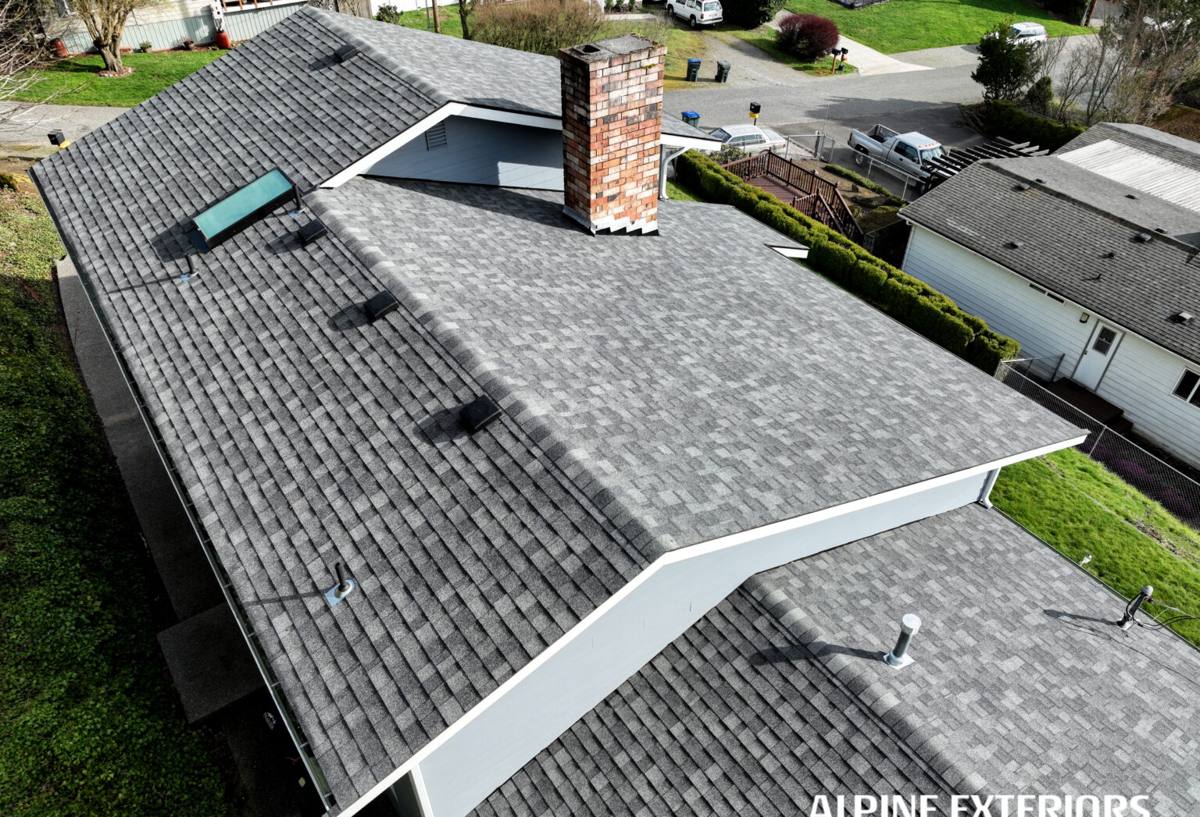
What Salt Air, Rain, and Moss Actually Do to a Roof
Salt air
Airborne salt accelerates corrosion on any exposed metal — fasteners, flashing, panel edges, and cut ends where the protective coating has been compromised. On a roof close to the water, this happens faster than most manufacturers' generic warranty language assumes, which is why fastener and coating selection matters more here than it would forty miles inland.
Driving rain
Wind-driven rain doesn't just fall straight down — it gets pushed sideways and upward under eaves, around chimneys, and into any flashing detail that wasn't lapped or sealed correctly. A roof that would perform fine in calmer weather can leak in California Creek's storm patterns if the underlayment, valleys, and penetrations weren't built assuming the rain will come in sideways.
Moss season
Moss needs moisture and a surface to grip. Shaded roof planes, north-facing slopes, and areas near overhanging trees stay damp longest and are where moss establishes first. Once it takes hold, it holds water against the roof surface, works into seams, and — on the wrong material — can shorten the roof's life considerably. Metal gives moss almost nothing to grip onto, which is one of the material's real practical advantages here, not a marketing point.
Metal Roofing Options and How They Hold Up Locally
Not all metal roofing is the same product wearing different colors. The panel style and fastening method change how the roof performs against wind-driven rain and salt exposure specifically.
| Panel Type | How It's Fastened | Performance in This Climate |
|---|---|---|
| Standing seam | Concealed clips, no exposed fasteners through the panel field | Best resistance to wind-driven rain and long-term salt corrosion; the standard we recommend for exposed or waterfront-adjacent lots |
| Exposed-fastener panel | Screws driven through the panel face into the substrate | Lower upfront cost, but every fastener is a potential leak and corrosion point over time — requires more maintenance attention near the water |
| Stone-coated steel | Interlocking panels, often over battens | Good wind and moss resistance with a more traditional shingle profile; a reasonable middle option where standing seam's look isn't wanted |
For most California Creek homes, we steer clients toward standing seam because of the concealed-fastener design — there's simply less hardware exposed to salt air and fewer penetration points for driving rain to exploit. Exposed-fastener panels still have their place on outbuildings, shops, or budget-conscious projects where the maintenance tradeoff is understood and accepted, and we'll say so plainly rather than upsell a system a project doesn't need.
What a Correct Installation Actually Involves
The panels themselves get most of the attention, but the parts of the job that determine whether a metal roof lasts 20 years or 50 are mostly hidden once it's finished:
- Underlayment: A synthetic, high-temperature underlayment rated for the coastal exposure — not a builder-grade felt that wasn't designed for prolonged dampness.
- Fastener selection: Corrosion-resistant fasteners matched to the panel metal, so you don't get galvanic corrosion between dissimilar metals — a common, avoidable failure near salt air.
- Flashing detail: Custom-formed flashing at valleys, chimneys, skylights, and wall intersections, lapped in the correct direction and sealed for wind-driven rain, not just straight-down rain.
- Ventilation: Proper intake and exhaust venting so moisture from inside the attic doesn't condense against the underside of the panels — a mistake that causes hidden corrosion regardless of how good the top side of the roof looks.
- Edge and eave protection: Drip edge and starter detail sized to handle the volume of water this area actually sees, not the national code minimum.
Skipping or cheapening any one of these doesn't usually cause a visible problem on day one. It shows up two, five, or ten years later as a leak, a corroded fastener line, or moss finding a foothold where the panel edge was left exposed.
Our Process on a California Creek Roof
We start with a hands-on roof and attic inspection, not a drive-by estimate — ventilation, existing decking condition, and current flashing all get checked before we quote anything, since those often drive the real cost more than the panels do. We measure and plan the layout to minimize seams and cut edges, since every cut is a spot where the factory coating can be compromised and needs to be treated in the field. Tear-off and decking repair happen before a single panel goes down; we don't install new roofing over compromised sheathing, because it just moves the problem underneath where you can't see it. Panels, flashing, and fastening go in following the manufacturer's spec for this wind and rain exposure, and we walk the finished roof with the homeowner before calling the job done.
Because we already work this stretch of Whatcom County regularly, we're not guessing at what this climate does to a roof — we're building for the conditions we see repeatedly on jobs nearby.
What a Metal Roof Costs Here — and What Drives the Number
| Factor | Why It Moves the Price |
|---|---|
| Panel type | Standing seam costs more than exposed-fastener panels due to material and labor for the concealed clip system |
| Roof complexity | Valleys, dormers, and multiple roof planes mean more custom flashing and cutting |
| Existing decking condition | Rot or damage found at tear-off adds repair cost before new roofing can go on |
| Ventilation upgrades | Older homes often need intake/exhaust venting brought up to spec, which isn't optional on a metal roof |
| Access and site conditions | Steep pitches, tree cover, or tight lot access affect labor time and staging |
We don't quote in vague ranges pulled from a national average — every estimate is based on what we actually find on your roof, and we'll walk you through what's driving the number line by line.
Simple Maintenance That Keeps a Metal Roof Performing
- Clear gutters and downspouts each fall before the heavy rain arrives, so water isn't backing up under the eave.
- Trim back overhanging branches on shaded roof planes to cut down the moss-friendly damp conditions.
- Do a visual check after major windstorms for lifted flashing or displaced debris, especially around chimneys and valleys.
- Rinse off heavy salt residue or built-up grime periodically rather than letting it sit against seams and fasteners.
- Have flashing and fastener condition checked every few years rather than waiting for a visible leak.
Why a Crew That Already Works California Creek Matters
A roofing crew that only occasionally works this close to the water tends to install by the general manual — correct in most places, but not tuned to what salt air and driving rain do specifically here. A crew that regularly works California Creek and the surrounding Blaine area has already seen which flashing details fail first in this wind pattern, which fastener choices hold up and which corrode early, and where moss actually starts on local rooflines. That local repetition is what keeps a metal roof performing at year fifteen the way it did at year one, not just on installation day.
If you're weighing a metal roof for a California Creek home, we're glad to come take a look and give you a straightforward, no-pressure estimate based on your actual roof — not a generic quote. Use the form below to get started.