 Blaine
 Windows Built for the California Creek Microclimate
California Creek sits close enough to Drayton Harbor and the Strait of Georgia that homes here take on a specific mix of weather stress that inland Whatcom County properties don't deal with in the same way. You've got salt-laden air moving in off the water, wind-driven rain that hits windows sideways rather than straight down, and a wet season that stretches long enough to grow moss on anything that stays damp. Windows in this pocket of Blaine work harder than windows twenty minutes inland, and they show wear differently too.
We're not talking about exotic engineering here — we're talking about getting the ordinary details right, consistently, because the margin for error is smaller near the water. Salt air accelerates corrosion on hardware and fasteners that aren't rated for it. Driving rain finds any gap in flashing or sealant that a calmer climate would never expose. And moss and algae on siding and trim hold moisture against window frames longer than most homeowners realize, which matters a lot if the frame material underneath isn't suited to sustained dampness.
What "Custom" Means on a Job Like This
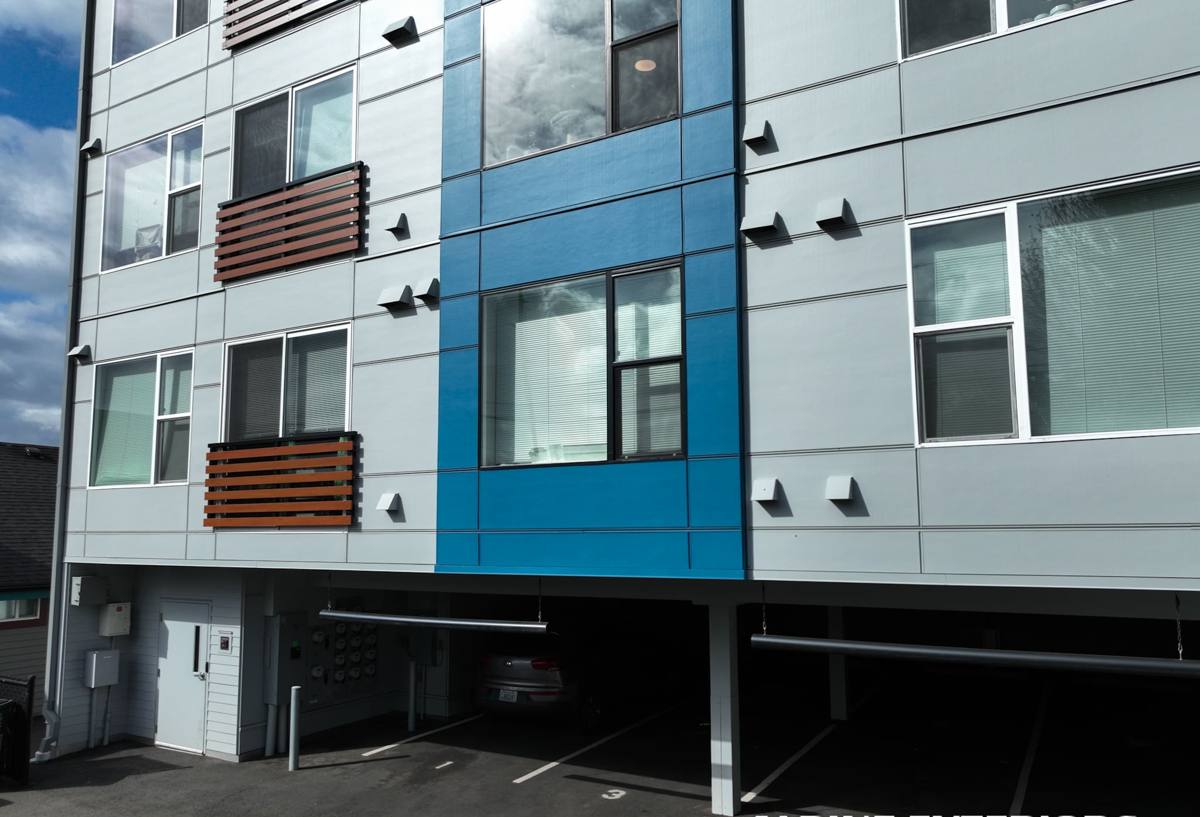
Custom windows doesn't mean expensive or elaborate — it means the window is specified to match the actual opening, the actual wall assembly, and the actual exposure of that specific wall on your specific house. A lot of older homes around California Creek have openings that have shifted slightly over decades of settling, or trim details that don't match anything in a standard size chart. Custom sizing avoids the shims, filler strips, and compromised seals that come with forcing a stock window into an opening it wasn't made for.
Where Custom Sizing Actually Pays Off
The payoff isn't cosmetic. A properly sized window seats fully against its rough opening, which means the flashing and sealant do their job the way they're designed to. An undersized or oversized window forces extra caulk or foam to bridge the gap — and caulk is not a substitute for a correct fit. In a high-exposure spot like California Creek, that gap is exactly where wind-driven rain gets in over time.
Materials and Glass: What Holds Up Near the Water
Frame material matters more here than it does further inland, mostly because of the combination of salt exposure and sustained moisture. There's no single "best" material for every home — it depends on your siding, your sun exposure, and your budget — but here's how the common options actually perform in this kind of climate.
| Frame Material | Salt Air Behavior | Moisture/Moss Season | Maintenance |
|---|---|---|---|
| Vinyl | Won't corrode; UV-stable finishes hold color | Doesn't absorb moisture; fine with periodic cleaning | Low — occasional wash |
| Fiberglass | Excellent — dimensionally stable, no corrosion | Handles sustained damp exposure very well | Low |
| Aluminum-clad wood | Cladding protects wood, but seams need attention | Interior wood needs the cladding seal to stay intact | Moderate — inspect seams periodically |
| Bare wood | Requires diligent paint/finish upkeep near salt air | Prone to moisture intake if finish fails | High |
Glass packages matter too, though less for weather resistance and more for comfort and condensation control. A double-pane, low-E, argon-filled unit is the practical baseline for this area — it cuts down on the interior condensation that shows up on cold, damp Blaine mornings, and it takes some of the edge off wind noise on stormy days off the water. Triple-pane is worth discussing for north- and west-facing rooms that catch the brunt of winter storms, but it's not automatically the right call for every wall of every house.
Hardware and Fasteners
This is the detail that gets skipped most often, and it's the one that causes the most callbacks in coastal-influenced areas. Standard steel hardware and fasteners corrode faster near salt air, even under paint. Corrosion-resistant hardware — stainless or properly coated — costs a little more up front and saves you a service call in a few years when a hinge or lock mechanism seizes up.
Signs Your Current Windows Are Losing the Fight
Most homeowners don't replace windows on a schedule — they replace them when something tells them to. Around California Creek, watch for:
- Fogging or moisture trapped between panes (seal failure — not fixable, only replaceable)
- Soft or discolored wood at the sill or lower corners of the frame
- Hardware that's stiff, corroded, or won't latch fully
- Visible moss, algae, or dark streaking building up on the frame or nearby trim
- A noticeable draft or cold spot near the window on windy days
- Difficulty opening or closing that wasn't there a year or two ago
Any one of these on its own isn't an emergency. Several of them together, especially on a wall that faces the water or prevailing wind, usually means the window's protective seal has already been compromised for a while.
How We Approach a California Creek Window Job
The process is straightforward, but the sequence matters — skipping a step is exactly how you end up with a window that looks fine for a year and then leaks.
- On-site assessment. We look at the actual opening, the wall assembly behind it, and the specific exposure — a west-facing window catching prevailing wind gets treated differently than a sheltered one.
- Accurate measurement and ordering. Openings get measured precisely rather than assumed, and the window is specified — material, glass package, hardware — to match that opening and its exposure.
- Removal without damaging the surrounding wall. Old flashing, sealant, and trim get inspected as they come off, since that's often where hidden moisture damage shows up.
- Correct flashing and sealing. This is the step that actually keeps water out — flashing integrated with the wall's water-resistive barrier, not just caulk smeared around the edges.
- Fit and function check. Every window gets opened, closed, and locked before we consider the job done, not just visually inspected.
- Cleanup and walkthrough. We show you what was done and what to watch for going forward.
Mistakes We See From Past Installs in This Area
We're called out to a fair number of homes near California Creek and elsewhere in Blaine to fix or replace windows that were installed within the last decade — sometimes less. The recurring problems aren't exotic:
- Caulk used to compensate for a poorly sized opening instead of proper flashing
- Standard hardware that corroded faster than it should have this close to the water
- Flashing that wasn't tied into the house wrap or building paper correctly, so water tracked behind the window instead of out
- Trim reinstalled tightly against the frame with no room for the window to shed water, trapping moisture and encouraging moss growth
None of these are unusual mistakes in the trade generally — they're just costlier here because the climate doesn't forgive them the way a drier inland location might.
Why It Matters That We Already Work This Neighborhood
There's a real difference between a crew that's read about coastal Whatcom County exposure and one that's actually pulled old windows out of homes near California Creek and seen firsthand what salt air, driving rain, and moss season do to a wall over ten or twenty years. That familiarity shows up in small decisions — which corner of a house tends to take the worst weather, what flashing detail actually holds up here versus on paper, which hardware is worth the upgrade and which isn't.
It also means we're not guessing at what "normal" looks like for a home in this spot. A little more weathering on a north-facing sill, or a slightly different moss pattern than a house a mile inland, isn't cause for alarm — it's just what this microclimate does. Knowing the difference between normal wear and an actual problem is exactly the judgment call a local crew is positioned to make.
What Custom Windows Typically Involve, Cost-Wise
We don't publish fixed prices because every opening, material choice, and glass package changes the number — and quoting a number without seeing the job does homeowners a disservice. What we can tell you is what tends to move the price up or down.
| Factor | Effect on Cost |
|---|---|
| Frame material (vinyl vs. fiberglass vs. clad wood) | Vinyl is typically the most economical; fiberglass and clad wood cost more upfront |
| Glass package (double vs. triple pane, low-E coatings) | Upgraded glass adds cost but improves comfort and condensation control |
| Opening condition (rot, out-of-square framing) | Hidden repairs behind the old window add labor and material |
| Corrosion-resistant hardware | Modest upcharge, worth it on exposed, water-facing walls |
| Number of windows and access difficulty | Bulk work and easy access reduce per-window labor cost |
Living With Custom Windows After the Install
New windows aren't maintenance-free, especially this close to the water. A simple rinse a couple of times a year clears salt residue before it builds up on frames and hardware. Keeping nearby siding and trim clear of moss and algae helps the window frame too, since trapped moisture against a wall doesn't stay contained to the siding. Operable hardware benefits from being exercised occasionally rather than left shut all winter — it's an easy way to catch a stiffening latch before it seizes.
If you're weighing whether it's time to replace windows on a California Creek property, or you just want a straight answer about what's driving the wear you're seeing, we're happy to take a look. Reach out for a free, no-pressure estimate using the form below.