 Blaine
 Why Board & Batten Fits the Peace Arch Look
Board and batten has a long history in the Pacific Northwest, and it's easy to see why it keeps showing up on homes around Peace Arch. The vertical lines read as clean and a little more architectural than standard lap siding, it pairs well with the mix of craftsman, farmhouse, and modern builds you'll find in this part of Blaine, and it works nicely as an accent on gables, entries, or dormers even on homes that are lap-sided everywhere else. It's a style choice first — but in this climate, it's also a construction choice, and the two aren't always compatible unless the job is done correctly.
That's the part that gets skipped when board and batten is treated as a purely cosmetic upgrade. The vertical battens create seams, the panels behind them take on more direct weather exposure than a lapped profile does, and every one of those seams is a place where water can either shed cleanly or find its way behind the siding. Peace Arch sits close enough to the water that this isn't a theoretical concern — it's the exact condition the assembly has to be built for.
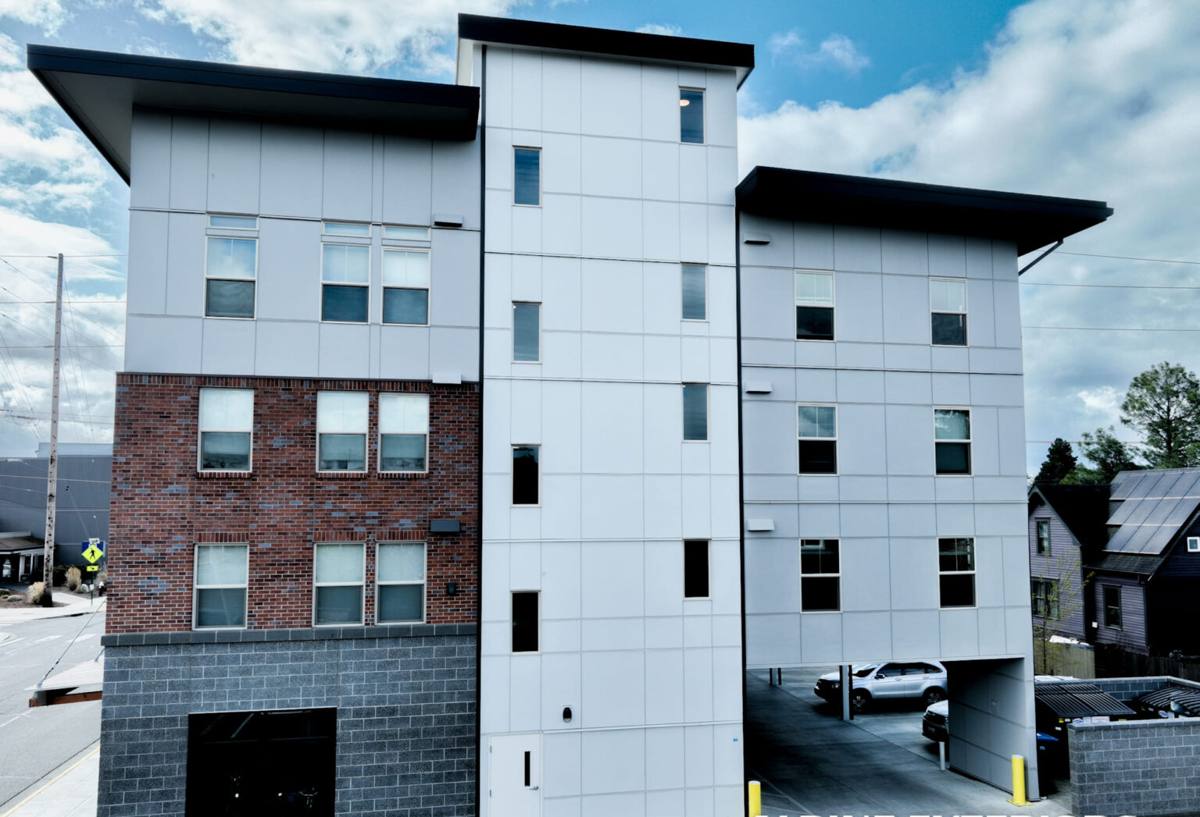
What Blaine's Marine Climate Does to Vertical Siding
Blaine and the surrounding Whatcom County coastline get a specific combination of weather that's harder on siding than people expect: salt-laden air off the water, long stretches of driving rain pushed in by wind rather than falling straight down, and a moss season that can run for months given how much of the year stays damp and shaded. Each of those affects board and batten differently than it affects flat lap siding.
- Salt air accelerates corrosion on fasteners, flashing, and any exposed metal trim — a bigger issue on vertical profiles where more hardware is visible and exposed per square foot.
- Driving rain gets pushed sideways into batten seams and panel joints under wind pressure, not just straight down the face of the wall, which means gravity alone won't keep water out.
- Moss and prolonged dampness favor north-facing walls, shaded eaves, and anywhere airflow behind the siding is restricted — conditions that are common on tree-lined Peace Arch lots.
None of this means board and batten is a bad choice for a Peace Arch home. It means the installation has to account for these conditions from the start, not patch for them later with caulk.
What a Correct Board & Batten Installation Actually Involves
The finished look of board and batten is simple — vertical panels or boards with battens covering the seams — but what's behind that finish is where the job succeeds or fails. A correct install includes:
A proper drainage plane
A weather-resistant barrier goes on the wall sheathing first, lapped correctly from the bottom up so water is shed downward and out, never trapped behind the cladding. On a wall exposed to driving rain, this layer is doing real work, not just satisfying a code checkbox.
Rainscreen furring where it's warranted
Adding a ventilated air gap between the weather barrier and the siding lets any moisture that does get past the surface dry out instead of sitting against the wall. On shaded or water-facing elevations around Blaine, this small detail has an outsized effect on how the siding performs over the next twenty years.
Correct fastening
Vertical panels and battens need to be fastened into solid framing with corrosion-resistant fasteners, at the spacing and pattern the manufacturer specifies — not just wherever a stud happens to line up. Under-fastened or improperly spaced battens are one of the more common corner-cutting shortcuts we see on redo jobs.
Flashing at every horizontal transition
Window heads, door heads, roof-to-wall intersections, and the base of the wall all need flashing detailed to shed water outward, not just caulk smeared over a gap. Caulk is a maintenance item; flashing is the actual water management system.
Batten spacing and reveal consistency
Beyond function, battens need consistent spacing and reveal for the finished wall to actually look intentional — an easy thing to get sloppy on if the crew is moving fast.
Why We Install James Hardie Board & Batten — Not Vinyl, LP, or Cedar
Board and batten can be built out of several materials, and each one has a real, honest trade-off. We install James Hardie fiber cement exclusively, and it's worth explaining why, rather than just stating it.
Cedar board and batten
Real cedar looks great and has genuine history in this region, but it's a wood product in a climate that stays wet for much of the year. It needs ongoing refinishing, is vulnerable to moisture absorption at end grain and seams, and in a moss-prone, salt-air environment it demands more upkeep than most homeowners want to sign up for long-term.
Vinyl board and batten
Vinyl is low-maintenance and inexpensive, but it's a thin, flexible material that can show waviness on a wall this visually simple — board and batten's straight vertical lines make any panel distortion more obvious than they'd be on lap siding. Vinyl also has a lower ceiling for impact resistance and can become brittle over decades of UV and temperature cycling.
LP SmartSide
LP is an engineered wood product, and like other wood-based sidings, its long-term performance depends heavily on sealed edges and cut ends staying protected from moisture — a harder standard to hold consistently on a coastal, high-rainfall site like Blaine.
James Hardie fiber cement
Hardie's HZ5 product line is engineered specifically for climates like this one — cold, wet, and salt-exposed. It's non-combustible, doesn't absorb moisture the way wood-based products do, holds a factory-applied ColorPlus finish that resists the fading and chalking that plagues field-painted siding, and carries a strong transferable warranty. It costs more upfront than vinyl and is heavier and less forgiving to install than either vinyl or wood — which is exactly why installation quality matters as much as the material choice.
| Material | Moisture behavior | Upkeep in this climate | Why it matters for board & batten |
|---|---|---|---|
| James Hardie fiber cement | Doesn't swell, rot, or absorb water like wood | Occasional wash; factory finish resists fading | Holds straight lines and crisp reveals for decades |
| Cedar | Absorbs moisture at seams and end grain | Periodic refinishing/sealing required | Vertical seams are more numerous and more exposed |
| Vinyl | Doesn't absorb water, but flexes and can distort | Low, but panels can warp or fade over time | Straight board lines make any waviness visible |
| LP SmartSide | Vulnerable at cut edges if not sealed correctly | Field-applied finish needs monitoring | Edge sealing is harder to guarantee on vertical joints |
Our Process for a Peace Arch Board & Batten Project
Every project starts with a walk of the home, not a generic quote. We look at which elevations take the most direct rain and wind, where moss and shade have already caused problems on the existing siding or trim, and where the old assembly is failing — usually at flashing, seams, or ground clearance rather than in the middle of a wall.
- Assessment: We check the sheathing and framing condition once old siding is off, since board and batten depends on solid backing for proper fastening.
- Weather barrier and drainage plane: Installed and lapped correctly before anything else goes up, with rainscreen furring added on elevations that need it.
- Flashing: Every window, door, and horizontal transition gets flashed to shed water outward, not just sealed.
- Panel and batten installation: Fastened to Hardie's specification, with consistent spacing and reveal across the wall.
- Trim and finish detail: Corners, edges, and transitions finished so water has nowhere to sit or collect.
- Final walkthrough: We go over the finished work with the homeowner before calling the job done.
Maintenance Checklist for Board & Batten in a Salt-Air, High-Rain Climate
Correctly installed Hardie board and batten needs far less attention than wood, but "far less" isn't "none." A short seasonal routine keeps it performing the way it's supposed to:
- Rinse the exterior once or twice a year, focusing on shaded and north-facing walls where moss and grime build up fastest.
- Keep gutters clear so overflow doesn't run down the wall and sit in batten seams.
- Trim back vegetation and tree cover that keeps a wall damp and shaded longer than the rest of the house.
- Check caulking at trim and penetration points annually — even with good flashing, sealant is a wear item.
- Look at low, ground-level battens periodically for splash-back staining or standing moisture.
Why a Crew That Already Works Peace Arch Matters
Board and batten forgives fewer mistakes than lap siding — the seams are more numerous, the vertical lines make sloppy work more visible, and the exposure to wind-driven rain off the water is real rather than theoretical. A crew that's worked on homes in and around Peace Arch already understands which elevations in this area tend to take the worst weather, how Whatcom County's permitting and inspection process works, and what the existing housing stock in this pocket of Blaine typically needs when the old siding comes off. That local pattern recognition shows up in fewer surprises mid-project and a finished wall that's actually built for the weather it's going to face, not just installed to a generic spec sheet.
Get a Straight Answer for Your Home
If you're weighing board and batten for a home near Peace Arch, we're glad to take a look and give you an honest read on what your walls need — no pressure, no upsell. Request a free estimate below and we'll walk the property with you.