 Blaine
 Roofing Built for Blaine Harbor, Not Just Blaine
Blaine Harbor sits close enough to the water that homes here deal with a different set of stresses than a house ten miles inland in Whatcom County. Salt-laden air moves off the harbor and settles on every exposed surface, wind-driven rain gets pushed sideways under anything that isn't properly sealed, and the shaded, damp stretches of fall through spring keep roofs wet for weeks at a time. A new roof installed here has to be chosen and installed with those specific conditions in mind, not just built to a generic Pacific Northwest standard.
When we quote a new roof for a Blaine Harbor property, we're already thinking about fastener corrosion resistance, ventilation that can keep up with persistent moisture, and moss-resistant details that hold up through a full wet season. That's a different conversation than the one we'd have for a roof on the east side of the county, and it's why a cookie-cutter installation often underperforms near the water.
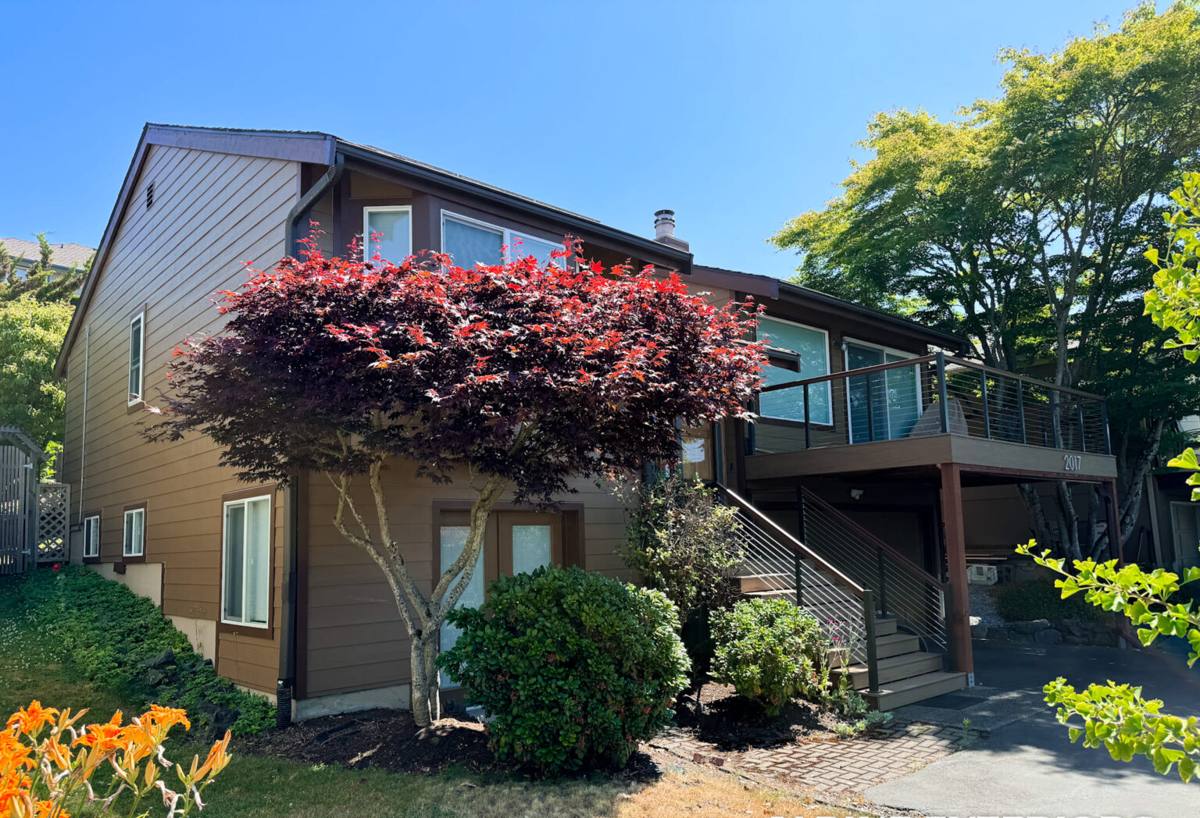
What the Salt Air and Moss Season Actually Do to a Roof
Salt Air and Metal Fatigue
Airborne salt is corrosive to unprotected or lower-grade metal. Flashing, fasteners, vents, and any exposed metal trim near the harbor take on that exposure daily, not just during storms. Standard electro-galvanized fasteners can start showing rust streaks and pitting years before their inland counterparts, which eventually shows up as staining on the roof surface or, worse, a compromised seal at a penetration point.
Driving Rain and Wind-Driven Water
Blaine Harbor gets weather off the water that doesn't always fall straight down. Wind-driven rain looks for any gap at a ridge, valley, sidewall, or vent boot and pushes water in horizontally, not just downhill. A roof that would shed water fine in a calm rain can leak in these conditions if the underlayment, flashing laps, and valley details weren't built for sideways water.
Extended Moss Season
Shaded roof sections and the moisture that lingers through much of the year in this part of Whatcom County give moss a long window to establish itself. Moss isn't just cosmetic — it holds water against the roof surface, works its way under shingle tabs and shakes, and can lift material over time. A roof designed with moss in mind uses materials, ventilation, and detailing that make it harder for moss to get a foothold in the first place.
What a Correct New Roof Installation Involves
A new roof is more than laying material over the old deck. For a harbor-adjacent home, we treat every layer as part of a system:
- Tear-off and deck inspection: removing old roofing down to the deck so we can see and address any rot, soft spots, or prior water damage before it's covered up again.
- Corrosion-resistant fasteners and flashing: choosing hardware rated for coastal exposure rather than standard-grade fasteners that corrode faster near salt air.
- Ice-and-water shield at vulnerable points: valleys, eaves, and penetrations get a self-adhered membrane underneath the primary underlayment as a backup against wind-driven water.
- Balanced attic ventilation: intake and exhaust venting sized to move moist air out, which helps control condensation and reduces the damp conditions moss and mold prefer.
- Proper valley and sidewall detailing: these are the highest-risk leak points on any roof, and they need more attention, not less, in a wind-driven rain climate.
- Final inspection and cleanup: checking every penetration, flashing lap, and fastener pattern before we consider the job finished.
Choosing the Right Roofing Material for a Harbor Property
There's no single "best" roofing material for every home — the right choice depends on the home's exposure, roof pitch, budget, and how much long-term maintenance the homeowner wants to take on. Here's how the common options compare for a Blaine Harbor setting:
| Material | Salt Air Performance | Moss Resistance | Maintenance |
|---|---|---|---|
| Architectural asphalt shingle | Good with coastal-rated fasteners and flashing | Moderate; benefits from zinc/copper strips at ridges | Low to moderate; periodic moss treatment recommended |
| Standing seam metal | Excellent with marine-grade coatings and fasteners | High; smooth surface sheds moss more easily | Low; occasional fastener and seam checks |
| Cedar shake | Fair; requires diligent maintenance near salt air | Lower; textured surface holds moisture and moss | High; regular cleaning and treatment needed |
| Composite/synthetic shingle | Good; engineered for consistent weather resistance | Moderate to high depending on product | Low |
We don't push one product line as the answer for every home. Cedar shake, for example, can look great and has real fans, but it asks for more upkeep in a damp, shaded harbor environment than most owners want to commit to — that's a maintenance and moisture-behavior trade-off we'll walk through honestly, not a knock on the material itself. Metal and quality architectural shingle systems tend to be the more forgiving choices for this specific climate, but pitch, budget, and the look you want for the home all factor in.
How Our Process Works, Start to Finish
- On-site assessment: we look at the current roof, attic ventilation, and any problem areas specific to the home's exposure to the harbor and prevailing weather.
- Written estimate: a clear scope of work and cost breakdown so you know exactly what's being installed and why.
- Material selection: we walk through the trade-offs above based on your home, budget, and how much maintenance you want going forward.
- Scheduling around the weather: we plan tear-off and installation with Whatcom County's wet-season patterns in mind to minimize the time your deck is exposed.
- Tear-off, deck repair, and installation: done in the sequence described above, with inspection at each layer.
- Final walkthrough: we go over the finished roof with you, including any maintenance recommendations specific to your home's exposure.
Ventilation and Moisture Control Matter as Much as the Shingles
It's easy to focus entirely on the roofing material and overlook what's happening underneath it. In a climate this damp, attic ventilation is doing real work — it moves warm, moist interior air out before it can condense against the roof deck, and it helps keep the deck dry enough that moss and algae have a harder time getting established from below as well as above. A new roof installation is the right time to correct any existing ventilation imbalance, because the roof surface is already open and accessible. Skipping this step is one of the more common reasons a roof that looks fine on day one develops moisture problems a few years in.
Signs a Blaine Harbor Roof Needs Replacing, Not Just Patching
- Granule loss heavy enough that you're finding shingle grit in gutters regularly
- Moss establishing in multiple areas even after cleaning
- Curling, cupping, or cracked shingles across large sections rather than isolated spots
- Rusted or failing flashing at valleys, chimneys, or sidewalls
- Visible daylight or water staining in the attic near the roof deck
- A roof already past or near the end of its material's expected service life
Any one of these on its own might be repairable. Several at once, especially combined with a roof that's already gotten a full lifespan out of harbor-exposed weather, usually points to replacement being the more cost-effective long-term move over chasing repairs.
Why Local Experience with Blaine Harbor Conditions Matters
A roofing crew that mostly works inland jobs isn't necessarily thinking about salt-air fastener corrosion or wind-driven rain at valleys the same way a crew that regularly works this stretch of Whatcom County does. That local pattern recognition shows up in small decisions — which flashing detail to reinforce, where moss is likely to start, how to sequence a tear-off around harbor weather — that add up to a roof that performs better over its full lifespan. We work in Blaine and the surrounding harbor area regularly, and we build every new roof installation around what actually holds up here, not a generic specification sheet.
What Affects the Cost of a New Roof
Every home is different, but the main cost drivers on a Blaine Harbor new roof installation are generally the same:
- Roof size and complexity (number of valleys, dormers, penetrations)
- Material choice, from standard architectural shingle up through metal or premium composites
- Extent of deck repair needed once old roofing is removed
- Ventilation upgrades required to bring the attic system up to standard
- Accessibility of the roof for equipment and material staging
We'll always give you a written estimate that breaks these out so you can see where the cost is coming from, rather than a single lump number.
If you're weighing a repair against a full replacement, or just want a straight answer on what your roof needs, we're happy to take a look. Fill out the form below for a free, no-pressure estimate on your Blaine Harbor home.