 Blaine
 Why Birch Point Decks Face Tougher Conditions Than Most
Birch Point sits close enough to the water that homes here deal with a different set of stresses than a deck built inland in Bellingham or Lynden. Salt-laden air moves in off the water and settles on everything — decking, railings, fasteners, framing. Add Whatcom County's long wet season, frequent wind-driven rain, and tree-shaded lots that stay damp long after a storm passes, and you have a climate that is genuinely hard on outdoor wood structures. A deck built with inland assumptions — standard hardware, minimal drainage detailing, no plan for moss — will show problems years before it should.
We build decks specifically for this environment. That means different fastener choices, different attention to drainage and airflow, and a maintenance plan that accounts for how fast moss and algae take hold on a shaded, moisture-heavy site.
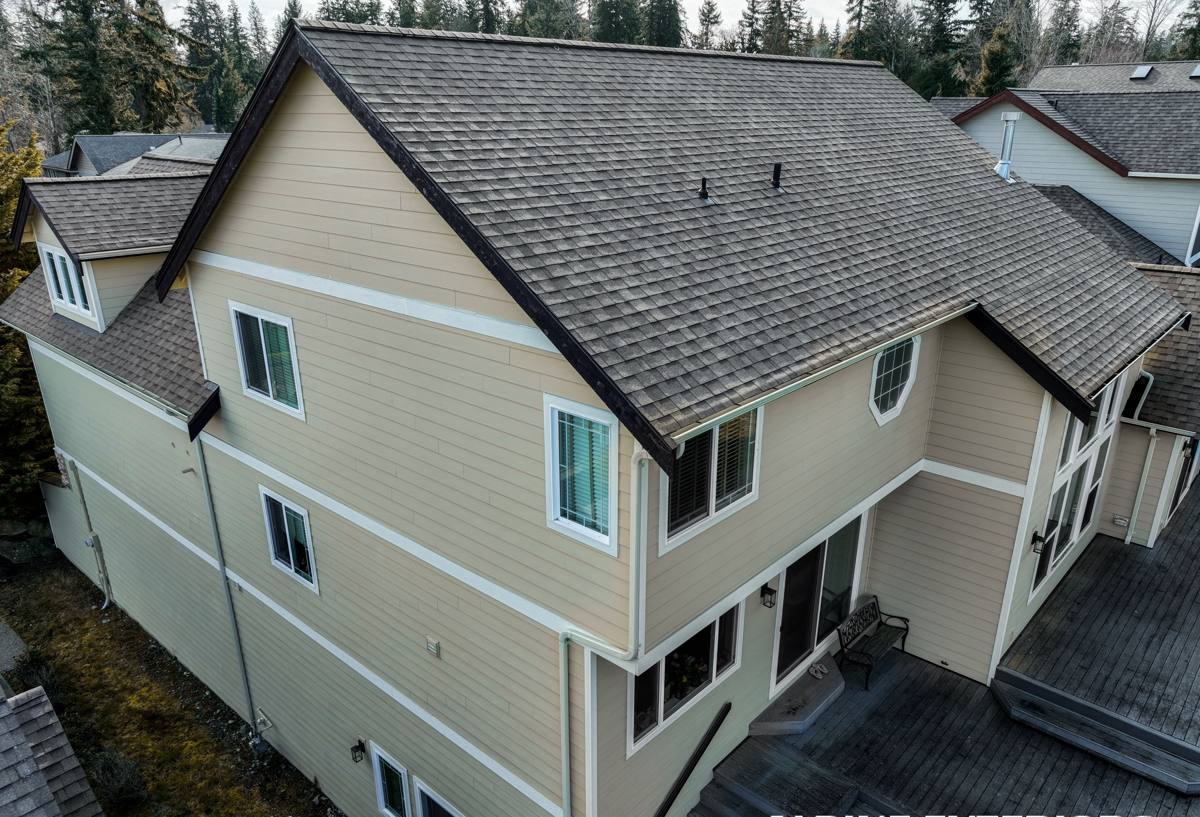
What Salt Air, Rain, and Moss Actually Do to a Deck
None of these factors alone is dramatic. Together, over several wet seasons, they add up.
Salt air and corrosion
Airborne salt speeds up corrosion on any exposed metal — screws, joist hangers, post bases, railing brackets. Standard electro-galvanized fasteners that would last for decades in a drier inland climate can start showing rust streaks and weakening within a few years this close to the water. Once a fastener corrodes, it loses holding strength long before it looks obviously bad.
Moisture cycling
Wood that stays damp for extended periods, then dries, then gets wet again, moves. That cycling is what eventually splits boards, loosens fastener grip, and opens gaps where water can get behind flashing or trim. Whatcom County's fall-through-spring wet stretch means many decks here rarely get a long enough dry period to fully recover between storms.
Moss and algae
Shaded lots near the water — common around Birch Point — grow moss on deck boards, framing tops, and railings faster than open, sunny sites. Moss holds moisture directly against the wood surface, which accelerates rot underneath it, and a mossy or algae-slicked deck surface is also a real slip hazard, especially on stairs.
Decking Materials: What Actually Holds Up Near the Water
There's no single "right" material for every home — budget, look, and how much upkeep an owner wants to do all factor in. What matters is choosing with eyes open about how each option behaves in a salt-air, high-moisture setting.
| Material | Moisture & Salt-Air Behavior | Moss/Algae Tendency | Maintenance |
|---|---|---|---|
| Pressure-treated wood | Good rot resistance if properly sealed and maintained; fasteners must be rated for treated lumber | Moderate — textured surface holds moisture and organic buildup | Annual cleaning and re-sealing recommended |
| Cedar | Naturally decay-resistant but still needs sealing in this climate; can gray and check if neglected | Moderate to high in shaded spots | Regular sealing and cleaning |
| Composite decking | Does not absorb moisture the way wood does; performs well long-term in wet, salty air | Lower, but surface film can still develop in heavy shade and needs periodic washing | Occasional washing; no sealing or staining |
| Tropical hardwoods | Very dense and naturally moisture-resistant, but installation is unforgiving and pricier | Low to moderate | Periodic oiling to maintain color and surface protection |
For most Birch Point homeowners, the honest trade-off is this: composite costs more up front and needs the least ongoing attention; wood species cost less initially but require a real maintenance commitment — sealing, cleaning, and periodic inspection — to get a comparable service life this close to the water.
Framing and Fasteners: Where Salt-Air Decks Actually Fail
The decking surface is what homeowners notice first, but framing and hardware are where most premature deck failures start — and they're hidden underneath the boards, so problems can go unseen for years.
- Fastener grade matters more here than inland. We use fasteners and connectors rated for coastal and treated-lumber exposure, not standard-grade hardware that corrodes faster in salt air.
- Ledger board flashing is critical. Where the deck attaches to the house, poor flashing lets water track behind the siding and rot the house wall framing, not just the deck. This is one of the most common failure points we see on older decks.
- Joist hangers and post bases need real corrosion resistance, since they sit at ground level or in shaded, damp air pockets under the deck where moisture lingers longest.
- Post bases should keep wood off concrete and off grade, so posts aren't sitting in standing water after heavy rain.
Drainage, Airflow, and Keeping Moss From Taking Over
A deck that dries out quickly after rain will always outlast one that doesn't, regardless of material. Good drainage and airflow design is largely invisible once the deck is finished, but it's the difference between a deck that needs occasional cleaning and one that develops rot and moss problems within a few seasons.
Design choices that help
Proper board spacing lets water drain through rather than pool on the surface. Framing that keeps air moving underneath the deck helps everything dry between storms instead of staying damp. Where a deck sits under trees or in the shadow of the house for most of the day, we account for that in material choice and in how often the owner should plan to clean the surface.
What owners can do
Keeping overhanging branches trimmed back reduces both leaf litter and the shade that keeps a deck damp. Sweeping off debris regularly — rather than letting it sit and compost against the boards — goes a long way toward slowing moss growth in a climate that gives it every advantage.
Our Deck Building Process
- Site assessment. We look at sun exposure, slope, drainage patterns, and how exposed the lot is to wind and salt air before recommending materials or layout.
- Design and material selection. We walk through the honest trade-offs of each decking option for your specific site and budget, not a one-size-fits-all pitch.
- Permitting. We handle the paperwork with Whatcom County so the project is built to code from the footings up.
- Framing. This is where we use coastal-rated fasteners and connectors and pay close attention to ledger flashing and drainage detailing — the parts that determine how the deck ages, not just how it looks on day one.
- Decking and railing installation. Boards, stairs, and railings go in to code, with attention to spacing and layout that supports drainage.
- Final walkthrough. We go over the finished deck with you, including a realistic maintenance plan for the material you chose.
Permits and Code Requirements in Whatcom County
Most decks attached to a house, and many freestanding ones above a certain height, require a building permit in Whatcom County. Code requirements typically cover things like guardrail height for elevated decks, stair and handrail specifications, and footing depth and spacing for the framing below. Waterfront-adjacent lots can also carry additional setback or environmental considerations depending on the specific parcel. We handle the permitting process as part of the job so you're not left tracking down inspections or paperwork on your own.
Why It Matters to Hire a Crew That Already Works Birch Point
Deck building isn't the same job everywhere in Whatcom County. A crew that mostly works drier, sunnier, inland lots may not think twice about fastener grade or ledger flashing detail — and on an inland site, they might get away with it. On a Birch Point lot exposed to salt air, wind-driven rain, and heavy shade, those same shortcuts show up as corrosion, rot, and moss within a handful of years instead of decades.
Working this area regularly means we already know what fails first in this specific environment, what materials genuinely hold up, and how the local permitting process runs. That's not a sales pitch — it's the difference between a deck that's built for the conditions it will actually face and one that just looks fine on installation day.
Maintenance Checklist for Birch Point Deck Owners
Whatever material you choose, a little seasonal attention keeps a deck performing the way it should in this climate.
- Sweep debris and leaf litter off the deck surface regularly, especially in fall
- Rinse or wash the surface periodically to slow moss and algae buildup, particularly in shaded areas
- Trim back overhanging branches to improve sun and airflow where possible
- Check and re-seal wood decking on the manufacturer's recommended schedule
- Look underneath the deck once a year for signs of rust on hardware or soft, discolored wood at the ledger board
- Keep gutters and downspouts near the deck clear so runoff isn't draining directly onto or under it
If you're planning a new deck or replacing one that's showing its age, we're happy to walk the site with you and talk through what actually makes sense for your lot's sun, shade, and exposure. Reach out for a free, no-pressure estimate using the form below.