 Blaine
 Roofing Built for Birch Point's Conditions, Not a Catalog Photo
Birch Point sits close enough to the water that your roof deals with things a roof twenty miles inland never has to think about. Salt-laden air off the Strait of Georgia, wind-driven rain that finds every gap in flashing, and a moss season that can run most of the year in the shade of the fir and cedar canopy common to this part of Whatcom County. Asphalt shingle roofing can absolutely handle all of that — but only when it's specified and installed with those conditions in mind. A roof that would be perfectly fine in a dry inland subdivision can underperform here if it's put on the same way.
This page is about one job in one place: asphalt shingle roofing on homes in and around Birch Point. Not a general "we do roofing" pitch — the specific decisions that matter for this stretch of coastline, and what a correct installation actually looks like when it's done by people who already know the neighborhood.
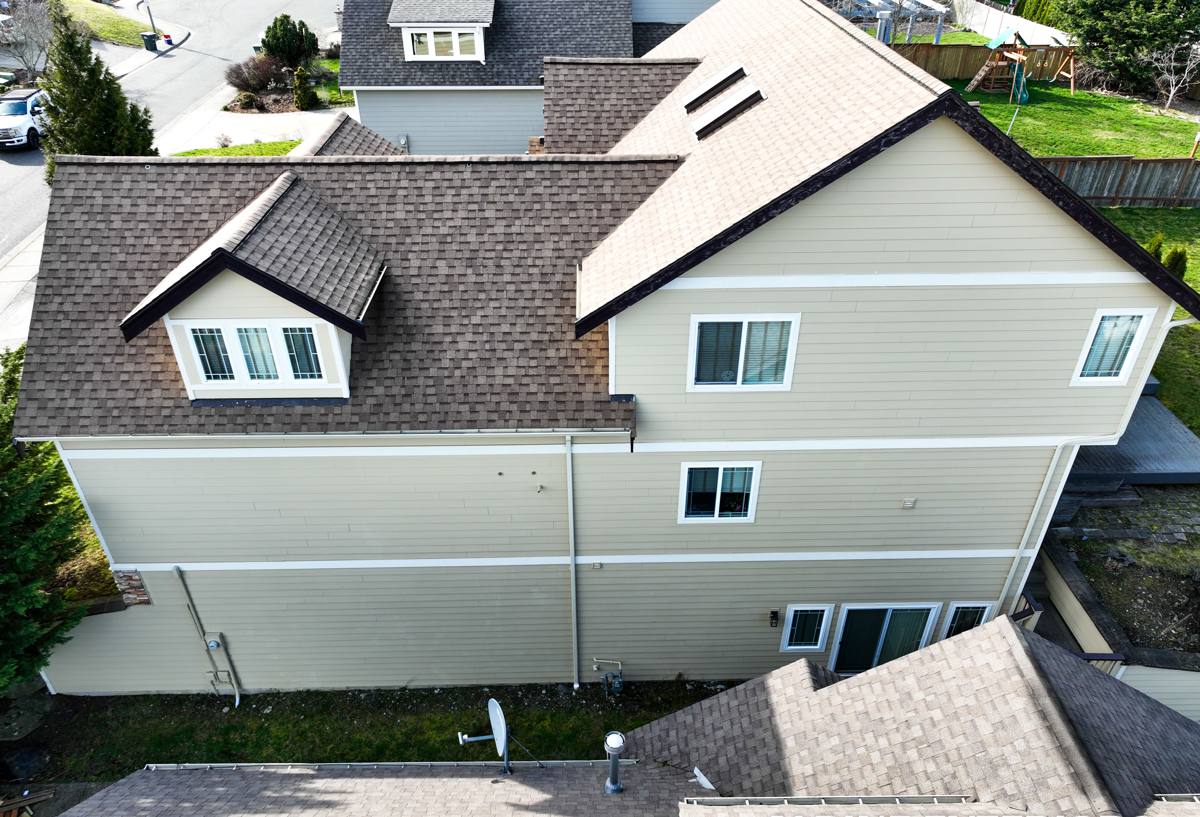
What Salt Air, Rain, and Moss Actually Do to a Roof
Salt Air
Airborne salt doesn't rot shingles the way it corrodes metal, but it accelerates wear on exposed metal components — nail heads, flashing, vents, and gutter hardware — if those parts aren't rated for coastal exposure. Over years, corroding fasteners and flashing seams are where leaks start, not usually the shingles themselves.
Driving Rain
Wind off the water doesn't just fall straight down — it pushes rain sideways and up under laps that would shed water fine in a calm storm. Valleys, wall-to-roof transitions, and low-slope sections are the places this shows up first. Standard installation practices that pass in sheltered areas can leave these spots vulnerable here.
Moss and Sustained Moisture
Shade, humidity, and mild temperatures make Whatcom County good moss country. Moss holds moisture against the shingle surface, works its way under tabs as it grows, and — if left unchecked — lifts shingles and traps water where it doesn't belong. A roof that's shaded most of the day needs a different maintenance rhythm than one that's in full sun, and ignoring that is one of the most common reasons we see premature failure on otherwise decent roofs.
What a Correct Installation Looks Like Here
None of this is exotic — it's just applying the right details consistently, in the order that actually keeps water out.
- Ice-and-water shield or self-adhered underlayment at eaves, valleys, and any low-slope transitions, not just where code minimums require it
- Synthetic underlayment across the full deck rather than felt, for better wind and moisture resistance during the install window and over the life of the roof
- Coastal-rated fasteners and flashing — corrosion-resistant materials on metal components that stay exposed to salt air year-round
- Properly lapped step and counter-flashing at every wall intersection, chimney, and skylight — this is where most leaks actually originate, not in the field of the roof
- Balanced intake and exhaust ventilation so moisture from inside the house doesn't condense against the underside of the deck, especially under shaded, damp roof sections
- Sealed and properly nailed shingle courses with the manufacturer's specified nailing pattern — high winds off the water punish under-nailed roofs first
Skipping any one of these doesn't usually cause an immediate problem. It shows up two, five, or ten years later as a leak that's hard to trace back to its actual cause — which is exactly why doing it right the first time matters more here than in milder climates.
Choosing the Right Shingle for a Coastal, Shaded Property
Not every asphalt shingle product is a good match for Birch Point's mix of salt exposure, moss pressure, and rain volume. The differences that matter most:
| Factor | Why It Matters Here |
|---|---|
| Algae/moss resistance (copper- or zinc-infused granules) | Slows moss and algae growth on shaded, damp roof sections — a real factor in this climate, less relevant in drier areas |
| Wind rating | Coastal gusts off the water are stronger and more frequent than typical inland wind loads |
| Warranty structure | Some warranties are prorated or reduced in high-wind, coastal, or high-moisture zones — worth reading before you assume full coverage |
| Granule adhesion quality | Sustained moisture and freeze-thaw cycling can accelerate granule loss on lower-grade shingles over time |
| Color and reflectivity | Darker shingles hold more heat and dry faster after rain, which can reduce moss retention on shaded slopes |
We're not going to tell you one specific product name is the only right answer — the right choice depends on your roof's slope, sun exposure, and your budget. What we will do is walk you through the actual trade-offs for your house instead of defaulting to whatever's cheapest to install.
Why We Frame This as a Maintenance Relationship, Not Just an Install
A well-installed asphalt shingle roof in this climate is a low-maintenance product — but "low" isn't "zero," especially under tree cover near the water. Homes shaded by conifers or close to the shoreline benefit from periodic moss treatment and gutter clearing that a sunny, inland roof simply doesn't need as often. We'd rather tell you that upfront than have you find out the hard way when a moss mat lifts a course of shingles during a wind event.
What We Recommend Homeowners Watch For
- Moss or algae streaking, especially on north-facing or shaded slopes
- Granules collecting in gutters or downspouts after storms
- Shingles that look lifted, curled, or out of alignment at the edges
- Rust staining around flashing, vents, or metal fixtures
- Any interior ceiling staining, even faint, after a heavy rain event
- Standing debris in valleys that traps moisture against the roof surface
None of these mean you need a new roof. Most are quick fixes if caught early, and expensive ones if ignored for a few seasons.
Our Process for a Birch Point Roofing Project
1. On-Site Assessment
We walk the roof and the attic, not just look at it from the driveway. Ventilation, decking condition, existing flashing, and moss/moisture patterns all get checked before we talk about materials.
2. Honest Scope and Options
You get a clear explanation of what's actually needed versus what's optional, with real trade-offs on material tiers — not a single quote with no context for why it costs what it costs.
3. Protecting the Property During the Job
Landscaping, siding, and gutters get protected before tear-off starts. Nail and debris cleanup — including magnetic sweeps — happens at the end of each work day, not just at the very end of the project.
4. Installation to Coastal-Appropriate Detail
Underlayment, flashing, fastening, and ventilation are done to the standards outlined above — every time, not just when it's convenient or when someone's watching.
5. Final Walkthrough
We go over the finished roof with you, explain what maintenance (if any) makes sense given your specific site — shade level, tree cover, roof pitch — and answer questions before we consider the job done.
What Influences the Cost of a New Roof
Every roof is different, but the biggest cost drivers on Birch Point homes tend to be the same few things:
| Factor | Effect on Cost |
|---|---|
| Roof size and number of facets | More area and more valleys/hips mean more material and labor |
| Existing layers and tear-off | Removing old roofing adds cost but is usually the right call over a second layer |
| Deck condition | Rotted or soft decking found during tear-off requires repair before new roofing goes on |
| Shingle tier | Standard three-tab, architectural, and premium algae-resistant lines all price differently |
| Flashing and ventilation upgrades | Bringing older detailing up to current standards adds labor but reduces future leak risk |
| Access and pitch | Steeper roofs or tricky access near trees and slopes take longer and require more safety setup |
We don't publish a flat per-square price because it genuinely varies this much house to house — but we'll give you a real number after we've actually looked at your roof, not a lowball estimate that grows once the tear-off starts.
Why Local Experience in This Specific Area Matters
A crew that's worked roofs throughout Blaine and Whatcom County knows which slopes hold moss longest, which flashing details tend to fail first on homes exposed to wind off the water, and how local permitting and code requirements actually get applied — not just what's written in the book. That's different from a crew that mainly works drier, inland jobs and treats every roof the same way. It's also easier to get warranty work, follow-up questions, or a maintenance check answered by a company that's a short drive away rather than one based well outside the area.
Ready for a Straight Answer on Your Roof?
If your roof is showing moss, granule loss, or you're just planning ahead before it becomes a problem, we're happy to take a look and give you an honest read on where things stand. There's no pressure and no hard sell — just a real assessment and a straightforward quote. Use the form below to request a free estimate for your Birch Point home.