 Blaine
 Why So Many Bellingham Decks Need Replacing Before Owners Expect
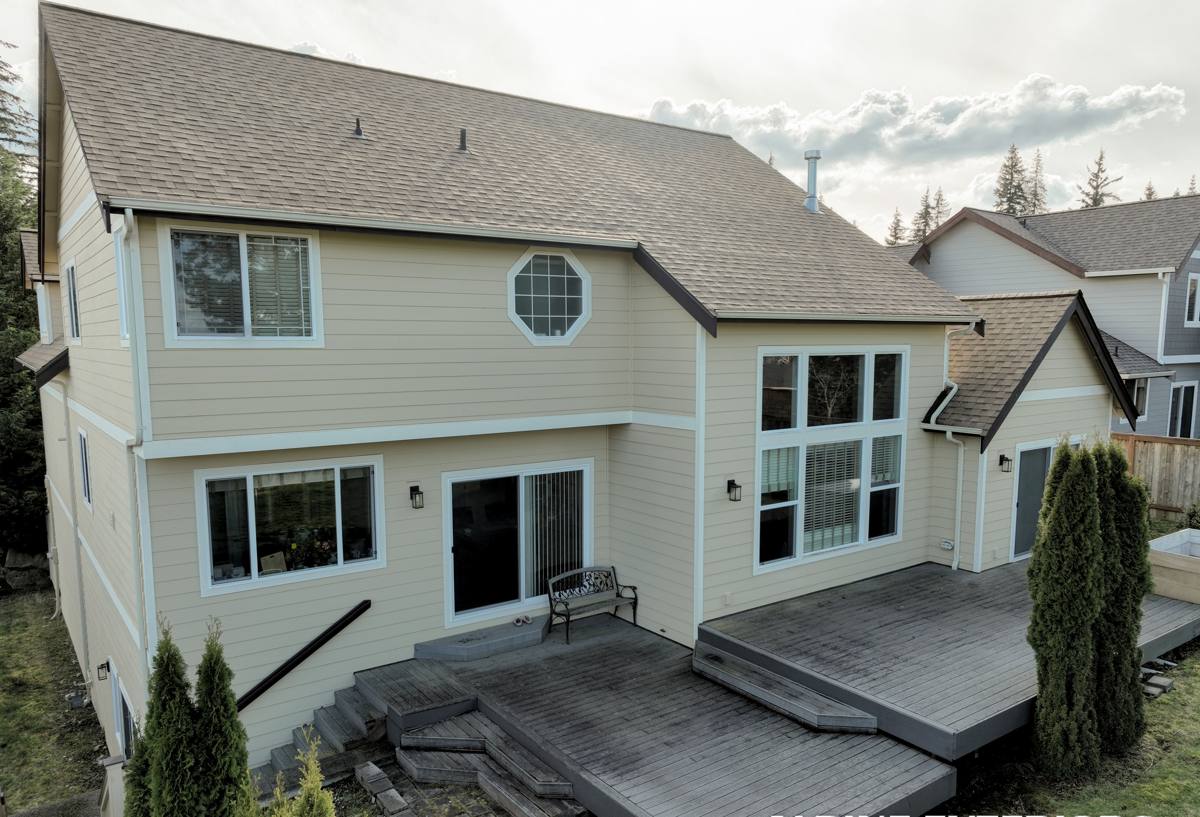
Bellingham sits on Bellingham Bay, and that location does more to a deck than most homeowners realize until they're standing on one that's starting to feel soft underfoot. A deck has no roof, no siding, and often no real protection from the weather that moves in off the water. It takes the full force of salt-laden air, driving rain, and a moss season that barely lets up, year after year, on a structure that was often built to a lower standard than what's expected today. By the time a deck looks like it needs attention, the framing underneath it has usually needed attention for a while.
This page is about deck replacement specifically for Bellingham properties: how to tell a deck has actually reached the end of its service life rather than just needing a repair, what a correct replacement involves in this climate, and how our process works from the first site visit to the final walkthrough.
What Bellingham's Climate Does to an Aging Deck
Salt Air and Corroding Hardware
Homes closer to the bay take a steady dose of salt-tinged air, and older decks were often built with standard galvanized fasteners and brackets that weren't rated for that kind of sustained exposure. Corrosion in structural hardware doesn't announce itself. A ledger bolt or joist hanger can lose real holding strength years before it shows visible rust on the surface, which is part of why a deck that still looks fine can have a framing problem underneath it.
Driving Rain and Ledger Rot
Storms off the water push rain sideways into a house rather than dropping it straight down, and the ledger board, where the deck bolts into the home, is one of the most common places that water finds its way in on an older build. Decks built more than a decade or two ago frequently used flashing details, or no flashing at all, that don't meet what's considered correct practice now. Once water starts tracking behind that ledger connection, it can rot the band joist and framing behind it long before the deck surface shows any sign of trouble.
A Moss Season That Runs Most of the Year
Mild temperatures and near-constant dampness give moss a long growing season in Bellingham, and a horizontal deck surface holds water longer than a vertical wall does, which makes it one of the first places moss and mildew take hold. Shaded decks and north-facing surfaces usually show it first. Beyond looking bad, a mossy deck surface stays wetter longer between rain events, which accelerates whatever decay process is already underway in an aging board or joist.
Signs Your Bellingham Deck Needs Replacement, Not Repair
Not every problem deck needs to come out entirely. But certain signs point toward a structural issue that a patch won't fix for long:
- Soft, spongy, or bouncy decking, especially near the ledger or around post bases
- Visible rot, splitting, or crumbling wood in the framing you can see from underneath
- Rust staining bleeding out from fasteners, brackets, or joist hangers
- A railing or post that wiggles or feels loose when you put weight on it
- Gaps opening up at the ledger connection where the deck meets the house
- Persistent moss or dark staining that returns quickly after cleaning, particularly on shaded sections
- A deck that's simply older than its decking material's realistic service life, especially untreated or minimally maintained wood
- Multiple past repairs to the same area, which usually means the underlying cause was never actually fixed
If what you're seeing is limited to a handful of boards or a section of railing, repair may still make sense. If it's showing up in the framing or at the ledger, replacement is almost always the more honest answer, and we'll tell you plainly which situation you're in after an actual look rather than guessing from a description.
What a Correct Deck Replacement Actually Involves
Tear-Off and What It Reveals
Full tear-off is where a replacement earns its value over a surface-level fix. Pulling the old decking and, where needed, the framing exposes the ledger connection, the post bases, and the joists, all the places moisture damage tends to hide behind a deck that still looks acceptable from above. We check for rot, corrosion, and undersized or outdated framing before anything new goes back, and we'll walk you through what we find rather than just handing you a change order.
Ledger Board and Flashing Done Right
The ledger connection is where most old-deck failures start in this climate, and it's also the detail most likely to have been done incorrectly or skipped altogether on an older build. A correct replacement includes proper ledger flashing that sheds water away from the house rather than behind it, along with lag bolts or through-bolts sized and spaced to current structural standards, not whatever held the old deck up adequately enough for a while.
Framing and Fastener Upgrades
Replacement is also the point where it makes sense to upgrade what was underbuilt the first time. That typically means stainless steel or coastal-grade corrosion-resistant fasteners throughout, joist and beam sizing matched to current span tables rather than decades-old assumptions, and post-to-beam and post-to-footing connections that meet today's structural hardware standards. None of that is visible once the decking goes back on, which is exactly why it matters more than the surface material.
Footings and Post Bases
Older decks in this area sometimes sit on footings that were undersized, set too shallow, or have shifted over the years from ground moisture. A replacement is the practical time to check footing condition and post base hardware, since digging that up again later means removing the deck a second time. Post bases that hold the post above grade, rather than embedding wood directly in or near soil, make a real difference in how long the new structure lasts in a climate this wet.
Decking Material Choices for a Replacement
Once the structure underneath is sound, the decking surface itself is a separate decision, and it's worth choosing based on how the old material actually performed rather than defaulting to whatever was there before. Wood is the traditional choice and can still make sense on a budget, but it needs regular sealing or staining to hold up against sustained moisture and salt air, and it's usually the first material to show moss and soft spots if that maintenance slips. Capped composite resists moisture absorption and staining far better than wood or uncapped composite, largely because the plastic cap layer keeps water from ever reaching the wood-fiber core. Cellular PVC decking contains no wood fiber at all, so it holds up especially well in high-moisture, salt-air conditions, though it typically costs more and can need more support under heavy point loads than composite does.
A lot of Bellingham homeowners replacing an old wood deck move to composite or PVC specifically because they're tired of the sealing and staining cycle, but that's a personal call, not a requirement. We'll size the framing correctly for whichever material you choose.
Deck Replacement Cost Factors in Bellingham
| Factor | What It Affects | Why It Matters Here |
|---|---|---|
| Extent of structural damage found at tear-off | Framing, ledger, and footing repair costs | Years of trapped moisture from wind-driven rain can rot framing that isn't visible until the old decking comes off |
| Ledger and flashing correction | Labor and hardware to bring the house connection up to current standards | Older Bellingham decks often predate today's flashing detailing, and this connection is the most common point of hidden water damage |
| Decking material selected | Material cost and long-term upkeep | Wood costs less upfront but needs more maintenance against salt air and moss; composite and PVC cost more but need less ongoing attention |
| Fastener and hardware grade | Material cost, long-term durability | Standard galvanized hardware corrodes faster this close to the bay than coastal-grade stainless does |
| Deck size, height, and layout | Framing material and labor time | Elevated decks and multi-level layouts common on sloped Bellingham lots add structural complexity |
| Permit and inspection requirements | Timeline and code-driven scope | A full replacement usually triggers current code requirements even if the original deck was built under older rules |
Real numbers depend on what tear-off actually reveals, which is why we look at the deck in person and talk through what we find before finalizing a scope.
How Our Deck Replacement Process Works
We start with a site visit to assess the existing deck: how it's attached to the house, what condition the visible framing is in, drainage and grade underneath, and how exposed the site is to wind and rain off the bay. From there we talk through decking material options and layout changes, if you want any, and give you an honest read on what tear-off is likely to find based on the deck's age and condition.
Once the scope is set and permits are pulled where required, the old deck comes out and we assess the framing, ledger, and footings directly rather than assuming they're fine because the surface looked okay. Framing repairs or upgrades happen before any new decking goes down, followed by correct ledger flashing, fastening, and the decking surface itself. We finish with a walkthrough covering what your specific new material needs going forward, which for most modern decking is minimal but not nothing.
Permits and Code on an Older Bellingham Deck
Deck-building code has changed over the years, particularly around ledger attachment, guardrail height and spacing, and structural connections at posts and beams. A deck built decades ago may have been compliant with the rules at the time, but a full replacement generally means bringing the structure up to current standards, not just matching what was there before. That's not a sales pitch, it's how permitting works, and it's part of why we treat framing and connection details as seriously as we do on every replacement, whether or not the old deck's problems were visible from the surface.
Why a Crew That Already Works Bellingham Matters
A contractor who occasionally builds a deck in this area can still do competent work, but a crew that works Bellingham regularly has actually seen how salt air, wind-driven rain, and a long moss season play out on real decks here over years, not just how a product is supposed to perform on paper. That shows up in practical decisions: which fastener grade is worth the extra cost on a bay-facing lot, where ledger flashing needs extra attention based on how a particular house is oriented to the weather, and which older framing shortcuts we've learned to specifically check for on tear-off because we've found them before. It's the difference between a replacement that solves the actual problem and one that just puts a new surface over the same underlying issue.
If your Bellingham deck is showing its age, or you just want an honest opinion on whether it needs replacing or can be repaired, we're glad to take a look. Reach out using the form below to schedule a free, no-pressure estimate.