 Blaine
 Asphalt Shingle Roofing Built for the California Creek Environment
Homes along California Creek sit close enough to Semiahmoo Bay and Drayton Harbor that salt air is a daily fact of life, not an occasional nuisance. Add Whatcom County's driving rain off the Strait of Georgia and a moss season that can run eight or nine months out of the year, and you have one of the tougher environments in the Pacific Northwest for a roof to hold up in. Asphalt shingles can absolutely handle it — but only when the materials, the ventilation, and the installation details are matched to what this specific stretch of coastline actually does to a roof over time.
This page is about that one job, done right, for that one area: asphalt shingle roofing for California Creek homes, whether you're on a treed lot back from the water or closer to open exposure where the wind and salt hit harder.
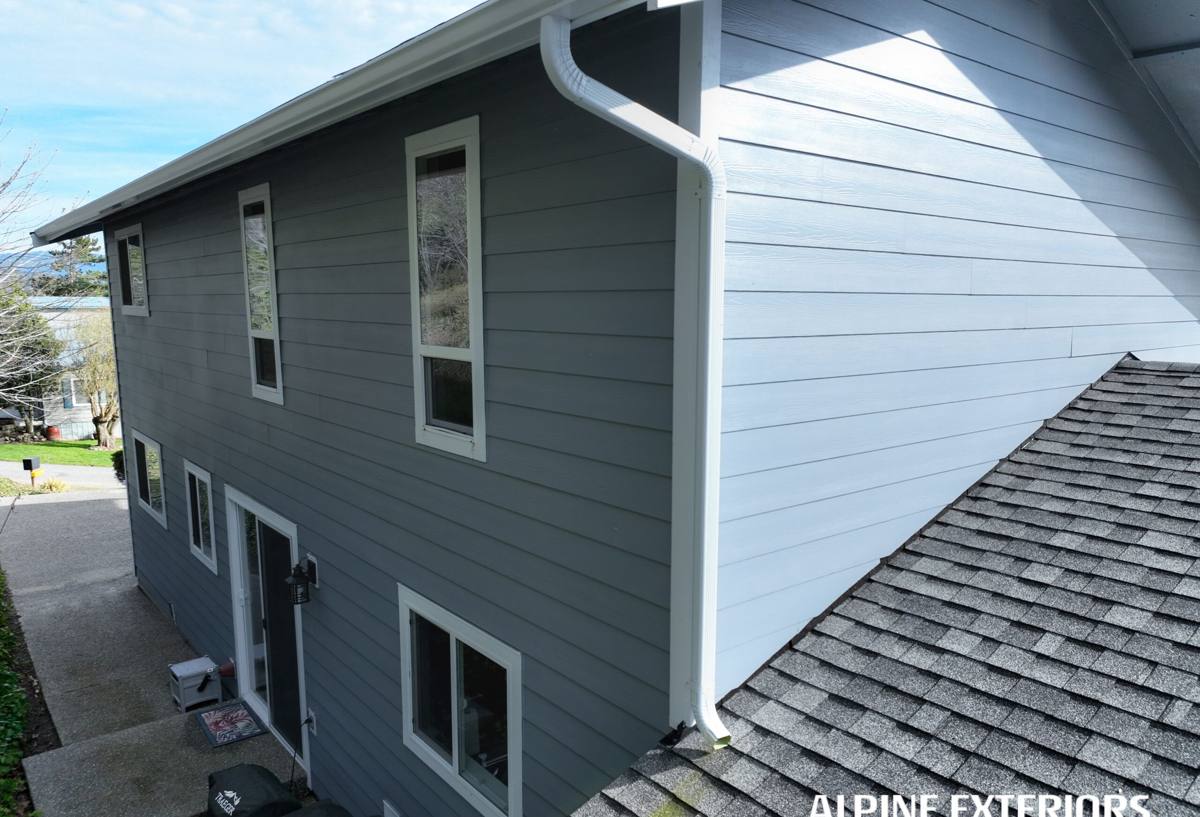
What Salt Air, Driving Rain, and Moss Actually Do to a Shingle Roof
Salt air
Airborne salt from the bay settles on every exterior surface, including your roof. Over years it accelerates the breakdown of metal flashing, fasteners, and vent components faster than it would a few miles inland. It doesn't destroy asphalt shingles directly, but it speeds up corrosion on the metal parts of the system that keep water out — which is where most roof leaks actually start.
Driving rain
Wind-driven rain off the strait doesn't fall straight down — it comes in sideways, which means it tests every lap, seam, and fastener on your roof, not just the open field of shingles. A roof that would shed water fine in a calm rain can still take on water at a ridge cap, a valley, or a poorly sealed penetration when the wind is pushing it sideways.
Moss and moisture
Between the tree cover common on California Creek lots and the long, damp stretch of fall through spring, moss and algae get a real head start here. Moss holds moisture against the shingle surface, works its way under tabs, and lifts granules — which shortens the life of the roof even if nothing is actively leaking yet.
What a Correct Asphalt Shingle Job Looks Like Here
A roof that's going to hold up on California Creek needs more attention paid to the details than the same job would need somewhere drier and further from the water. That means:
- Corrosion-resistant flashing and fasteners at valleys, chimneys, and roof-to-wall transitions — not the cheapest option available, but the one that won't be the weak point in five years
- Self-adhered underlayment (ice-and-water-type membrane) at valleys, eaves, and other vulnerable spots, in addition to standard synthetic underlayment across the field
- Balanced intake and exhaust ventilation, sized for the roof, so moisture from inside the house doesn't get trapped against the underside of the deck
- Proper nailing pattern and shingle exposure, matched to the manufacturer's high-wind installation instructions rather than the minimum standard
- Sealed and lapped correctly at every penetration — plumbing vents, roof jacks, skylights — since wind-driven rain finds these spots first
None of this is exotic. It's standard best practice applied consistently, instead of skipped when nobody's checking.
Choosing the Right Shingle for a California Creek Roof
Not every asphalt shingle product is a good fit for a coastal, tree-covered, high-moisture site. Here's how the common tiers compare for this specific environment:
| Shingle Type | Wind Rating | Algae/Moss Resistance | Typical Lifespan Here |
|---|---|---|---|
| 3-Tab (economy) | Lower — flat profile, less wind resistance | Standard granules only, unless algae-resistant option specified | Shorter — moss and wind exposure wear these faster |
| Architectural / Dimensional | Higher — laminated construction holds up better in gusts | Usually available with algae-resistant (copper- or zinc-infused) granules | Solid mid-range life, good balance of cost and durability |
| Premium / Designer | Highest available in asphalt | Best available algae resistance, heavier granule coat | Longest-lasting asphalt option, higher upfront cost |
For most California Creek homes, we steer people toward an architectural shingle with an algae-resistant rating as the baseline — it's the point where the extra cost over 3-tab is small relative to the added years of service in this climate. Premium shingles make sense for homes with heavy tree cover or full water exposure where moss and wind pressure are both working against the roof at once.
Signs Your California Creek Roof Needs Attention
Because salt air and moss cause gradual damage rather than sudden failure, a lot of roofs here go past the point where a simple repair would have worked. Watch for:
- Green or black streaking, or visible moss growth, especially on north-facing or shaded slopes
- Granules collecting in gutters or at the base of downspouts
- Shingle edges curling, cupping, or lifting at the tabs
- Rust staining running down from flashing, vents, or fasteners
- Soft spots, sagging, or visible daylight around chimneys and skylights from inside the attic
- Interior water stains on ceilings after a heavy wind-driven rain event
Any one of these is worth a look before the next wet season. Caught early, most of these are a repair. Left alone through another winter, several of them turn into a full re-roof.
Our Process for a California Creek Roof
1. On-site inspection
We walk the roof and the attic, not just look from the ground. Ventilation, decking condition, and existing flashing all get checked before we talk about shingles.
2. Honest scope and estimate
You get a written estimate that spells out materials, tear-off scope, and what's driving the price — no vague allowances that turn into surprise add-ons mid-job.
3. Tear-off and deck check
Old roofing comes off down to the deck so we can actually see what's underneath — rot, soft spots, and old flashing don't get covered up and re-shingled over.
4. Underlayment and flashing first
This is where most of the long-term protection against wind-driven rain actually comes from, and it's the step that gets rushed on cheap jobs. We don't rush it.
5. Shingle installation to spec
Correct exposure, correct nailing, correct pattern at valleys and ridges — installed to the manufacturer's requirements so the warranty is actually valid if you ever need it.
6. Cleanup and final walk-through
Magnetic sweep for stray fasteners, debris hauled off, and a walk-through so you know what was done and what to keep an eye on going forward.
Ventilation: The Part of the Job You Can't See
A roof can have the best shingles on the market and still fail early if the attic underneath isn't ventilated correctly. In a moisture-heavy climate like Whatcom County's, trapped warm, damp air condenses against the roof deck from the inside — which rots decking and shortens shingle life from underneath, regardless of what's happening on the surface. Proper intake at the eaves and exhaust at the ridge, sized to the attic space, is a standard part of any roof we install here — not an upsell.
Maintenance That Actually Extends Roof Life Here
Asphalt shingle roofs on California Creek benefit from a level of upkeep that a drier inland roof simply doesn't need:
- Keep gutters and downspouts clear so water isn't backing up under the eaves
- Have moss treated or removed before it works under the tabs — don't wait until it's thick
- Trim back overhanging branches to cut down on shade, debris, and moisture retention on the roof surface
- Have flashing and fasteners checked periodically for early corrosion, especially closer to the water
None of this replaces a properly installed roof, but it's the difference between getting the full expected life out of a good roof and cutting it short.
Why It Matters Who Installs Your Roof Here
A roofing crew that mostly works drier, inland jobs isn't necessarily thinking about salt-air corrosion on fasteners, algae-resistant granules, or how much underlayment coverage a valley actually needs when the rain is coming in sideways. Those aren't things you notice missing on installation day — you notice them three or five years later, when the roof that should have had a decade or two of life left starts showing problems early. Working this area regularly means those details are just part of how the job gets built, not an afterthought.
If your roof is showing wear, due for replacement, or you just want a straight answer about what condition it's really in, we're glad to come take a look. The estimate is free, there's no pressure, and you'll get a clear explanation of what we find — use the form below to get started.