 Blaine
 Siding Built for the Sumas Side of Blaine
Homes on the Sumas side of Blaine sit in a stretch of Whatcom County that takes weather from two directions at once: salt-laden air rolling in off the Strait of Georgia and Drayton Harbor, and the steady, driving rain that settles over the county for much of the year. Add in a moss season that can run from fall through spring, and the siding on these homes is under near-constant pressure. It's not one bad storm that causes damage here — it's the slow, repeated cycle of moisture, salt, and shade that wears down the wrong materials year after year.
We install James Hardie fiber cement siding exclusively, and we've worked enough homes in and around Sumas to know which details actually matter for this specific stretch of Blaine. This page walks through what local homes need from a siding installation, what a correct job looks like, and how our process handles the realities of this climate.
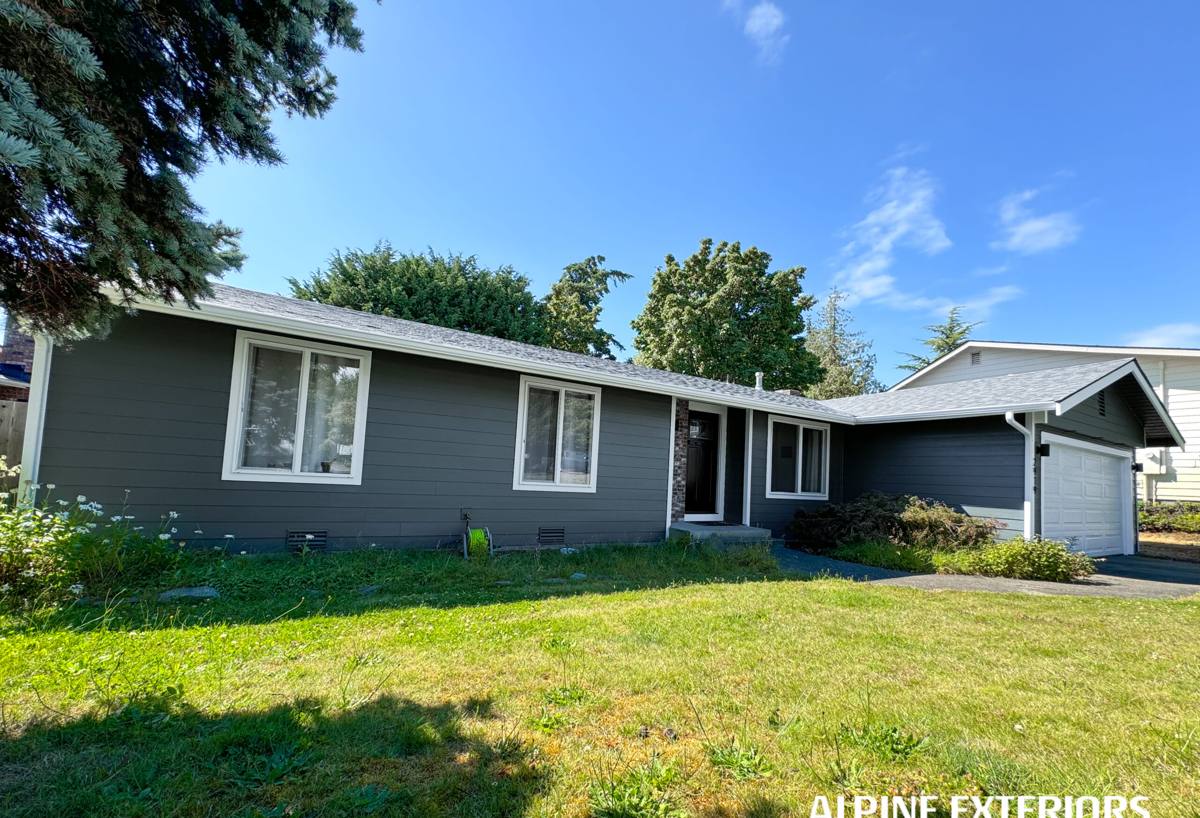
What Sumas-Area Homes Are Up Against
Salt Air
Proximity to Drayton Harbor and the Strait means airborne salt is a real factor here, even a few miles inland. Salt accelerates corrosion on fasteners, flashing, and any exposed metal trim, and it degrades paint film faster than it would in a drier, inland climate. Siding materials and finishes that aren't engineered for coastal exposure tend to chalk, fade, or corrode at their fastening points well ahead of schedule.
Driving Rain
Blaine's rain isn't always gentle straight-down rainfall — wind-driven rain pushes water sideways into wall assemblies, testing every seam, joint, and penetration in the siding system. A siding installation that isn't detailed correctly at these transition points will let water behind the cladding long before the siding itself shows visible wear.
Moss and Sustained Shade
Mature tree cover and long stretches of overcast, damp weather create ideal conditions for moss and algae growth on north-facing and shaded walls. Moss holds moisture against the siding surface for extended periods, which is hard on any material that isn't dimensionally stable or that absorbs water into its substrate.
Put together, these three factors mean Sumas-area homes need a siding system that resists moisture absorption, holds a factory finish under UV and salt exposure, and doesn't feed the organic growth that damp shade encourages.
Why We Standardized on James Hardie
We don't install LP SmartSide, vinyl, Cemplank, Allura, primed spruce, or cedar. That's a deliberate standard, not a sales pitch, and it comes down to how those materials perform over time in exactly the conditions described above.
- Vinyl expands and contracts with temperature swings, can warp under sustained damp-and-dry cycling, and its color is baked into a thin material that fades and becomes brittle with age.
- Wood-based composites (LP SmartSide) and primed spruce or cedar rely on wood fiber or solid wood substrates. Even with treatments and primer, wood-based products are more vulnerable to moisture intrusion at cut edges, fastener holes, and joints — exactly the failure points that driving rain finds first.
- Other fiber cement brands (Cemplank, Allura) are legitimate fiber cement products, but we've standardized on one manufacturer so our crew has deep, repeatable expertise with one set of installation specs, one finish system, and one warranty structure — rather than splitting attention across products.
James Hardie fiber cement is non-combustible, engineered specifically for climate zones (its HZ5 product line is built for the kind of freeze-thaw and moisture cycling the Pacific Northwest sees), and finished with the ColorPlus factory-baked finish rather than field-applied paint. That factory finish is what holds up to salt air and UV exposure without the chalking and fading that field-painted materials show sooner. It also carries a strong transferable warranty when installed to spec — which is the other half of the equation.
What a Correct Installation Actually Involves
Fiber cement siding is only as good as the installation behind it. James Hardie's own warranty is tied to installation meeting their specifications — this isn't a material you can install loosely and still expect full performance or warranty coverage.
Weather-Resistive Barrier and Flashing
Every wall gets a properly lapped weather-resistive barrier, with flashing integrated at every window, door, and roof-to-wall transition. In a driving-rain climate, these transition points are where water intrusion actually starts — the field of the siding is rarely the problem.
Proper Fastening
Hardie panels and lap siding need to be fastened per manufacturer spec — correct fastener type (corrosion-resistant, given the salt air exposure), correct spacing, and correct penetration depth. Under- or over-driven fasteners are a common source of long-term callbacks.
Clearance and Drainage
Siding needs proper clearance from grade, roof lines, and horizontal surfaces like decks and patios, plus a drainage plane behind the cladding so any moisture that does get past the surface can escape rather than sit against the wall assembly. This matters even more on shaded, moss-prone elevations where wall surfaces stay damp longer.
Joints and Caulking
Butt joints, corners, and trim transitions need to be sealed correctly with compatible sealants — not just caulked on the surface, but detailed so water sheds away from the joint rather than pooling at it.
Cut-Edge Sealing
Every field cut on Hardie siding needs to be sealed per spec. An unsealed cut edge is a moisture entry point, and it's one of the easiest details to skip if a crew is moving fast.
Our Process for Sumas-Area Homes
- On-site assessment. We walk the home, check the current siding and sheathing condition, and note shaded elevations, drainage issues, and any moisture damage already present.
- Tear-off and substrate check. We remove the existing siding and inspect the sheathing underneath — this is when hidden moisture damage from years of driving rain or trapped moss dampness typically shows up, and it needs to be addressed before new siding goes on, not covered over.
- Weather barrier and flashing installation. New house wrap and flashing are installed at every penetration and transition, sized for this climate's rain load.
- Hardie panel or lap installation. Installed to manufacturer spec for fastening, clearance, and joint treatment, with attention to the shaded and salt-exposed elevations that see the most wear.
- Trim, caulking, and final detailing. All joints sealed, cut edges treated, and trim finished for a clean, consistent look.
- Final walkthrough. We review the completed work with the homeowner and go over basic care so the siding performs the way it's designed to.
Comparing Siding Options for This Climate
| Factor | James Hardie Fiber Cement | Vinyl | Wood-Based / Primed Wood |
|---|---|---|---|
| Salt air resistance | Factory ColorPlus finish holds up well | Fades and chalks over time | Depends on paint upkeep; substrate vulnerable |
| Driving rain / moisture | Dimensionally stable, engineered for climate zone | Can warp; seams are a weak point | Absorbs moisture at cuts and joints |
| Moss-prone shade | Non-organic substrate resists moisture-driven decay | Doesn't rot but traps moisture behind panels | Wood substrate vulnerable to sustained dampness |
| Fire resistance | Non-combustible | Combustible | Combustible |
| Finish maintenance | Factory-baked, longer repaint interval | No repainting, but fades/embrittles | Regular repainting required |
Why a Local Crew Matters Here
Siding installation isn't one-size-fits-all across Whatcom County, let alone across a state. A crew that already works homes on the Sumas side of Blaine knows which elevations catch the worst wind-driven rain, which areas hold shade and moss longest, and how salt exposure from Drayton Harbor and the Strait actually plays out on a finished wall over several years — not just in a spec sheet. That local pattern recognition shows up in small decisions: where to add extra flashing attention, which elevations get prioritized for drainage detailing, and how to sequence work around the county's rain patterns so panels and seals cure properly before the next system moves through.
What to Check Before Hiring Anyone for This Job
- Ask whether the crew is trained and experienced specifically with James Hardie installation specs, not just fiber cement in general.
- Confirm they'll inspect and address sheathing condition during tear-off, not just install over what's there.
- Ask how they handle flashing and drainage detailing at windows, doors, and roof lines — this is where most real-world failures start.
- Get clarity on warranty coverage: manufacturer warranty on the product, plus what the contractor covers on labor and workmanship.
- Ask about their experience with homes in similar coastal, shaded, or high-moss conditions — not just general siding experience.
If your Sumas-area home is due for new siding, we're happy to take a look and walk you through what we're seeing and what it would take to do the job right. Reach out for a free, no-pressure estimate using the form below.