 Blaine
 Asphalt Shingle Roofing Built for Sumas Weather
Sumas sits right up against the Canadian border in north Whatcom County, and the roofs out here take a beating that homeowners further inland don't have to think about. Long stretches of soaking rain, wind that funnels through the valley, and a moss season that can run most of the year all put real wear on an asphalt shingle roof. A roof that's installed correctly and maintained on schedule will handle all of that for decades. One that's installed with shortcuts, or ignored for too long, will show problems years before it should.
This page covers what asphalt shingle roofing actually involves for a Sumas home — not the marketing version, the practical one. What the climate does to shingles, what a correct installation looks like underneath the surface, how to tell when repair is enough versus when replacement makes more sense, and what our process looks like from first look to final cleanup.
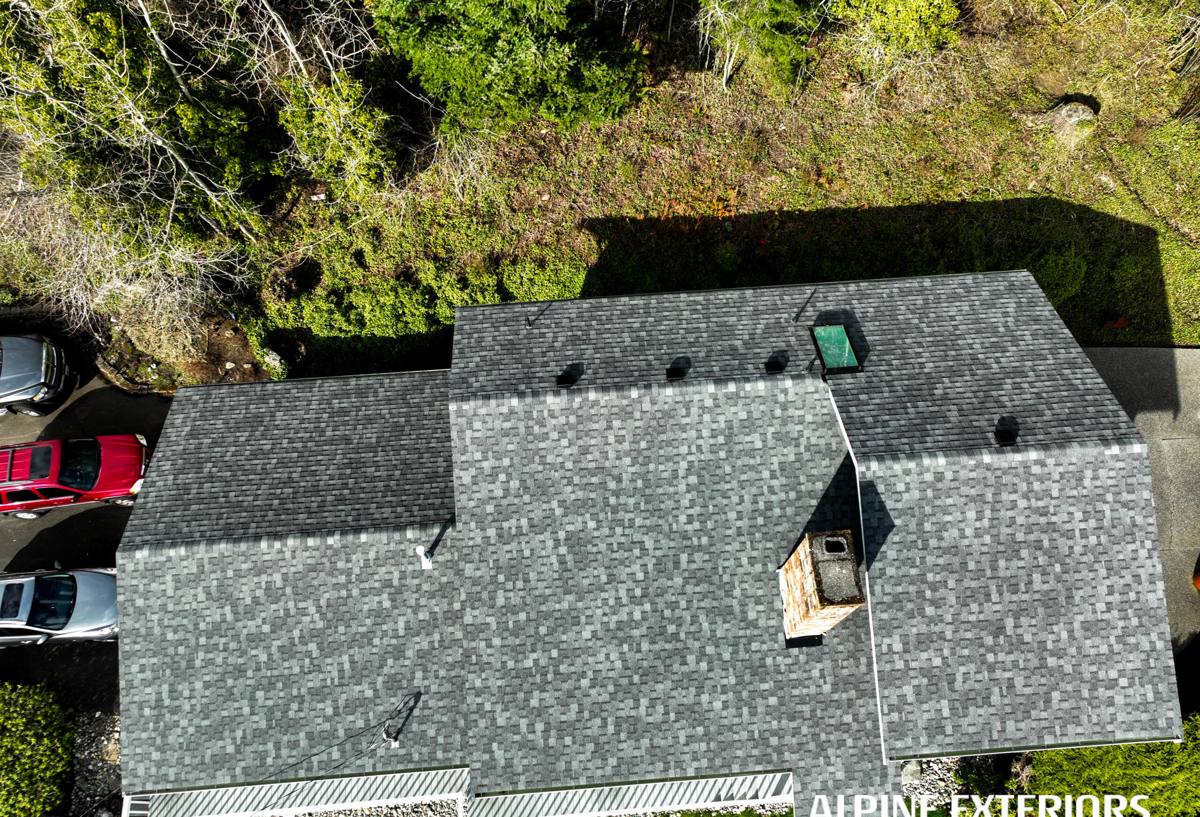
What Whatcom County Weather Does to a Shingle Roof
Asphalt shingles are a proven, affordable roofing material, but they're not indestructible, and the Pacific Northwest is a demanding place to put them to work.
Driving rain and wind
Rain that falls straight down is easy on a roof. Rain that comes in sideways during a winter storm is not — it tests every shingle edge, every nail line, and every flashing detail around chimneys, vents, and valleys. A roof with proper nailing patterns and correctly lapped courses sheds that water. A roof with even a few shingles out of alignment can let water track sideways underneath the shingle field, where it does damage you won't see until it reaches the ceiling.
Moss and organic growth
Whatcom County's damp, mild climate is close to ideal for moss. Once moss gets a foothold on a shingle roof, it holds moisture against the granule surface far longer than open air would, and its root structure works into the gaps between shingle tabs. Over a few seasons that lifts shingle edges, accelerates granule loss, and opens the door for slow leaks — usually well before the shingles have reached the end of their rated life.
Cooler, damper air near the border
Homes near the Canadian border deal with a climate that stays cool and humid for long stretches of the year, which is exactly the environment where a poorly ventilated attic causes problems from the underside of the roof deck — trapped moisture, premature sheathing rot, and shingles that fail from beneath rather than above. That's a ventilation and installation issue as much as a shingle issue, and it's one a lot of roof jobs get wrong.
What a Correct Asphalt Shingle Roof Actually Involves
A shingle roof is a system, not just a layer of shingles nailed to plywood. Skipping any one part of that system shortens the life of the whole roof, even if the shingles themselves are a good product.
The roof deck
Before anything new goes down, the deck underneath gets checked for soft spots, rot, and delamination — usually only visible once the old roofing is off. Any damaged sheathing gets replaced before underlayment goes on. Roofing over a bad deck is one of the most common corners cut in this trade, and it's the one that causes the most expensive problems later.
Underlayment and ice-and-water protection
A synthetic underlayment layer goes over the full deck as the roof's backup water barrier. In vulnerable areas — eaves, valleys, and around penetrations like vents and chimneys — a self-adhering ice-and-water membrane goes down first. This matters more here than in drier climates, because it's the layer that protects the home when wind-driven rain or an ice dam pushes water past the shingle surface.
Flashing
Flashing around chimneys, skylights, walls, and roof valleys is where the majority of roof leaks actually originate — not in the open shingle field. Correct flashing is formed and layered to shed water downhill at every junction, not caulked together as a shortcut. Caulk is a maintenance item; it is not a substitute for properly lapped metal.
Shingle installation
Shingles are nailed within the manufacturer's specified nailing zone, at the correct number of fasteners per shingle, with proper offset between courses so no seam lines up with the seam below it. Rushed installs miss nailing zones or use too few fasteners — a shortcut that's invisible on the day of installation and obvious the first time a windstorm rolls through.
Attic ventilation
Intake vents at the eaves and exhaust at or near the ridge keep air moving under the roof deck. That airflow controls moisture in the attic, helps regulate deck temperature, and protects the underside of the shingles. A new roof installed over an unventilated or under-ventilated attic will underperform its warranty life regardless of shingle quality.
Repair or Replace? What to Look For
Not every roof problem in Sumas means a full replacement. Isolated damage — a lifted ridge cap, a cracked pipe boot, a section of moss-damaged shingles — is often a repair. The signs below help sort out which situation you're in.
- Granules collecting in gutters or at downspout outlets — a sign shingles are wearing past their protective layer
- Shingles that are cupping, curling at the edges, or visibly cracked
- Moss or dark streaking established across large sections of the roof, not just isolated patches
- Soft or spongy spots when the roof deck is walked, which usually means moisture has reached the sheathing
- Daylight visible through the roof deck from inside the attic
- Water stains on ceilings or attic framing, especially after a wind-driven rain event
- Flashing that's rusted, lifted, or separated from the roof surface around chimneys and vents
- A roof that's 18–25+ years old and has never been fully replaced
One or two items on that list, isolated to one area, usually points to a repair. Several items, or damage spread across the whole roof, usually means it's time to talk about replacement before a small problem becomes a ceiling repair.
Our Process, Start to Finish
1. Inspection and honest assessment
We look at the roof from the ground and, when it's safe and useful, up close — shingle condition, flashing, ventilation, and any signs of deck damage. You get a straight answer on whether you're looking at a repair or a replacement, and why.
2. Written estimate
You get a clear scope of work and price before anything is scheduled — what's being removed, what's going back, and what materials are involved. No surprise add-ons sprung on you mid-job.
3. Tear-off and deck inspection
Old roofing comes off down to the deck so it can actually be inspected, not roofed over. Any damaged sheathing is flagged and replaced as part of the job, not treated as a surprise change order.
4. Underlayment, flashing, and shingle installation
Ice-and-water membrane in vulnerable areas, synthetic underlayment across the field, new flashing where needed, and shingles installed to manufacturer nailing specifications — the sequence that actually determines how the roof performs in a storm, not just how it looks the day it's finished.
5. Ventilation check
Intake and exhaust ventilation gets evaluated as part of the job, not assumed to be adequate because the old roof had some. If it needs correcting, that gets addressed while the roof is open.
6. Cleanup and walkthrough
Job site and yard get cleaned of debris and stray nails, and we walk the finished roof with you so you know what was done and what to watch for going forward.
Shingle Options: What Fits a Whatcom County Roof
Not every asphalt shingle product is built the same way, and the right choice depends on your budget, your roof's exposure, and how long you want to go before thinking about it again.
| Shingle Type | Typical Lifespan | Wind & Impact Performance | Best Fit For |
|---|---|---|---|
| 3-tab | 15–20 years | Lower wind rating, thinner profile | Budget-focused replacements, secondary structures |
| Architectural / laminate | 25–30 years | Higher wind rating, better resistance to lifting | Most primary residences in this climate |
| Impact-rated (Class 4) | 25–30+ years | Best resistance to impact and wind damage | Exposed roofs, homeowners prioritizing long-term durability |
For most homes in the Sumas area, architectural shingles offer the best balance — meaningfully better wind performance than 3-tab at a moderate cost increase, which matters on a roof that regularly faces wind-driven rain off the valley. Impact-rated shingles cost more up front but are worth discussing for roofs with heavy tree exposure or homeowners who want to minimize maintenance calls over the life of the roof.
Cost Factors Worth Understanding
We won't quote a number without seeing the roof, but the variables that actually move the price are worth knowing ahead of time so an estimate makes sense when you get it.
- Roof size and complexity — more valleys, dormers, and penetrations mean more flashing work and labor time
- Deck condition — sheathing replacement is a real cost variable and often isn't known until tear-off
- Shingle tier — 3-tab, architectural, and impact-rated products carry different material costs
- Layers being removed — a roof with an existing layer or two costs more to tear off than a single-layer roof
- Ventilation upgrades — adding or correcting intake and exhaust venting adds material and labor
- Accessibility — steep pitch or difficult site access affects labor time and safety equipment needs
Maintaining a Shingle Roof in This Climate
A well-installed roof still needs upkeep in a climate this wet. A few habits go a long way toward getting the full service life out of the investment:
- Keep gutters and downspouts clear so water isn't backing up under the eave line during heavy rain
- Have moss growth treated before it establishes across large sections, not after
- Trim back overhanging branches that keep sections of roof shaded and damp longer than the rest
- After major windstorms, do a visual check — from the ground is fine — for lifted or missing shingles
- Have the roof looked at every few years, not just when there's already a leak
Why a Crew That Already Works Sumas Matters
Roofing work here isn't the same as roofing work in a drier region, and a crew that only occasionally works this far north misses details that matter. Knowing how much ice-and-water protection this climate actually calls for, how aggressive moss pressure gets on a shaded north-facing slope, and how to sequence a tear-off around a stretch of unpredictable weather — that's knowledge built from working Whatcom County roofs repeatedly, not from a general roofing checklist. It also means straightforward scheduling and a crew that's realistic about weather windows instead of promising timelines that don't hold up against local conditions.
If you're weighing a repair against a replacement, or you just want an honest read on where your roof stands, we're happy to take a look. Reach out below for a free, no-pressure estimate — no obligation, just a straight assessment of what your roof needs.