 Blaine
 Peace Arch sits close enough to Boundary Bay and the Strait of Georgia that its roofs live a different life than roofs twenty miles inland. Wind-driven storms roll in off the water with little to slow them down, salt air works on metal and fasteners year-round, and the long, wet Whatcom County shoulder seasons keep moss and moisture problems going almost continuously. A roof here doesn't just need "a repair" after a storm — it needs a repair that accounts for what's coming next.
Why Peace Arch Roofs Take a Different Kind of Beating
Storm damage in this part of Blaine rarely shows up as one clean, obvious problem. It's usually a combination of exposure factors stacking up over years, and a bad storm just exposes the weak point first.
Salt Air and Marine Exposure
Homes close to the water pick up airborne salt that settles on roofing metal, fasteners, and flashing. Over time it accelerates corrosion on anything that isn't properly rated for coastal exposure — exposed nail heads, cheap flashing, and older metal valleys are usually the first things to fail. A storm doesn't cause that corrosion, but it will find it, usually as a leak at the weakest fastener or seam.
Driving Rain Off the Strait
Wind here often pushes rain sideways instead of straight down, which changes how water finds its way into a roof system. Shingles and flashing that would shed a normal vertical rain without issue can still take on water when it's being driven horizontally under tabs, around chimneys, and into valleys. This is why storm repairs in Peace Arch need to focus as much on flashing and underlayment as on the visible shingle damage.
A Long Moss Season
Whatcom County's wet season stretches long enough that moss and algae get a real foothold on north-facing and shaded roof sections. Moss holds moisture against the roofing material, lifts shingle edges, and works its way under flashing over time. A roof already carrying moss going into a storm is more vulnerable — the moss has usually already loosened the seal a storm needs to break through.
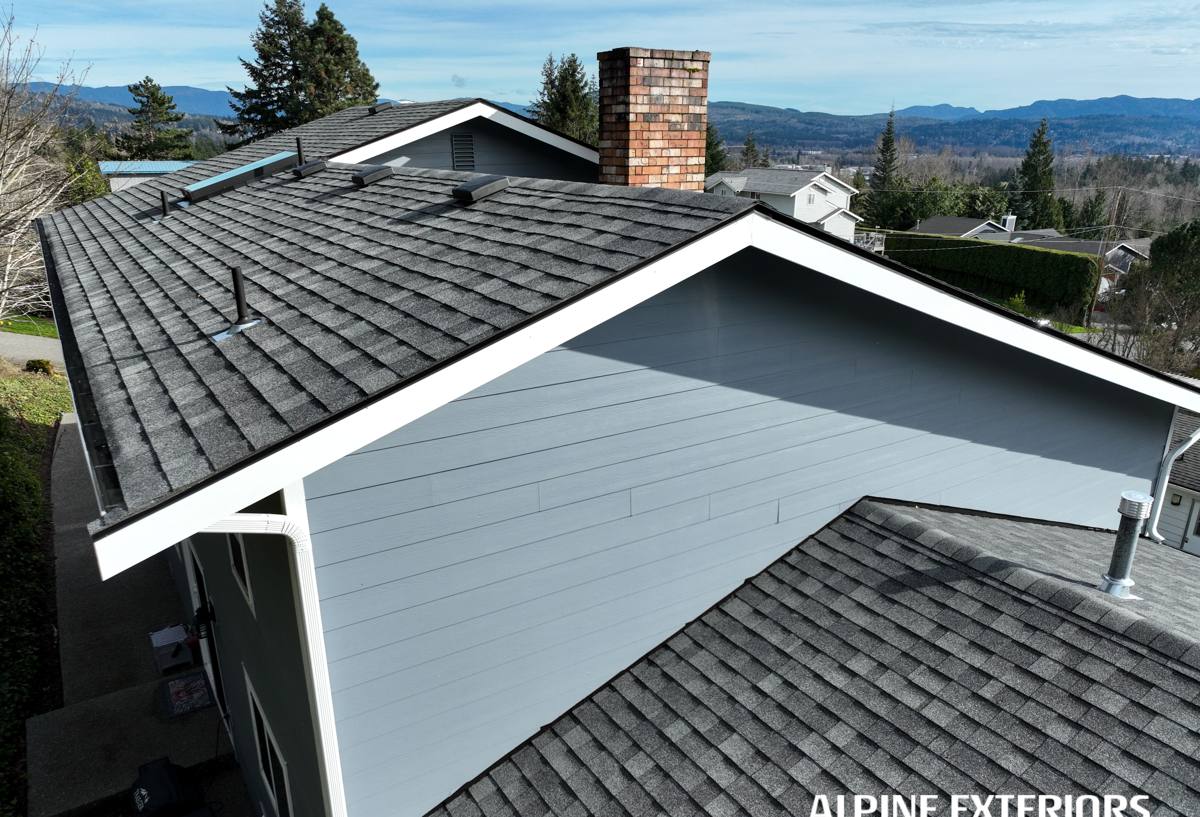
What Counts as Storm Damage (and What Doesn't)
Not every roof problem that shows up after a storm is actually storm-caused, and it matters for both the repair plan and any insurance claim. A straightforward inspection can usually sort out the difference.
- Storm-related: wind-lifted or torn-off shingles, impact damage from falling limbs, flashing pulled loose by wind uplift, sudden new leaks tied to a specific storm date
- Pre-existing and storm-exposed: moss-lifted shingles, worn-out flashing sealant, aged underlayment, granule loss from years of sun and rain
- Not storm damage: gradual wear, poor original installation, ventilation problems, or roofs that were already past their service life
Being honest about which category a problem falls into is part of doing the job right — it's also what an insurance adjuster is going to be checking for.
What a Correct Storm Damage Repair Involves
Inspection First
A proper storm repair starts on the roof, not on a ladder from the ground. That means checking the shingle field, all flashing points (chimneys, valleys, vents, wall intersections), the underlayment where it's exposed, and the attic side for signs of moisture intrusion. Given how often driving rain pushes water sideways here, flashing gets particular attention even when the visible shingle damage looks minor.
Repair vs. Full Section Replacement
Sometimes a handful of shingles and a flashing reseal is genuinely enough. Other times the damage is spread across enough of a slope, or the underlying material is degraded enough, that patching would just mean another call in a year. The honest answer depends on the extent of the damage, the age and condition of the surrounding roofing, and whether the repair can actually be made watertight and match the existing roof properly.
| Factor | Localized Repair Usually Works | Full Section Replacement Usually Needed |
|---|---|---|
| Damage spread | A few shingles or one flashing point | Damage scattered across most of a slope |
| Roof age | Roof is under roughly 10-12 years old | Roof is near or past typical service life |
| Underlayment condition | Dry, intact where exposed | Wet, degraded, or showing rot underneath |
| Matching materials | Discontinued shingle can still be closely matched | Shingle line is unavailable or badly weathered/faded |
| Typical cost range | Roughly $400–$1,500 for most localized repairs | Roughly $1,500–$5,000+ depending on slope size and material |
These ranges are general and vary with roof pitch, access, material, and how much decking (if any) needs to be replaced underneath — a firm number only comes after someone has actually been on the roof.
Our Process for Peace Arch Storm Repairs
- Assessment: full roof and attic inspection, with photo documentation of every damage point found
- Scope and options: a plain explanation of what's storm-related, what repair approach fits, and a written estimate before any work starts
- Temporary protection: if there's active leaking, we get the roof weathertight first so the interior of the home isn't taking on more damage while the full repair is scheduled
- The repair itself: matching shingles and flashing correctly, resealing and re-fastening to current standards, and checking that water is actually shedding the way it should before we call it done
- Final walkthrough: we show you what was done and why, not just hand you an invoice
Materials and Fastening Standards We Hold To
Given the salt air and wind exposure around Peace Arch, we don't cut corners on the details that don't show up in a curb-side look at the roof. That means corrosion-resistant fasteners rather than standard-grade ones, properly lapped and sealed flashing rather than caulk-only patch jobs, and underlayment that's actually rated for the moisture load this area gets. None of that is exotic — it's just the baseline we hold ourselves to because we've seen what happens when a repair skips it. A repair that looks fine for six months but fails the following storm season isn't a repair, it's a delay.
Insurance Claims and Storm Documentation
Many storm repairs in this area end up going through homeowners insurance, especially after a named windstorm or a significant wind event off the water. We document damage thoroughly — photos, notes on cause, and a clear scope of work — so homeowners have what they need for a claim. We're not a public adjuster and we don't negotiate the claim for you, but we'll give you a straightforward, honest assessment of what's storm-caused and what isn't, which is usually the sticking point in these conversations.
Why Hiring a Crew That Already Works Peace Arch Matters
A roofer who's worked other parts of Whatcom County but not this specific stretch near the water can still do competent general roofing work — but they may not think to check the things that matter most here: corrosion at fastener points, flashing detail on the windward side of the house, or moss buildup in the shaded valleys that's common on this kind of lot. Familiarity with how storms actually move through Blaine and Peace Arch — which slopes take the worst of the wind, where driving rain tends to find its way in — means less guessing and a repair that's built for the next storm, not just patched for the last one.
Maintenance That Keeps the Next Storm From Doing More Damage
A storm-damaged roof is often a roof that had smaller problems already working against it. A few basic habits go a long way toward keeping small issues from becoming storm emergencies:
- Keep gutters and downspouts clear so wind-driven rain has somewhere to go besides under the shingles
- Have moss treated or removed before it lifts shingle edges, especially on shaded north-facing slopes
- Trim back tree limbs that could come down on the roof in high wind
- Get flashing around chimneys and vents checked every couple of years, not just after something leaks
- Walk the attic after any major storm and look for new water stains, even if nothing looks wrong from outside
When to Call for an Inspection
You don't need visible damage to justify a look after a significant storm. Missing granules in the gutters, a slow new drip during heavy rain, or shingles that look slightly out of line from the ground are all reasons to have someone check before the next storm turns a small problem into a bigger one. Waiting until there's a stain on the ceiling usually means the damage has already spread past the roof and into the structure underneath it.
If a recent storm has left you with damage — or you're just not sure whether what you're seeing is worth worrying about — we're happy to take a look. Fill out the form below for a free, no-pressure estimate on your Peace Arch home.