 Blaine
 Roofing on Blaine Harbor: A Different Set of Rules
Homes along Blaine Harbor sit closer to the water than almost anywhere else in Whatcom County, and that proximity changes what a roof has to survive. Salt-laden air off the harbor and the Strait works into fasteners, flashing, and vent metal in a way that inland Blaine and Custer roofs never have to deal with. Add the region's long, wet moss season and the driving, wind-pushed rain that comes off the water during winter storms, and you get a roofing environment that punishes shortcuts fast. A roof that's fine in a sheltered neighborhood a few miles inland can fail early right on the harbor if it wasn't built with that exposure in mind.
This page is about one job, done right, in this one area: full roof replacement for Blaine Harbor homes. Not a general overview of roofing — the specific decisions that matter when your roof deck is a few hundred yards from saltwater.
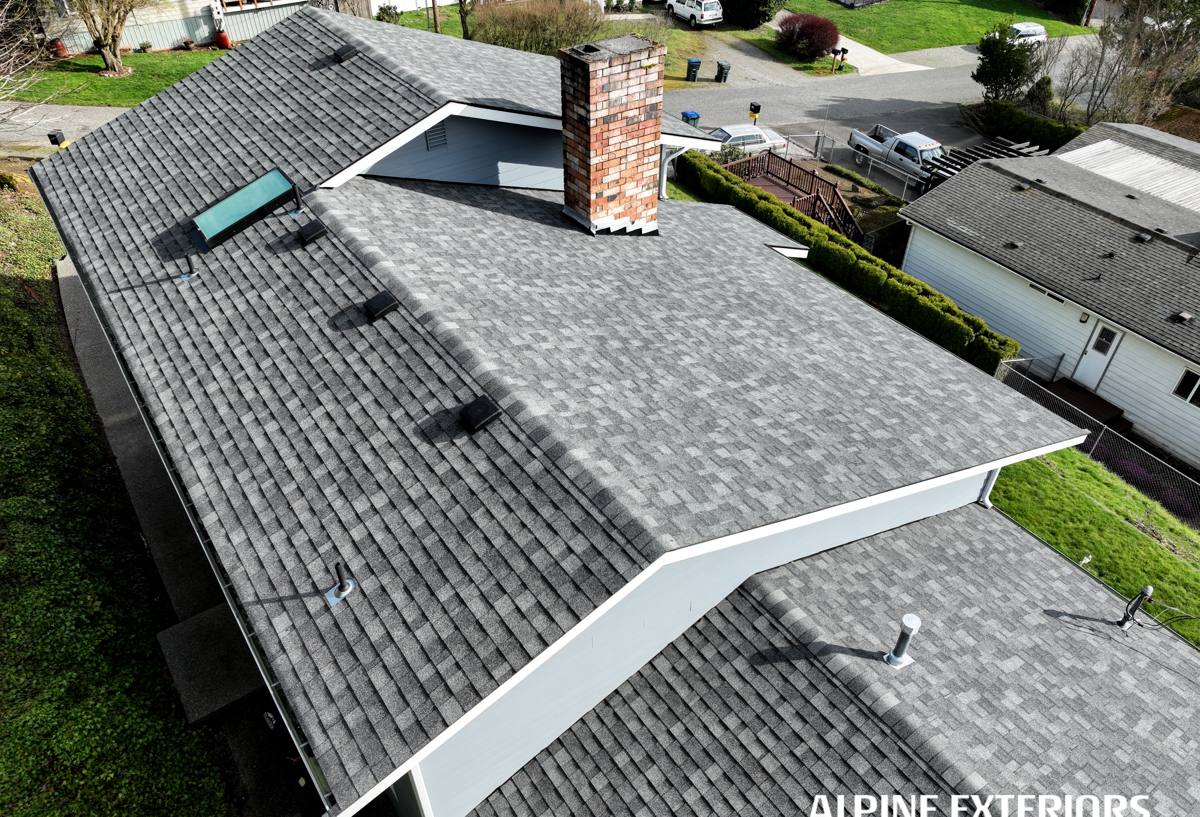
What Blaine Harbor's Climate Actually Does to a Roof
Salt Air and Corrosion
Airborne salt accelerates corrosion on anything metal — nail heads, flashing, drip edge, vent stacks, and gutter hardware. Standard electro-galvanized fasteners that hold up fine 20 miles inland can start rusting at the head within a few years on a harbor-facing roof. Once a fastener corrodes, its grip on the shingle or panel weakens, and that's usually where the first leaks start — not in the field of the roof, but at the edges and penetrations where corrosion-prone metal was used.
Driving Rain and Wind-Driven Water
Blaine Harbor gets weather straight off the water with little to break it up. Rain here doesn't just fall — it's pushed sideways under eaves, up under shingle tabs, and into any flashing gap that a calmer inland roof would never test. This matters most at valleys, chimney flashing, and low-slope transitions, where wind-driven water finds any weakness in the underlayment or flashing detail.
Moss and Sustained Moisture
The long moss season in this part of Whatcom County means north-facing slopes and shaded sections of roof stay damp for months at a time. Moss holds moisture against the roofing material, works its way under shingle edges, and, left unchecked, lifts material and opens the door for water intrusion. It also adds weight and can clog gutters and valleys, backing water up under the roofline.
What a Correct Roof Replacement Looks Like Here
A roof replacement for a Blaine Harbor home isn't just "the same job, but by the water." Several details change because of the exposure:
- Corrosion-resistant fasteners and flashing — stainless or heavier-coated hardware at exposed edges and penetrations, not standard electro-galvanized, especially on the harbor-facing slopes.
- Fully sealed underlayment system — synthetic underlayment with taped or sealed laps, plus self-adhered ice-and-water membrane at eaves, valleys, and around every penetration, so wind-driven rain that gets past the surface layer still has nowhere to go.
- Wider valley and flashing coverage — extra width and sealant at valleys and step flashing, since these are the points wind-driven rain tests hardest.
- Balanced ventilation — intake and exhaust venting sized correctly so moist air isn't trapped under the deck, which matters even more in a climate that's already damp most of the year.
- Material chosen for moss resistance — algae-resistant shingle granules or metal roofing on shaded slopes, so the north side of the roof isn't fighting moss growth within the first couple of years.
Roofing Material Options for Harbor-Exposed Homes
There's no single "best" roofing material for every Blaine Harbor home — it depends on the roof's slope, sun exposure, and your budget and maintenance preferences. Here's how the common options actually perform under this area's conditions:
| Material | Salt Air Behavior | Moss Resistance | Typical Lifespan Here |
|---|---|---|---|
| Architectural asphalt shingle (algae-resistant) | Good, if flashing/fasteners are upgraded | Good with AR granules; needs periodic cleaning on shaded slopes | 20–30 years |
| Standing seam metal (coated steel or aluminum) | Very good with marine-grade coatings and stainless fasteners | Excellent — smooth surface sheds moss | 40–50+ years |
| Composite/synthetic shingle | Good; check manufacturer's coastal warranty terms | Good, similar to AR asphalt | 30–50 years |
| Cedar shake | Poor without diligent maintenance — moisture and salt accelerate decay | Poor — highly prone to moss without regular treatment | Highly variable; heavy upkeep near the harbor |
We'll generally steer harbor-facing homeowners away from untreated cedar shake and toward AR asphalt, composite, or metal — not because cedar can't be a fine roof in the right setting, but because the maintenance burden it carries in this specific salt-and-moss environment is a lot higher than most owners expect going in. We'll always explain the trade-offs honestly rather than push one product.
Our Roof Replacement Process
- On-site inspection. We walk the roof (or use a drone where pitch or access makes that unsafe), check the deck for soft spots or rot, look at current flashing and ventilation, and note anything specific to your home's exposure to the water.
- Written estimate. Material options, scope, and price laid out clearly — no vague allowances that turn into surprise add-ons later.
- Deck inspection and repair. Once the old roofing is off, we inspect the deck itself. Any soft, rotted, or delaminated sheathing gets replaced before anything new goes down — no roofing over a compromised deck.
- Underlayment and flashing installation. Ice-and-water membrane at vulnerable areas, synthetic underlayment across the field, and new flashing at every valley, wall, and penetration.
- Roofing material installation. Installed to manufacturer spec, with fastening and flashing upgraded for the salt air exposure discussed above.
- Ventilation check. We confirm intake and exhaust venting are balanced for your home's attic or roof structure.
- Final walkthrough and cleanup. Magnetic sweep for stray fasteners, debris hauled off, and a walkthrough so you know what was done and what to expect going forward.
Signs a Blaine Harbor Roof Needs Replacing, Not Patching
- Granule loss heavy enough that you're finding grit in the gutters regularly
- Shingles cupping, curling, or lifting at the edges — often worse on the harbor-facing slope
- Rust streaking from nail heads, flashing, or vent stacks
- Moss established thick enough that it's lifting shingle edges, not just sitting on the surface
- Soft spots or sagging when walked, which usually signals deck damage underneath
- Leaks that keep reappearing near valleys or flashing after prior patch repairs
- Roof is past 20–25 years old (asphalt) with no major upgrades to flashing or ventilation
A patch can buy time for one or two of these issues in isolation. Once several show up together, it's usually a sign the underlying materials and flashing system are past the point where patching is the economical choice.
Cost Factors for Harbor-Area Roof Replacement
Every roof is different, but the price of a replacement here is driven by a consistent set of factors:
| Factor | Why It Matters Here |
|---|---|
| Roof size and complexity | More valleys, dormers, and penetrations mean more flashing work — and flashing is where harbor exposure does the most damage. |
| Deck condition | Sustained moisture from the moss season sometimes means hidden deck rot that isn't visible until tear-off. |
| Material choice | Asphalt, composite, and metal carry different upfront costs and very different long-term maintenance near the water. |
| Fastener and flashing upgrades | Corrosion-resistant hardware costs more than standard, but it's the difference-maker for a harbor-facing roof's lifespan. |
| Access and pitch | Steeper roofs and tighter lot access (common on view lots near the water) affect labor time and staging. |
Why It Matters That We Already Work Blaine Harbor
A roofing crew that mostly works inland projects doesn't always think to spec stainless fasteners, wider valley flashing, or salt-tolerant materials — because they haven't had to watch standard-spec roofs fail early right on the water. Working Blaine Harbor regularly means we've seen where salt air and driving rain actually cause problems on homes like yours, and we build the replacement to account for it up front rather than fixing it as a warranty callback two years in. It also means we know this stretch of Whatcom County's weather patterns well enough to plan install timing around the wetter stretches of the year, so the roof goes on dry and cures properly before the next storm system moves through.
Maintaining Your New Roof in a Harbor Environment
- Have moss treated or removed at least once a year, especially on shaded, north-facing slopes
- Keep gutters clear so wind-driven rain and moss debris don't back water up under the roofline
- Rinse accumulated salt film off the roof surface periodically if your home is directly harbor-facing
- Have flashing and fastener condition checked every few years, since corrosion here moves faster than the shingles themselves wear out
- Address small leaks immediately — in this climate, a small gap becomes a bigger problem faster than in drier inland areas
If you're weighing a roof replacement for a Blaine Harbor home, we're glad to come take a look, walk the roof, and give you a straightforward, no-pressure estimate — including which materials and details make sense for your home's specific exposure to the water. There's a form below to get that scheduled.