 Blaine
 Storm Damage Roof Repair for Everson Homes
When wind and rain roll through Whatcom County, roofs take the brunt of it. Homes in and around Everson deal with a specific mix of weather stress: gusty fronts that lift and crack shingles, driving rain that finds every weak seam, and a long stretch of the year when roofs simply never fully dry out. That last part matters more than most homeowners realize. A roof that stays damp for months at a time behaves differently than one that gets a quick storm and then bakes dry in the sun. It holds moisture longer, grows moss faster, and lets small storm damage turn into rot before anyone notices.
This page is about one job, done right, in one area: storm damage roof repair for Everson. Not a full re-roof pitch, not a generic "we fix roofs" page. If a windstorm lifted shingles, a branch came down on a slope, or you've got a stain spreading across a ceiling after the last heavy rain, this is what an honest, correctly done repair looks like and why it matters who does it.
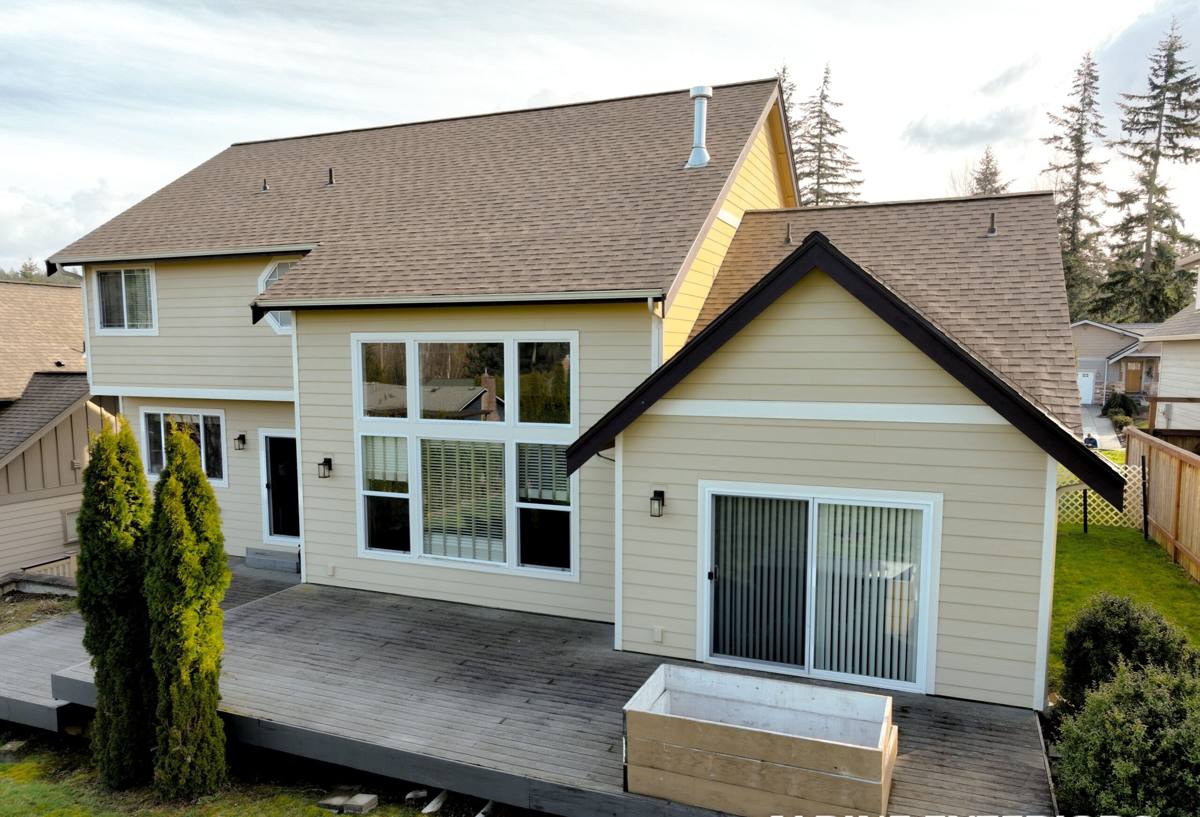
Why Storm Damage Here Isn't Like Storm Damage Everywhere
Roofing problems don't look the same in every climate, and treating a Whatcom County roof like it's in a dry inland state is how repairs fail early. A few things are working against local roofs at the same time:
- Wind-driven rain, not just rain. Storms here often push rain sideways under the wind, which forces water into gaps that would stay dry in a straight downpour — lifted shingle tabs, loose flashing edges, and nail heads that have backed out even slightly.
- Salt-tinged marine air. Being close to the water means metal flashing, fasteners, and vent components corrode faster than the same materials would inland. A fastener that's rusted through is a leak waiting to happen, storm or no storm.
- A long moss season. Cool, damp conditions for much of the year give moss and algae months to establish themselves. Moss doesn't just look bad — it holds water against the shingle surface and works its way under tabs, which is exactly where storm-loosened shingles are most vulnerable.
- Freeze-thaw swings. Whatcom County doesn't get brutal winters, but it does get enough freeze-thaw cycling that water trapped in a cracked shingle or seam can expand, contract, and widen the damage over a season.
None of this means Everson roofs are fragile. It means storm damage repair here has to account for moisture retention and material corrosion in a way a repair in a drier climate doesn't.
What Actually Counts as Storm Damage
The obvious kind
Missing shingles, a tree limb through the decking, torn ridge cap, a section of roof that's visibly displaced — this is easy to spot from the ground and usually gets a homeowner to call right away.
The kind that gets missed
Most of the storm damage we actually repair isn't dramatic. It's a shingle tab that got lifted and never sealed back down, a nail that backed out half an inch during high wind and is now a pinhole leak path, flashing around a chimney or vent pipe that pulled loose just enough to let water track in during the next storm, or granule loss from wind-blown debris that thins a shingle's protective layer without breaking it outright. These are the repairs that matter most, because they're the ones that turn into rot, mold, or a ceiling stain if they sit through a second or third storm before anyone addresses them.
What we look for during an inspection
- Lifted, cracked, or missing shingle tabs, especially on roof faces exposed to prevailing wind
- Flashing separation around chimneys, skylights, vent pipes, and roof-to-wall transitions
- Exposed or backed-out fasteners
- Soft spots or discoloration in the decking, visible from the attic side when accessible
- Moss and debris buildup in valleys, where water concentrates and damage tends to hide
- Gutter and downspout damage that can redirect water back under the roof edge
What a Correct Repair Actually Involves
A storm repair that's done right isn't just "replace the shingle you can see." It's a sequence, and skipping steps is how a repair looks fine for a season and then leaks again.
1. Inspect past the visible damage
We check the area around the obvious damage, not just the spot itself. Wind rarely lifts a single shingle in isolation — the surrounding tabs and seals are usually stressed too, even if they haven't failed yet.
2. Check the decking
If water has been getting in for any length of time, the plywood or OSB decking underneath can be soft or delaminating. Replacing shingles over damaged decking doesn't fix anything — it just covers up the real problem until it fails again, usually during the next storm.
3. Replace or restore the underlayment
The underlayment is the actual waterproof layer beneath the shingles. If it's torn or compromised in the repair area, it gets replaced, not patched over.
4. Match materials correctly
Shingle color and profile matching matters for appearance, but the more important match is compatibility — using fasteners, flashing, and sealants rated for the same exposure conditions as the original install so the repair ages at the same rate as the surrounding roof.
5. Re-seal and reinforce flashing
Given how much local leak activity traces back to flashing rather than shingles themselves, we treat flashing as its own checkpoint, not an afterthought to shingle work.
6. Clean up debris and moss in the repair zone
Leaving moss or granule debris in a valley or seam next to a fresh repair undermines it. Storm repair and basic moss/debris clearing in the immediate work area go together.
Our Process, Start to Finish
- Call or request an estimate. Tell us what you're seeing — a leak, visible damage, or just a storm that had you worried.
- On-site inspection. We look at the roof itself, not just the ceiling stain, and we check the attic side when it's accessible, since that's often where the real story is.
- Plain-English explanation. You get a clear description of what's actually damaged, what's precautionary, and what can wait if you're on a budget.
- Written estimate. No surprise add-ons once work starts. If we find something once we open up the repair area, we tell you before proceeding, not after.
- Repair. Decking, underlayment, flashing, and shingles addressed in that order, matched to your existing roof.
- Final check and cleanup. We confirm the repair area is sealed correctly and haul away debris — no nails or shingle scraps left in the yard or gutters.
Repair vs. Replace: How We Help You Decide
Not every storm-damaged roof needs a full replacement, and not every repair is the right long-term call. The honest answer depends on the roof's age, how widespread the damage is, and how much of the roof's remaining service life is left.
| Factor | Favors Repair | Favors Replacement |
|---|---|---|
| Roof age | Under 12–15 years, shingles otherwise in good shape | Near or past typical shingle lifespan |
| Damage extent | Isolated to one section or slope | Spread across multiple slopes or recurring in different spots |
| Decking condition | Solid, no soft spots found | Soft, delaminated, or repeatedly wet decking |
| Moss/algae history | Manageable with cleaning and minor repair | Long-term moss damage already undermining multiple areas |
| Insurance situation | Damage limited enough that repair is the covered scope | Adjuster and inspection support full replacement |
We'll always tell you honestly which side of that table your roof falls on. A repair that's the right call saves you money; a repair that's the wrong call just delays a bigger bill.
Insurance and Documentation
Storm damage is often the kind of repair that homeowners insurance covers, depending on your policy and the cause of loss. We're not adjusters and won't promise coverage outcomes, but we can document what we find with photos and a written description of the damage, which is the kind of record that makes an insurance claim go smoother. If you're planning to file a claim, it's worth getting an inspection soon after the storm — damage that sits for weeks can raise questions about whether it happened during the storm event or afterward.
Why a Crew That Already Works Everson Matters
Roofing work benefits from local familiarity in ways that aren't always obvious until something goes wrong. A crew based in Blaine and working regularly in Everson and the surrounding Whatcom County area already knows what the region's wind patterns, rain exposure, and moss growth actually do to roofs over time — not from a textbook, but from repeat jobs. That means faster, more accurate diagnosis instead of guesswork, and it means we can get to a leak quickly after a storm instead of you waiting behind a crew that has to drive in from out of the area. It also means accountability: if a repair needs a follow-up check after the next storm season, we're not far away.
Simple Roof Maintenance That Prevents the Next Storm Call
A lot of storm damage repair calls could have been smaller jobs if a few basic things were kept up with. Between storms, this is worth doing or having checked:
- Clear moss and debris from valleys and roof edges before it builds up into a water-holding mat
- Keep gutters and downspouts clear so storm runoff doesn't back up under roof edges
- Trim back branches that overhang the roof — they're the most common source of impact damage in wind events
- Have flashing around chimneys, skylights, and vents visually checked every couple of years, since these fail before shingles usually do
- Address small leaks or stains as soon as they appear rather than waiting to see if they get worse
None of this replaces a professional inspection after a real storm, but it reduces how much a storm can actually damage in the first place.
Get an Honest Look at Your Roof
If a recent storm left you with missing shingles, a new leak, or just a nagging feeling that something's not right up there, it's worth having it looked at before the next round of weather moves through. We offer free, no-pressure estimates for Everson homeowners — we'll tell you plainly what we find, what it needs, and what it doesn't. Fill out the form below to get started.