 Blaine
 What Everson Roofs Are Up Against
A roof in Everson has to handle a different combination of stress than a roof somewhere dry and inland. Whatcom County sits under a long wet season, and homes here are exposed to a mix of salt-influenced coastal air moving in off the Strait of Georgia and Puget Sound, driving wind-blown rain, and enough shade and moisture to grow moss on almost any roof that isn't maintained. None of these factors are dramatic on their own. Together, over ten or fifteen years, they're what determines whether a roof lasts its full rated life or starts failing early.
Salt Air and Moisture
You don't have to live right on the water to feel the effects of a marine climate. Salt-laden air moves inland with the wind, and over time it accelerates corrosion on exposed metal — fasteners, flashing, vents, gutters. A roof installed without corrosion-resistant materials in the right places will show rust streaking and metal fatigue years before a roof built with that exposure in mind.
The Long Moss Season
Whatcom County's combination of shade, moisture, and mild temperatures is close to ideal for moss growth. Moss isn't just cosmetic. It holds water against the roofing surface, lifts shingle edges as it grows, and works its way under laps and around fasteners. A roof that isn't detailed and maintained with moss in mind will trap moisture in exactly the spots where leaks start.
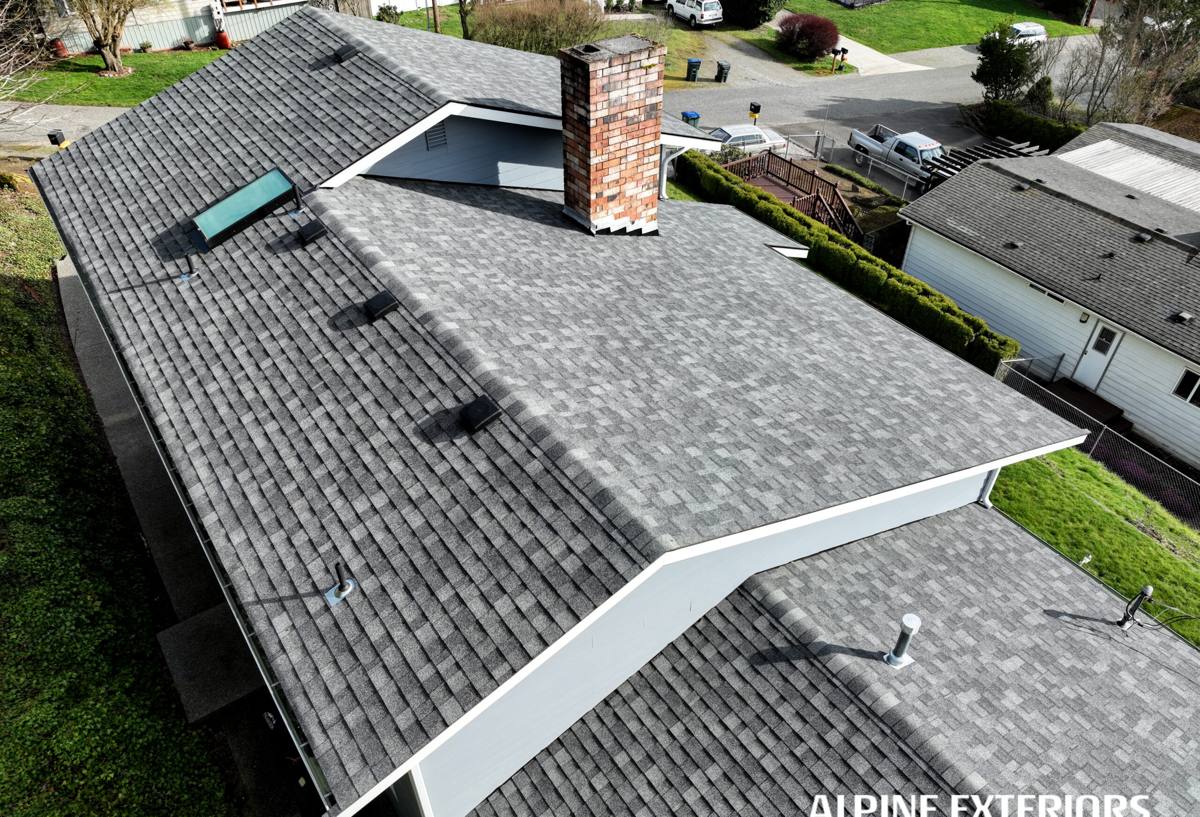
Signs an Everson Home Needs a New Roof, Not Just a Repair
Not every roof problem calls for full replacement, and we won't tell you it does. But there's a point where patching becomes a waste of money. Here's how we help homeowners tell the difference:
- Granule loss heavy enough that you can see bare asphalt on multiple slopes, not just one worn spot
- Shingles that are cupping, curling, or cracking across large sections rather than isolated tabs
- Soft or spongy decking felt underfoot when walked, which usually means water has already gotten into the plywood
- Repeated leaks in different locations each year, rather than one recurring spot that can be flashed and fixed
- Moss that has been scraped or treated repeatedly but keeps coming back thicker, a sign the underlying surface is already degraded
- A roof approaching or past the manufacturer's rated lifespan, especially one that has never had ridge or attic ventilation upgrades
If a roof is showing one or two of these, a repair is often the honest answer. If it's showing several at once, replacement is usually the more cost-effective path — repeated repairs on a failing roof add up fast without solving the underlying problem.
What a Correct New Roof Installation Actually Involves
"New roof" gets used loosely. A correct installation is a sequence of steps, and skipping or rushing any one of them is where problems start showing up two or three winters later.
Tear-Off and Deck Inspection
We remove the existing roofing down to the deck rather than layering over it. That's the only way to actually see what's underneath — soft spots, rot, or old damage that a layover would just hide. Any damaged decking gets replaced before anything new goes down. This step matters more in a climate like ours, where trapped moisture under an old roof is common.
Underlayment That Matches the Climate
Underlayment is the roof's backup layer if wind, ice, or wind-driven rain gets past the primary roofing material. In a region with driving rain, we pay particular attention to ice and water shield in the vulnerable areas — eaves, valleys, around penetrations — and a synthetic underlayment across the rest of the deck rather than older felt products that break down faster under repeated wetting.
Ventilation
A roof deck that can't breathe traps moisture from inside the house against the underside of the roofing material. Combined with our climate, that's a recipe for premature deck rot and, ironically, more moss and algae growth from the inside out. Proper intake and exhaust ventilation is part of a correct installation, not an optional upgrade.
Flashing and Detail Work
Most roof leaks don't happen in the open field of the roof — they happen at transitions: chimneys, skylights, walls, valleys, and vent penetrations. This is where careful, unhurried flashing work pays off. It's also the area most likely to be rushed on a cheap installation, because it's slower and more labor-intensive than laying field shingles.
Choosing Roofing Materials for Whatcom County Conditions
There's no single "best" roofing material — there's a best material for your home, your budget, and how much maintenance you want to take on. Here's how the common options compare for a climate with salt air, heavy rain, and moss pressure:
| Material | Moisture & Rain Performance | Moss Resistance | Salt Air Durability | Typical Maintenance |
|---|---|---|---|---|
| Architectural asphalt shingle | Good, when properly underlaid and ventilated | Moderate — benefits from algae-resistant granules | Good with corrosion-resistant fasteners and flashing | Periodic moss treatment and gutter clearing |
| Standing seam metal | Excellent — sheds water fast, minimal seams | Very good — moss struggles to hold on a smooth, steep-shed surface | Depends on coating; a marine-rated finish matters here | Low; occasional fastener and coating check |
| Cedar shake | Requires diligent maintenance to perform well in wet climates | Poor without regular treatment — wood holds moisture and feeds moss | Fair; hardware needs to be corrosion-resistant | High — regular cleaning, treatment, and inspection |
| Synthetic/composite shingle | Good; engineered to resist moisture absorption | Moderate to good, product-dependent | Good | Low to moderate |
We install asphalt and metal roofing for the majority of Everson and Blaine homes because both hold up well against this specific mix of rain, salt air, and moss when installed correctly. We're honest that cedar shake, while attractive, asks a lot of ongoing maintenance from the homeowner in this particular climate — that's a trade-off worth knowing before you commit to it, not a knock on the material itself.
Our Installation Process, Start to Finish
We keep the process straightforward so you know what's happening and when:
- On-site inspection and honest assessment of whether you need repair or replacement
- Written estimate covering materials, labor, disposal, and any deck repair contingencies
- Material selection walkthrough based on your budget and how much upkeep you want going forward
- Scheduling around weather windows — we don't install in conditions that compromise the seal
- Full tear-off, deck inspection and repair, underlayment, ventilation, and roofing installation
- Flashing and detail work at every penetration, valley, and transition
- Site cleanup, including magnetic sweep for nails and debris removal
- Final walkthrough so you can see the finished work before we call the job done
What a New Roof Costs, and What Drives the Price
Every roof is different, so we won't quote a number without seeing the house — but the main cost drivers are consistent from job to job:
- Roof size and pitch — steeper roofs take longer and require more safety equipment
- Number of layers to remove and whether decking needs repair or replacement
- Material choice, from standard architectural shingle up through metal roofing
- Complexity of the roofline — valleys, dormers, chimneys, and skylights all add labor
- Ventilation and flashing upgrades needed to bring an older roof system up to current standards
Broadly, asphalt shingle replacement tends to run less per square foot than standing seam metal, but metal's longer service life and lower long-term maintenance can close that gap over the life of the roof. We'll walk through the real numbers for your specific roof during the estimate rather than giving you a figure that doesn't match your house.
Why Hire a Crew That Already Works in Everson and Blaine
Roofing crews that mostly work drier climates tend to build to a generic standard — because most of the time, that's good enough where they are. That standard isn't good enough here. A crew that regularly works Whatcom County roofs already knows to spec ice and water shield in the right places, use corrosion-resistant fasteners without being asked, and detail flashing for driving rain rather than occasional showers. That knowledge comes from repetition, not from a manufacturer's install manual alone.
There's also a practical side to hiring local: warranty service, follow-up questions, and any adjustments after a hard winter are easier when the crew that installed your roof is a short drive away, not a company that did one job in the area and moved on.
Keeping Your New Roof Performing After Installation
A correctly installed roof still benefits from basic upkeep, especially in a moss-prone climate:
- Keep gutters clear so water isn't backing up under the eaves
- Have moss growth treated before it establishes rather than after it's visible from the street
- Trim back overhanging branches that keep sections of the roof shaded and damp
- Schedule a quick inspection after major windstorms to catch lifted flashing or displaced shingles early
None of this is intensive, but skipping it is how a well-installed roof still ends up with an avoidable leak five or six years in.
If your Everson or Blaine home needs a new roof, or you're not sure yet whether it's a repair or a replacement situation, we're happy to take a look and give you a straight answer. Reach out for a free, no-pressure estimate using the form below.