 Blaine
 Storm Damage Roof Repair for Custer Homes
Custer sits in an exposed stretch of Whatcom County between Blaine and Ferndale, where open farmland and a short run to the water mean roofs take weather straight on. When a windstorm rolls through or a heavy Pacific system dumps rain for days, Custer homes often show damage that a quick look from the ground won't catch. Missing shingles are obvious. Lifted flashing, saturated underlayment, and moss-clogged valleys are not, and those are the problems that turn into interior leaks weeks after the storm has passed.
This page covers what storm damage roof repair actually involves for homes in and around Custer — what the local climate does to a roof over time, what a correct repair looks like, and how our process works from the first call to the final cleanup.
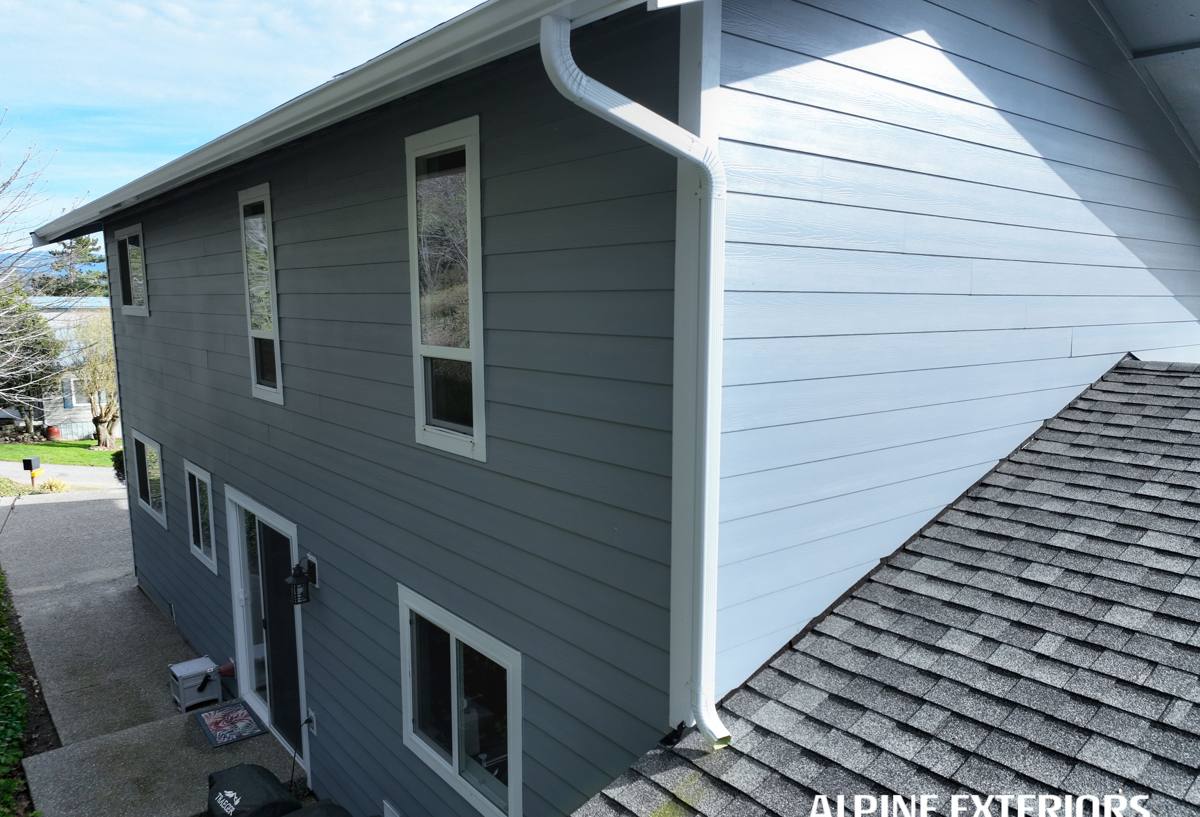
What Custer's Weather Does to a Roof
Three things define roofing conditions out here, and they compound each other.
Salt Air
Custer's proximity to Semiahmoo Bay and the Strait of Georgia puts a steady trace of salt in the air. Over years, that accelerates corrosion on exposed metal — flashing, fasteners, gutter hangers, and vent caps. A fastener that would last decades inland can start weeping rust stains onto a roof much sooner here, and a corroded fastener is a fastener that no longer holds a shingle down in a gust.
Driving Rain
Storms coming off the water don't just drop rain straight down — they push it sideways under shingle edges, into valleys, and behind flashing that's even slightly loose. A roof that would shed a gentle rain fine can still take on water during a driving storm if the underlayment and flashing details aren't right. This is why so much storm damage shows up as a leak days after the wind has died down, not during the storm itself.
A Long Moss Season
Whatcom County's mild, wet stretch from fall through spring gives moss months to establish itself on north-facing slopes and shaded roof sections. Moss holds moisture against the shingle surface, works its way under tabs, and adds weight. A moss-covered roof going into a windstorm is already weakened — moss-lifted shingles tear loose far more easily than a clean roof would.
Signs You Might Have Storm Damage
Not all storm damage is visible from the driveway. After any significant wind or rain event, it's worth checking for:
- Shingles that are missing, cracked, curled at the edges, or creased from wind flex
- Granules collecting in gutters or at downspout outlets — a sign of shingle surface wear
- Bent, lifted, or missing flashing around chimneys, skylights, and roof-to-wall junctions
- Water stains or discoloration on interior ceilings, especially near exterior walls
- Sagging or soft-feeling sections of roof deck, which can indicate trapped moisture
- Debris — branches, needles, or leaf litter — packed into valleys or behind chimneys
- Gutters pulled away from the fascia or full of shingle granules and debris
If you notice any of these, especially staining inside the home, it's worth getting a roof looked at before the next storm rather than after.
What a Correct Storm Damage Repair Involves
Inspection Before Anything Else
A proper repair starts with getting on the roof, not just looking at it with binoculars from the ground. That means checking the full field of shingles, all flashing points, valleys, vents, and the edges where wind damage tends to start. We also check the attic when accessible, since interior moisture staining tells us things the roof surface won't.
Temporary Protection When Needed
If a roof has active exposure — missing shingles or torn underlayment letting water in — the first priority is a temporary cover to stop further damage while the permanent repair is scheduled. This isn't a substitute for the real fix; it buys time so the interior of the home isn't taking on water while materials or scheduling are worked out.
Matching Materials and Doing the Detail Work Right
Patching a section of roof isn't just swapping in new shingles. It means matching the existing shingle profile and color as closely as possible, replacing underlayment in the repaired area rather than just the top layer, and rebuilding flashing details — step flashing, counter-flashing, valley metal — to shed water correctly rather than just covering the hole. A repair that skips the flashing work usually leaks again within a season or two.
Cleanup That Doesn't Leave a Mess Behind
Storm repair work should leave the property in better shape than it found it — old materials hauled off, nails and debris cleared from gutters and the ground with a magnetic sweep, and the work area left clean.
Our Process
- Call or request: Tell us what happened and what you're seeing — missing shingles, a leak, storm damage you're not sure how to assess.
- On-site inspection: We get on the roof, document the actual condition, and identify everything that needs attention, not just the obvious spot.
- Honest scope and estimate: You get a clear explanation of what's damaged, what's still sound, and what the repair involves — no pressure toward a full replacement if a repair will genuinely hold.
- Temporary protection if needed: If the roof is actively exposed, we address that first.
- Repair work: Matching materials, correct flashing and underlayment detail, and a roof that's actually sealed against the next storm, not just patched to look fine.
- Walkthrough and cleanup: We show you the completed work and leave the site clean.
Repair vs. Replace: How We Think About It
Storm damage doesn't automatically mean a new roof. The right call depends on the age and condition of the roof, how widespread the damage is, and what shape the underlying materials are in.
| Factor | Leans Toward Repair | Leans Toward Replacement |
|---|---|---|
| Roof age | Under roughly 12-15 years, shingles still flexible | Nearing or past manufacturer lifespan, brittle shingles |
| Extent of damage | Isolated area — one slope, one flashing detail | Damage scattered across multiple slopes |
| Underlayment condition | Dry, intact beneath the damaged section | Saturated or deteriorated in multiple areas |
| Moss/granule history | Minimal wear elsewhere on the roof | Heavy moss history and granule loss roof-wide |
| Deck condition | Solid decking under the damaged area | Soft or rotted decking found during inspection |
We'll tell you honestly which category your roof falls into. A well-maintained roof with isolated storm damage almost always just needs a correct repair — not a sales pitch toward a full tear-off.
Storm Damage and Insurance
Many storm-related roof repairs are covered under homeowners insurance policies, particularly wind and impact damage from a documented storm event. We can provide a written inspection report and photo documentation you can submit to your insurer, and we're glad to walk an adjuster through the damage on-site if that's helpful. We don't handle the claim itself — that's between you and your insurance company — but we make sure the documentation reflects what's actually there.
Why a Crew That Already Works in Custer Matters
Custer isn't downtown Blaine or Bellingham — it's a mix of older farmhouses, newer construction on larger lots, and properties spread out enough that a contractor unfamiliar with the area can waste real time just getting oriented. Working this area regularly means we know what salt air and open-field wind exposure typically do to a roof out here, we're not guessing at how a specific storm track likely hit which slopes, and we can usually get on-site faster because we're already working nearby. That local familiarity shows up in a more accurate inspection and a repair that accounts for conditions specific to this part of Whatcom County, not a generic checklist.
Preventing the Next Storm From Doing the Same Damage
Once a storm repair is done, a few maintenance habits go a long way toward keeping the next storm from causing a repeat:
- Keep gutters and downspouts clear so driving rain has somewhere to go instead of backing up under the roof edge
- Address moss growth before it establishes on north-facing or shaded slopes
- Trim back tree limbs that overhang the roof, since falling branches are one of the most common causes of storm damage locally
- Have flashing and fastener condition checked periodically, especially given how salt air accelerates corrosion here
- Don't ignore small leaks — they're almost always cheaper to fix before the next big storm than after
If your Custer home has visible storm damage, a leak you can't quite trace, or you just want an honest read on how your roof handled the last storm, we're happy to take a look. Fill out the form below for a free, no-pressure estimate.