 Blaine
 Why Semiahmoo Roofs Wear Differently
Semiahmoo sits right where Whatcom County meets the Strait of Georgia, and that location shapes everything about how a roof ages here. Homes closer to the water take a steady dose of salt-laden air, which speeds up corrosion on exposed metal fasteners, flashing, and vent caps long before the shingles themselves give out. Add in driving rain that comes sideways off the water during winter storms, and you get wind-driven moisture finding its way into laps and seams that would stay dry in a calmer inland setting. On top of that, the tree cover and shade patterns common around Semiahmoo properties create a long moss season that can run most of the year in the shadier spots. None of this means a roof here is doomed to fail early — it means the roof has to be built and maintained with these specific stresses in mind, not treated like a generic install.
We work on homes throughout Blaine and Whatcom County, and Semiahmoo roofs consistently show a particular failure pattern: fasteners and flashing corrode faster than the field material, moss gets a foothold in shaded valleys and north-facing slopes, and wind-driven rain finds any weak point in the underlayment or flashing detail. A correct replacement addresses all three, not just the shingles on top.
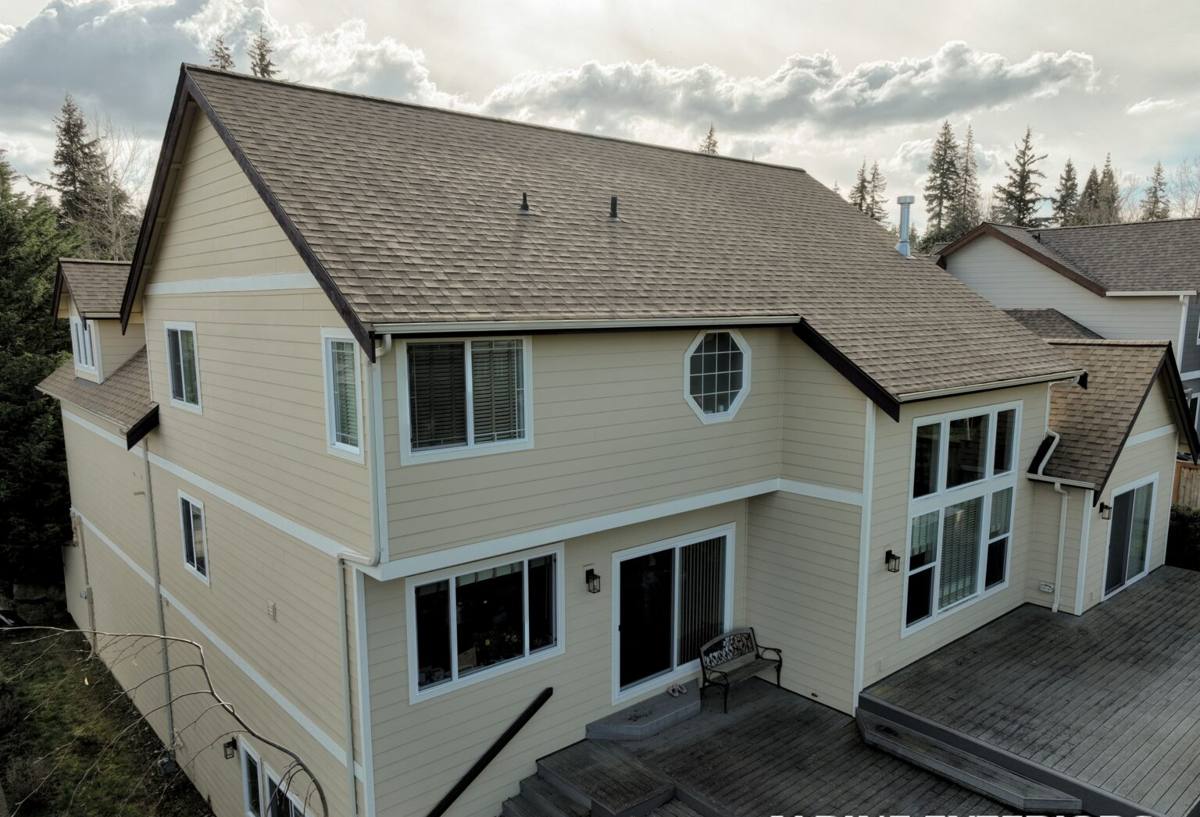
What "Correct" Looks Like for a Salt-Air, High-Moisture Roof
A roof replacement done right for this location isn't just about swapping old shingles for new ones. It's a system, and every layer of that system needs to be chosen and installed with coastal Whatcom County conditions in mind.
Underlayment That Actually Handles Wind-Driven Rain
In a location that gets rain coming in sideways off the water, the underlayment is doing more work than people realize. A synthetic underlayment with strong lap performance, properly sealed around every penetration, is the difference between a roof that sheds wind-driven rain and one that lets it wick sideways under the shingles during a bad storm.
Fasteners and Flashing Rated for Salt Exposure
Standard fasteners can start showing surface corrosion within a few years this close to the water. We spec corrosion-resistant fastener and flashing materials for Semiahmoo properties as a standard practice, not an upsell — it's simply what holds up in this environment. Cutting corners here shows up as rust streaks and loosening fasteners well before the shingles are due for replacement.
Ventilation That Discourages Moss and Rot
Moss doesn't just sit on top of shingles — it holds moisture against the roof deck, and over a long wet season that moisture works its way into the wood. Balanced intake and exhaust ventilation keeps the underside of the roof deck drier and less hospitable to both moss and the rot that follows it. A roof that's under-ventilated will grow moss faster and dry out slower, no matter how good the shingles are.
Our Semiahmoo Roof Replacement Process
- On-site inspection. We walk the roof, check the deck condition, look at existing ventilation, and note any moss buildup patterns that point to shaded or poorly drained areas.
- Honest scope and estimate. You get a clear breakdown of what's needed — deck repair, ventilation upgrades, flashing replacement — not just a shingle quote with hidden add-ons later.
- Tear-off and deck check. Old roofing comes off completely so we can inspect the deck for soft spots or moisture damage that's invisible from above. Any compromised decking gets replaced before anything new goes down.
- Underlayment and flashing installation. This is where wind-driven rain resistance is built in — proper laps, sealed penetrations, and flashing at every valley, chimney, and wall intersection.
- Roofing material installation. Installed to manufacturer spec, with fastening patterns and exposure set correctly for wind exposure common near the water.
- Ventilation and moss-prevention details. Intake and exhaust balanced, and where appropriate, moss-resistant strategies discussed for shaded roof sections.
- Final walkthrough. We go over what was done, answer questions, and make sure you understand your new roof's maintenance needs before we leave.
Signs a Semiahmoo Roof Needs Replacing, Not Patching
Not every roof problem near the water calls for a full replacement — sometimes a repair is genuinely the right call. But there are signs that patching is just delaying a bigger cost:
- Granule loss heavy enough that you're finding shingle granules in gutters or downspouts regularly
- Multiple soft or spongy spots on the roof deck, felt from inside the attic or noticed during inspection
- Widespread moss coverage that's returned after cleaning, especially on north-facing or shaded slopes
- Rusted or failing flashing around chimneys, vents, and valleys
- Daylight visible through the roof deck from inside the attic
- Shingles curling, cracking, or lifting at the edges in multiple areas rather than one isolated spot
- A roof approaching or past the manufacturer's expected service life for this climate
If only one or two of these apply and they're localized, a repair may still make sense. If several apply across the roof, replacement is usually the more cost-effective path — repeated repairs on a roof that's genuinely at end of life add up fast without solving the underlying problem.
Roofing Material Considerations for This Location
There's no single "best" roofing material for every home — the right choice depends on your roof's exposure, your budget, and how much maintenance you want to take on. Here's how common options stack up specifically for salt air, driving rain, and moss exposure:
| Material | Salt Air Behavior | Moss Resistance | Maintenance Load |
|---|---|---|---|
| Asphalt composition shingle | Good with corrosion-resistant fasteners and flashing | Moderate — benefits from periodic cleaning | Low to moderate |
| Metal roofing | Requires coated, corrosion-rated systems near the water | Good — sheds moisture, less moss buildup | Low |
| Wood shake/shingle | More sensitive to moisture cycling | Lower — moss and moisture retention is a known trade-off | Higher — more frequent maintenance and treatment |
| Synthetic/composite | Generally stable | Moderate to good depending on product | Low to moderate |
We'll talk through the honest trade-offs for your specific roof rather than pushing one product — the right call depends on your home's shade exposure, roof pitch, and how much upkeep you want going forward.
Cost Factors for Semiahmoo Roof Replacement
Every roof is different, so we won't quote a number without seeing the actual job — but the following factors are what typically move the price up or down on a Semiahmoo replacement:
| Factor | Why It Matters |
|---|---|
| Roof size and pitch | More surface area and steeper pitches mean more material and labor time |
| Deck condition | Rot or soft decking found during tear-off requires repair before new roofing goes down |
| Material choice | Asphalt, metal, and specialty materials carry different material and install costs |
| Number of penetrations | Chimneys, skylights, and vents each need individual flashing work |
| Existing ventilation | Upgrading intake/exhaust ventilation adds scope but reduces moss and moisture problems long term |
| Access and site conditions | Tree cover, steep lots, or tight access near the water can affect labor time |
Maintenance That Extends the Life of a Semiahmoo Roof
A well-installed roof still needs some ongoing attention in this climate to reach its full lifespan. A short annual checklist goes a long way:
- Clear moss buildup on shaded or north-facing slopes before it spreads, rather than waiting until it's heavy
- Keep gutters and downspouts clear so water isn't backing up under roof edges during heavy rain
- Trim back overhanging branches that keep sections of the roof shaded and damp
- Have flashing around chimneys and vents checked periodically for early corrosion, especially in homes closer to the water
- Address small leaks or soft spots early — in a wet climate, small problems don't stay small for long
Why Local Experience Matters for This Job
Roof replacement isn't a one-size-fits-all trade, and a crew that mostly works drier, inland climates can miss the details that matter here. A contractor who already works Semiahmoo and the broader Blaine area knows which slopes tend to hold moss, which fastener and flashing choices actually hold up against salt air over years rather than months, and how wind-driven rain off the Strait behaves differently than a typical inland storm. That local pattern recognition is what keeps a roof performing well past year one, not just at the final walkthrough. We also know the practical side of working near the water — job site conditions, seasonal weather windows, and how to sequence a tear-off so your home isn't exposed during an unpredictable stretch of weather.
Get a Straight Answer on Your Roof
If your Semiahmoo roof is showing moss, corrosion around flashing, or you're just not sure whether it's a repair or replacement situation, we're happy to take a look and give you an honest assessment — no pressure, no inflated urgency. Reach out for a free estimate and we'll walk you through exactly what your roof needs and why.