 Blaine
 Semiahmoo's Waterfront Climate Is Hard on Roofs
Homes on and around the Semiahmoo peninsula sit closer to open water and wind than almost anywhere else in Whatcom County. That location is part of what makes the area desirable, but it also means roofs here work harder than roofs a few miles inland in Blaine or Custer. Salt-laden air moves off the water and settles on every exposed surface, wind gusts come off the bay with little to slow them down, and the long Pacific Northwest wet season keeps roofing materials saturated for months at a time. Add in a heavy moss season most winters, and you have a combination of stresses that a generic roofing job isn't built to handle.
A new roof installed for a Semiahmoo property needs to be specified and built differently than a roof going on a sheltered inland lot. That starts with material selection and continues through every flashing detail, fastener choice, and ventilation decision made during the install.
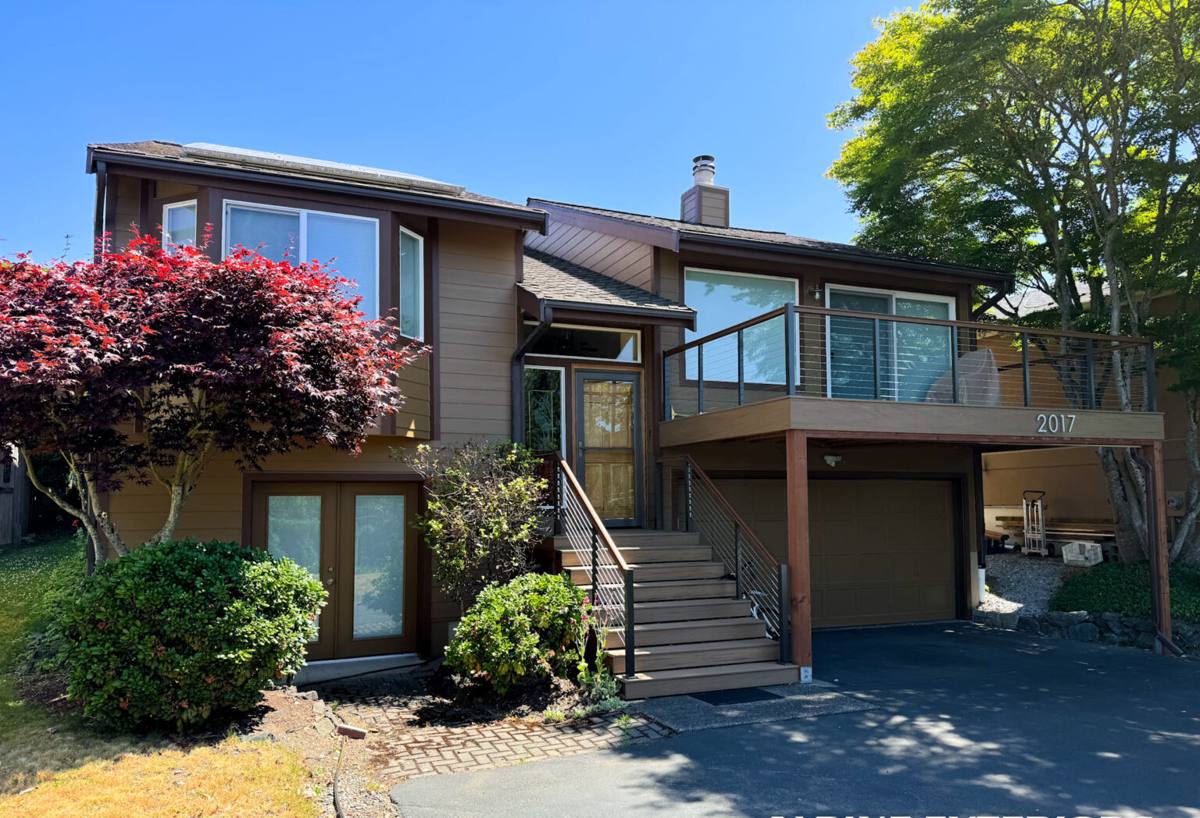
What "Correct" Looks Like for a Coastal Roof System
A roof isn't one product — it's a system of layered components, and each layer has a job. On a Semiahmoo home, we pay close attention to a few components that get rushed or skipped on cheaper jobs:
Underlayment and Water Barriers
Synthetic underlayment goes down over the full deck as the primary water barrier beneath the roofing material. In valleys, around chimneys, and along eaves, we add self-adhering ice-and-water membrane. In this climate that membrane isn't just for winter ice dams — it's a second line of defense against wind-driven rain that can push water uphill under shingles during a real Pacific storm.
Flashing
Flashing is where most roof leaks actually start, not in the field of the roof. Step flashing at wall intersections, counterflashing at chimneys, and properly lapped valley flashing all need to be installed correctly, not just caulked and hoped for. Salt air accelerates corrosion on the wrong metal, so flashing material matters as much as the installation technique.
Ventilation
Balanced intake and exhaust ventilation keeps the attic dry and the roof deck at a stable temperature. In a marine climate with high ambient humidity, poor ventilation traps moisture in the attic, which shortens the life of the decking and the roofing material from underneath — a failure mode a homeowner never sees until it's expensive.
Material Options for Semiahmoo Homes
There's no single "best" roofing material for every house — it depends on the home's exposure, roof pitch, budget, and how long you want to go before thinking about it again. Here's how the common options compare for a property with real wind and salt exposure:
| Material | Wind/Salt Performance | Moss Resistance | Typical Lifespan |
|---|---|---|---|
| Architectural asphalt shingle | Good with correct nailing pattern and wind-rated product | Better with algae-resistant granules; still needs periodic cleaning | 25–30 years |
| Standing seam metal | Excellent — high wind ratings, minimal wind-catch surface | Very good — smooth surface sheds moss and debris | 40–50+ years |
| Composite/synthetic shake | Good, product-dependent | Good with proper airflow beneath | 30–40 years |
| 3-tab asphalt shingle | Fair — more exposed tabs, lower wind rating | Fair — more surface texture holds moisture | 15–20 years |
For exposed lots closer to the water, we lean toward architectural shingles rated for higher wind speeds or standing seam metal. For more sheltered lots, a well-installed architectural shingle roof is a reasonable, cost-effective choice. We'll walk your specific site with you rather than push one product on every job.
Our New Roof Installation Process
A roof replacement has a lot of steps that aren't visible in the finished product, and skipping any of them is how roofs fail early. Here's the general sequence we follow:
- On-site inspection of the existing roof, decking, and ventilation, plus a look at wind exposure and tree cover specific to your lot
- Written estimate outlining material options, scope, and timeline — no pressure, no surprise add-ons buried in fine print
- Tear-off of the old roofing down to the deck, with the deck inspected for soft spots or rot and repaired before anything new goes down
- Underlayment and ice-and-water membrane installation at eaves, valleys, and penetrations
- New flashing at all walls, chimneys, and vents
- Roofing material installation per manufacturer specifications, including nailing pattern and exposure appropriate for coastal wind
- Ridge vent and ventilation tie-in
- Full site cleanup, including a magnetic sweep for stray fasteners
- Final walkthrough with the homeowner
Most residential roof replacements in this area take one to a few days once work begins, weather permitting — the Whatcom County wet season means we build some flexibility into scheduling rather than rushing a job into a rain window.
Wind, Salt Air, and Fastener Corrosion
Two details separate a roof that holds up on an exposed Semiahmoo lot from one that starts showing problems in a few years: fastener quality and nailing pattern. Standard fasteners can corrode faster in a salt-air environment, so we use fasteners rated for coastal exposure rather than the cheapest option on the shelf. On the installation side, hand-nailing or careful gun calibration matters — overdriven or underdriven nails are one of the most common causes of early shingle failure and wind blow-off, and it's a detail that's easy to rush on a crew that doesn't normally work this close to the water.
We also pay attention to starter strip and hip/ridge cap installation, since those are the areas most likely to lift in sustained wind. On a home with real bay or spit exposure, we'll talk through whether a higher wind-rated product is worth the modest upgrade in material cost.
Moss, Algae, and Long-Term Roof Health
Whatcom County's wet, mild winters are ideal growing conditions for moss and algae, and shaded, north-facing roof slopes are especially prone to it. Moss isn't just cosmetic — as it grows, it lifts shingle edges and holds moisture against the roofing material, which shortens the life of the roof and can lead to leaks at the areas where moss has taken hold.
During a new roof installation, we can install algae-resistant shingles where copper or zinc granules are embedded to slow regrowth, and we make sure valleys and gutters are built to shed debris rather than trap it. After installation, simple annual maintenance — clearing debris, keeping overhanging branches trimmed back, and gentle moss removal — goes a long way toward protecting the investment.
Permits, Timeline, and What to Expect
Roof replacements in Whatcom County typically require a building permit, and we handle that process as part of the job so you're not tracking down paperwork yourself. Timeline depends on scope, material availability, and weather — we'll give you a realistic window up front rather than an optimistic one, and we communicate if conditions push a start date.
What Drives the Cost of a New Roof
Every roof is different, but the same handful of factors move the price up or down on most jobs:
| Factor | Why It Matters |
|---|---|
| Roof size and pitch | More square footage and steeper pitches mean more material and labor time |
| Material choice | Asphalt shingle, composite, and metal roofing carry different material and install costs |
| Deck condition | Rotten or soft decking found during tear-off requires repair before new roofing goes on |
| Number of valleys, penetrations, and flashing points | More complex rooflines require more flashing and labor |
| Tear-off layers | Removing multiple existing layers takes longer than a single-layer tear-off |
| Access and site conditions | Tight lots, steep driveways, or limited staging area can affect labor time |
We give a written, itemized estimate before any work starts so you know exactly what you're paying for and why.
What to Ask Before You Hire a Roofer Near the Water
Not every roofing crew is set up to build correctly for a coastal, wind-exposed lot. Before hiring, it's worth asking:
- Are they licensed and insured to work in Washington, and can they show proof?
- Do they specify fasteners and flashing material appropriate for salt-air exposure, or is it a standard inland spec?
- Will they inspect and repair the deck if rot is found, or just roof over it?
- Do they pull the required building permit, or expect you to?
- Have they worked on homes with similar wind exposure in this area before?
- Is the estimate written and itemized, with material brand and product line specified?
A crew that already works around Semiahmoo and the Blaine waterfront has already made the mistakes that come with learning a coastal climate — the wrong fastener, the wrong flashing detail, the wrong nailing pattern for real wind. That experience doesn't show up as a line item on an estimate, but it shows up in how long the roof lasts.
Why Local Experience Matters Here
Whatcom County covers a lot of ground, and roofing needs on a sheltered inland lot are genuinely different from a lot facing open water near the Semiahmoo Spit or Drayton Harbor. A contractor who works this specific area regularly understands the wind patterns, the moss pressure, and the practical realities of scheduling around the wet season — and builds the roof accordingly instead of applying a one-size-fits-all spec everywhere.
If you're planning a new roof for your Semiahmoo home, we're happy to walk the property, look at your specific exposure and roofline, and put together a straightforward, no-pressure estimate. Use the form below to get started.