 Blaine
 Building a Deck That Holds Up in Nooksack
Nooksack sits in the part of Whatcom County where marine weather off the Salish Sea meets river-valley moisture, and that combination is hard on outdoor structures. A deck built here does more work than a deck built somewhere dry and inland — it's carrying salt-laden air, long stretches of driving rain, and a moss season that can run from October well into April. If you're planning a new deck or replacing a tired one, the choices you make on framing, decking material, fasteners, and drainage will decide whether you get ten years out of it or twenty-five.
We build and repair decks for homeowners around Nooksack and the greater Blaine area, and most of the calls we get aren't "build me something," they're "fix what someone else built wrong for this climate." That's the lens this page is written through: what actually holds up here, not what looks good in a catalog photo from a drier region.
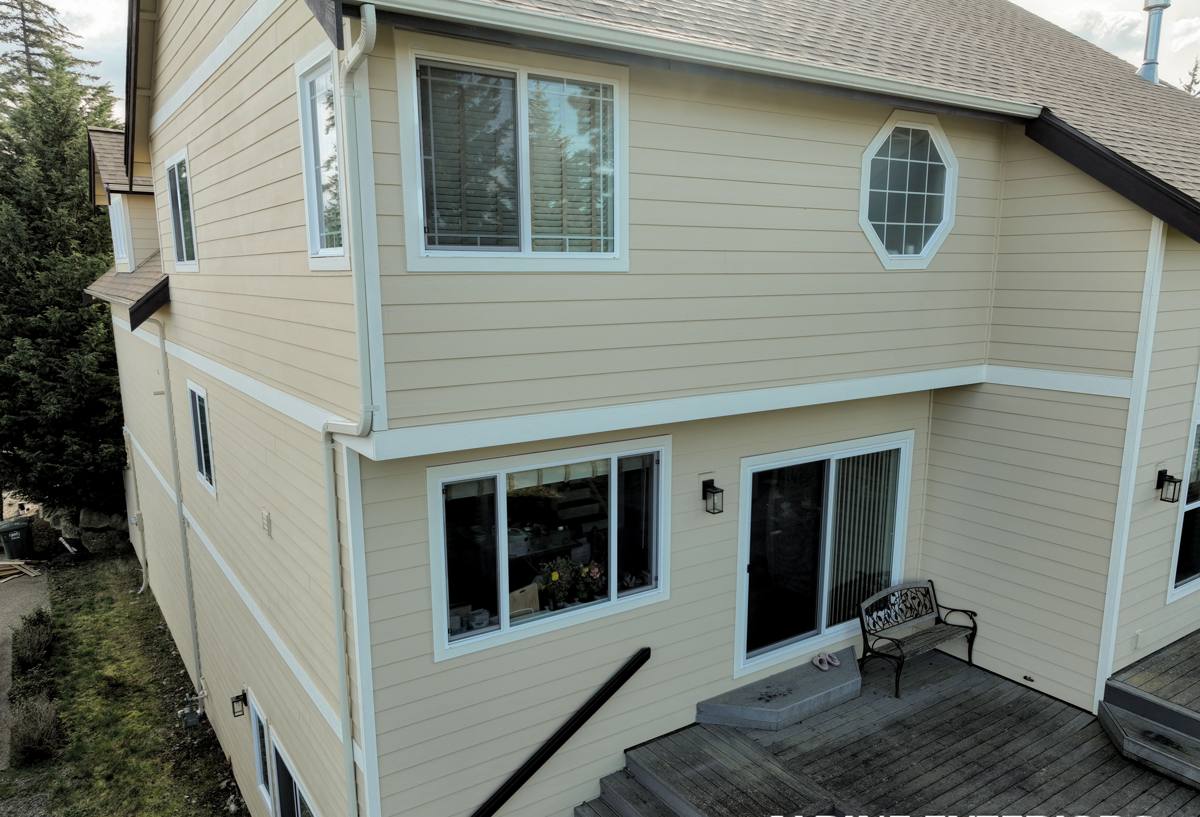
What Blaine County County Whatcom Weather Does to a Deck
Three things separate deck-building here from deck-building in most of the country:
Salt Air
Being close to Semiahmoo Bay and the Salish Sea means airborne salt reaches further inland than most homeowners expect, especially on windy days. Salt accelerates corrosion in any exposed metal — fasteners, joist hangers, post bases, railing brackets — and it can leave a chalky film on lower-grade finishes over time.
Driving Rain
Rain here rarely falls straight down. Wind-driven rain gets pushed sideways into ledger connections, under poorly flashed rim joists, and into end grain that isn't sealed. Standing water on a deck surface is less of a long-term threat than water that gets trapped where it can't dry out — inside a joist bay, behind a fascia board, or under a post base with no drainage gap.
Moss and Extended Damp Season
Whatcom County's moss season is long, and it's not just a cosmetic issue. Moss and algae hold moisture against decking boards, block airflow at the surface, and turn any deck into a slip hazard when wet. Boards with tight grain patterns or a smooth top texture tend to grow moss faster than boards designed with some surface texture or gapping for airflow.
Framing: The Part Nobody Sees That Matters Most
The decking boards get all the attention, but the framing underneath is what determines whether a deck is still standing in twenty years. In this climate we pay particular attention to:
- Ledger flashing — where the deck attaches to the house is the single most common point of hidden rot we find on deck tear-outs. Proper flashing keeps wind-driven rain from working behind the ledger board.
- Joist hanger and fastener material — hot-dip galvanized is a minimum near the water; stainless steel is worth the upgrade cost on decks closer to the bay or on any hardware that's difficult to inspect or replace later.
- Post base standoffs — posts should sit on a base that lifts the wood off the concrete and lets water drain away from end grain, not one that traps moisture against the post.
- Joist tape or drip caps — a strip of butyl flashing tape over joist tops protects the wood from the deck screws down and blocks water intrusion at every fastener penetration.
- Airflow underneath — decks built low to grade or boxed in without ventilation trap humidity and take much longer to dry out after a rain event, which is most of the year here.
Choosing Decking Material for This Climate
There's no single "best" decking material — there's a best material for a given budget, maintenance appetite, and how exposed the deck is to salt air and shade. Here's how the common options stack up for homes around Nooksack:
| Material | Moss/Algae Resistance | Maintenance | Typical Lifespan Here |
|---|---|---|---|
| Pressure-treated wood | Moderate — needs regular cleaning and re-sealing | Annual wash, re-stain every 2-3 years | 10-15 years with upkeep |
| Cedar | Good natural resistance, but softens without upkeep | Periodic cleaning, occasional oil/sealant | 15-20 years with upkeep |
| Capped composite | Very good — cap layer resists moss growth and staining | Occasional wash, no sealing or staining | 25+ years |
| Uncapped composite (older style) | Fair — can absorb moisture and support algae growth over time | Periodic cleaning; watch for surface wear | 15-20 years |
Our professional standard on most Nooksack-area decks is capped composite for the decking surface, paired with treated or steel framing underneath, because the cap layer is specifically formulated to resist moisture absorption and surface staining — the two things that shorten a deck's life fastest in a wet marine climate. That said, cedar and quality pressure-treated wood are honest choices for homeowners who prefer the look of real wood and are willing to keep up with cleaning and re-sealing on a schedule. We'll walk through the trade-offs with you rather than push one product.
Fasteners and Hardware: Where Corrosion Starts
This is the detail that separates a deck that ages gracefully from one that develops rust streaks and loose connections within a few years. In salt-air exposure, mismatched or under-rated hardware is the most common failure point we see on decks that are otherwise structurally fine.
- All structural hardware — hangers, angle brackets, post bases — should be rated for the treated lumber species being used, and upgraded to stainless in higher-exposure spots.
- Deck screws should match the hardware rating; mixing a stainless screw into a standard galvanized hanger (or vice versa) can accelerate corrosion of the less-resistant metal through galvanic reaction.
- Railing post connections take significant wind and lateral load — this is not a place to save money on fasteners.
- Visible fasteners on composite decking should use the manufacturer's specified clip or screw system to preserve any warranty coverage.
Railings, Stairs, and Surface Details
Beyond the deck field itself, a few details matter specifically because of the wet, mossy climate:
Stair Tread Surfaces
Stairs are where slip risk concentrates. We look at tread material and surface texture on stairs more carefully than on the flat deck field, since stairs see concentrated foot traffic in wet conditions and often sit in shadier, damper spots.
Railing Hardware
Railing posts and connectors are exposed to the same wind-driven rain and salt as everything else, and they take real structural load. We treat railing hardware selection with the same seriousness as framing hardware — it's not just a finish detail.
Board Spacing and Airflow
Proper gapping between boards lets water shed through the deck surface instead of pooling on top, and it lets air move underneath to help everything dry between rain events — which, in this climate, is most days.
Our Process for a Nooksack Deck Project
Every deck project we run follows the same sequence, whether it's new construction or a replacement:
- On-site assessment — we look at grade, drainage, sun exposure, and how the deck ties into the house, including any existing rot or moss patterns if it's a replacement.
- Design and material walkthrough — we talk through decking material, railing style, and layout based on your budget and how you'll use the space.
- Permitting — most decks above a certain height or attached to the house require a permit through Whatcom County; we handle that process rather than leaving it to you.
- Framing and flashing — ledger flashing, joist hanger installation, and joist tape go in before any decking touches the frame.
- Decking, railing, and stairs — installed per manufacturer spec, with attention to fastener matching and board spacing.
- Final walkthrough — we go over care and cleaning recommendations specific to the material installed, since moss and algae management is an ongoing job in this climate, not a one-time thing.
Maintenance Checklist for Whatcom County Decks
Regardless of material, a few maintenance habits meaningfully extend the life of a deck in this climate:
- Sweep leaves and debris off the deck surface regularly in fall — trapped organic matter holds moisture and feeds moss growth.
- Wash the deck surface at least once a year with a deck-safe cleaner to remove algae and moss buildup before it takes hold.
- Keep gutters and downspouts near the deck clear so roof runoff isn't dumping extra water onto or under the structure.
- Inspect ledger flashing and any visible hardware annually for rust streaks or loosening.
- Re-seal or re-stain wood decking on the schedule recommended for the product — don't wait until it's visibly gray and weathered.
- Trim back vegetation that's shading the deck and keeping it damp longer than the rest of the yard.
Why Local Experience Matters for This Job
Deck-building isn't complicated in the abstract — the physics of framing and load are the same everywhere. What's different is knowing which details matter enough to spend extra on in this specific climate: which fastener grade actually holds up near the bay, where flashing tends to fail on a ledger board that's taking wind-driven rain, and which decking surfaces are going to fight moss and which are going to grow it. A crew that's done this work around Nooksack and the rest of the Blaine area has already seen where the corners get cut on lower-quality builds, and builds accordingly the first time.
If you're planning a new deck, replacing an aging one, or just want an honest read on whether your current deck's framing is still sound, we're happy to come take a look. Reach out for a free, no-pressure estimate — the form below gets you started.