 Blaine
 Building New in Semiahmoo Means Building for the Water
Semiahmoo sits out on its spit between Semiahmoo Bay and Drayton Harbor, which makes it one of the most exposed building sites in Whatcom County. If you're framing a new home or a new addition here, the windows you choose and how they're installed matter more than almost anywhere else in the Blaine area. A window package that would be perfectly fine three miles inland can start showing problems within a few years out here — corroded hardware, fogged glass, soft trim, staining from wind-driven rain that found a gap in the flashing.
New-construction windows are a different job than a replacement. On a new build, the window opening isn't finished yet — there's no existing trim, siding, or weather barrier to work around. That's an advantage, because it means the flashing and water management can be built in correctly from the start, instead of patched around old work. But it also means there's more that can go wrong if the installer isn't coordinating closely with the framing and siding crews. Get it right at this stage and the windows will perform for decades. Get it wrong and you're looking at hidden moisture problems behind the wall long before anyone notices a leak.
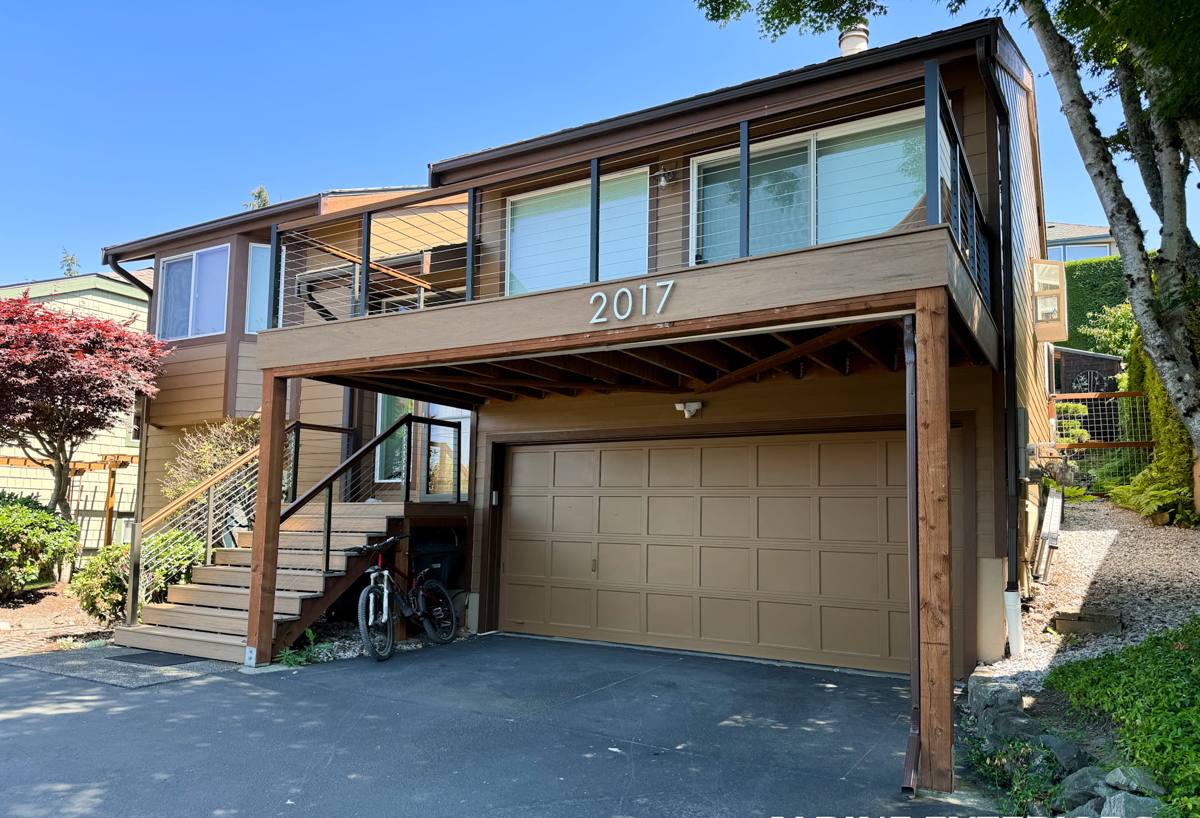
What Semiahmoo's Climate Actually Does to Windows
Three things define the exposure out here, and each one shapes a different part of the window spec:
Salt Air
Being this close to the water, homes in Semiahmoo take on airborne salt that settles on every exterior surface. Over time, salt accelerates corrosion on unprotected metal — screws, hinges, balance hardware, and low-grade aluminum components. It's not usually dramatic; it's a slow degrade that shows up as pitting, stiff operation, or streaking on the frame finish. Hardware and cladding choices matter more here than in a typical Blaine or Whatcom County build.
Driving Rain
Semiahmoo catches wind off the water with little to break it up, and that wind regularly drives rain sideways into the building envelope rather than straight down. A window that only sheds water well in calm conditions isn't good enough here — the flashing details, sill pans, and sealant joints all need to be built to handle water being pushed uphill and sideways against the frame, not just falling on it.
A Long Moss Season
Whatcom County's wet season runs long, and moss and algae take hold anywhere moisture sits and doesn't dry out — window sills, mulled joints, and trim details with poor drainage. On new construction, this is solved with design, not maintenance: sills that slope and drain, materials that don't hold moisture against wood, and gaps left where they belong so surfaces can actually dry between storms.
How We Install New-Construction Windows the Right Way
New-construction ("nail fin" or "flange") windows attach directly to the framed rough opening and get integrated into the weather-resistive barrier before siding goes on. The sequence matters as much as the window itself:
- Rough openings are checked for square, level, and correct sizing before any window arrives on site — this is the single most common source of installation problems if it's skipped.
- A sloped sill pan is built at the bottom of every opening so any water that does get past the exterior cladding drains back out, not into the wall cavity.
- The weather-resistive barrier (housewrap or building paper) is cut and lapped in the correct order — sill first, then jambs, then head — so water always sheds down and over the layer below it, never behind it.
- The window is set, checked for square and plumb, and fastened per the manufacturer's schedule — proper fastening matters for structural performance and warranty validity, not just for keeping the window in place.
- Flashing tape is applied over the nailing fin and integrated with the WRB, with special attention at the corners, where most leaks on new builds actually originate.
- Head flashing is installed above the window before siding closes it in, giving driving rain a place to shed away from the top of the frame.
- Interior air-sealing is completed with backer rod and sealant or low-expansion foam, which also helps with energy performance and condensation control.
None of these steps are unique to Semiahmoo, but the tolerance for skipping one of them is much lower here than in a sheltered inland lot. A minor gap in flashing tape that might go unnoticed for a decade elsewhere can start causing staining or moisture intrusion within a couple of wet seasons on an exposed waterfront build.
Choosing the Right Frame Material for This Site
Frame material is one of the biggest decisions on a new build, and it's worth slowing down on for a Semiahmoo property specifically. There's no single "best" answer — it's a trade-off between upfront cost, maintenance, and how the material handles salt air and moisture over time.
| Frame Material | Salt Air / Moisture Behavior | Maintenance | Notes for This Site |
|---|---|---|---|
| Vinyl | Won't corrode; UV and coastal-grade formulations resist chalking better than budget vinyl | Low — occasional cleaning | Good value; confirm coastal/UV-rated formulation, not a basic inland spec |
| Fiberglass | Excellent — dimensionally stable, doesn't corrode, holds paint or factory finish well | Low | Strong fit for exposed waterfront elevations; higher upfront cost |
| Aluminum-clad wood | Good exterior protection if cladding and seals are intact; wood interior needs the envelope to stay tight | Moderate | Attractive interior finish option; relies heavily on correct installation to keep water out of the wood core |
| Bare aluminum | Prone to pitting and corrosion in salt air unless marine-grade and properly finished | Higher | We steer clients away from budget aluminum on waterfront lots for this reason |
We're not going to tell you one product line is "bad" — most reputable manufacturers make a workable window. Where we push back is on spec'ing a builder-grade aluminum or an inland-formulated vinyl on a lot that takes this much wind and salt. It's a maintenance and longevity call, not a brand argument.
Hardware and Fasteners
Whatever frame material you choose, ask what grade of hardware and fasteners are going in. Stainless or coated corrosion-resistant hardware costs a little more up front and saves you from replacing balances, locks, and hinges within a few years of moving in.
Glass and Performance Ratings That Actually Matter Here
Washington's energy code sets minimum performance requirements for new-construction windows, and any reputable installer will meet them as a baseline. For Semiahmoo specifically, a few numbers are worth understanding rather than just checking a box:
- U-factor — measures heat loss through the window; lower is better for a marine climate with cool, damp winters.
- Design Pressure (DP) rating — tells you how much wind load and wind-driven rain a window is rated to resist. On an exposed spit like Semiahmoo, this matters more than it does a mile inland, and it's worth confirming the DP rating fits your specific elevation's exposure.
- Low-E coatings and gas fill — help with both energy performance and reducing interior condensation, which is a real issue in a climate with this much humidity and temperature swing.
We'll walk through what these numbers mean for your specific elevations — a window on the water-facing side of the house may warrant a higher DP rating than one on a sheltered side, even on the same build.
Coordinating With Your Builder or GC
On most new builds, window installation sits right in the middle of the schedule — framing has to be done, but siding and interior finish can't start until windows are set and flashed. A crew that's done this sequencing before keeps your project moving instead of becoming the bottleneck. We work directly with your general contractor or framing crew to confirm rough opening sizes before windows are ordered, schedule installation to match your siding start date, and document flashing details for inspection sign-off. Miscommunication at this stage is one of the most common causes of delay on new-construction jobs — window sizes or opening details get changed on paper but not communicated in the field, and something arrives that doesn't fit.
Why It Helps to Hire a Crew That Already Works This Area
Semiahmoo isn't a huge community, but it has its own building conditions that differ from downtown Blaine or the areas further inland in Whatcom County — closer exposure to the water, more consistent wind, and building sites where the elevation facing the bay takes noticeably more weather than the sheltered side. A crew that's already installed windows on this spit knows to ask about elevation-specific exposure before finalizing a spec, has a feel for how local siding and trim details drain, and isn't guessing at DP ratings or flashing details for the first time on your house. That familiarity doesn't replace a good process — but it does mean fewer surprises and fewer change orders once the walls are open.
What This Typically Costs
New-construction window installation is usually priced as part of a broader framing or exterior package rather than a standalone line item, so exact numbers depend heavily on window count, size, frame material, and performance rating. A few honest factors that move the number:
| Factor | Why It Affects Cost |
|---|---|
| Frame material | Vinyl is generally the most affordable; fiberglass and clad-wood cost more but offer different longevity and appearance trade-offs |
| Window count and size | Larger openings and specialty shapes (picture windows, corner units) add labor and material cost |
| Performance rating required | Higher DP ratings and upgraded glass packages for exposed elevations cost more than a standard inland spec |
| Site access and staging | Waterfront lots can have tighter access or delivery logistics that add labor time |
We'll give you a real number once we know your window schedule and elevations — not a padded estimate designed to be negotiated down.
Get a Free Estimate for Your Semiahmoo Build
If you're planning a new build or addition in Semiahmoo, we're happy to look at your window schedule and plans and give you honest, no-pressure feedback on frame material, performance ratings, and installation sequencing before anything is ordered. Fill out the form below to request a free estimate.