 Blaine
 Decking on Semiahmoo Doesn't Get an Easy Life
Semiahmoo sits right where Whatcom County meets Semiahmoo Bay, and that waterfront position is exactly what makes decking here different from a deck build inland in Bellingham or Lynden. Homes on or near the spit deal with salt-laden air blowing off the water almost year-round, driving rain that comes in sideways during winter storms, and a moss season that can stretch from October clear through April in shaded, north-facing yards. A deck built with materials or fastening methods meant for a drier, calmer climate will show it within a few seasons — fading unevenly, staining at the fastener heads, or growing a slick green film in the spots that never quite dry out.
Composite decking earns its keep in this environment better than wood does, but "composite" isn't one product with one set of rules. The board, the substructure, the fastening system, and the drainage detailing all matter, and getting any one of them wrong shows up as a callback in a year or two. This page is about what a correct composite deck build looks like specifically for a Semiahmoo property, not a generic rundown of composite decking in general.
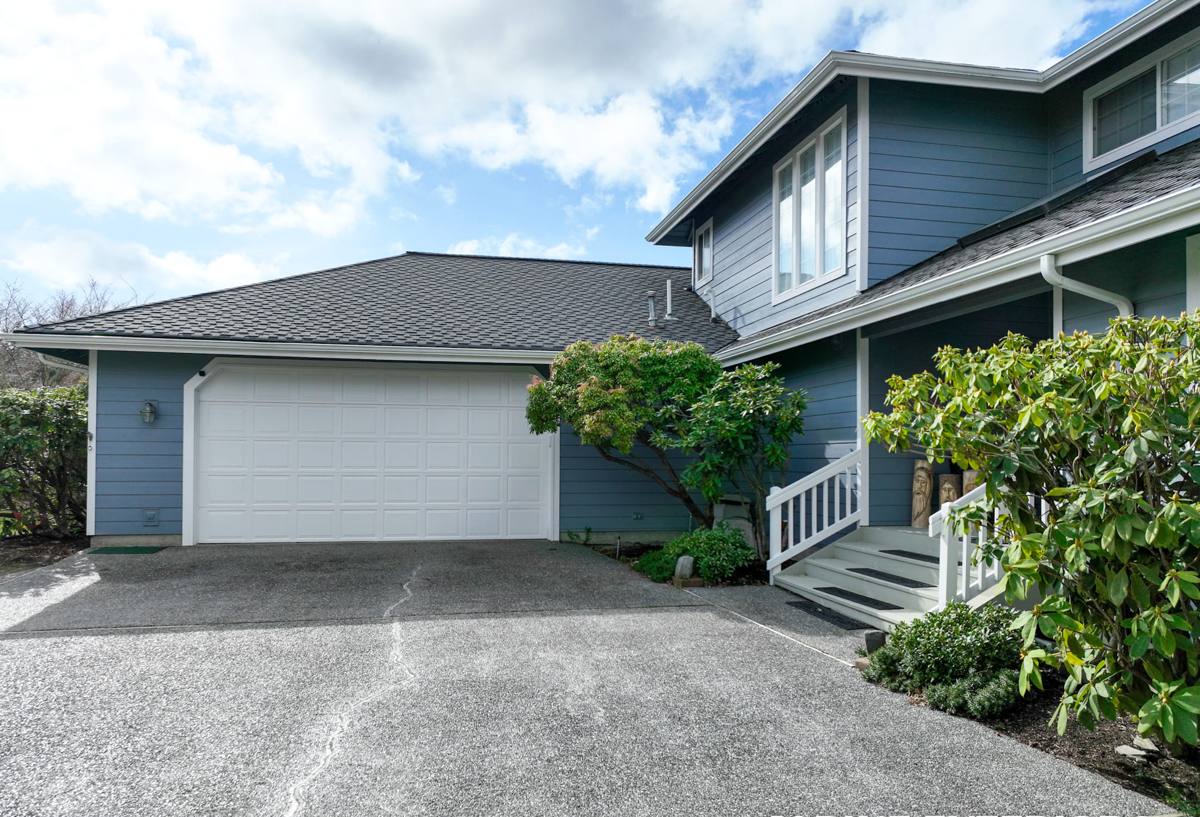
What the Semiahmoo Climate Actually Does to a Deck
Salt Air
Salt spray off the bay settles on every horizontal surface, including deck boards, railings, and fasteners. On wood decks this accelerates finish breakdown and corrodes standard fasteners over time. Composite boards don't corrode, but the fastener system holding them down still can if it's not rated for coastal exposure — we spec stainless or coated fasteners for anything within reach of salt air, which on Semiahmoo is essentially every property.
Driving Rain
Storms off the water don't just fall straight down — wind-driven rain gets pushed under railings, into board gaps, and against ledger connections at the house. That means flashing at the ledger board and proper gapping between boards aren't optional details; they're the difference between a deck that sheds water and one that traps it against the house framing.
Moss and Shade
Semiahmoo has plenty of mature trees and waterfront homes with shaded north sides. Moss needs moisture and low light to take hold, and a deck surface that stays damp because of poor drainage or debris buildup in the gaps is an invitation for it. Composite doesn't feed moss the way untreated wood can, but it's not immune — buildup of pollen, needles, and organic debris in board gaps still gives moss something to grow on.
Why We Install Composite Instead of Wood for Most Semiahmoo Decks
We still build wood decks when a homeowner wants that look and understands the upkeep, but for most Semiahmoo properties we recommend composite, and it's worth being straight about why:
- Maintenance burden: wood on the water needs annual sealing or staining to keep salt air and moisture out; composite needs occasional washing, not a yearly refinish.
- Moisture behavior: quality composite boards are engineered to resist water absorption at the core, which matters when rain is blowing sideways part of the year.
- Consistency: composite doesn't cup, splinter, or check the way cedar or fir can after repeated wet-dry cycles.
- Long-term cost: composite costs more up front but typically costs less over a 15-20 year window once you factor in the labor and materials for repeated wood maintenance.
The trade-off is real too — composite costs more initially, and some homeowners simply prefer the feel and repairability of real wood. We'll tell you honestly which makes sense for your specific deck, budget, and how you plan to use the space.
What a Correct Composite Deck Build Involves
Substructure First
The composite boards get all the attention, but the framing underneath is what determines whether the deck lasts. For a coastal property like Semiahmoo, we use pressure-treated or composite substructure material rated for ground contact and moisture exposure, and we make sure joists are spaced correctly for the specific composite board being installed — manufacturers publish different span ratings, and undersized joist spacing is one of the most common mistakes we see on decks that develop a bounce or sag over time.
Ledger Attachment and Flashing
Where the deck attaches to the house is the single most important connection on the whole structure, both structurally and for water management. We flash the ledger board properly so driving rain off the bay can't work its way behind the siding or into the rim joist. This is the detail that gets skipped on cheap deck builds and causes hidden rot years later — you won't see the problem until the siding or framing behind it is already damaged.
Hidden Fastening and Board Gapping
Most quality composite systems today use hidden fastener clips rather than face screws, which gives a cleaner look and eliminates the corrosion-prone screw heads that salt air attacks first. Board gapping has to account for thermal expansion — composite moves more with temperature swings than wood does — and correct gapping also gives water and debris somewhere to go instead of pooling.
Railings and Fasteners
Railing posts need solid blocking and through-bolted connections, not just surface-mounted brackets, especially on elevated decks. Every exposed fastener on a coastal build should be stainless steel or a coating rated for salt exposure — standard galvanized hardware will show rust streaks on light-colored composite within a couple of seasons here.
Comparing Composite Options for a Coastal Property
| Factor | Wood (cedar/fir) | Capped Composite | Basic/Uncapped Composite |
|---|---|---|---|
| Salt air resistance | Fair — needs regular sealing | Good — capped shell resists staining and moisture | Fair — more prone to surface wear over time |
| Moisture/rain exposure | Requires diligent maintenance | Strong, engineered for wet climates | Adequate but less forgiving of standing water |
| Moss/algae resistance | Depends on finish upkeep | Good, especially with textured caps | Moderate |
| Upfront cost | Lowest | Highest | Mid-range |
| Long-term maintenance | Ongoing (annual) | Low (periodic cleaning) | Low-moderate |
| Typical warranty structure | N/A (finish-dependent) | Longer, often prorated after initial years | Shorter, often prorated |
We walk every Semiahmoo homeowner through this comparison against their actual budget and how exposed the deck site is — a deck tucked under an eave with some tree cover has different needs than one fully open to the water.
Our Process for a Semiahmoo Deck Build
- On-site assessment: we look at sun exposure, wind exposure to the bay, drainage slope, and the condition of any existing structure being replaced.
- Material selection: we discuss composite board options, color (lighter colors show less thermal expansion stress but can show salt residue more visibly — we'll explain the trade-off), and railing systems.
- Permitting: most deck rebuilds and new builds in Whatcom County require a permit, particularly for elevated structures or anything attached to the house — we handle that process.
- Demolition and substructure: old decking and, if needed, framing is removed and replaced or reinforced to current span and connection standards.
- Ledger flashing and waterproofing: this happens before a single composite board goes down.
- Decking, railing, and fastener installation: hidden-fastener composite boards, through-bolted railing posts, corrosion-rated hardware throughout.
- Final walkthrough: we check gapping, fastener finish, railing rigidity, and drainage before calling it done.
Living With a Composite Deck on Semiahmoo
Even low-maintenance composite isn't zero-maintenance, especially this close to the water. A short seasonal checklist keeps a Semiahmoo deck looking and performing the way it should:
- Rinse salt residue and pollen off the surface every few weeks during dry stretches, more often right after storms.
- Clear leaves, needles, and debris out of board gaps before they compact and hold moisture.
- Sweep or hose off developing moss in shaded corners early, before it establishes and stains the board surface.
- Check railing hardware annually for any early rust bleed, especially at the coast where salt exposure is constant.
- Keep planters and furniture feet from sitting directly on the boards in one spot for months at a time — trapped moisture underneath can still cause surface staining on composite.
Why Local Experience on Semiahmoo Specifically Matters
A crew that mostly builds decks in drier inland parts of Whatcom County can still do competent work, but they may not default to coastal-rated fasteners, may under-flash a ledger because it's never bitten them before, or may not think about board gapping the way a wind-driven rain climate demands. We work Blaine and the Semiahmoo area regularly, so those aren't afterthoughts — they're just how we build here. We also know which composite products hold up well in this specific microclimate versus which ones are better suited to calmer, drier settings, because we've seen both age in real Whatcom County weather.
Cost Factors for a Semiahmoo Composite Deck
Every deck is different, but the price of a composite deck build is driven by a consistent set of factors: total square footage, height off grade (elevated decks need more substructure and often stairs), railing style and material, board tier (capped versus basic composite), and site access for demolition and material delivery. Waterfront or view-lot properties sometimes add complexity for permitting or setback requirements as well. We give straightforward, itemized estimates so you can see where the cost is actually going rather than a single lump number.
If you're planning a new deck or replacing an aging one in Semiahmoo, we're happy to take a look and give you an honest, no-pressure estimate — just fill out the form below.