 Blaine
 Why Sandy Point Siding Wears Differently Than Siding Inland
Sandy Point sits right up against the water, which means the siding on these homes is doing a harder job than siding a few miles inland in Blaine or Birch Bay. Salt-laden air off the strait settles on exterior walls day after day, wind-driven rain gets pushed sideways into every seam and joint, and the shaded, damp stretches of the year keep moss and algae established on north- and west-facing walls longer than almost anywhere else in Whatcom County. None of that is dramatic on its own. It's cumulative — siding that would coast for twenty-plus years on a dry inland lot can start failing at the seams, fasteners, and butt joints on a waterfront lot in half that time if it wasn't built or installed for the exposure.
That's the lens we use for every Sandy Point siding replacement: not "what siding looks good," but "what siding, installed which way, actually holds up to salt air and driving rain year after year."
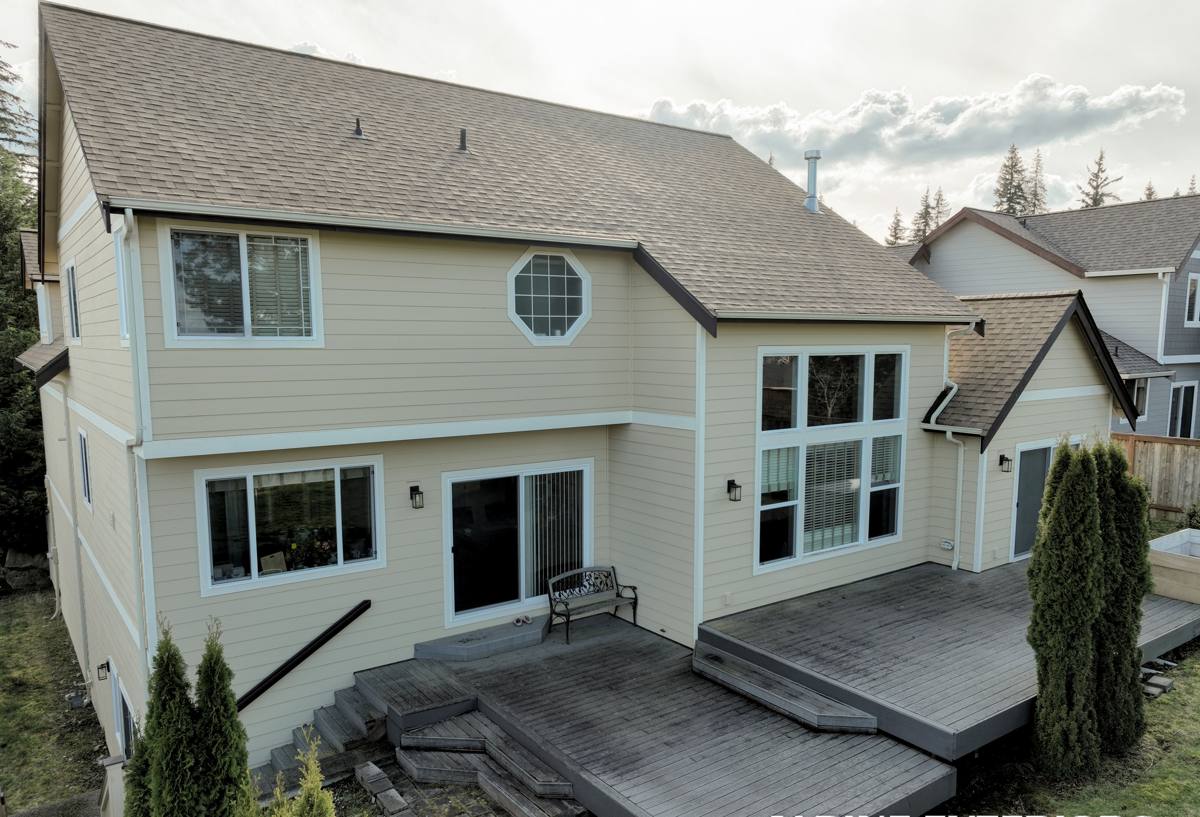
What Salt Air and Moss Actually Do to Siding
Salt air
Airborne salt is corrosive to metal fasteners and trim, and it's abrasive to painted and coated surfaces over time. On products with a factory finish that isn't engineered for coastal exposure, you'll typically see chalking, fading, and finish breakdown show up earlier on the ocean-facing walls than on the sides of the same house that face inland.
Driving rain
Wind off the water doesn't just fall as rain — it drives it horizontally into laps, corners, and any gap around windows and trim. Siding systems tolerate this fine when the water-resistive barrier, flashing, and lap details are done correctly. When they're not, water gets pushed behind the siding instead of shedding off the face of it, and that's where rot and hidden damage start — often long before anything looks wrong from the ground.
Moss and algae
Shaded, damp walls near mature trees or on the north side of a home stay wet longer after a storm, which gives moss and algae more time to establish. Beyond the cosmetic issue, moss holds moisture against the siding surface, which is exactly the condition that shortens the life of moisture-sensitive materials.
Signs a Sandy Point Home Needs Replacement, Not Just Repair
- Soft, spongy, or crumbling spots when you press on the siding, especially near the bottom courses or around window and door trim
- Persistent dark staining or streaking that comes back shortly after cleaning
- Paint that's failing across large areas rather than one weathered spot — a sign the substrate underneath is no longer holding a finish well
- Visible gaps opening at seams, corners, or where siding meets trim
- A musty smell or soft drywall on an interior wall that backs up to an exterior wall taking heavy weather
- Siding that's original to an older cottage-style home and has never been fully replaced or had its water-resistive barrier updated
One or two of these can sometimes be addressed with targeted repair. Multiple signs together, especially on the ocean-facing walls, usually mean the underlying moisture management has failed and a full replacement is the honest recommendation.
What a Correct Siding Replacement Involves Here
A replacement done right for a waterfront property like Sandy Point isn't just swapping old boards for new ones. The sequence matters more than the finish color:
- Full tear-off and inspection. Old siding comes off so the sheathing underneath can actually be checked for rot or soft spots — you can't properly diagnose water damage from the outside.
- Sheathing repair where needed. Any compromised sheathing gets replaced before anything new goes back on. Siding installed over damaged sheathing just hides the problem.
- Weather-resistive barrier. A continuous, properly lapped house wrap or building paper goes on as the actual water barrier — the siding sheds bulk water, the barrier behind it is what stops what gets through.
- Flashing at every penetration. Windows, doors, hose bibs, vents, and any other penetration get flashed so driving rain can't work its way behind the siding at those points.
- Correct fastening and lap spacing. Fastener type, placement, and lap exposure all follow the manufacturer's installation specs — this is where a lot of cut corners on cheaper jobs show up years later as fastener corrosion or panel movement.
- Trim and caulking details. Joints are sealed and trimmed to shed water outward, not trap it against the wall.
Skip any one of these steps and you can end up with siding that looks right on install day but fails from behind within a few years — which is a common story with older homes in this area that were sided quickly without the barrier and flashing work done properly the first time.
Why We Only Install James Hardie Fiber Cement
We've made a standing decision not to install vinyl, LP SmartSide, or primed wood siding, and it's a decision that matters more on a lot like a Sandy Point waterfront property than almost anywhere else we work. Vinyl can warp and become brittle under sustained sun and temperature swings, and its seams and expansion joints are more exposure points for wind-driven rain to exploit. Wood-based products, even engineered ones, are inherently more moisture-sensitive — exactly the vulnerability that salt air and constant damp exposure will find first.
James Hardie fiber cement is non-combustible, dimensionally stable, and doesn't rot, warp, or feed pests the way wood-based siding can. Hardie's ColorPlus factory finish is baked on and engineered to hold color and resist fading far better than field-applied paint, which matters on a coastal wall taking direct salt exposure. Hardie also makes climate-engineered HZ product lines — the HZ5 line in particular is built for wetter, harsher climates, which is a genuinely useful fit for a strait-facing property like this one rather than a marketing distinction.
None of this means other products are junk — they have real uses and reasonable price points elsewhere. It means that for the specific combination of salt air, driving rain, and long moss seasons that Sandy Point homes deal with, we don't think it's honest to install something we know is more likely to need attention again in half the time.
Our Process for a Sandy Point Project
- Walk the property and assess exposure on each wall — the ocean-facing side gets treated differently in the plan than a sheltered side wall
- Check existing sheathing condition where accessible, and flag areas likely to need repair once old siding is off
- Provide a written scope covering tear-off, barrier, flashing, product line, and finish — no surprise add-ons mid-job
- Sequence the tear-off to limit how much of the home is open to weather at once, which matters more here than on a dry inland lot
- Install to manufacturer spec, including fastening, lap exposure, and flashing at every penetration
- Final walkthrough covering warranty paperwork and basic care for a coastal-exposure home
Cost Factors for a Sandy Point Siding Replacement
Every home is different, and we'll give you actual numbers after walking the property — but these are the variables that move the price most on a job like this:
| Factor | Why It Matters Here |
|---|---|
| Extent of sheathing repair | Homes with hidden water damage from prior siding failures need more substrate work before new siding goes on |
| Wall exposure and access | Ocean-facing and hard-to-access walls take more time to detail correctly |
| Home size and wall complexity | More corners, dormers, and trim details mean more flashing and cutting |
| Product line and finish | Standard HZ10 versus HZ5 climate-engineered panels, plus ColorPlus finish selection |
| Existing siding removal and disposal | Full tear-off of older siding adds labor versus a bare-sheathing new build |
Living With New Siding on a Waterfront Lot
Even correctly installed siding benefits from a little seasonal attention in a spot like Sandy Point:
- Rinse salt residue off exterior walls periodically, especially on ocean-facing sides
- Keep gutters clear so roof runoff isn't dumping extra water down a wall during storms
- Trim back vegetation that keeps a wall shaded and damp, which slows moss regrowth
- Have caulking and trim joints checked every few years — sealant is the one component that ages faster than the siding itself
- Address any soft spot or staining early rather than waiting — it's far cheaper to fix a small area than a wall that's been wet for years
None of this is heavy maintenance. It's the difference between siding that quietly does its job for decades and siding that needs premature attention because small issues went unaddressed.
Why Hiring a Crew That Already Works Sandy Point Matters
A crew that's worked this stretch of coastline knows the difference between a wall that needs standard detailing and one that needs the coastal-grade approach — which walls take the worst of the wind-driven rain, where moss tends to establish first, and how much extra care the flashing and barrier work deserves on a lot this exposed. That's not something you get from a crew that mostly works dry inland neighborhoods and treats every job the same way. It shows up in the small decisions: fastener choice, how tight the flashing laps are, whether the crew treats a waterfront wall with the same routine as a sheltered one.
If your Sandy Point home is showing signs of siding failure, or you'd just like an honest read on how much life is left in what's currently on the walls, we're happy to take a look. Reach out for a free, no-pressure estimate using the form below.