 Blaine
 Sandy Point Sits in a Tough Spot for Siding
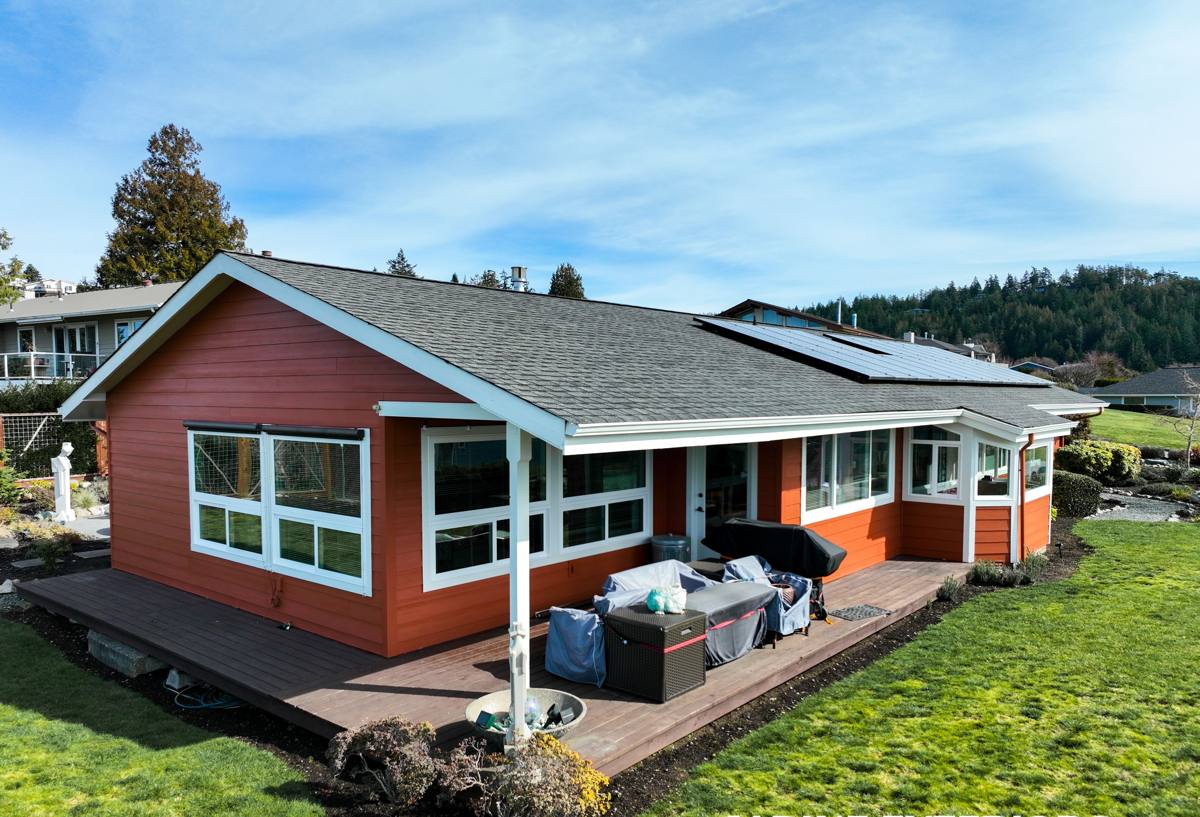
Homes along Sandy Point deal with a combination of stresses that inland Whatcom County properties simply don't face to the same degree. The marine air coming off the water carries salt, which finds its way into every seam, nail head, and hairline crack in a home's exterior. Add Blaine's long stretch of wind-driven rain each fall and winter, plus a moss season that can run from October well into spring, and you've got a recipe for siding problems that show up faster and hide deeper than they would in a drier, more sheltered neighborhood.
None of that means Sandy Point homes are doomed to constant repairs. It means the repairs need to be done correctly, with an understanding of how water, salt, and moss actually behave on a coastal exterior. A patch that would hold up fine in a landlocked subdivision can fail within a season out here if it's not detailed right.
Why Salt Air, Rain, and Moss Cause Different Damage Than You'd Expect
Salt Air Attacks the Metal, Not Just the Siding
Salt-laden air is corrosive to fasteners, flashing, and trim metal long before it visibly damages the siding material itself. A siding board can look fine on the surface while the nails holding it, or the flashing behind it, have already started to corrode and lose their grip. That's part of why siding problems near the water often show up as movement, gaps, or fastener pops rather than obvious rot at first.
Driving Rain Finds the Weak Points
Wind-driven rain doesn't fall straight down — it gets pushed sideways into laps, seams, butt joints, and anywhere caulking has started to fail. Once water gets behind siding, it doesn't dry out quickly in our climate. It sits against the wall sheathing and the water-resistive barrier, and if either of those has a gap, that's where rot starts.
Moss Holds Moisture Against the Wall
A long moss season means more than a cosmetic problem. Moss and algae growth on siding traps moisture right at the surface, extending how long a wall stays wet after a storm. On north-facing walls and shaded sections that get less sun exposure, that moisture retention adds up over multiple seasons and accelerates deterioration at the exact spots where repairs are usually needed anyway.
Signs Your Sandy Point Home May Need a Siding Repair
- Soft or spongy spots when you press on the siding, especially near the bottom courses or around windows
- Visible gaps opening up at butt joints, corners, or where siding meets trim
- Nail or fastener heads that have backed out or show rust staining
- Persistent moss or dark staining that keeps returning after cleaning
- Peeling or bubbling paint, which often points to moisture trapped underneath rather than a surface paint problem
- Visible warping, cupping, or separation in individual boards or panels
- Soft trim or window casings adjacent to siding sections
What a Correct Siding Repair Actually Involves
A proper repair is not just pulling off a damaged board and nailing up a new one. On a coastal property, that approach almost guarantees the same failure repeats within a year or two. A repair done right addresses what's underneath the siding, not just what's visible.
Checking the Water-Resistive Barrier
Once siding is removed from a damaged section, the house wrap or building paper underneath needs to be inspected. If it's torn, degraded, or was never lapped correctly in the first place, replacing the siding without fixing the barrier just sets up the next round of water intrusion.
Flashing Details Matter More Here
Flashing above windows, at butt joints, and around penetrations is what actually redirects wind-driven rain away from the wall assembly. In a driving-rain climate like Blaine's, flashing that's missing, reversed, or installed with the wrong lap direction is one of the most common root causes we find behind siding damage.
Matching Fasteners to the Environment
Given how corrosive salt air is to standard fasteners, repairs near the water should use fasteners rated for corrosion resistance, installed to the manufacturer's spacing and embedment specs. Skimping here is one of the most common reasons a repair looks fine for a season and then starts failing again.
Sealant Is a Detail, Not a Fix
Caulk and sealant have a real job to do at specific joints, but they're not a substitute for correct flashing and drainage. We see a lot of prior "repairs" that were really just a bead of caulk over a problem that needed to be opened up and fixed properly.
Repair or Replace? How We Make That Call
Not every problem section needs a full wall replacement, and not every visible issue can be solved with a patch. The right call depends on how far the damage has spread and what's causing it.
| Factor | Repair Is Usually Sufficient | Replacement Is Usually the Better Call |
|---|---|---|
| Extent of damage | Isolated to one or two boards/panels | Spread across multiple courses or several walls |
| Sheathing condition | Solid, dry wood underneath | Soft or delaminated sheathing found during inspection |
| Cause of damage | A single identifiable failure point (one bad flashing detail, one impact) | A systemic issue like a missing water-resistive barrier or wrong material for the exposure |
| Age and material | Newer siding in otherwise good condition | Older siding nearing the end of its service life, or a product not suited to marine exposure |
| Repeat problems | First occurrence in that area | Same spot has already been "fixed" once before and failed again |
We'll always tell you honestly which category a given problem falls into. Our goal on a repair call is to fix what actually needs fixing — not to upsell a full replacement, and not to patch over something that's going to come back.
Our Process for a Sandy Point Repair Call
- Inspection first. We look at the damaged area and the surrounding sections, checking for moisture, soft spots, and how far a problem may have already traveled behind the surface.
- Diagnose the cause. We identify whether the issue is a flashing failure, a barrier gap, fastener corrosion, moisture from moss and shade, or simple wear — because the fix is different for each.
- Open it up. Damaged siding comes off cleanly so we can actually see and address the sheathing, wrap, and flashing underneath, not just cover it back up.
- Repair the substrate. Any compromised sheathing or barrier material gets addressed before new siding goes back on.
- Reinstall correctly. New material goes on with proper flashing laps, corrosion-appropriate fasteners, and correct spacing — matched as closely as possible to the surrounding siding.
- Walk the job with you. We explain what we found, what we fixed, and what to watch going forward.
Why Hiring a Crew That Already Works Sandy Point Matters
Siding repair on a coastal property in Whatcom County isn't the same trade as siding repair in a dry inland neighborhood, even though it looks similar from the curb. A crew that regularly works waterfront and near-waterfront homes in this area already knows where problems tend to hide — which wall orientations take the worst of the wind-driven rain, how far salt corrosion typically travels into a wall assembly before it's visible, and how much a shaded, moss-prone section needs extra attention compared to a sun-exposed one.
That familiarity matters when you're deciding whether to trust a quote. A contractor unfamiliar with this kind of exposure may underestimate what's happening behind the siding, quote a surface-level patch, and leave the actual cause untouched. We'd rather spend an extra few minutes during the inspection than hand you a repair that doesn't hold up through the next storm season.
Material Matters: Why We Repair — and Recommend — James Hardie Fiber Cement
We only install James Hardie fiber cement siding, and that standard shapes how we think about repairs too. Different siding materials respond very differently to the exact conditions Sandy Point homes face.
Vinyl siding can crack or warp under repeated wet-dry cycling and temperature swings, and it's difficult to color-match or patch invisibly once it's aged in the sun. Cedar and other wood-based sidings are naturally more vulnerable to the kind of sustained moisture that a long moss season creates, requiring more frequent maintenance to stay ahead of rot. Engineered wood products like LP SmartSide can swell or deteriorate at cut edges and seams if moisture gets in and isn't caught early — a real risk in a climate where wind-driven rain is finding those seams regularly.
James Hardie's fiber cement is engineered specifically to handle moisture-prone climates, and Hardie's HZ5 product line is built for exactly this kind of marine and high-moisture exposure. It won't rot, and it holds up to the wet-dry cycling that's constant near the water. When a repair calls for replacing a damaged section, matching into existing Hardie siding is straightforward, and if a home is due for a fuller replacement down the line, we'll walk you through why Hardie is the product we stand behind for this exposure — not because of marketing, but because of what we consistently see holding up on homes like yours.
Get an Honest Look at Your Siding
If you're seeing soft spots, gaps, persistent moss, or peeling paint on your Sandy Point home, it's worth having someone look before the next round of fall rain finds its way further into the wall. We're happy to come out, take an honest look, and tell you plainly whether you're looking at a targeted repair or something bigger — with a free, no-pressure estimate either way.