 Blaine
 Why Sandy Point Roofs Take More Punishment
Sandy Point sits right on the water in Whatcom County, just south of the Blaine city limits, and that location comes with a roofing bill most inland neighborhoods don't pay. Homes here deal with a steady mix of salt-laden air off the strait, wind-driven rain that gets pushed sideways under poorly sealed edges, and heavy tree cover that keeps sections of roof shaded and damp for much of the year. None of that means a roof out here is doomed to fail early — it means the roof has to be built and installed with those specific conditions in mind, not with a generic approach that works fine in a drier, more open part of the county.
We work in this area regularly, which matters more than it sounds. A crew that mostly roofs subdivisions ten or fifteen miles inland doesn't see the same failure patterns we see week to week at Sandy Point: fastener corrosion near the water, moss colonies that come back within a season if the first treatment was half-hearted, and flashing details that were fine for a standard Whatcom County rainstorm but not for driving rain coming straight off the water.
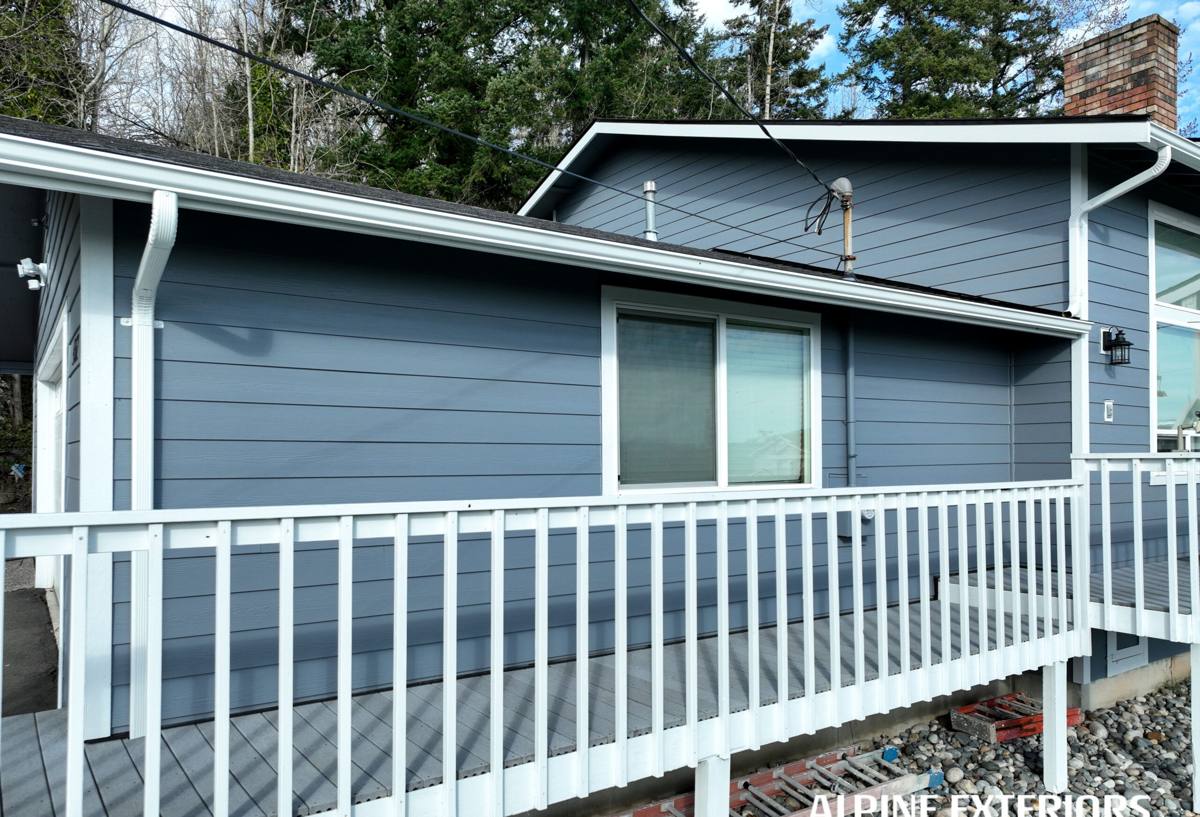
What Salt Air, Rain, and Moss Actually Do Over Time
Each of these three factors wears a roof down differently, and understanding the mechanism helps explain why the fix isn't always as simple as "put new shingles on."
Salt Air
Airborne salt is corrosive to exposed metal. Nails, staples, flashing, and any unprotected fastener heads are the first things to show it — rust streaking, pitting, and eventually fastener failure. On a standard roofing job away from the water, this is a non-issue for decades. Close to Sandy Point's shoreline, it's one of the first things we check on an older roof, because a roof can look intact from the ground while its fastening is already compromised underneath.
Driving Rain
Rain that falls straight down is easy to shed. Rain that's being pushed sideways by wind off the water behaves differently — it finds its way under shingle tabs, around poorly lapped flashing, and into any gap that a calmer climate would never expose. That's why underlayment choice, flashing detail, and fastening pattern matter more here than in a sheltered inland yard.
Moss
Whatcom County's damp, mild climate is generally moss-friendly, and shaded, north-facing, or tree-covered roof sections at Sandy Point are especially prone to it. Moss isn't just cosmetic. As it establishes, it lifts shingle edges, holds moisture against the roof deck longer than bare shingle would, and accelerates granule loss. A roof that's been fighting moss for years is often further along in its decline than its age alone would suggest.
Signs a Sandy Point Roof Needs Replacement, Not Just Repair
Not every roofing problem here calls for a full tear-off. But there's a point where patching stops being the honest answer. Some signs that point toward replacement rather than another round of repairs:
- Granule loss heavy enough that you can see bare, shiny patches on multiple slopes, not just one weathered spot
- Moss that keeps returning to the same areas within a year or two of treatment, especially if it's spreading rather than staying contained
- Rust staining or visible corrosion at flashing, vent boots, or nail heads across more than a small area
- Soft spots or sagging when walked, which usually means deck damage underneath, not just a surface issue
- Interior staining on ceilings or in the attic after wind-driven storms, even if the roof "looks fine" from the ground
- A roof that's already had multiple repair visits in the last few years for different leaks in different spots
If a roof is showing one or two of these in isolation, a repair can often buy real time. When several show up together, that's usually the underlying materials and structure telling you the roof has reached the end of its useful life, and further patching is just delaying a bigger repair bill.
What a Correct Roof Replacement Involves Here
A roof replacement done right at Sandy Point isn't fundamentally different in structure from a well-done replacement anywhere else — it's the details that shift to account for the site.
The job starts with a full tear-off down to the deck, not an overlay. Overlaying new shingles on top of old ones hides the deck condition, traps moisture, and is exactly the kind of shortcut that causes early failure in a climate this damp. Once the deck is exposed, we check it for soft spots, rot, or damage from long-term moisture — this is also the point where salt-related fastener corrosion on the old roof becomes visible, and it's a useful data point for how the new roof should be detailed.
From there, the build-up matters:
- Underlayment: a synthetic, water-resistant underlayment is standard practice for coastal exposure, giving the deck a real second line of defense if wind-driven rain gets past the shingle layer
- Ice and water shield: applied at eaves, valleys, and other vulnerable transitions where wind-driven rain and standing moisture are most likely to find a way in
- Flashing: new flashing at every roof-to-wall transition, chimney, and vent penetration, sized and lapped correctly for wind-driven rain rather than just vertical rainfall
- Fasteners: corrosion-resistant fasteners appropriate for coastal exposure, following manufacturer nailing patterns rather than shortcuts that save time but cost wind resistance
- Ventilation: proper intake and exhaust airflow, which keeps the underside of the deck drier and reduces the conditions moss and rot both depend on
Material Considerations for a Shoreline Property
There's no single "best" roofing material for every home — it depends on the house, the budget, and how much upkeep an owner wants to take on. What we can offer is a straight comparison of how common options actually hold up under Sandy Point's specific conditions.
| Material | Salt Air Durability | Moss Resistance | Typical Upkeep |
|---|---|---|---|
| Architectural asphalt shingle | Good, with corrosion-resistant fasteners | Moderate — benefits from periodic treatment on shaded slopes | Low to moderate |
| Standing seam metal | Very good, when properly coated and detailed | Strong — sheds moss growth better than shingle surfaces | Low |
| Cedar shake | Fair — requires diligent maintenance near salt exposure | Poor without regular treatment; naturally moss-prone | High |
| Composite/synthetic shake | Good | Moderate to good, depending on product | Low to moderate |
We'll walk through these trade-offs honestly during an estimate rather than steering everyone toward the same product. A shaded, tree-covered lot leans the conversation toward moss resistance; an open, wind-exposed lot leans it toward wind rating and fastening detail. Budget and how the home looks from the street matter too, and there's nothing wrong with weighing those against performance as long as the choice is made with eyes open.
How Our Process Works, Start to Finish
Estimate and Inspection
We start with an on-site look at the roof, deck condition where accessible, attic ventilation, and any trouble spots you've already noticed — leaks, moss buildup, sagging, or storm damage. You get a straightforward assessment of whether the roof needs replacement or whether repair is still the honest recommendation, along with a written estimate that spells out materials and scope.
Scheduling and Prep
We plan around Whatcom County's weather windows rather than forcing a job into a bad forecast, and we protect landscaping, siding, and anything below the work area before the tear-off starts.
Tear-Off and Deck Check
Old roofing comes off down to the deck. Any rot or soft decking gets identified and addressed before anything new goes down — this isn't an upsell add-on, it's a step that determines whether the new roof has a sound base to begin with.
Install
Underlayment, ice and water shield at vulnerable areas, flashing, and the roofing material go on in that order, following manufacturer specifications for fastening pattern and exposure — not a rushed or shortcut version of it.
Cleanup and Walkthrough
We clear debris and run a magnetic sweep for stray nails, then walk the finished roof with you so you know what was done and what to expect from it going forward.
Why a Crew That Already Works Sandy Point Matters
Roofing knowledge that applies generally across Blaine and Whatcom County only goes so far at Sandy Point. A crew that's spent time on roofs in this specific area has already seen how moss re-establishes on the shaded lots, which flashing details actually hold up against driving rain off the water, and where salt exposure tends to show up first on fasteners and metal components. That's the kind of pattern recognition that comes from repeated work in one place, not from a single job or a general roofing background.
It also matters for practical reasons — a local crew can respond faster if something needs a follow-up look after a storm, and they're not learning the area's quirks on your roof for the first time.
After Your Roof Is Replaced: Keeping It Performing
A correctly installed roof at Sandy Point should need far less attention than an aging one, but "low maintenance" isn't "no maintenance" in this climate. A short list of what actually protects the investment:
- Clear gutters and downspouts at least twice a year so wind-driven rain has somewhere to go instead of backing up under the roof edge
- Have shaded or north-facing slopes checked for early moss growth before it establishes, rather than waiting until it's visibly spreading
- Trim back tree limbs that overhang the roof to reduce shade, debris buildup, and physical wear from branches in wind
- After any significant windstorm, do a visual check from the ground for lifted shingles, displaced flashing, or debris damage
- Keep an eye on attic ventilation — blocked vents trap moisture and undercut even a well-installed roof over time
- Address small leaks or flashing issues promptly rather than letting them sit through another wet season
None of this requires a maintenance contract or constant attention — it's a few checks a year that catch problems while they're still small and cheap to fix.
Get a Straightforward Estimate
If your Sandy Point roof is showing its age, dealing with recurring moss, or you're just not sure whether it's a repair or a replacement situation, we're glad to take a look and give you an honest read — no pressure, no scare tactics, just a clear assessment and a written estimate you can take your time with. Fill out the form below to get started.