 Blaine
 Roofing in Custer: A Different Climate Than Most Installers Admit
Custer sits close enough to the Strait of Georgia and Drayton Harbor that homes here take on a different kind of weather stress than roofs just twenty miles inland. Salt-laden air moves through on the marine wind, driving rain comes in sideways off winter storms, and the shoulder seasons stay damp and shaded long enough for moss and algae to get established before summer ever dries things out. A roof installed with generic, one-size-fits-all methods will survive here for a while. A roof installed with Whatcom County's specific conditions in mind will survive here well.
This page is about one job, done right, in one place: new roof installation for homes in and around Custer. Not a general overview of roofing services — the specific decisions that matter when the house is a few miles from saltwater and the roof will spend a good chunk of the year wet.
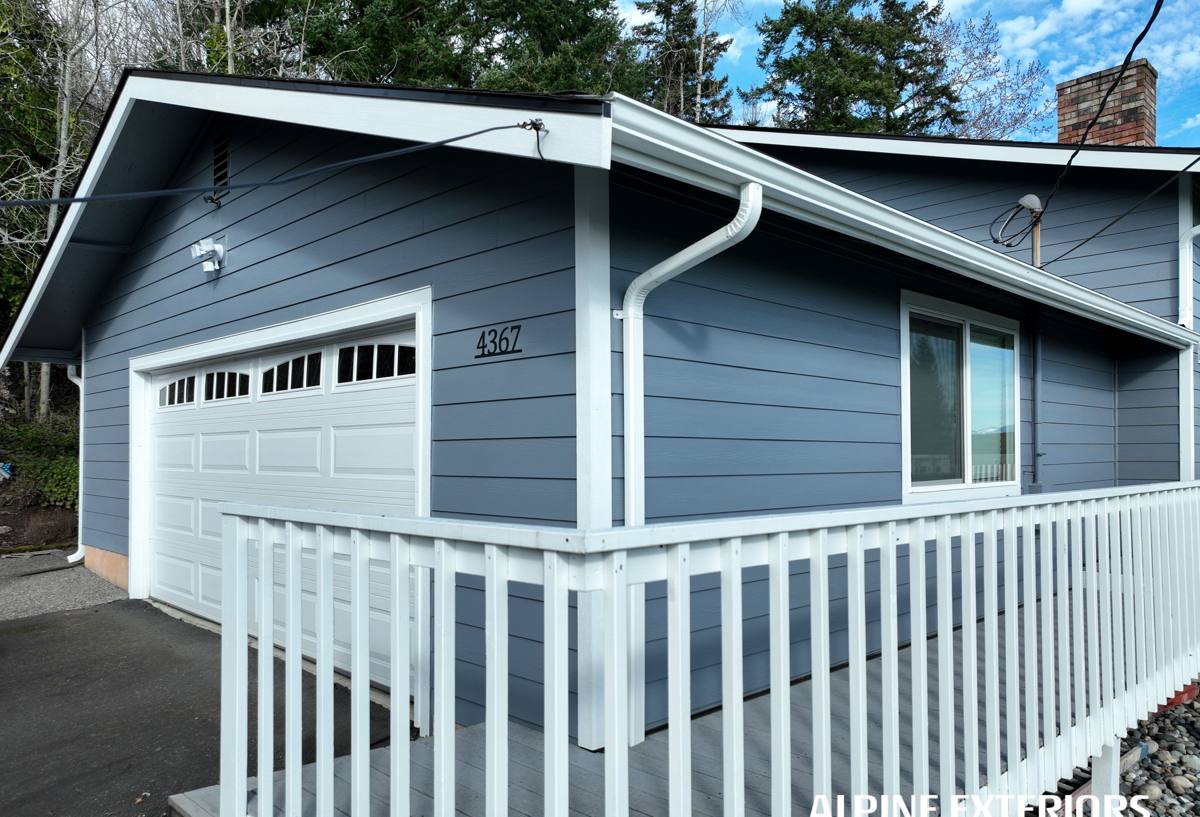
What Salt Air, Driving Rain, and Moss Actually Do to a Roof
Salt Air
Airborne salt accelerates corrosion on exposed metal — flashing, fasteners, vent caps, and gutter hardware take the brunt of it. Roofs closer to the water need fastener and flashing metals chosen for corrosion resistance, not just whatever is cheapest to stock.
Driving Rain
Wind-driven rain doesn't just fall on a roof, it pushes sideways and upward under laps, around vents, and into any seam that isn't properly lapped or sealed. Standard installation shortcuts that might get away with it in a calmer climate show up as leaks here within a season or two.
Moss Season
Whatcom County's damp, shaded stretches run long — often eight months of the year with enough moisture for moss and algae to take hold, especially on north-facing slopes and under tree cover. Moss isn't just cosmetic. It holds moisture against the roofing material, lifts shingle edges, and works its way under the surface over time, shortening the life of an otherwise sound roof.
Signs a Custer Home Needs a New Roof, Not Another Repair
- Granule loss heavy enough that you can see bare, shiny patches on asphalt shingles
- Shingles that are cupping, curling, or cracking, especially on south and west-facing slopes
- Soft or spongy decking felt underfoot in the attic or from a ladder
- Moss buildup thick enough that it's lifted shingle tabs rather than just sitting on the surface
- Daylight visible through the roof deck from inside the attic
- Repeated leaks in different spots after previous patch repairs
- A roof already past 20-25 years old (typical asphalt shingle lifespan) with multiple issues stacking up
One or two of these on their own might mean a repair is enough. Several at once, especially on a roof already in its second decade, usually means the smarter money is a full replacement rather than chasing leaks one at a time.
What a Correct Installation Actually Involves
"New roof" gets used loosely. A correct installation in this climate is a system, not just a layer of shingles nailed down. Each piece matters:
Tear-Off and Deck Inspection
We remove the old roofing down to the deck rather than layering over it, because you can't evaluate — or trust — what's underneath otherwise. Any water-damaged or rotted decking gets identified and replaced before anything new goes down. Skipping this step is the single most common way a new roof fails early.
Underlayment
A quality synthetic underlayment, installed as a continuous water-resistant layer under the roofing material, is what actually keeps a home dry if wind-driven rain gets past the surface layer — which, in this climate, it eventually will at some point.
Ice and Water Shield at Vulnerable Areas
Valleys, eaves, and roof-to-wall transitions get self-adhering waterproof membrane, not just standard underlayment. These are the spots where driving rain and moisture backup cause the most damage.
Flashing
Chimneys, skylights, vent pipes, and wall intersections all need properly formed and lapped flashing — installed so water sheds outward at every layer, not caulked over as a substitute for correct sequencing. Given the salt air here, we pay attention to flashing metal that resists corrosion rather than pitting and staining within a few years.
Ventilation
Balanced intake and exhaust ventilation keeps the attic temperature and moisture level in check, which matters for both shingle lifespan and moss resistance — a cooler, drier roof deck holds moss less readily than a warm, damp one.
Drip Edge and Final Details
Proper drip edge at eaves and rakes, correctly lapped starter courses, and nailing patterns that meet manufacturer specs (not just "close enough") are what separate a roof that holds its warranty from one that doesn't.
Roofing Materials: What Holds Up Near the Water
Most Custer homes are well served by architectural asphalt shingles from established manufacturers like GAF, CertainTeed, or Owens Corning — they're a proven, cost-effective choice when installed correctly. Metal roofing is a strong option for homeowners who want a longer service life and are comfortable with the higher upfront cost. We steer most clients away from wood shake and low-end 3-tab shingles for this specific climate — not because either is a bad product everywhere, but because wood shake demands more moisture-related maintenance than most owners want to keep up with here, and 3-tab shingles simply don't hold up as well to wind-driven rain and moss as architectural profiles do.
| Material | Typical Lifespan | Moss Resistance | Salt Air Durability | Relative Cost |
|---|---|---|---|---|
| Architectural Asphalt Shingle | 25-30 years | Good, with proper ventilation | Good | $ |
| 3-Tab Asphalt Shingle | 15-20 years | Fair | Fair | $ |
| Standing Seam Metal | 40-60 years | Excellent | Very Good (with proper fastener choice) | $$$ |
| Cedar Shake | 20-30 years (with upkeep) | Requires regular maintenance | Fair | $$$ |
There's no single "best" material for every Custer home — the right call depends on the roof's pitch, sun exposure, tree cover, and how the home's budget lines up with long-term maintenance versus upfront cost. We'll walk through the real trade-offs for your specific roof rather than pushing one product across the board.
Our Installation Process
- On-site inspection and estimate — we look at your current roof, attic ventilation, and any problem areas before recommending anything
- Material and scope walkthrough — a straightforward conversation about material options and what's actually needed for your roof, not a sales pitch
- Scheduling around the weather — we plan installation windows with Whatcom County's rain patterns in mind, since roofing done in the wrong conditions is roofing done wrong
- Tear-off and deck inspection — old roofing removed, decking checked and repaired as needed
- System installation — underlayment, ice and water shield, flashing, roofing material, and ventilation installed in the correct sequence
- Final walkthrough — we review the completed roof with you before calling the job done
Why a Crew That Already Works in Custer Matters
Roofing crews unfamiliar with this stretch of Whatcom County tend to treat it like anywhere else in Western Washington — and that's exactly where problems start. A crew that regularly works Custer and the greater Blaine area already knows which slopes here hold moss the longest, how far wind-driven rain travels up a roof plane in a winter storm off the water, and which flashing details actually need extra attention this close to saltwater. That's not something you pick up from a manual; it's something you learn from doing the work in this specific place, season after season.
There's also the practical side: local permitting familiarity, knowing realistic weather windows for scheduling, and being reachable afterward if a question comes up — not a crew that did one job in the area and moved on.
What Affects the Cost of a New Roof
| Factor | Why It Matters |
|---|---|
| Roof size and complexity | More valleys, dormers, and penetrations mean more labor and flashing work |
| Current deck condition | Rotted or damaged decking found during tear-off adds material and labor |
| Material choice | Asphalt, metal, and shake carry different upfront costs and lifespans |
| Roof pitch and access | Steeper or harder-to-access roofs take longer and require more safety setup |
| Ventilation upgrades | Adding or correcting intake/exhaust ventilation adds some cost but pays off in roof life |
| Layers to remove | Tearing off multiple existing layers takes more labor than a single-layer tear-off |
We don't quote a job over the phone with any real accuracy — too much depends on what's actually happening on your specific roof. A proper estimate starts with getting eyes on it.
Keeping a New Roof Sound After Installation
- Keep gutters and downspouts clear so water isn't backing up under the eaves
- Trim back tree limbs that shade the roof and keep it damp longer than it needs to be
- Have moss growth addressed early, before it lifts shingle edges rather than just sitting on the surface
- Schedule a periodic visual check after major windstorms, since driving rain and gusts off the water can loosen flashing or shift material over time
- Address any small leak or stain immediately rather than waiting for it to spread
A correctly installed roof shouldn't need much — but a little attention each year goes a long way toward getting the full lifespan out of it in this climate.
If your Custer home needs a new roof, or you're not sure whether a repair will actually hold, we're glad to take a look and give you a straight answer. Use the form below to request a free, no-pressure estimate.