 Blaine
 Semiahmoo Takes Weather Differently Than the Rest of Blaine
Homes on the Semiahmoo spit and along the surrounding shoreline sit in one of the more exposed spots in Whatcom County. There's open water on more than one side, wind that doesn't have much to slow it down before it hits a roofline, and salt-laden air that settles on every surface, day after day. A storm that causes minor cosmetic damage a few miles inland can lift shingles, drive water under flashing, or strip granules off a roof that's already been softened by years of salt exposure in Semiahmoo.
Add in the fact that this part of Washington gets long stretches of damp, mild weather that never quite dries a roof out, and you get ideal conditions for moss and algae to take hold. Moss doesn't just look bad — it holds moisture against the roof deck and works its way under shingle edges, which turns a small storm event into a bigger repair than it should have been. Any honest assessment of storm damage on a Semiahmoo roof has to account for what the roof was already dealing with before the wind and rain showed up.
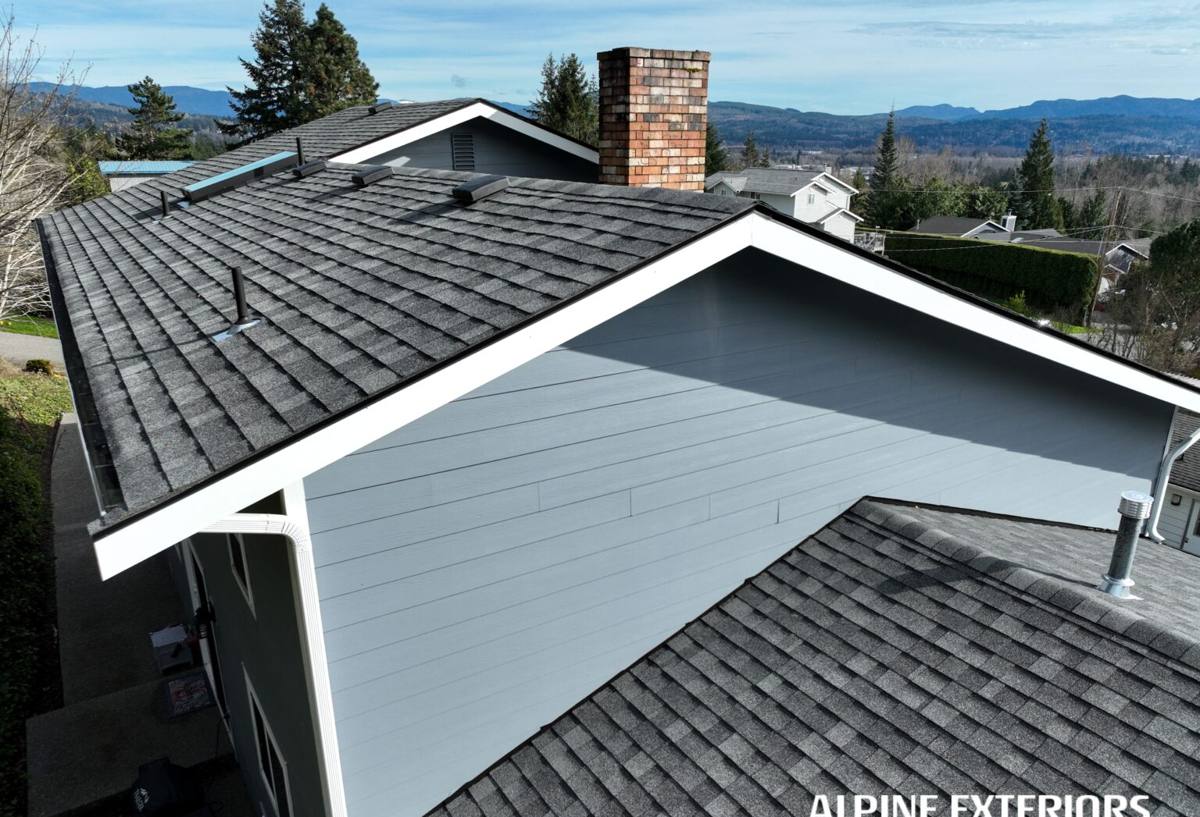
What Storm Damage Actually Looks Like on a Semiahmoo Roof
Not all storm damage announces itself with a missing shingle in the yard. A lot of the damage we find during a post-storm inspection is subtle enough that a homeowner walks past it for months before it turns into a ceiling stain. Here's what we're actually looking for:
- Wind-lifted or creased shingles — the sealant strip breaks loose, the shingle doesn't lie flat anymore, and it's now a wind sail waiting for the next storm to finish the job.
- Flashing pulled away from chimneys, walls, and roof valleys — this is one of the most common leak points after wind events, and it's easy to miss from the ground.
- Granule loss from driving rain and hail-like debris impact, which shows up as bare, shiny patches on asphalt shingles and speeds up UV and moisture damage underneath.
- Gutter and downspout damage that lets water dump against the fascia and soffit instead of routing away from the house — a bigger deal here than in drier climates because it stays wet longer.
- Moss and algae intrusion at shingle laps and valleys, often worsened by wind-driven rain forcing water under mats of growth that a dry-climate roof would never develop in the first place.
- Corrosion on exposed metal — nails, vents, and older flashing that were already weakened by salt air fail faster once storm water gets to them.
The tricky part is that these problems compound. A shingle that lifted in one windstorm may reseal enough to look fine, then fail completely in the next one because the sealant strip is now broken for good. That's why a proper storm damage inspection isn't just a glance at the roofline — it's a hands-on check of the areas most likely to be hiding trouble.
What a Correct Storm Damage Inspection Involves
A rushed inspection misses the damage that actually causes leaks. We walk the roof itself when it's safe to do so, not just look from a ladder at the eave, and we check the following in order:
On the Roof Surface
We check every shingle course near ridges, valleys, and edges — the areas that take the most wind load — for lifting, cracking, or broken seals. We also check granule loss patterns, since heavy loss in one section but not another often points to wind direction and helps confirm the damage is storm-related rather than general age.
At Penetrations and Transitions
Chimneys, vent pipes, skylights, and wall-to-roof transitions are where the vast majority of storm leaks actually start. We check flashing seams, counterflashing, and sealant for movement or separation, because these are the spots wind pressure works on hardest.
In the Attic, When Accessible
Water doesn't always show up on the ceiling right away. Staining on the underside of the roof deck, damp insulation, or a musty smell in the attic can point to a leak that hasn't reached the living space yet — catching it here instead of after drywall damage saves real money.
Gutters, Fascia, and Drainage
We check that water is actually being carried away from the roof edge and the siding below it. A gutter pulled loose in a windstorm can undo the protection the roof is otherwise providing.
Repair or Replace? How We Actually Decide
Not every storm-damaged roof needs a full replacement, and we're not going to tell you it does. The decision comes down to how much of the roof is affected, how old the existing roofing is, and whether the damage is isolated or spread across multiple areas.
| Factor | Favors Targeted Repair | Favors Full Replacement |
|---|---|---|
| Age of existing roof | Under 10-12 years, otherwise sound | Nearing or past its expected service life |
| Extent of damage | Isolated to one slope, valley, or flashing point | Spread across multiple slopes or the whole roof |
| Moss/algae condition | Light growth, treatable | Heavy growth with deck moisture damage underneath |
| Matching materials | Current shingle line still available | Discontinued product, visible patch mismatch |
| Underlying deck condition | Solid, dry sheathing | Soft spots, rot, or repeated past leaks |
We'll always tell you honestly which side of that table your roof falls on. A targeted repair done correctly — proper flashing, matched materials, sealed transitions — can add years of reliable service to a roof that isn't ready to be torn off. Where the damage is more extensive or the roof was already near the end of its life, we'll explain why a repair would just be a short-term patch and let you make the call with real information.
Our Process, Start to Finish
- Inspection and documentation. We assess the damage in person and document it clearly enough to support an insurance claim if you're filing one.
- Written scope and estimate. You get a clear explanation of what's damaged, what we recommend, and a real cost range before any work starts — no surprise add-ons once we're on the roof.
- Temporary protection if needed. If there's an active leak or exposed section, we get it covered and stabilized first so water damage doesn't get worse while repairs are scheduled.
- The repair itself. Damaged shingles, flashing, or decking are replaced with materials matched to your existing roof as closely as possible, with attention to how everything ties into the surrounding roofing — a patch that isn't properly integrated is just a future leak.
- Cleanup and final check. We clear debris, nails, and old materials from the property and walk the repair with you before calling it done.
Materials That Actually Hold Up in This Environment
Flashing and Fasteners
In a salt-air environment like Semiahmoo, the metal you use for flashing and fasteners matters more than it would inland. We favor corrosion-resistant flashing and fastener options over standard-grade materials in these applications, because the cost difference up front is small compared to the cost of redoing a repair in a few years when standard metal starts to pit and fail.
Underlayment
Given how much wind-driven rain this area sees, we pay close attention to underlayment quality and how it's installed around penetrations, valleys, and eaves — this is the layer that protects the deck if wind ever works a shingle loose again before the next inspection catches it.
Moss and Algae Treatment
Where moss has taken hold, we clear it carefully rather than power-washing granules off the shingles, and we'll talk through preventive treatment options so it doesn't come back as fast. Moss control is maintenance, not a one-time fix, and we're upfront about that instead of promising a permanent solution that doesn't exist in this climate.
Storm Damage and Insurance Claims
Most homeowners filing a storm damage claim for the first time don't know what an adjuster needs to see. A few things make the process smoother:
- Get an inspection soon after the storm — some damage (like lifted shingles that haven't fully failed yet) is easier to document while it's fresh.
- Ask for a written scope of damage with photos, not just a verbal description, before you talk to your insurer.
- Understand that not all storm damage is covered the same way — flashing wear from years of salt exposure, for example, is different from a single wind event, and insurers look at that distinction closely.
- Get more than one perspective if the adjuster's assessment seems to miss damage you know is there — you're allowed to have your own contractor's documentation on record.
We're happy to provide clear, honest documentation either way. We won't inflate a scope of work to pad a claim, and we won't downplay real damage to make a repair sound simpler than it is.
A Simple Maintenance Checklist for Semiahmoo Homeowners
Between storms, a little attention goes a long way in this climate. Homeowners on the spit and around Semiahmoo Bay should keep an eye on:
- Gutters and downspouts clear of debris, especially before the wet season builds
- Visible moss or dark streaking on north-facing or shaded roof slopes
- Loose or lifted shingle edges after any significant windstorm
- Flashing around chimneys and vents for gaps or rust staining
- Attic for musty odor, damp insulation, or ceiling stains after heavy rain
- Fasteners and metal trim for early corrosion, before it spreads
Catching any of these early usually means a smaller, cheaper repair than waiting until it shows up as an interior leak.
Why It Matters That We Already Work in Semiahmoo
Roofing crews that mostly work inland don't always think about salt exposure, wind loading from open water, or how long moss really lingers here compared to a drier neighborhood a few miles away. Working regularly in and around Semiahmoo and greater Blaine means we're not guessing about how this specific stretch of Whatcom County treats a roof — we've seen the pattern of damage this environment causes and we build the repair to hold up against it, not just against a generic storm damage checklist.
If you've got storm damage, suspected storm damage, or just want an honest opinion on a roof that's been through a rough winter, we're glad to take a look. Reach out for a free, no-pressure estimate using the form below — we'll tell you straight what we find and what it would take to fix it right.