 Blaine
 Building New in Sandy Point: Why Window Choice and Installation Matter More Here
Sandy Point sits right up against the Strait of Georgia, which means homes here deal with a combination of conditions you don't see a few miles inland in Blaine or Custer. Salt-laden air off the water, wind-driven rain that comes in sideways during winter storms, and a long stretch of gray, damp months that keep moss and mildew active nearly year-round. When you're framing a new home or a major addition out here, the windows you choose and how they're installed will decide whether you're dealing with condensation, staining, and callbacks in five years, or a tight, dry building envelope that holds up for decades.
New construction is the best possible time to get this right. Unlike a retrofit, where a crew is working around existing siding, trim, and interior finishes, new-construction window installation happens while the wall assembly is still open. That gives us direct access to the rough opening, the sheathing, and the water-resistive barrier — which means the flashing and drainage details can be built correctly from the start instead of patched in later. Get it right now, and you won't touch it again for a long time. Get it wrong, and it's often hidden behind siding and trim until a leak shows up.
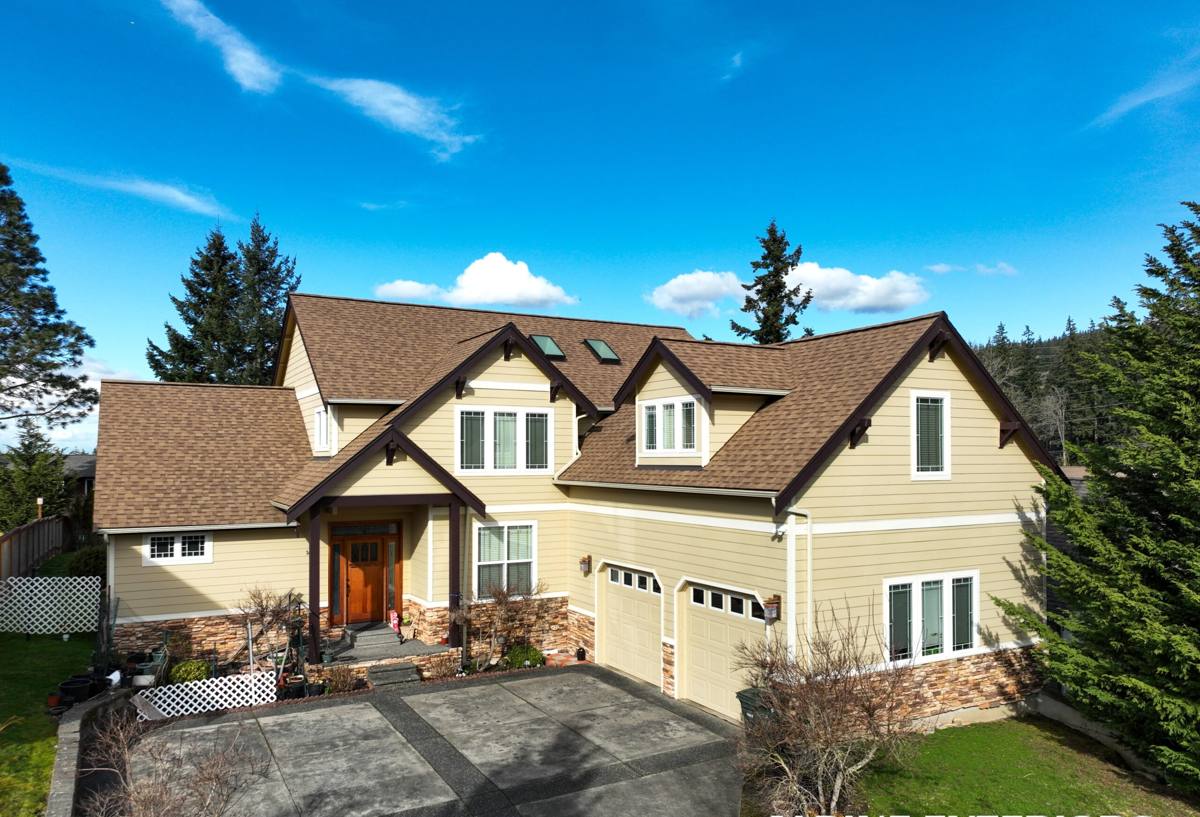
What Sandy Point's Climate Actually Does to Windows
Salt Air and Corrosion
Homes within a mile or two of the water take on airborne salt that settles on every exterior surface, including window frames, hardware, and fasteners. Over time, salt exposure accelerates corrosion on lower-grade metal components — hinges, cranks, and screws — and can pit or dull finishes on aluminum-clad products that aren't rated for coastal exposure. This is one of the main reasons we steer clients toward vinyl, fiberglass, or properly coastal-rated clad wood frames for Sandy Point builds, and why we pay attention to the corrosion resistance of the hardware, not just the frame material.
Driving Rain and Wind Pressure
Sandy Point catches wind straight off the Strait, and that wind regularly pushes rain horizontally against the west and north-facing walls of a home. Standard flashing details that work fine on a sheltered inland lot can fail here because water is being forced up and under laps, not just running down by gravity. New-construction installation lets us build a shingle-style flashing sequence — sill pan, jamb flashing, head flashing, all lapped correctly with the water-resistive barrier — that's designed for wind-driven water, not just calm-day drainage.
Moss, Moisture, and a Long Wet Season
Whatcom County's wet season runs long, and Sandy Point's exposure to marine moisture keeps humidity elevated even on drier days. Moss and algae growth on north-facing trim and lower window sills is common if drainage paths aren't kept clear. It's less about the window itself and more about how water is managed around it — sills need slope, weep paths need to stay open, and any wood trim needs to be back-primed and sealed on all sides before install.
What a Correct New-Construction Window Install Involves
New-construction windows have a nailing flange that gets fastened directly to the sheathing, then integrated into the wall's water-resistive barrier before siding goes on. The sequence matters as much as the window itself:
- Rough opening checked for square, level, and correct dimensions before the window ever arrives on site
- Sill pan flashing installed with back-dam and slope to shed any water that gets past the window to the exterior, not into the wall cavity
- Window set in place, shimmed for level and plumb, and fastened through the nailing flange per the manufacturer's schedule
- Jamb flashing lapped over the sill pan, then head flashing lapped over the jamb flashing — always shingle-style, water moving down and out at every layer
- Housewrap or building paper integrated over the flanges in the correct order so the drainage plane stays continuous
- Interior and exterior air sealing with low-expansion foam or backer rod and sealant, keeping the assembly airtight without over-compressing the frame
- Final check for square, smooth operation, and a clean reveal before trim and siding close it in
Skipping or shortcutting any one of these steps is how a brand-new window ends up with a moisture problem behind the siding within a few winters. The window product warranty doesn't cover bad flashing — that's an installation issue, and it's on the installer.
Choosing the Right Window Product for a Coastal Whatcom County Lot
There's no single "best" window brand for every home, but for Sandy Point's exposure, a few factors matter more than they would inland:
| Factor | Why It Matters in Sandy Point |
|---|---|
| Frame material | Vinyl and fiberglass resist salt corrosion well and need little upkeep; clad wood needs a coastal-rated finish and more attention |
| Hardware and fasteners | Stainless or corrosion-resistant hardware holds up far longer than standard-grade hardware near the water |
| Glass package | Low-E, argon-filled dual pane is standard for our climate; triple pane adds performance on exposed west and north walls |
| Air infiltration rating | A tighter rating matters more here given sustained wind off the water, not just gusts |
| Sill design | A sill with clear weep paths and slope resists moss and standing water better than a flat sill |
We'll walk through these trade-offs with you based on your home's actual exposure — a window on a sheltered south wall doesn't need the same spec as one facing straight into the strait.
Our Process for New-Construction Window Work in Sandy Point
1. Plan Review and Opening Verification
Before windows are ordered, we review the plans and verify rough opening sizes against the actual framing on site. Framing tolerances vary, and catching a discrepancy before the windows are built saves weeks of delay.
2. Product Selection Walkthrough
We go over frame material, glass package, and hardware options with you, factoring in which walls face the water and which are more sheltered. Budget matters too — we'll give you honest ranges, not upsell every opening to the top-tier product.
3. Flashing and Install
Our crew installs sill pans, sets and fastens the windows, and builds the full flashing sequence before siding crews close in the wall. We don't consider a window "done" until the drainage plane is continuous around it.
4. Quality Check Before Closing the Wall
Every opening gets a check for square operation, sealed gaps, and correctly lapped flashing before siding and trim cover it up. This is the last point where a mistake is cheap to fix — after siding goes on, it's not.
Why It Matters to Hire a Crew That Already Works Sandy Point
General contractors and builders coming from drier or more sheltered parts of Whatcom County sometimes install windows the same way they would anywhere else — and most of the time, it's fine, because most inland conditions are more forgiving. Sandy Point isn't as forgiving. A crew that's done window work on this stretch of coastline knows which walls take the brunt of the weather, understands why a sill pan isn't optional on a west-facing opening, and has already seen what happens when salt air gets at the wrong hardware. That local pattern recognition is hard to substitute with a generic install checklist, and it's the difference between a window install that just meets code and one that's actually built for where it sits.
Timeline and Coordination on a New Build
Window installation on new construction has to land at the right point in the schedule — after the wall sheathing and water-resistive barrier are in place, but before siding starts. We coordinate directly with your general contractor or builder to hit that window (no pun intended), and we build in enough lead time on ordering so a custom size or finish doesn't stall the rest of the framing crew. On a typical Sandy Point home, window installation itself takes a matter of days once the units are on site; the longer lead time is usually in ordering, especially for less common sizes or coastal-rated finishes.
Maintenance After Move-In
A correctly installed window in Sandy Point still benefits from a little seasonal attention given the salt air and long wet season:
- Rinse frames and hardware periodically to clear salt buildup, especially on water-facing walls
- Check that weep holes and sill drainage paths stay clear of debris and moss
- Inspect exterior caulking annually and re-seal any cracked or separated joints
- Operate hardware through a full cycle a few times a year to keep it from seizing
None of this is heavy maintenance — it's the kind of five-minute check that keeps a well-installed window performing for its full service life instead of fighting the coastal environment from day one.
If you're framing a new home or addition in Sandy Point and want windows specified and installed correctly the first time, we're happy to walk the plans with you and put together a straightforward estimate — no pressure, no obligation. Use the form below to get started.