 Blaine
 Why Dakota Creek Roofs Take a Different Kind of Beating
Dakota Creek sits close enough to the water that homes here deal with a combination most inland roofs never see: salt-laden air off the Strait of Georgia and Semiahmoo Bay, wind-driven rain that comes in sideways during winter storms, and a moss season that runs long because the marine climate keeps roof surfaces damp for weeks at a time. Any one of those on its own is manageable. Together, they speed up wear on shingles, flashing, and fasteners in ways that a roof twenty miles inland doesn't experience.
Salt air is corrosive to exposed metal — nail heads, flashing seams, gutter hardware — and it accelerates the breakdown of asphalt shingle granules over time. Driving rain doesn't just fall on a roof, it gets pushed sideways and upward under shingle edges, ridge caps, and around penetrations like vents and chimneys, which is exactly where storm damage tends to show up first as a leak rather than as obvious missing shingles. And moss, which thrives in Whatcom County's wet, mild winters, holds moisture against the roof deck and lifts shingle edges, creating entry points for wind and rain that wouldn't otherwise be a problem.
When we talk about storm damage repair in Dakota Creek specifically, we're talking about repairs that account for all three of these factors at once — not just patching what blew off, but fixing the roof in a way that holds up to the next storm and the one after that.
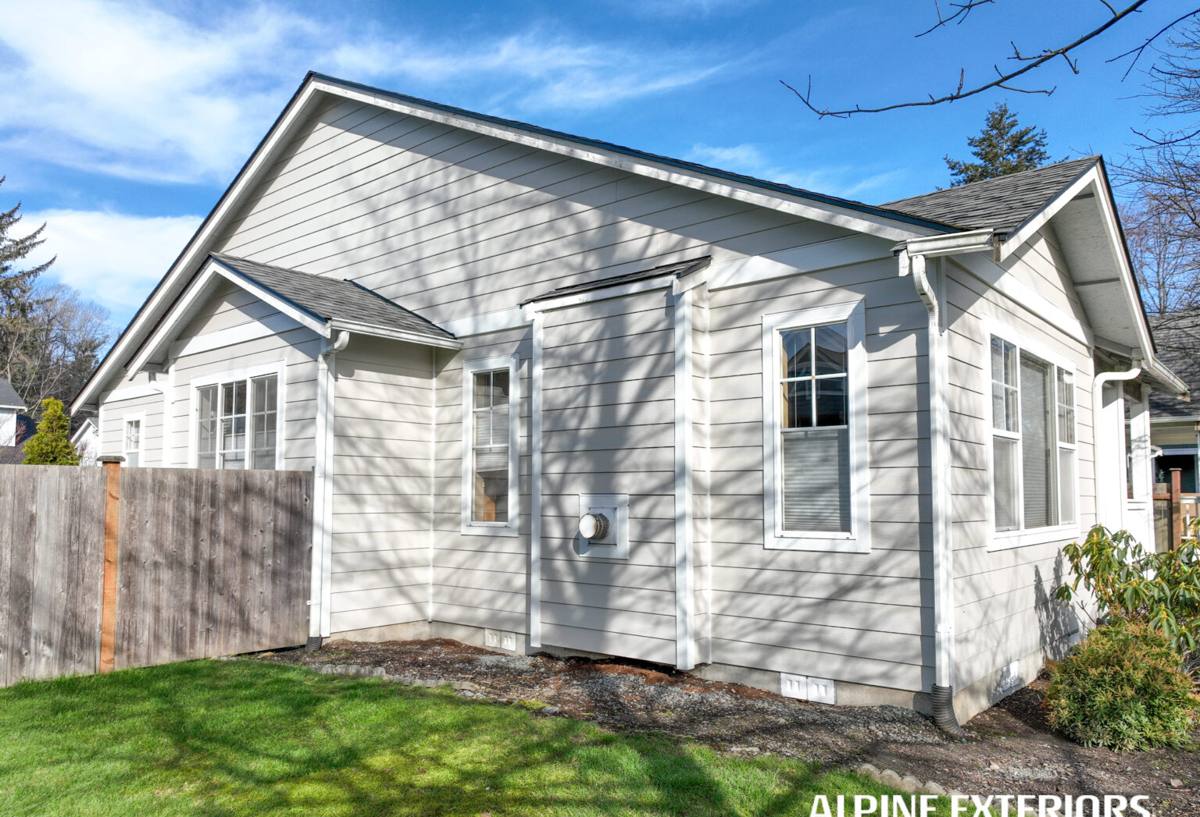
What Actually Counts as Storm Damage
Homeowners often assume storm damage means missing shingles or a visible hole. That's part of it, but a lot of the damage we get called out for in this area is less obvious and easy to miss from the ground.
Wind Damage
Sustained coastal wind and storm gusts can lift shingle tabs without fully detaching them, crease shingles at the seal line, or work ridge cap shingles loose. A roof can look intact from the driveway and still have dozens of compromised seals that will leak with the next heavy rain.
Wind-Driven Rain Intrusion
This is the one that catches people off guard. Rain that's being pushed horizontally by wind can get up under shingle edges, around chimney and vent flashing, and along roof-to-wall transitions even when nothing is visibly broken. The result is often a water stain on an interior ceiling weeks after the storm, with no obvious cause on the roof surface.
Impact and Debris Damage
Falling branches, blown debris, and hail (less common here but not unheard of) can bruise or puncture shingles, crack ridge vents, or dent metal flashing. Impact damage can compromise a shingle's waterproofing without breaking it apart, so it often gets missed in a quick visual check.
Moss-Related Damage
Moss buildup isn't itself "storm damage," but a storm often exposes damage that months of moss growth already set in motion — lifted shingle edges, saturated underlayment, and soft spots on the deck that only reveal themselves once a heavy rain event pushes water where it doesn't belong.
What a Correct Storm Damage Repair Actually Involves
A repair that's done right starts well before anyone gets on the roof.
Full Inspection, Not Just a Patch
We inspect the whole roof plane, not just the spot where damage is reported, because wind and rain damage rarely stays confined to one area. That includes checking flashing at every penetration, the condition of the underlayment where it's exposed, gutter and downspout function, and any soft or spongy areas on the decking underneath.
Proper Tear-Back, Not Just Overlay
Damaged shingles and compromised underlayment need to be pulled back far enough to install a clean, correctly overlapped repair — not just capped over. Overlaying damaged material traps moisture and hides problems instead of fixing them, which is a common shortcut we don't take.
Matching Materials Where Possible
We try to match existing shingle color and profile as closely as available product lines allow. On older roofs where an exact match isn't possible, we'll be upfront about that before starting the work rather than after.
Flashing and Underlayment Get the Same Attention as Shingles
Given how much of Dakota Creek's storm damage shows up as rain intrusion around penetrations, we treat flashing repair and underlayment as equal priorities to shingle replacement — not an afterthought.
Our Process From Call to Finished Roof
- Initial contact and scheduling. We ask what you've noticed — interior leaks, missing shingles, debris on the ground — so we can prioritize urgent issues.
- On-site inspection. We walk the full roof, document what we find, and identify whether this is a targeted repair or something more extensive.
- Written scope and estimate. You get a clear explanation of what's damaged, what needs to be done, and why — in plain language, before any work starts.
- Temporary protection if needed. If there's active leaking or exposed decking, we'll get it weather-tight first, even if the full repair is scheduled for later.
- Repair work. Tear-back, deck check, underlayment and flashing repair, and shingle replacement, done in that order so nothing gets covered up before it's addressed.
- Final walkthrough. We show you what was fixed and flag anything worth watching, like an aging section nearby that wasn't part of this storm's damage but is worth planning for.
Repair or Replace: How to Tell the Difference
Not every storm-damaged roof needs to be replaced, and not every roof that looks fine after a storm is actually fine underneath. Here's how we think through that decision.
| Factor | Leans Toward Repair | Leans Toward Replacement |
|---|---|---|
| Age of roof | Under 12-15 years, otherwise healthy | Nearing or past expected lifespan |
| Extent of damage | Isolated to one or two areas | Spread across multiple roof planes |
| Decking condition | Solid, dry decking underneath | Soft, delaminated, or repeatedly wet decking |
| Moss and granule loss | Light moss, granules intact | Heavy moss history, widespread granule loss |
| Prior repair history | First significant repair | Multiple past patches in different spots |
Salt air and moss exposure both push older roofs toward the "replacement" side of that table faster than they would inland, simply because the underlying material has already taken more of a beating by the time storm damage shows up.
Signs You Should Have Your Roof Checked After a Storm
- Water stains or discoloration on interior ceilings or upper walls, even faint ones
- Granules collecting in gutters or at downspout outlets after heavy rain
- Shingles that look curled, lifted, or creased at the edges from the ground
- Visible gaps in ridge caps or around chimney and vent flashing
- Sagging or soft-looking spots on any roof plane
- Increased moss growth concentrated in one area, which can signal a spot that's staying wetter than the rest of the roof
- Debris — branches, shingle fragments, granules — on the ground near the house after wind events
Documentation and Insurance Considerations
Most storm damage claims move faster when there's clear documentation of what happened and when. We provide a written inspection report with our findings, which homeowners can use when filing a claim. We're not an insurance adjuster and don't represent the insurance company — our job is to give you an honest, accurate account of the roof's condition so you can make informed decisions, whether that's with an adjuster, on your own dime, or somewhere in between.
One thing worth knowing: insurance policies and storm damage definitions vary, and older or pre-existing wear (like long-term moss damage) isn't always treated the same as acute storm damage. We'll tell you plainly which parts of what we find look storm-related and which look like ongoing maintenance issues, so there are no surprises later.
Why a Crew That Already Works Dakota Creek Matters
A roofer who works this specific stretch of Whatcom County regularly knows what to expect before they climb the ladder. They know how far wind-driven rain tends to travel up under shingles in a coastal exposure, which roof orientations in this area take the worst of winter storms off the water, and how quickly moss reestablishes itself in a marine climate compared to drier parts of the state. That local pattern recognition shortens the inspection, sharpens the estimate, and reduces the odds of a repair that looks complete but misses a secondary issue that's common to this area.
It also means faster response after a significant storm event, when demand for roofing work in Blaine and the surrounding county spikes and crews unfamiliar with the area are often booked out or unavailable.
Reducing Storm Damage Risk Between Now and the Next Storm
Moss Control
Keeping moss growth in check — through periodic cleaning and, where appropriate, preventive treatment — reduces the amount of moisture held against the roof surface and lowers the odds of lifted shingle edges becoming a storm-season leak point.
Gutter and Drainage Maintenance
Clear gutters and functioning downspouts matter more here than in drier climates, since they're doing more total work over the course of a wet Whatcom County winter. Clogged drainage during a storm can back water up under lower roof edges.
Periodic Inspection, Not Just Reactive Repair
A roof that's checked once a year or after any significant storm catches small issues — a lifted shingle, a failing sealant point — while they're still small, inexpensive fixes instead of storm-triggered emergencies.
If a recent storm has you wondering whether your roof came through it in good shape, we're happy to take a look and give you a straight answer — no pressure, no upsell. Fill out the form below to request a free estimate for your Dakota Creek home.