 Blaine
 Building Decks for Sandy Point's Coastal Conditions
Sandy Point sits right up against the water in Whatcom County, and that location shapes almost every decision that goes into a deck built here. Homes in this stretch near Blaine deal with salt-laden air coming off the water, driving rain that gets pushed sideways by wind more often than it falls straight down, and a moss and algae season that can stretch from late fall well into spring. A deck that looks great in July can be a slick, green, fastener-corroded mess by the following March if it wasn't built with those conditions in mind from day one.
We're not describing a generic Pacific Northwest deck here — we're describing what actually happens to wood, fasteners, and framing a few hundred feet from saltwater in Whatcom County. That distinction matters when you're choosing materials, spacing, and hardware.
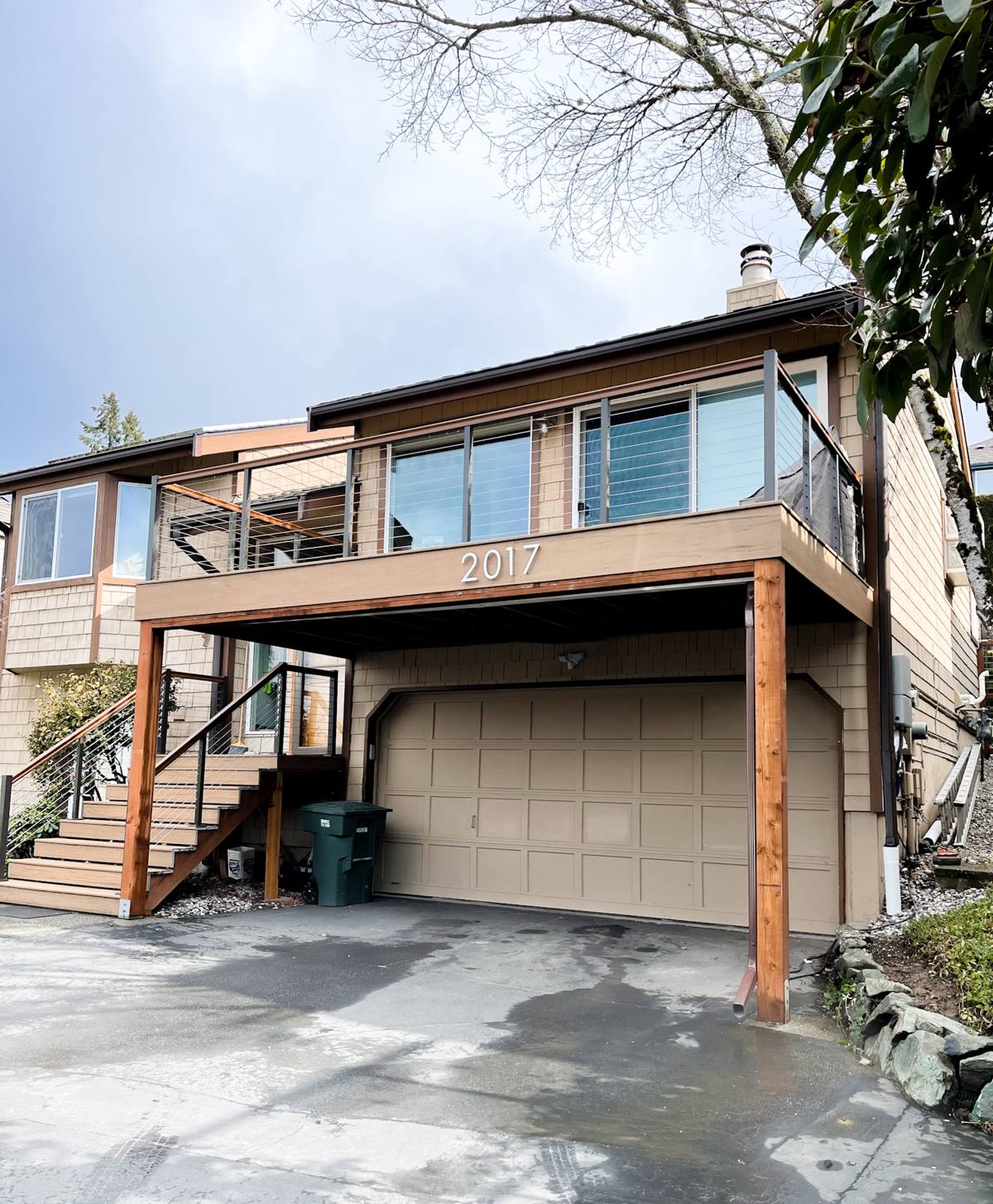
What Salt Air Actually Does to a Deck
Airborne salt is corrosive to metal, full stop. Over a few seasons it accelerates rust on fasteners, hinges, and any hardware that isn't rated for coastal exposure. It also breaks down cheap or mismatched coatings faster than inland exposure would. This isn't scare-mongering — it's the same reason boat hardware and coastal fencing use different specs than what you'd find at a big-box store's standard aisle.
Where This Shows Up First
- Fastener heads staining or streaking rust down the decking boards
- Structural screws and joist hardware corroding faster than the wood around them ages
- Railing hardware and post bases pitting or seizing up
- Any exposed steel — brackets, angle connectors — showing surface rust within a year or two if it's the wrong grade
The fix isn't complicated, but it does cost a bit more upfront: stainless steel or coastal-rated (often marine-grade coated) fasteners and hardware throughout, not just on the visible top surface. A deck is only as durable as its least corrosion-resistant component, and that's almost always a fastener buried somewhere you can't easily inspect later.
Driving Rain and Where Water Actually Goes
Rain in this part of Whatcom County rarely falls straight down. Wind off the water pushes it sideways, which means water gets driven into gaps, ledger connections, and any spot where two building materials meet — places that would stay relatively dry in a calmer inland setting. On a deck, the two spots this matters most are the ledger board connection to the house and the framing underneath the decking surface.
Ledger Attachment
Where a deck attaches to the house is the single most common source of hidden water damage on any deck, coastal or not — but driving rain makes it worse here. A correct ledger installation uses proper flashing that directs water out and away from the house sheathing, not just a bead of caulk and a hope. We flash every ledger connection as though the rain is going to hit it sideways, because in Sandy Point, it will.
Framing and Drainage
Joists and beams need airflow underneath and around them, not just water resistance on top. We keep decking boards gapped correctly for drainage and air circulation, and we don't box in framing in ways that trap moisture against wood that's already dealing with salt-laden, humid air for most of the year.
Moss, Algae, and the Long Wet Season
Whatcom County's moss season isn't a minor cosmetic issue — it's a slip hazard and a long-term wear issue. Shaded decks, north-facing decks, and anything under tree cover will grow moss and algae film faster here than almost anywhere else in the state, and Sandy Point's combination of coastal humidity and tree-lined lots is a near-perfect setup for it.
Design and Material Choices That Reduce Moss Buildup
- Decking profiles with grain or texture patterns that shed water rather than pool it
- Composite and PVC boards that don't absorb moisture the way untreated wood does, which slows moss colonization
- Board spacing and substructure ventilation that lets the deck actually dry out between rain events
- Avoiding fully enclosed skirting on the shaded side, which traps humidity underneath
No deck material is moss-proof. Anything left wet and shaded long enough will grow something on it. But the difference between a deck that needs a yearly wash-down and one that needs a monthly scrub usually comes down to material choice and how well the structure drains and breathes.
Decking Material Options for This Climate
There isn't one "correct" material for every Sandy Point deck — it depends on budget, how much upkeep you want to do, and how much shade and salt exposure the specific site gets. Here's how the common options actually compare for this environment.
| Material | Moisture & Moss Behavior | Maintenance | Typical Lifespan Here |
|---|---|---|---|
| Pressure-treated wood | Absorbs moisture, more prone to moss/algae if not sealed regularly | Needs cleaning and re-sealing every 1-2 years in this climate | 15-20 years with upkeep |
| Cedar | Naturally rot-resistant but still absorbs moisture; ages gray without finish | Periodic cleaning, optional staining/sealing | 15-25 years with upkeep |
| Composite decking | Low absorption, sheds water well, some algae film possible on shaded boards | Occasional wash-down, no sealing or staining | 25-30+ years |
| PVC/capped polymer | Essentially non-absorbent, best moss resistance of the common options | Lowest maintenance, occasional cleaning | 25-30+ years |
We'll walk through these trade-offs against your specific lot — shade level, proximity to the water, and how the deck will actually be used — rather than pushing one material as a default.
What a Correct Deck Build Involves Here
A deck that holds up in Sandy Point isn't built differently in a dramatic way — it's built carefully in the details that matter most for this environment. That means:
- Coastal-rated or stainless fasteners and structural hardware throughout, not just where it's visible
- Proper ledger flashing engineered for wind-driven rain, not standard-issue flashing meant for calmer sites
- Footings and post bases sized and set for this region's soil and frost conditions
- Correct board spacing and substructure airflow to fight moss and slow decay
- Railing and guard systems that meet current code for height and baluster spacing
- Material selection matched honestly to your shade, exposure, and maintenance preferences
Skipping any one of these doesn't usually cause an immediate problem — decks rarely fail in year one. The cost shows up two, five, or ten years down the road as rust streaks, soft framing, or a slick surface that never quite dries out.
Our Process for a Sandy Point Deck Project
1. On-Site Assessment
We look at sun exposure, shade from trees, distance from the water, existing drainage, and how the deck will connect to your home. This tells us which material and construction details actually matter for your specific lot.
2. Design and Material Selection
We talk through decking, railing, and structural options honestly, including the maintenance trade-offs of each, so you're choosing based on real information rather than a sales pitch.
3. Permitting
Deck projects in Whatcom County typically require a permit depending on size and height — we handle that process as part of the job rather than leaving it for you to sort out.
4. Construction
Framing, flashing, and fastening done to the standards outlined above — not cut corners that only show up later.
5. Final Walkthrough
We go over the finished deck with you, including basic care guidance specific to a coastal, moss-prone site, so you know what upkeep actually looks like going forward.
Repair, Rebuild, or Replace?
Not every deck problem means starting over. If your existing deck's framing is sound but the surface is failing, has moss you can't get ahead of, or the railing is due for an update, a partial rebuild can make sense. If the framing itself has soft spots, rust-streaked structural hardware, or a ledger connection that's clearly been letting water in, that's usually a sign to rebuild from the structure up rather than patch the surface and leave a hidden problem underneath.
An honest assessment on-site is the only reliable way to know which category your deck falls into — we'll tell you straight if repair is a reasonable option or if it's not worth the money to patch something with a bigger underlying issue.
Why Local Experience in Sandy Point Matters
A crew that mostly builds decks in drier, inland parts of the county can still frame a deck that looks fine on completion day. What's harder to get right without local experience is the stuff you can't see afterward — the fastener grade, the flashing detail at the ledger, the spacing that lets a deck actually dry out between the rain events that roll through this part of Whatcom County most of the year. Working regularly in Sandy Point and along Blaine's coastal edge means we're not guessing at what salt air and driving rain do to a deck over time — we've seen it, and we build to avoid it from the start.
If you're planning a new deck, a rebuild, or just want an honest read on what your current deck needs, we're glad to come take a look. Reach out for a free, no-pressure estimate using the form below.