 Blaine
 Why Point Roberts Is a Different Kind of Window Job
Point Roberts sits on its own peninsula at the southern tip of Boundary Bay, cut off from the rest of Whatcom County by the international border. That geography isn't just a curiosity — it shapes what your windows go through every year. Homes here take a steady dose of salt-laden air off the water, wind-driven rain that hits siding and window walls at an angle instead of falling straight down, and a mossy, damp shoulder season that stretches longer than it does further inland. Add in the fact that a lot of Point Roberts homes were built as seasonal or waterfront properties, often with larger glass areas to take advantage of the view, and you've got a window package that has to work harder than a typical Whatcom County home.
We've been doing exterior work in Blaine and the surrounding peninsula long enough to know that a window that performs fine in a sheltered inland lot can fail early out here — not because it's a bad product, but because it wasn't the right product, or wasn't installed with this exposure in mind.
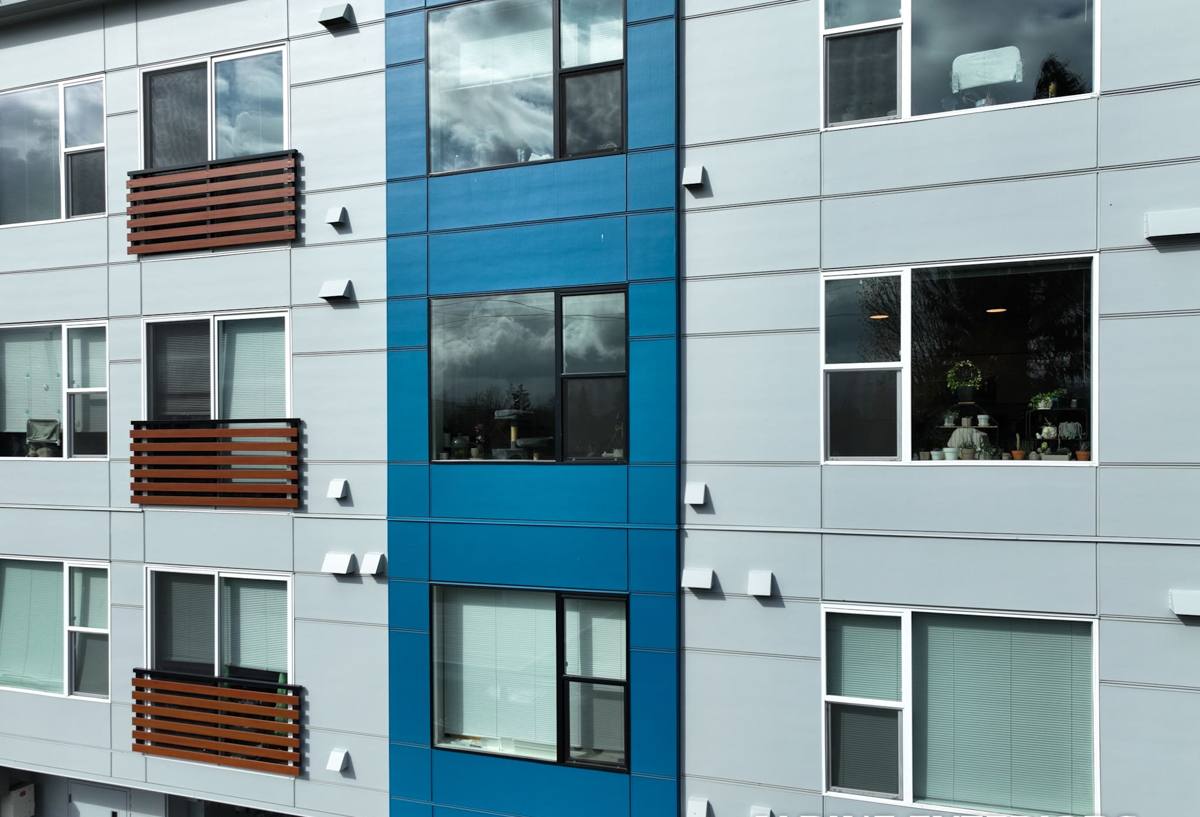
What "Custom" Actually Means for This Area
Custom windows aren't about fancy shapes for their own sake. In Point Roberts, "custom" usually comes down to one of these situations:
- Older homes with openings that don't match today's standard sizes, so stock windows would need major carpentry to fit
- Waterfront or bay-facing rooms where owners want larger, unbroken sightlines rather than smaller stock units
- Mixed-material walls (log, cedar shake, older stucco) where the window has to integrate with an unusual existing exterior
- Replacing a single odd-shaped or oversized unit — an arched window, a large picture window, a corner combination — without redoing the whole wall
In all of these cases, the window itself is only half the job. The other half is making sure whatever goes into that opening is sealed and flashed correctly for a marine climate, because a custom-sized unit gives you more opportunities for a gap or a poorly lapped detail than a standard off-the-shelf window does.
New Construction vs. Replacement
If you're building or doing a full addition, we can work from the framing stage and build the opening to the window, which is the cleanest way to get a tight, correctly flashed result. Most of our Point Roberts work, though, is replacement — pulling out an aging window and installing new into an existing wall. That requires more judgment calls: what condition is the framing in once we open it up, is there hidden moisture damage from years of driving rain, and does the new unit need to be resized to correct a problem with the original installation.
Materials That Hold Up to Salt Air
Salt air is hard on hardware and finishes long before it's hard on glass. Locks, hinges, cranks, and screws are usually the first things to show corrosion on a coastal property, and once hardware seizes or corrodes, the window stops sealing properly even if the frame looks fine.
| Frame Material | Behavior in Salt Air / Damp Climate | Where It Fits |
|---|---|---|
| Vinyl | Won't corrode or rot; UV-stable finishes hold up well; hardware quality varies by manufacturer | Most cost-effective, solid standard choice for replacement |
| Fiberglass | Very stable dimensionally, resists moisture and salt exposure, holds paint well over time | Good fit for larger custom sizes and higher-exposure walls |
| Aluminum-clad wood | Attractive interior wood look, but clad seams and corners need careful detailing to keep moisture from reaching the wood core | Interior aesthetics matter more than max weather exposure |
| Bare wood | Highest maintenance burden in a wet, mossy climate; repainting and sealing on an ongoing schedule | Historic or design-specific projects only |
We don't push one material on every home. What we do insist on is corrosion-resistant hardware (stainless or coated components, not bare steel) and glazing seals rated for coastal exposure. That's a standard we hold ourselves to regardless of which line a homeowner picks, because in this location, hardware failure is the most common reason a good window starts underperforming after a few years.
Installation Details That Matter More Here Than Elsewhere
A window is only as good as its installation, and in a driving-rain environment the installation details that get skipped on an easy job are exactly the ones that cause leaks two winters later.
Flashing and Water Management
Every opening needs a proper sequence — sill pan, correctly lapped house wrap or building paper, and head flashing that sheds water outward rather than trapping it against the sheathing. On wind-driven rain sites like Point Roberts, water gets pushed sideways and even slightly upward under some conditions, so laps and seals that would be fine on a sheltered inland wall aren't enough here.
Sealant Choice and Placement
Not every sealant is rated for constant salt exposure and UV. We use products chosen for coastal durability, and just as important, we don't over-seal — a fully sealed perimeter with no way for incidental moisture to escape can trap water inside the wall assembly, which causes rot you won't see until it's serious.
Fit and Shimming
Custom-sized openings are more prone to slightly-off framing than standard rough openings. Proper shimming keeps the window square and keeps the sash operating smoothly for years — a racked frame is one of the fastest ways to get an early seal failure.
Our Process, Start to Finish
- On-site assessment — we look at existing openings, wall condition, and exposure (which walls take the worst of the wind and rain), not just the windows themselves
- Measuring and product selection — for custom sizes we measure multiple times and account for any out-of-square conditions before ordering
- Scheduling around logistics — covered below, because Point Roberts scheduling isn't as simple as a normal Whatcom County job
- Removal and inspection — once the old window is out, we check the framing for hidden water damage before anything new goes in
- Installation — flashing, shimming, insulating, and sealing to a coastal-exposure standard
- Interior and exterior finish work — trim, caulking, and cleanup so the job looks finished, not just functional
- Walkthrough — we show you how the new hardware operates and what maintenance to expect given the local climate
Why Point Roberts Logistics Actually Matter
Point Roberts is a U.S. exclave — the only land route in and out goes through Canada. That single fact changes how a window project has to be planned. Material deliveries, crew scheduling, and even simple things like a mid-job supply run all take longer and need more planning than they would on a normal job in Blaine proper. Some contractors just don't want the hassle of routing crews and materials through a border crossing for a single job, which is part of why Point Roberts homeowners sometimes have a harder time getting bids at all, let alone quick ones.
We already work this peninsula regularly, so the border crossing, the ferry-adjacent scheduling rhythm, and the realities of getting materials to the site are built into how we plan a job rather than something we're improvising on the day. That matters for your timeline and for making sure the crew isn't rushing a coastal-grade installation because they're worried about getting back across before a deadline.
Living With the Climate After Installation
Good installation buys you years, but this climate still asks for some upkeep:
- Rinse salt residue off frames and glass periodically, especially on water-facing elevations
- Keep gutters and nearby drainage clear so runoff isn't sheeting directly across window walls
- Check and lightly lubricate hardware (locks, cranks, hinges) once a year so corrosion doesn't get a foothold
- Watch for moss or algae buildup on sills and trim during the wet months and clean it off before it holds moisture against the frame
- Have caulking and exterior sealant inspected every few years — UV and salt exposure break sealants down faster here than inland
None of this is heavy maintenance, but skipping it in a driving-rain, salt-air environment is how a 20-year window turns into a 10-year problem.
A Practical Checklist Before You Call for Quotes
- Note which walls face the water or prevailing wind — that's where exposure and cost both go up
- Check current windows for fogging between panes, hard-to-operate hardware, or soft trim — signs of seal or moisture failure
- Decide if you're after a straight replacement or want to resize/reshape an opening
- Think about whether you want matching frame material across the whole house or are open to mixing based on exposure
- Ask any contractor directly how they plan for delivery and scheduling logistics specific to Point Roberts
Cost Factors Worth Understanding
We won't quote a number without seeing the job, but the main drivers on a Point Roberts custom window project are consistent: opening size and shape, frame material, whether framing repair is needed once the old unit comes out, and how much of the exterior wall exposure requires extra flashing or sealant work. Waterfront and bay-facing openings typically cost more to do right, not because the window itself is different, but because the water management around it needs more attention.
If you're weighing a window project for a Point Roberts home, we're happy to come take a look and give you a straightforward, no-pressure estimate — including an honest read on what your specific exposure calls for. There's a form below to get that started.