 Blaine
 Windows in Peace Arch Take a Different Kind of Beating
Peace Arch sits close enough to the water and the border corridor that its homes deal with a specific combination of weather stress most window installers never have to plan for: salt-laden air rolling in off the Strait, driving rain that comes in sideways during winter storms, and a long, damp moss season that keeps wood and trim wet for months at a time. None of that is dramatic on its own. It's the combination, repeated year after year, that wears out a poorly installed window years before it should fail.
A window that's a good product but a mediocre install will show it here faster than almost anywhere else in Whatcom County. Salt air accelerates corrosion on hardware and fasteners. Wind-driven rain finds any gap in flashing or sealant and pushes water uphill, against gravity, into places a "normal" rain would never reach. And moss doesn't just grow on roofs — it colonizes damp trim, sill areas, and anywhere water sits instead of draining. Getting a window installation right in Peace Arch isn't about buying a fancier window. It's about respecting what this specific climate does to a house.
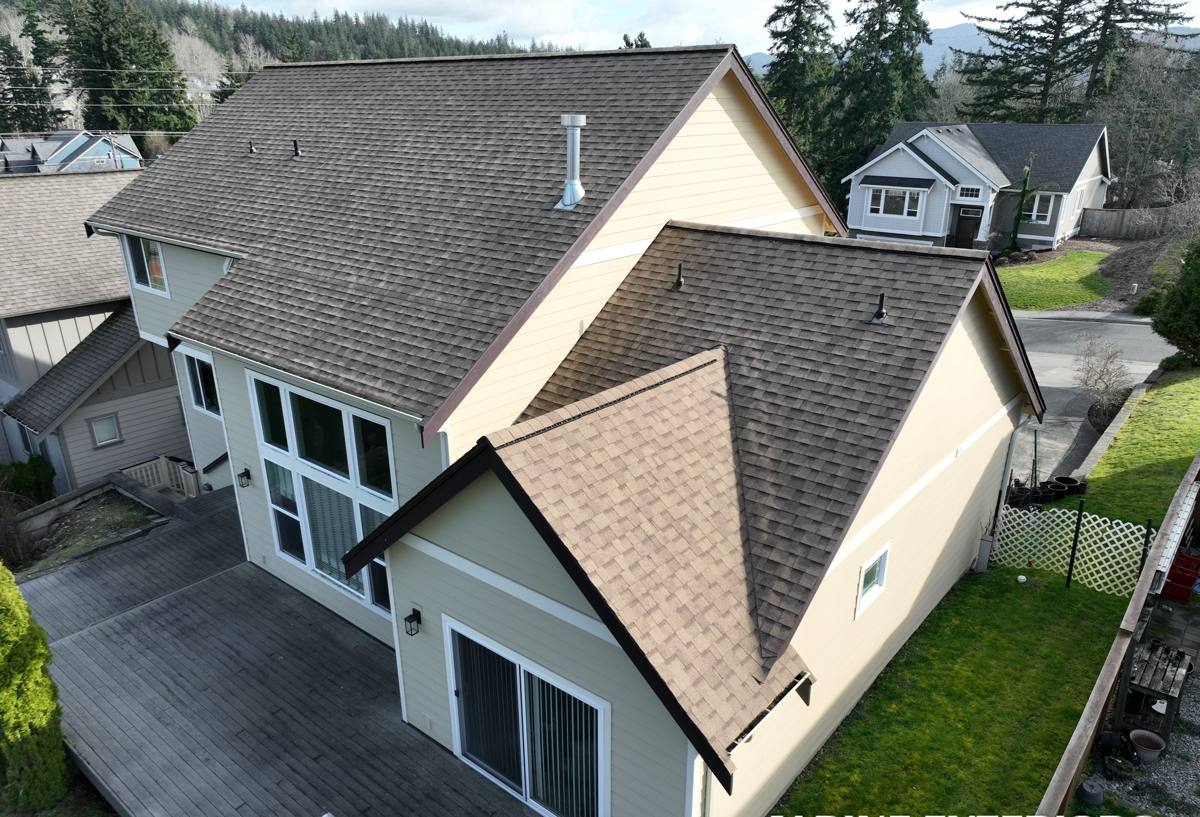
What "Correct" Actually Means for a Peace Arch Window Install
A window installation isn't just setting a unit in a rough opening and running a bead of caulk around the outside. Done right, it's a layered water-management system, and every layer matters more here than in a drier inland climate.
The Layers That Keep Water Out
- Rough opening prep — the opening is checked for level, square, and plumb, and any rot or soft wood from prior moisture intrusion is dealt with before a new window ever goes in.
- Sill pan flashing — a sloped, sealed pan under the window directs any water that does get past the exterior back outside instead of into the wall cavity. This is the single most-skipped step on cheap installs, and it's the one that matters most in driving rain.
- Weather-resistive barrier integration — the house wrap or building paper has to be shingle-lapped correctly with the window flanges so water always sheds downward and outward, never into a seam.
- Flashing tape at jambs and head — self-adhering flashing seals the sides and top of the window to the wall assembly, with the head flashing lapped over the wrap above it, not tucked under.
- Backer rod and sealant at the exterior joint — the visible caulk line is the last line of defense, not the first. A proper backer rod gives the sealant the right joint depth so it flexes with temperature changes instead of cracking.
- Insulation and air sealing at the interior gap — the gap between the window frame and rough opening gets filled with low-expansion foam or backer rod and sealant, not just stuffed with fiberglass, which does nothing to stop air and moisture movement.
Skip or rush any one of these layers and the window will probably look fine for a year or two. In a salt-air, high-rain climate, the failures show up as stained drywall, soft trim, or a musty smell near the window well before the glass itself ever fails.
Salt Air's Effect on Window Materials
Salt air is corrosive to unprotected metal, and it doesn't take direct ocean spray to matter — proximity and prevailing wind are enough to bring salt-bearing moisture inland to Peace Arch on a regular basis. This shows up in a few practical ways:
- Standard steel fasteners and hardware corrode faster near the water. Stainless steel or coated fasteners hold up far better over the life of the window.
- Aluminum-clad frames need a quality finish and careful installation, since scratches or gaps in the cladding expose bare metal to salt air and speed up pitting.
- Vinyl frames are largely immune to salt corrosion, which is one reason they're a common, practical choice in coastal Whatcom County homes — though color and UV stability still matter over decades of sun exposure.
- Hinges, locks, and cranks on operable windows should be checked and lubricated more often near the water than they would be further inland — salt air works on moving hardware even when the frame itself is fine.
Rain, Wind, and Why Orientation Matters
Not every wall of a Peace Arch home takes the same amount of weather. The sides of a house that face the prevailing wind and open water catch far more wind-driven rain than a sheltered back wall, and that difference should change how a window is installed — not the window itself, but the level of care given to flashing and sealant detail on that exposure.
On weather-exposed walls, we treat the sill pan and head flashing as non-negotiable, and we're more conservative about sealant choice and joint design. On sheltered walls, the same standards apply, but the margin for a minor imperfection is a little wider. A contractor who treats every wall identically, regardless of exposure, either overbuilds the easy walls or underbuilds the hard ones — neither is the right answer.
Moss Season and Moisture-Sensitive Areas
Whatcom County's long wet stretch from fall through spring keeps moss and algae active on north-facing and shaded surfaces for much of the year. Around windows, that matters most at the sill and bottom trim, where water naturally collects and dries slowest. A correctly sloped sill, proper drainage, and trim materials chosen for moisture exposure (rather than looks alone) keep that area from becoming a long-term moss and rot trap.
Choosing a Window for This Climate
There's no single "best" window material — the right choice depends on budget, the home's style, and how much maintenance the homeowner wants to take on. Here's how the common options actually compare for a coastal Whatcom County home:
| Frame Material | Salt Air Resistance | Maintenance | Typical Trade-Off |
|---|---|---|---|
| Vinyl | Excellent — won't corrode | Low — occasional cleaning | Fewer color/finish options; frame can expand/contract with temperature swings |
| Fiberglass | Very good | Low | Higher upfront cost than vinyl |
| Aluminum-clad wood | Good if finish stays intact | Moderate — finish should be inspected periodically | Handsome interior wood look, but more installation sensitivity and higher cost |
| Solid wood | Fair — needs diligent upkeep | High — regular painting/sealing required | Classic look; most vulnerable to this region's damp, mossy conditions if maintenance lapses |
We install a range of materials because different homes and budgets call for different answers. Where we draw a hard line is on installation quality — flashing, sealant, and drainage detail don't change based on which frame material a homeowner picks.
How the Job Actually Runs
- On-site assessment. We look at each opening individually — exposure to wind and rain, condition of the existing rough opening, any signs of past water intrusion or rot, and what's realistic given the home's age and construction.
- Measurement and product selection. Windows are measured to the actual opening, not a catalog assumption, and we talk through material and glass options based on that wall's exposure and the homeowner's priorities.
- Removal and opening prep. The old window comes out carefully to avoid unnecessary damage to siding or trim. Any soft or water-damaged framing found underneath gets repaired before anything new goes in — this step gets skipped by installers in a hurry, and it's the one that causes callbacks later.
- Flashing and sill pan installation. This is the step that determines whether the window will still be watertight in ten years, not just on install day.
- Setting, leveling, and shimming the window. The unit is set plumb, level, and square, and shimmed so it operates smoothly without stressing the frame.
- Insulating and air-sealing the interior gap. Done with the right material and technique so the window doesn't become a cold spot or a condensation point.
- Exterior sealant and trim finish work. The final weatherproofing layer, plus whatever trim work restores the exterior to a clean, finished look.
- Final walkthrough. Every window is opened, closed, and locked to confirm smooth operation before we consider the job done.
Signs a Window Needs Attention Before It Fully Fails
Most window problems in this climate don't show up as a cracked pane — they show up as slow, quiet water or air problems. Worth checking for:
- Soft or discolored trim or drywall near the window, especially at the bottom corners
- Fogging or condensation between panes on double- or triple-glazed units, which means the seal has failed
- Drafts you can feel with a hand near the frame on a windy day
- Difficulty opening, closing, or locking a window that used to operate smoothly
- Visible gaps in old caulk or sealant, or sealant that's cracked and pulling away from the frame
- A musty smell near the window that wasn't there before
- Moss or dark staining building up on sills or bottom trim faster than on the rest of the wall
Any one of these is worth a look. Several at once usually means the original installation — not just the window itself — is the underlying issue.
What Drives the Cost
Every home and opening is different, but a few factors consistently move the price up or down more than homeowners expect:
| Factor | Why It Matters |
|---|---|
| Frame material | Vinyl is typically the most budget-friendly; fiberglass and clad-wood cost more up front |
| Rot or water damage found at removal | Repairing damaged framing adds labor and materials beyond the window itself |
| Wall exposure | Weather-exposed walls warrant more careful (and sometimes more time-intensive) flashing detail |
| Window size and configuration | Larger units, custom shapes, or multi-unit combinations cost more than standard single units |
| Trim and finish work | Matching existing trim profiles or repainting adds labor beyond a bare install |
| Access | Second-story or hard-to-reach windows take longer and may need additional equipment |
We'd rather walk a homeowner through these factors honestly during an estimate than quote a number that doesn't hold up once we're into the actual opening.
Why a Crew That Already Works Peace Arch Is Worth Something
Window installation isn't a job you want a contractor learning on. A crew that regularly works Peace Arch and the surrounding Blaine area already knows how this specific stretch of Whatcom County behaves — which walls take the worst of the wind-driven rain, how fast moss and moisture problems show up on shaded sills, and what corrosion looks like on hardware that's been exposed to salt air for years instead of months. That local pattern recognition is hard to fake and it shortens the distance between "something looks a little off" and knowing exactly what caused it.
It also means accountability doesn't disappear once the job is done. A local crew is still in the area next month and next year, not just for the duration of one project. That matters if a question comes up after the fact, or if a homeowner just wants someone to look at a window a few years down the road and confirm it's still doing its job.
A Quick Homeowner Checklist
- Ask whether sill pan flashing is standard practice on every install, not an upsell
- Ask how rough openings are checked and repaired if rot is found
- Confirm what warranty covers labor and installation, separate from the manufacturer's product warranty
- Ask how they handle wall exposure differences — do all walls get treated the same, or does exposure change the approach
- Get a written, itemized estimate before work begins
If your windows in Peace Arch are showing any of the signs above, or you're just planning ahead for a home in this climate, we're happy to take a look and walk you through what your specific home needs. The estimate is free, there's no pressure, and you can use the form below to get started.