 Blaine
 Why Peace Arch Homes Wear Differently
Homes near the Peace Arch border crossing sit in one of the more exposed pockets of Blaine. You're close enough to Semiahmoo Bay and Drayton Harbor to catch salt-laden air off the water, close enough to the Canadian border that weather rolling in off the Strait doesn't lose much punch before it reaches your siding, and often tucked under enough mature tree cover that north- and east-facing walls stay damp longer than they should. That combination — salt air, driving rain, and shade-driven moisture — is exactly the profile that ages siding faster than homeowners expect, and it's why a siding replacement done right in this part of Whatcom County looks a little different from a generic re-side.
We're not going to pretend every house on this side of Blaine fails the same way or on the same timeline. But the pattern we see is consistent enough that it should shape how a replacement is specified, installed, and finished.
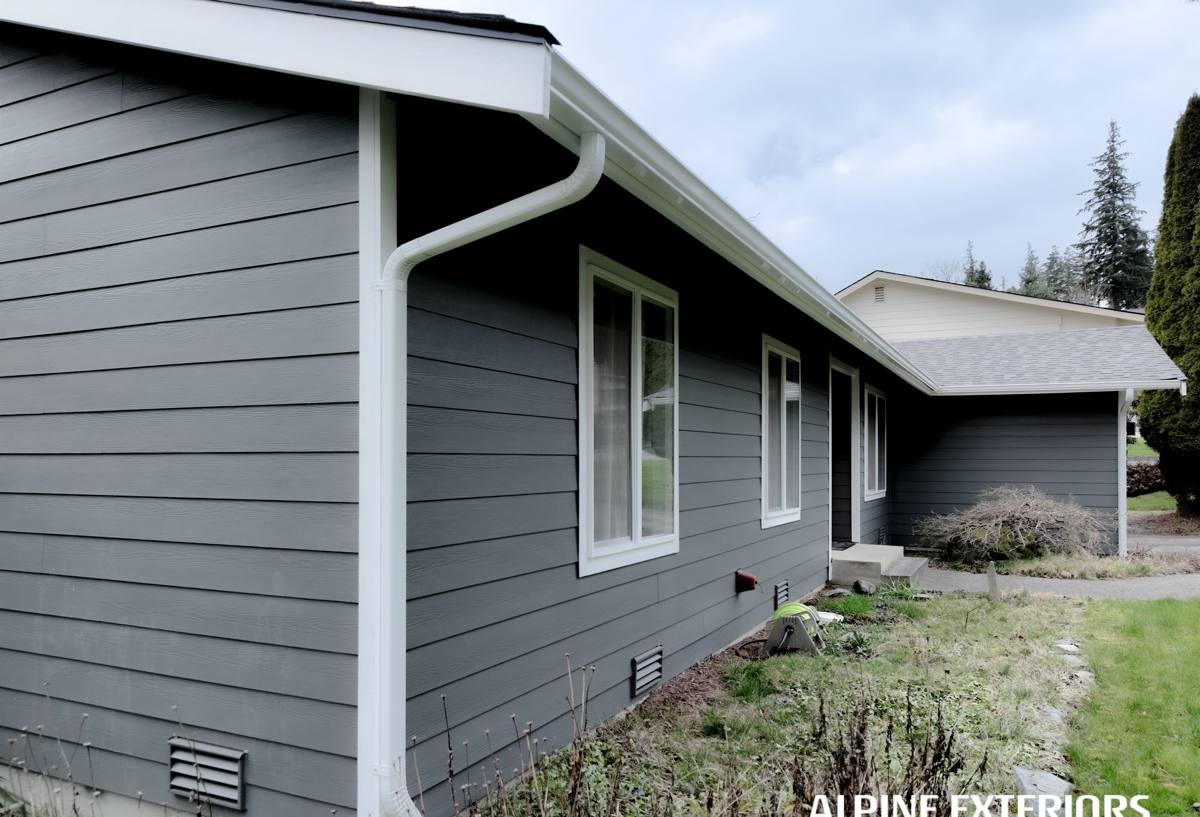
The Local Climate Factor: Salt, Rain, and Moss
Salt Air
Airborne salt doesn't just corrode metal fasteners and flashing — it also settles into porous or damaged siding surfaces and holds moisture there longer than it would inland. Over years, that speeds up paint failure, edge swelling, and fastener corrosion on lower-grade materials and hardware.
Driving Rain
Blaine gets weather that comes in sideways off the water, not just straight down. Wind-driven rain finds every gap in flashing, every under-caulked seam, and every lap joint that wasn't installed to the manufacturer's clearance spec. A siding system that only handles vertical rain well isn't enough here.
Long Moss Season
Whatcom County's wet season runs long, and shaded or north-facing walls near tree lines stay damp for weeks at a stretch. That's ideal conditions for moss, algae, and mildew to take hold on siding surfaces and in seams — which both looks bad and, on the wrong material, can trap moisture against the substrate.
Signs a Peace Arch Home Needs Replacement, Not Just Repair
- Soft or spongy spots when you press on the siding, especially near the bottom courses or under windows
- Visible swelling, delamination, or bubbling at panel edges and seams
- Paint that's failing in sheets rather than a slow fade — often a sign moisture is getting underneath the finish
- Persistent moss or dark streaking that comes right back after cleaning
- Rust staining running down from fasteners or trim
- Visible gaps at corners, window trim, or butt joints where wind-driven rain can get behind the cladding
If you're seeing two or more of these on the water- or shade-facing sides of the house, that's usually a stronger signal than any single symptom on its own.
What a Correct Siding Replacement Actually Involves
Replacing siding well in a climate like this is as much about what's underneath as what you see on the wall.
Full Tear-Off, Not Overlay
We remove the existing siding rather than sheathing over it. That's the only way to inspect the wall assembly underneath for rot, hidden moisture damage, or failed flashing before it gets sealed behind a new surface.
Weather-Resistive Barrier and Flashing
A correctly lapped weather-resistive barrier, properly integrated window and door flashing, and rain-screen detailing where called for are what actually stop wind-driven rain from reaching the sheathing — the siding itself is the second line of defense, not the only one.
Fastening to Spec
Manufacturer-specified fastener type, spacing, and penetration depth matter more in a salt-air, high-moisture environment than in a dry inland climate. Under- or over-driven fasteners are one of the most common causes of early siding failure we see on re-side jobs.
Trim, Caulking, and Termination Details
Corners, butt joints, and terminations at the roofline or foundation are where most water intrusion actually starts. These get finished to the same standard as the field of the wall, not treated as an afterthought.
Why We Install Only James Hardie Fiber Cement
We standardized on James Hardie fiber cement siding for every job we do, including here in Blaine, and we don't install vinyl, LP SmartSide, or cedar. That's not a marketing position — it's a decision based on what actually holds up in a marine, high-rain climate over decades rather than years.
| Material | Behavior in Salt Air & Driving Rain | Maintenance Burden | Our Position |
|---|---|---|---|
| James Hardie fiber cement | Non-combustible, dimensionally stable, resists moisture-driven swelling and pest damage when installed to spec | Periodic washing; factory ColorPlus finish reduces repainting cycles | What we install on every job |
| Vinyl | Won't rot, but can warp or crack in temperature swings and doesn't stop water at the surface — relies entirely on what's behind it | Low, but panels can fade and become brittle with age | Not installed by our crew |
| Cedar | Attractive, but absorbs moisture readily in a wet, shaded climate and is vulnerable to rot and moss without diligent upkeep | High — regular sealing, staining, and inspection | Not installed by our crew |
| LP SmartSide (engineered wood) | Treated to resist moisture, but as a wood-based product it's more sensitive to installation quality and prolonged wetting than fiber cement | Moderate — finish and joint maintenance | Not installed by our crew |
Each of those products has legitimate strengths, and plenty of them are installed correctly and perform fine elsewhere. Our decision comes down to wanting one system we can install, warranty, and stand behind consistently in this specific climate — and fiber cement is the one that best handles salt air, sustained moisture, and Pacific Northwest weather without asking homeowners to take on a heavier maintenance routine.
Matching the Product to a Peace Arch Wall
James Hardie's HZ5 product line is engineered for climates with more freeze-thaw cycling and moisture exposure than the milder HZ10 zone further south, which makes it the right specification for this part of Whatcom County. The factory-applied ColorPlus finish also matters more here than in a dry climate — a baked-on finish resists the fading and peeling that field-applied paint is prone to when it's constantly cycling between wet and dry.
We also pay attention to panel and trim selection based on wall orientation. Water-facing and shaded elevations sometimes warrant different detailing — tighter flashing tolerances, more attention to rain-screen gapping — than a sheltered, south-facing wall on the same house.
Our Process Working This Area
- On-site assessment — we walk the exterior, check for hidden moisture and rot, and note which elevations are taking the most weather.
- Scope and material plan — panel profile, trim details, and color are specified against the wall's exposure, not a one-size-fits-all spec.
- Permitting — we handle the local permit process so the job is inspected and documented correctly.
- Tear-off and inspection — old siding comes off, sheathing is checked, and any rot is addressed before anything new goes up.
- Weather barrier and flashing installation — done to manufacturer spec, not shortcut.
- Hardie installation and finish work — fastening, trim, and caulking finished to the same standard throughout.
- Final walkthrough — we review the finished job with you before calling it done.
We schedule around this area's weather rather than fighting it — tear-off and barrier installation are timed for dry windows so sheathing isn't left exposed longer than necessary, which matters more here than it would in a drier inland town.
What Drives Cost on a Peace Arch Re-Side
| Factor | Why It Moves the Price |
|---|---|
| Extent of hidden rot or moisture damage | Sheathing or framing repair found during tear-off adds labor and material beyond the siding itself |
| Wall complexity | Corners, dormers, and multiple roof lines mean more trim, flashing, and cutting |
| Panel profile and finish choice | Lap width, shingle-style panels, and specific ColorPlus colors carry different material costs |
| Access and site conditions | Tight lots, retaining walls, or limited equipment access affect labor time |
| Trim and accessory scope | Full trim replacement versus reusing sound existing trim changes both cost and long-term performance |
We won't quote a number without seeing the house, but these are the factors that actually move an estimate up or down — and any contractor who gives you a firm price over the phone without a site visit is skipping steps.
Choosing a Crew That Already Works This Neighborhood
A crew that's done siding work in and around the Peace Arch area already understands the exposure patterns on this side of Blaine, has a feel for which elevations need extra flashing attention, and isn't learning the local climate on your dime.
- Ask whether they're a certified James Hardie installer, and what that certification actually required
- Ask to see how they detail flashing and rain-screen gapping — not just the finished color
- Ask how they handle hidden rot discovered during tear-off, and get that process in writing
- Ask about warranty coverage on both material and labor, and who honors each
- Ask how they schedule around weather rather than rushing through a dry-window job
A contractor who can answer all of that clearly, without hedging, is one worth trusting with a wall that has to hold up against salt air and driving rain for decades, not just look good on installation day.
After Replacement: Keeping It Performing
Correctly installed Hardie siding is low-maintenance, not no-maintenance. A periodic rinse to clear salt residue and organic buildup, a visual check of caulking and trim after the wettest months, and prompt attention to any new gap or crack are what keep the system performing for its full service life in this climate.
If your Peace Arch area home is showing signs of wear, or you just want an honest read on what your siding has left in it, we're happy to take a look. The estimate is free, there's no pressure, and you'll get a straight answer about whether replacement makes sense now or can reasonably wait.