 Blaine
 Why Peace Arch Roofs Wear Differently
Peace Arch sits close enough to open water and the international border that its roofs live a harder life than a roof twenty miles inland. Salt-laden air moves through fasteners and flashing metal year-round, wind-driven rain gets pushed sideways under poorly lapped materials instead of just running off, and the long, damp shoulder seasons common to Whatcom County give moss and moss-feeding algae months at a time to take hold. None of this means a roof here fails faster than it should — it means the installation has to be done with this specific climate in mind, not with a generic, one-size-fits-all approach.
A new roof installed correctly for Peace Arch conditions and a new roof installed to a minimum-code standard can look identical the day the crew leaves. The difference shows up five, ten, and fifteen years later, in whether the deck is still dry, the fasteners are still holding, and the moss is a light surface film instead of a thick mat lifting shingles.
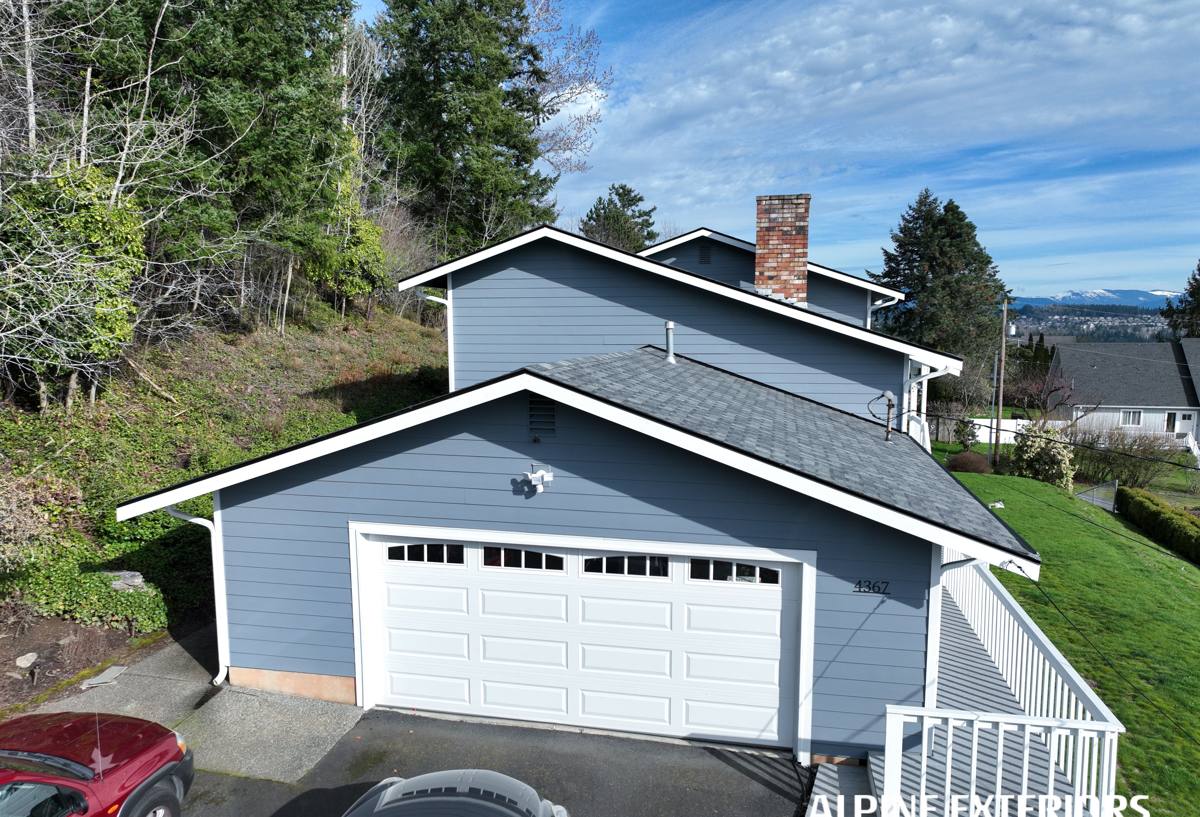
What Salt Air, Rain, and Moss Actually Do to a Roof
Salt Air and Metal Fatigue
Salt in the air accelerates corrosion on any exposed metal — nail heads, flashing, drip edge, vent boots, and gutter hardware. Standard galvanized fasteners that would hold up fine further inland can start rusting and staining a roof surface years ahead of schedule this close to the water. The fix isn't complicated, but it has to be specified up front: corrosion-resistant fasteners and flashing rated for coastal exposure, not whatever is cheapest at the supply house that week.
Wind-Driven Rain
Rain that comes in at an angle, pushed by wind off the water, behaves differently than rain falling straight down. It finds gaps in undersized laps, poorly sealed valleys, and flashing that was "close enough." A roof built for this area needs wider overlaps, properly integrated ice-and-water membrane at the vulnerable points, and flashing details that assume the rain won't always be falling straight.
Moss and Organic Growth
Whatcom County's long, mild, wet stretch of the year is close to ideal moss-growing weather. Moss isn't just a cosmetic issue — as it establishes on a roof surface, it holds moisture against the shingle or panel, lifts edges, and works its way toward fasteners and the deck underneath. Roof pitch, tree cover, shade patterns, and material choice all affect how fast moss takes hold on a given house, which is why the right roofing system for a shaded, low-slope Peace Arch roof isn't automatically the right system for a sunny, steep one two streets over.
Signs a Peace Arch Home Needs a New Roof (Not Just a Repair)
Not every problem roof needs full replacement, but a few signs point away from patch-and-wait and toward a proper new installation:
- Granule loss heavy enough that you're finding grit in gutters and downspouts on a regular basis
- Shingles that are cupping, curling, or cracking across large sections rather than one isolated spot
- Moss or moss stains established across a large portion of the roof, not just the shaded north side
- Soft spots, sagging, or spongy feel when walked (a sign of deck damage, not just surface wear)
- Daylight visible through the roof deck from inside the attic, or water stains on attic sheathing
- A roof approaching or past the manufacturer's expected service life for this climate, especially if it's had multiple smaller repairs already
If a roof is showing two or three of these at once, patch repairs usually end up being money spent toward a replacement you were going to need anyway.
Choosing a Roofing System for This Climate
There's no single "best" roofing material for every Peace Arch home — the right choice depends on the roof's pitch, sun and shade exposure, budget, and how the house looks with each option. What matters is picking with the real trade-offs in mind, not just the sticker price.
| Material | Moss/Moisture Resistance | Coastal Wind & Salt Durability | Typical Lifespan | Relative Cost |
|---|---|---|---|---|
| Standard 3-tab asphalt shingle | Lower — thinner profile holds less algae-resistant granule coating | Moderate — needs correct fastener spec near the water | 15–20 years | Lowest |
| Architectural (dimensional) asphalt shingle | Better, especially with algae-resistant granules | Good with proper wind-rated installation | 25–30 years | Moderate |
| Metal (standing seam or panel) | Very good — sheds moisture, little surface for moss to grip | Excellent when flashing and fasteners are coastal-rated | 40–50+ years | Higher upfront |
| Synthetic/composite shake or slate look | Good — resists moisture absorption better than natural wood | Good, but installation quality matters more than with metal | 30–50 years | Higher |
Natural cedar shake has real curb appeal and a long history in this region, but it demands a maintenance commitment most homeowners underestimate — regular treatment, more frequent moss removal, and closer attention to ventilation to manage moisture absorption. We'll talk through that trade-off honestly if it's a material you're considering; for a lot of Peace Arch roofs, an architectural shingle or metal system delivers similar looks with less upkeep.
What a Correct New Roof Installation Actually Involves
Tear-Off and Deck Inspection
A new roof starts with a full tear-off down to the deck — not a layover — so we can actually see the plywood or sheathing underneath. Any soft, delaminated, or water-damaged decking gets identified and replaced before anything new goes down. Skipping this step is the single most common shortcut that turns into a hidden problem a few years later.
Underlayment and Water Barrier
Given how much wind-driven rain this area sees, underlayment isn't a place to save money. Synthetic underlayment across the field, with self-adhering ice-and-water membrane at eaves, valleys, and around penetrations, gives the deck a second line of defense if wind ever forces water past the roofing surface itself.
Flashing and Fastening
Every place a roof plane meets something else — a wall, a chimney, a skylight, a vent — is a potential leak point if the flashing isn't sized and lapped correctly. We use corrosion-resistant fasteners and flashing appropriate for a coastal environment, not standard-grade hardware that starts staining or failing early.
Ventilation
Balanced intake (soffit) and exhaust (ridge) ventilation keeps attic moisture from condensing against the underside of the deck — which matters both for the roof's lifespan and for keeping moss growth conditions from starting from the inside out.
Our Process for Peace Arch Homeowners
- On-site inspection and honest assessment. We look at the current roof, the deck condition where accessible, ventilation, and anything specific to your home's exposure to sun, shade, and wind.
- Written estimate with real options. You get a clear breakdown of material choices and what each one means for cost, maintenance, and expected life in this climate — no pressure toward the most expensive option.
- Scheduling around the weather. Roofing in this region means working around rain windows, not ignoring them. We plan tear-off and dry-in to minimize how long your deck is exposed.
- Installation. Tear-off, deck repair as needed, underlayment, flashing, and the roofing material itself, installed to the manufacturer's specifications for wind rating.
- Cleanup and walkthrough. Magnetic sweep for stray nails, full site cleanup, and a walkthrough so you understand what was done and what maintenance, if any, it needs going forward.
Maintenance That Actually Extends a Roof's Life Here
A correctly installed roof still benefits from basic upkeep in a climate like this. A simple annual routine catches most problems while they're still cheap to fix:
- Clear gutters and downspouts at least once a year, more often under overhanging trees
- Have moss treated or gently removed before it establishes a thick mat, rather than after
- Check flashing around chimneys, vents, and skylights for lifting or corrosion after major windstorms
- Trim back branches that keep a section of roof shaded and damp longer than the rest
- Have the attic checked periodically for proper airflow and any sign of moisture staining
Why Hire a Crew That Already Works This Area
Roofing crews that work Blaine and the surrounding Whatcom County coastline regularly aren't guessing at fastener specs, underlayment choices, or how much moss pressure a given roof pitch is going to see — they've already seen what holds up here and what doesn't. That local experience shows up in smaller, practical decisions: which valleys need extra attention, how much roof needs to be exposed at once given the weather, and which material and color combinations actually shed moss well on a shaded lot versus a sunny one. It also means faster, more informed answers if something needs attention after a bad windstorm, since we're not learning the area's quirks on your roof.
If your roof is showing its age, or you just want an honest read on whether repair or full replacement makes more sense for your Peace Arch home, we're happy to take a look. Reach out for a free, no-pressure estimate using the form below.