 Blaine
 Why Decks in Peace Arch Wear Out Faster Than the Manufacturer's Warranty Suggests
If you live in the Peace Arch area of Blaine, you already know your deck doesn't behave like a deck fifty miles inland. Being this close to Semiahmoo Bay and the Strait of Georgia means salt-laden air is a constant, not an occasional coastal breeze. Combine that with Whatcom County's long, wet winters and the shoulder-season drizzle that never quite stops, and you get a deck environment that punishes shortcuts. Fasteners corrode faster. Wood grain opens up and holds moisture longer between dry spells. And because the sun angle here is low for much of the year, decks under trees or on the north or east side of a house can stay damp for days after a storm passes, which is exactly what moss needs to take hold.
None of this means a deck near Peace Arch can't last. It means the materials, fasteners, and framing details have to be chosen for this specific climate, not for a catalog photo. A deck built the same way you'd build one in Spokane or Sacramento will fail here years before it should.
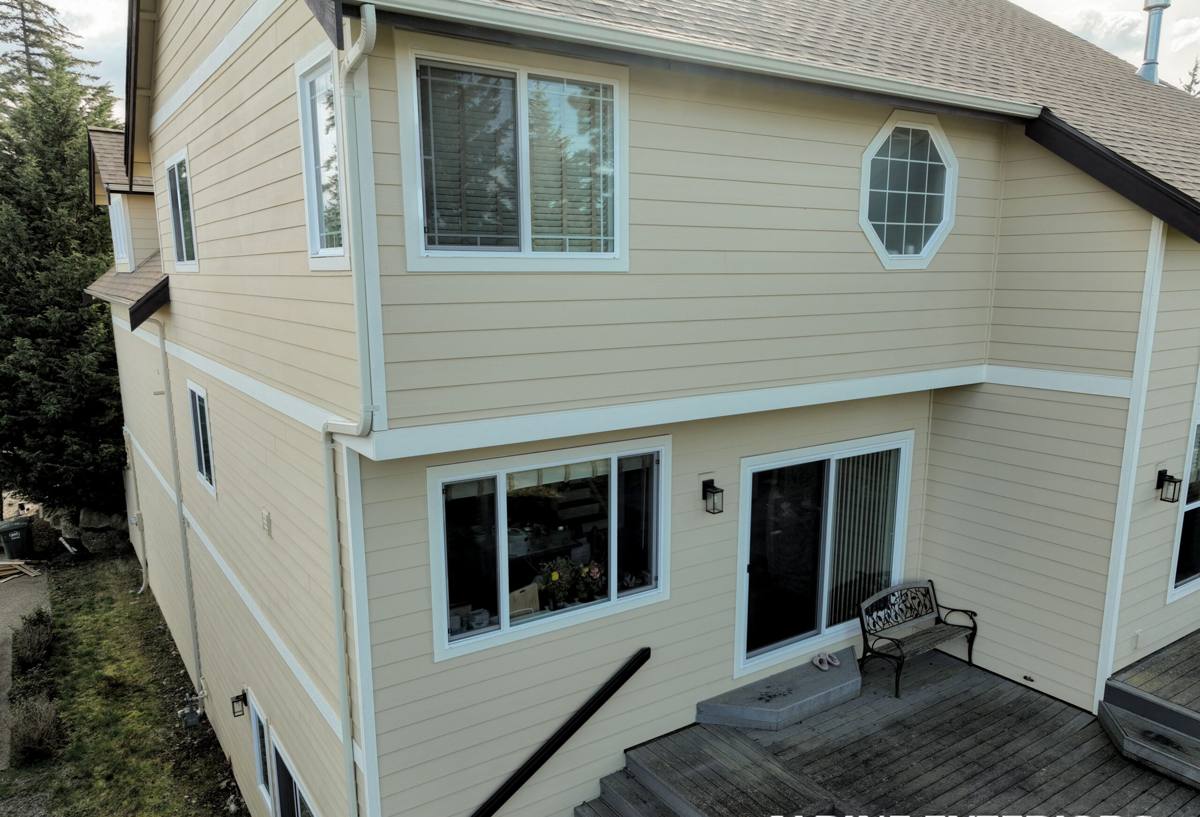
Signs Your Deck Needs Replacement, Not Another Repair
Homeowners often ask us to "just fix the bad boards," and sometimes that's genuinely the right call. But there's a point where patching becomes a waste of money because the structure underneath is what's actually failing. Here's what tells us a deck has crossed that line:
- Soft, spongy, or bouncy spots in the decking or framing when you walk across it
- Visible rot or dark staining at the ledger board where the deck meets the house
- Posts or footings that have shifted, settled, or show cracking at the base
- Railings that wiggle or flex more than a firm push should allow
- Persistent green or black moss growth that returns within weeks of cleaning
- Fasteners that are rusted, backing out, or leaving black streaks down the wood
- A deck that's more than 20-25 years old and has never had the substructure inspected
If you're only seeing surface graying or a few worn boards, repair or refinishing may still make sense. But rot at the ledger board or footings is a structural safety issue, not a cosmetic one, and it's the most common reason we recommend full replacement over repair in this area.
Choosing Decking Material That Actually Holds Up Near Peace Arch
There's no universally "best" decking material — there's a best material for your budget, your maintenance appetite, and this climate. Here's how the common options actually perform in a marine, moss-prone environment like Blaine's.
| Material | Upfront Cost | Maintenance | How It Handles Salt Air & Moss |
|---|---|---|---|
| Pressure-treated pine | Lowest | Needs re-staining or sealing every 2-3 years | Prone to moss and mildew if not cleaned and sealed regularly; grain can trap moisture |
| Cedar | Mid-range | Needs oiling or staining every 1-2 years to keep its natural rot resistance active | Naturally more rot-resistant than pine, but still needs upkeep in constant damp; looks best when maintained |
| Composite (capped) | Higher | Occasional washing; no staining or sealing | Doesn't absorb moisture into the board core, which limits rot; moss still grows on the surface film and needs periodic cleaning |
| PVC / vinyl decking | Highest | Occasional washing only | Fully moisture-resistant material; best long-term option where salt air and standing moisture are constant issues |
We're honest with clients about trade-offs rather than pushing one product line. Composite and PVC decking cost more up front, but for a deck that's shaded, low to the ground, or exposed to onshore air, the reduced maintenance and moisture resistance often pay for themselves over the deck's life. Wood decking isn't a bad choice — it's a different maintenance commitment, and we'll tell you plainly what that commitment looks like before you decide.
What a Correct Deck Replacement Actually Involves
The Ledger Board and Flashing
This is the single most common failure point we find on older Peace Arch decks. The ledger board bolts to your house and carries a huge share of the deck's structural load — and if it wasn't properly flashed when installed, water works its way behind the board and into the house framing over years. A correct replacement always includes new flashing, proper fastening into house framing (not just siding), and a check of the rim joist behind it for hidden rot.
Footings and Posts
Footings need to sit below frost depth and bear on undisturbed soil, not fill. In areas with poor drainage — common on lots near the bay — we look at whether footings need to be deeper or wider than what code minimums assume, because standing water around a footing over a wet Whatcom County winter is what causes posts to heave or settle unevenly.
Framing and Joist Spacing
Joist spacing has to match the decking material you're installing — composite and PVC boards often require tighter spacing than solid wood to prevent sagging between joists. This is a detail that gets missed when a deck is resurfaced instead of properly rebuilt.
Fasteners and Hardware
In a salt-air environment, hardware grade matters more than most homeowners realize. Standard galvanized fasteners can corrode within a handful of years this close to the coast. We use stainless steel or heavy hot-dip galvanized hardware rated for coastal exposure, along with structural connectors sized to current code, not whatever was on hand decades ago.
Railings and Guards
Railings take constant weather exposure and constant hand contact, so this is where corrosion and loosening show up first. We rebuild railing posts with proper blocking so they don't rely on decking boards alone for strength, and we match baluster spacing to current safety code.
Our Deck Replacement Process
- On-site assessment — We inspect the ledger board, framing, footings, and posts before quoting anything, because what's underneath determines the real scope of work, not just the square footage of decking.
- Honest scope and material walkthrough — We explain what's failing, what's still sound, and which materials fit your budget and how much upkeep you're willing to do.
- Permitting — We handle the permit application with the City of Blaine or Whatcom County, depending on your property's jurisdiction, so the work is inspected and legal.
- Demolition — Full removal of the old deck surface and, where needed, framing and footings, with a check for any hidden damage to the house structure behind the ledger board.
- Rebuild — New footings, framing, ledger flashing, decking, and railings installed to current code, with coastal-grade hardware throughout.
- Final walkthrough and inspection — We walk the finished deck with you and coordinate the final building inspection before calling the job done.
Moss, Mildew, and Keeping a New Deck Looking Right
Even a well-built deck near Peace Arch will see moss activity during the wet season — that's just the reality of this climate, not a sign of a bad install. What matters is whether the deck is built to shed water and resist moisture the way it should. Proper board spacing for drainage, joist tape under composite decking, and a slight slope away from the house all reduce how long water sits on the surface after a storm. We'll also walk you through a simple seasonal cleaning routine so moss doesn't get a foothold in the first place, rather than becoming a yearly pressure-washing battle.
Permits and Local Considerations in Blaine and Whatcom County
Most full deck replacements — especially anything involving new footings, a raised deck, or a deck attached to the house — require a building permit locally. Setback rules can also come into play depending on how close your lot is to property lines or shoreline areas, which matters more here than in many inland Washington towns given how much of Blaine sits near the water. We pull the correct permits and build to the inspected standard, which protects you if you ever sell the home or need to make an insurance claim tied to deck damage.
Why Hiring a Crew That Already Works Peace Arch Matters
A deck built by a crew that mostly works dry-climate jobs will make dry-climate assumptions — standard hardware, standard flashing details, standard maintenance advice. A crew that works Peace Arch regularly already knows which lots hold water longer, which exposures get hit hardest by onshore air, and which framing details actually hold up through a Whatcom County winter instead of just through the warranty period. That local pattern recognition is the difference between a deck that needs attention again in eight years and one that's still solid in twenty-five.
If your deck is showing its age, or you just want a straight answer on whether it needs repair or full replacement, we're happy to take a look. Reach out for a free, no-pressure estimate using the form below — we'll walk the deck with you, explain what we find, and give you options that fit your home and your budget, not a one-size-fits-all pitch.