 Blaine
 Windows Built for the Peace Arch Microclimate
Peace Arch sits about as close to the water and the border as a Blaine neighborhood gets, and that location shapes what a window has to survive here. You're dealing with salt-laden air rolling in off the bay, wind-driven rain that hits window assemblies sideways rather than straight down, and a long, damp moss season that keeps wood, vinyl, and metal surfaces wet for weeks at a stretch. None of that is unique to any one house — it's the baseline for this part of Whatcom County. But it means a window that's fine in a drier inland climate can start failing early once it's installed a few blocks from Semiahmoo Bay or Drayton Harbor.
Salt air is corrosive to exposed hardware and fasteners, especially anything not rated for coastal exposure. Driving rain finds any gap in flashing or sealant and pushes water uphill and sideways, not just down. And moss and algae don't just grow on roofs — they colonize damp sills, trim, and the shaded sides of window frames, holding moisture against the material and accelerating rot in wood components or breaking down caulking faster than it would inland. A custom window project in Peace Arch has to account for all three from the design stage, not patch for them after the fact.
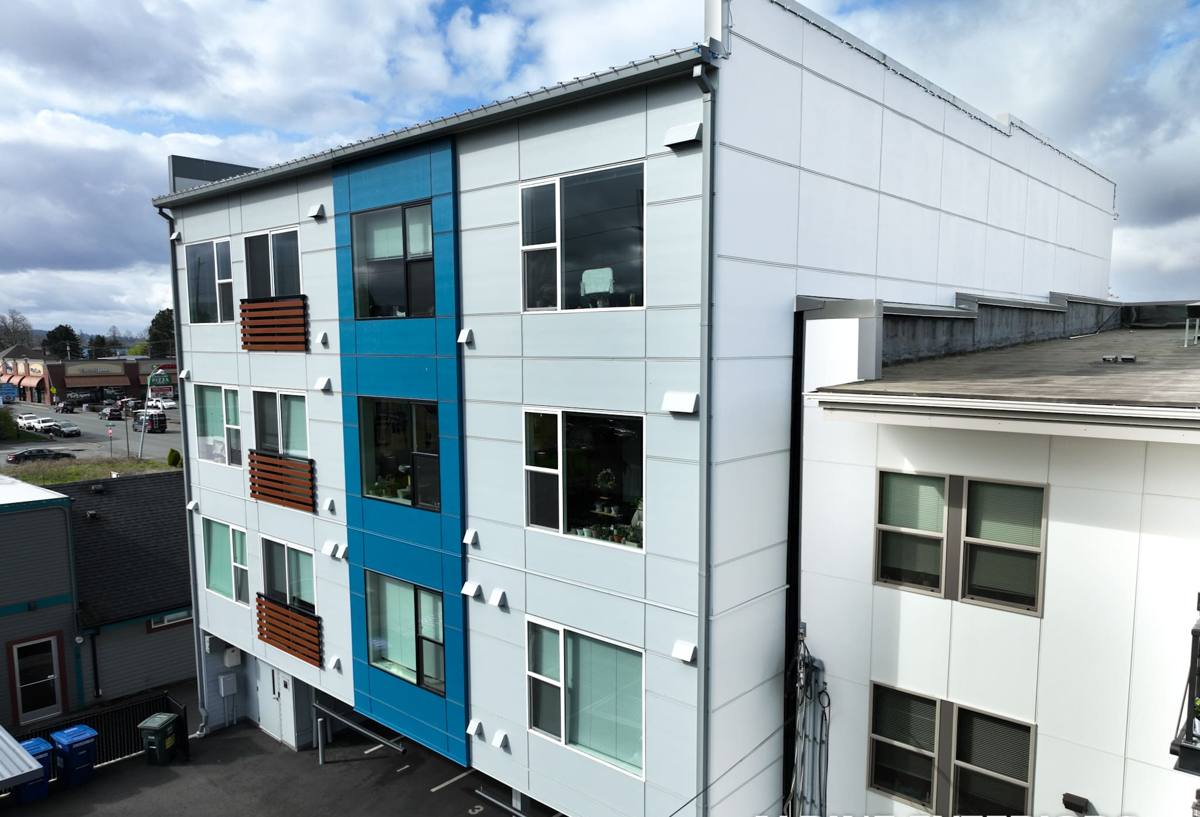
What "Custom" Actually Means for a Window Project
Custom doesn't necessarily mean unusual or expensive — it means a window built or specified to fit your actual opening, your actual wall assembly, and your actual house, instead of forcing a stock size to fit. Most homes in this area were built at different points over the decades, and openings drift out of square, get resized during past remodels, or were never standard dimensions to begin with. Trying to jam a big-box stock unit into a non-standard opening usually means shimming, gap-filling, and compromised flashing — exactly the weak points that salt air and driving rain exploit.
Custom sizing also matters for additions, bump-outs, or any spot where you're changing the window shape or count rather than doing a like-for-like swap. If you're opening up a wall for more light, changing a window's proportions, or matching an odd angle on an older section of the house, off-the-shelf simply isn't an option.
Common Window Shapes and Openings We See in This Area
- Standard double-hung and slider replacements in openings that have shifted slightly out of square over time
- Picture windows or larger fixed units for water- or garden-facing rooms
- Bay and bow window assemblies that need structural support built into the header and sill
- Odd or angled openings from additions and remodels that don't match any stock size
- Smaller specialty windows — transoms, hoppers, or narrow units in bathrooms and stairwells
When Custom Is the Right Call vs. When It Isn't
Not every project needs a fully custom unit. If your existing opening is square, standard-sized, and in good structural condition, a quality stock window built to the right dimensions can perform just as well and cost less. Custom construction earns its keep when the opening is non-standard, when you're changing the shape or size of the window, or when you're matching a distinctive architectural detail elsewhere on the house. Part of a good estimate is telling you honestly which category your project falls into rather than defaulting to the more expensive option.
Materials and Glass: What Holds Up Near the Water
Frame material and glass package matter more here than in a drier, inland part of the county, because you're weighing moisture exposure and salt air against maintenance and budget. There's no single right answer for every house — it depends on sun exposure, how sheltered the wall is, and how much upkeep you want to take on.
| Material | How It Handles This Climate | Maintenance |
|---|---|---|
| Vinyl | Won't rot or corrode; performs well in salt air; can expand/contract with temperature swings | Low — occasional cleaning |
| Fiberglass | Very stable dimensionally, strong resistance to moisture and salt exposure | Low — durable finish, minimal upkeep |
| Wood (clad exterior) | Good insulating properties; exterior cladding protects wood from direct rain and salt, but any cladding breach exposes wood to rot | Moderate — interior finish upkeep, watch cladding seams |
| Aluminum | Strong and slim-profiled but conducts cold and is prone to corrosion in salt air unless properly coated | Moderate to high near the water |
On glass, dual-pane with a low-E coating and an argon or krypton fill is the standard baseline for this climate — it cuts heat loss and helps control condensation on cold, wet days. For rooms that take direct wind and rain off the bay, or where noise from wind is a factor, a heavier glass package or laminated glass option is worth discussing. We'll walk through what makes sense for your specific exposure rather than upselling the most expensive package by default.
Installation Details That Actually Prevent Failures
Most window problems in this area don't start with the window itself — they start with the installation. A quality unit installed with poor flashing or sealant detailing will leak just as fast as a cheap one, and in driving rain conditions, faster.
What Correct Installation Includes
- A sloped sill pan under the window opening so any water that gets past the primary seal drains out, not into the wall
- Flashing tape and housewrap integration that shed water in the correct shingle-lap order — this has to tie into your siding's own moisture barrier, not just the window frame
- Backer rod and quality exterior sealant at the perimeter, sized and applied correctly rather than just caulked over gaps
- Proper shimming so the frame stays square and the sash operates without binding as the house settles or the frame expands and contracts
- Insulation in the gap between the frame and rough opening — an often-skipped step that affects both energy performance and condensation risk
Because Peace Arch takes rain from the water side more directly than more sheltered inland lots, we pay particular attention to flashing on any wall facing that exposure, and we integrate window flashing with the siding work rather than treating them as separate trades that just happen to meet at the same opening.
Our Process for a Peace Arch Window Project
- On-site assessment. We look at your existing openings, note which walls take the most weather, and check for any signs of moisture damage already present around frames or sills.
- Measuring and specification. Every opening is measured individually — we don't assume uniformity even across windows that look identical from inside the house.
- Material and glass selection. We walk through the tradeoffs for your specific exposure and budget, rather than pushing one product line.
- Ordering and lead time. Custom units take longer to arrive than stock sizes; we'll give you a realistic timeline up front.
- Removal and installation. Old units are removed, the opening is inspected and repaired if needed, and the new window is installed with proper flashing, sealant, and insulation detailing.
- Exterior integration. Trim and siding are tied back in around the new window so the whole assembly sheds water as one system, not a window patched into a wall.
- Final walkthrough. We check operation, seals, and finish work with you before calling the job done.
Signs Your Current Windows Are Already Struggling
Before deciding on replacement or custom work, it helps to know what to look for. In a climate like this, window problems tend to show up gradually and get written off as normal until they're expensive.
- Fog or moisture trapped between panes — the seal has failed and the insulated glass unit needs replacing
- Soft, discolored, or spongy wood at the sill or lower frame corners
- Persistent moss, algae, or dark streaking on sills and trim that keeps coming back after cleaning
- Noticeable drafts or cold spots near the frame in windy weather
- Difficulty opening, closing, or locking — a sign the frame has racked out of square
- Peeling or bubbling paint on interior or exterior trim near the window
- Visible gaps in old caulking or sealant around the exterior perimeter
Cost Factors for Custom Windows in This Area
There's no single number that applies to every project, but the factors that move the price are consistent. Many custom window installations in this area fall in a broad range of roughly $900 to $2,500 per window installed, with unusual shapes, full-frame replacements on older homes, or premium glass packages running higher. A written, itemized estimate is the only reliable way to know your actual number.
| Factor | Why It Affects Cost |
|---|---|
| Opening size and shape | Non-standard or large openings require more custom fabrication |
| Frame material | Vinyl is typically the most economical; wood-clad and premium fiberglass cost more |
| Glass package | Upgraded low-E coatings, gas fills, or laminated glass add cost but improve performance |
| Condition of existing opening | Rot repair or reframing adds labor beyond the window install itself |
| Siding and trim integration | Tying flashing and trim back into existing siding takes more time than a like-for-like swap |
| Access and exposure | Upper-story or hard-to-access windows on exposed walls take longer to install correctly |
Why Local Experience in Peace Arch Matters
A window is only as good as the person installing it, and that's especially true this close to the water and the border. A crew that's worked in Blaine and around Peace Arch specifically already knows which walls in this neighborhood take the worst of the wind and rain off the bay, how quickly moss establishes itself on north- and west-facing trim here, and how to sequence window and siding work so the whole exterior sheds water as one system instead of a collection of separate patches. That's knowledge you build from doing the work here repeatedly, not from a general contracting background applied to any climate.
Local familiarity also means fewer surprises with permitting through the City of Blaine or Whatcom County, and a realistic sense of how weather windows for exterior work actually play out in this part of the county through the fall and winter months.
If you're weighing custom window options for a home in Peace Arch, we're happy to take a look and give you a straightforward, no-pressure estimate — just fill out the form below.