 Blaine
 Why Composite Decking Makes Sense in Peace Arch
Homes in the Peace Arch area of Blaine sit right where marine air, near-constant rain, and a moss season that can run eight or nine months a year all meet. That combination is hard on any exterior surface, but it's especially hard on a wood deck. Salt-laden air corrodes fasteners faster than most homeowners expect, driving rain finds its way into end grain and fastener holes, and shaded, damp corners grow moss and algae almost year-round. Composite decking was designed to handle exactly this kind of exposure, which is why it's become the default choice for most of the deck rebuilds and new builds we do in this part of Whatcom County.
That said, "composite" isn't a single product with one set of rules. Board quality, capping, substructure choice, and installation detail all matter more here than they would in a drier, inland climate. A deck that would hold up fine in eastern Washington can fail early in Blaine if it's built the same way.
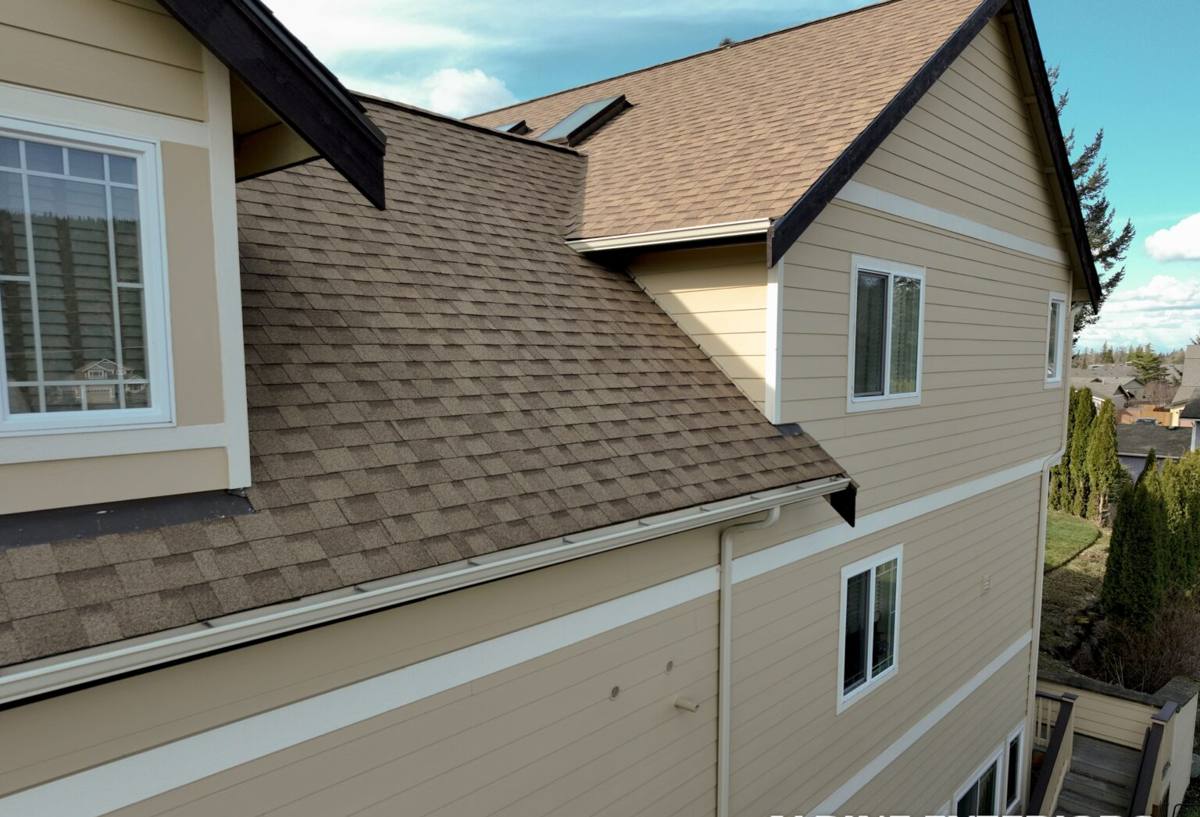
What This Climate Actually Demands From a Deck
Before we talk about the decking material itself, it's worth being clear about what the Peace Arch environment is actually testing for:
- Corrosion resistance — salt air accelerates rust on standard fasteners, joist hangers, and hidden clip systems within a few seasons if the wrong hardware is used.
- Drainage and slope — with the volume of rain this area gets, standing water on a deck surface or under it becomes a moss and rot problem fast.
- Airflow underneath — a deck built tight to the ground or against a foundation without ventilation traps moisture and speeds up decay in the framing, even if the decking boards themselves are composite.
- UV and moisture cycling — Blaine doesn't get brutal sun, but boards still need to handle repeated wet-dry cycling without warping, splitting, or losing their cap layer.
- Moss and algae resistance on the walking surface — shaded decks, tree cover, and the long damp season here mean the board surface itself needs to resist organic growth, not just the substructure.
Composite decking addresses most of these points structurally better than wood, but it still has to be installed with this climate in mind — details we'll get into below.
Composite vs. Wood in the Peace Arch Climate
We still install wood decking when a homeowner wants that look or has a specific budget need, and there's nothing wrong with a well-maintained wood deck. But given how this climate behaves, it's worth seeing the trade-offs side by side.
| Factor | Composite Decking | Wood Decking |
|---|---|---|
| Moisture absorption | Capped boards resist water intake at the surface | Absorbs moisture readily, especially at cut ends |
| Moss and algae on surface | Resists growth better; still needs occasional cleaning | Prone to moss and algae in shaded, damp spots |
| Annual maintenance | Periodic washing, no staining or sealing required | Regular cleaning, sealing, and re-staining needed |
| Fastener corrosion risk | Same risk to hardware; hidden clip systems still need marine-grade fasteners | Same risk to hardware; exposed screws show corrosion sooner |
| Upfront cost | Higher material cost | Lower material cost |
| Long-term cost | Lower over 15-20 years due to reduced upkeep | Higher over time from recurring maintenance and earlier board replacement |
| Appearance consistency over time | Color and texture stay uniform for the product's rated life | Weathers and grays unless maintained on a schedule |
For most Peace Arch homeowners, the deciding factor isn't the sticker price — it's whether they want to spend a weekend every year or two re-sealing a deck in a climate that barely gives wood a dry stretch to work with.
What a Correct Composite Deck Installation Involves
Composite decking is often marketed as low-maintenance, and the boards themselves are. But the installation underneath them is where most problems start, and it's where we spend the bulk of our attention.
Framing and Substructure
Composite boards are heavier and behave differently under load than wood, so joist spacing has to match the manufacturer's specification for the board profile being used — this is often tighter than what old wood-deck framing used. We also treat or use naturally resistant framing lumber, since the framing is still wood even when the decking isn't, and it's the framing that fails first if moisture gets trapped.
Ledger Board and Flashing
Where a deck attaches to the house is the single most common failure point we find on older decks in this area, composite or not. Rain driven sideways by coastal wind finds gaps at the ledger connection and works its way into the rim joist and wall sheathing behind it. A correct installation uses proper flashing that directs water out and away from the house, not just a bead of caulk hoping to hold back years of driving rain.
Fasteners and Hardware
Given the salt air here, we use stainless steel or coated, corrosion-rated fasteners and hardware throughout — hangers, screws, and hidden clip systems included. Standard galvanized hardware can start showing rust streaks and weakening within just a few years this close to the water; it's one of the more common shortcuts we see on decks that were built by crews unfamiliar with this stretch of coastline.
Board Spacing and Airflow
Gapping between boards has to account for both drainage and composite material's expansion behavior. Too tight, and water sits on the surface and behind boards, feeding moss growth; too loose, and the deck feels and looks wrong underfoot. We also make sure there's real airflow beneath the deck — skirting or low clearance without vents is one of the fastest ways to trap the moist air that drives mold and mildew growth in a climate that stays damp this much of the year.
Railings, Fascia, and Trim
These are often finished in composite or aluminum to match the deck's low-maintenance intent. Wood trim on an otherwise composite deck just reintroduces the same upkeep problem you were trying to get away from.
Our Process for Peace Arch Composite Decking Projects
- On-site assessment — we look at existing framing (if this is a rebuild), drainage slope, sun and shade exposure, and how the deck ties into the house.
- Design and board selection — we go over composite board options, color and texture choices, and railing systems, and talk through what fits the budget and the home's exposure to weather.
- Permitting — most deck rebuilds and new decks in Blaine and unincorporated Whatcom County require a permit; we handle that process as part of the job rather than leaving it to the homeowner.
- Demolition and framing — old decking and, where needed, old framing is removed and replaced or reinforced to current span and hardware standards.
- Flashing and waterproofing — ledger flashing, joist tape, and any house-side waterproofing get done before a single composite board goes down.
- Installation — boards, fascia, and railings are installed per manufacturer spec, with attention to gapping, fastening, and airflow underneath.
- Final walkthrough — we check the deck with the homeowner, go over any manufacturer warranty registration, and answer maintenance questions specific to this climate.
Cost Factors for a Composite Deck in This Area
Every deck is different, but the price swings we see locally usually come down to the same handful of variables.
| Factor | Why It Affects Cost |
|---|---|
| Deck size and shape | More square footage and complex angles mean more material and labor |
| Board tier | Entry-level capped composite vs. premium composite lines carry different material costs |
| Substructure condition | A rebuild on failed old framing costs more than decking installed over sound, code-compliant framing |
| Height and railing requirements | Taller decks need more substantial railing systems and structural support |
| Ledger and flashing work | Older homes often need additional flashing or sheathing repair at the house connection |
| Access and site conditions | Tight lots, slopes, or limited equipment access can add labor time |
We'll always give you a straightforward number after seeing the site — not a rough phone estimate that changes once we start pulling up old boards.
Living With a Composite Deck Through Blaine's Moss Season
Composite decking cuts down maintenance significantly, but "low-maintenance" doesn't mean "no maintenance" — especially with a moss season as long as this region's. A little seasonal attention keeps a composite deck looking and draining the way it should for its full service life.
- Sweep or rinse debris (leaves, needles, moss spores) off the surface regularly, especially in shaded areas, so organic material doesn't sit on the boards through the wet months.
- Wash the deck surface once or twice a year with a soft-bristle brush and a mild cleaner made for composite — pressure washers can be used carefully but shouldn't be aimed directly and close at the board surface.
- Check that gaps between boards stay clear of trapped debris, since blocked gaps hold moisture against the board edges.
- Confirm under-deck vents or skirting gaps haven't been blocked by landscaping, storage, or built-up debris.
- Inspect the ledger flashing and house connection once a year for any sign of water staining or soft trim, which usually shows up before a problem becomes serious.
- Re-tighten or replace any hardware showing early corrosion rather than waiting for it to fail.
Why Hiring a Crew That Already Works Peace Arch Matters
Composite decking installation isn't complicated in theory, but the details that make it last in this specific environment — flashing choices, hardware grade, framing moisture management, drainage slope — are the kind of thing you only get consistently right by having built decks in this exact climate repeatedly. A crew that mostly works inland or in a drier region may build a technically sound deck that still runs into moss, hardware corrosion, or hidden framing rot within a few years, simply because the details that matter here weren't the details that mattered where they usually work.
We're a Blaine-based crew, and Peace Arch and the surrounding Whatcom County shoreline are part of our regular service area, not an occasional job. That means we already know what the salt air does to fasteners over time, how driving rain behaves against a ledger connection here, and how long a shaded deck stays damp during moss season. It shows up in the material choices and installation details we default to, not just in what we tell you afterward.
If you're planning a new composite deck or replacing an aging wood one in the Peace Arch area, we're happy to take a look and give you a straightforward, no-pressure estimate — just fill out the form below to get started.