 Blaine
 Storm Damage Roof Repair in Nooksack
When a Pacific storm rolls through Whatcom County, the roof takes the first hit. In Nooksack, that usually means sideways rain finding its way under loose shingles, wind tearing at ridge caps, and standing moisture sitting in valleys long after the sky clears. A roof that looked fine before the storm can be quietly failing underneath, and small problems left alone turn into ceiling stains, rotted sheathing, and mold inside the attic. This page covers what storm damage roof repair actually involves for homes in and around Nooksack, what to look for after a storm, and how we approach the repair so it holds up through the next one.
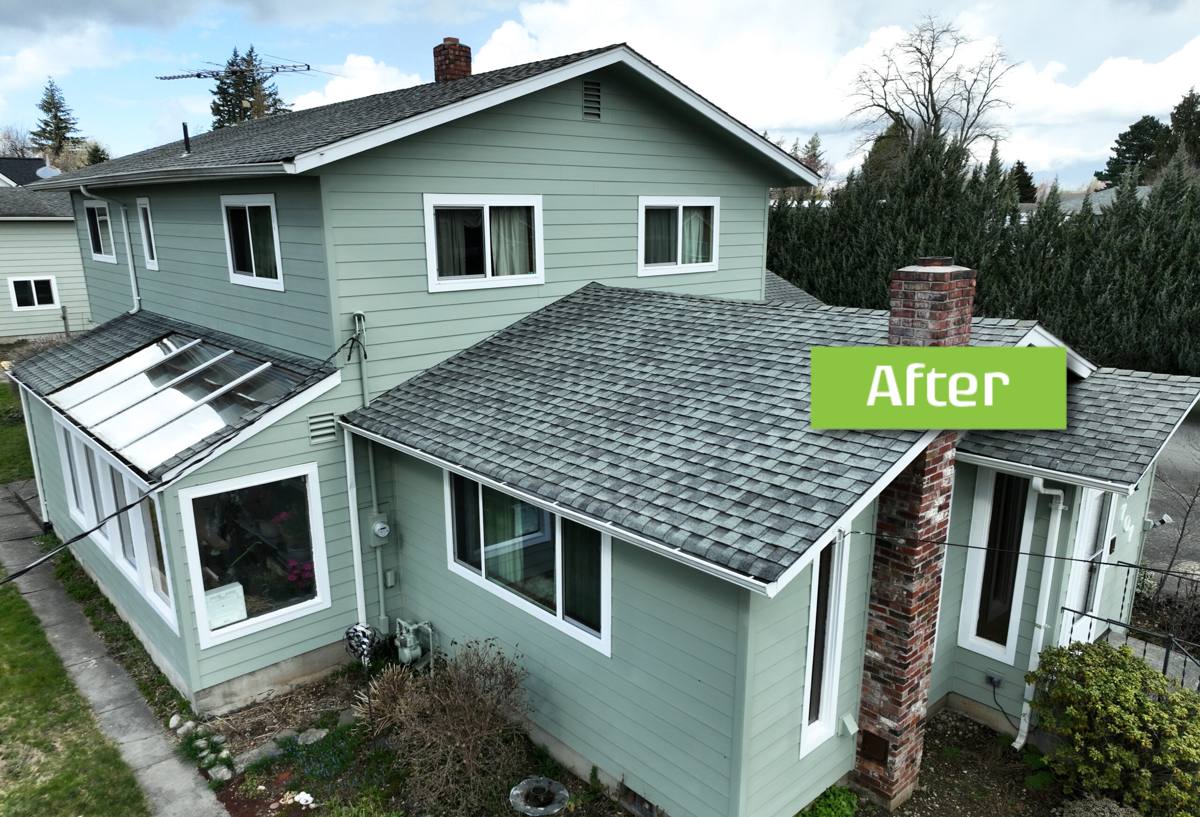
What Whatcom County Storms Do to a Roof
Roofs in this part of Washington deal with a specific combination of stresses that drier climates never see. Understanding what's actually happening on the roof surface makes it easier to understand why a proper repair looks different here than it would in a mild, dry region.
Wind-Driven Rain
Driving rain doesn't just fall on a roof — it gets pushed sideways and upward, working into laps, seams, and fastener holes that would stay dry in a calm rain. Shingle tabs that are even slightly lifted give wind-driven rain a path underneath, and once water gets past the shingle layer it's the underlayment and flashing doing all the work. Repeated storms gradually loosen nails, crack sealant strips, and open small gaps that widen with every event.
Moss and Trapped Moisture
Whatcom County's long, damp stretch of the year is exactly what moss needs to take hold. Moss doesn't just sit on top of a roof — it holds moisture against the shingle surface for days at a time, works its way under tabs and around fasteners, and can lift shingles enough for wind and rain to get underneath. A roof with heavy moss growth is very often hiding damage that isn't visible until the moss is cleared.
Salt Air and Metal Fatigue
Being close to the coast means salt-laden air moves through this region more than people expect, even well inland. Salt air accelerates corrosion on exposed metal — flashing, fasteners, gutter hardware, and vent caps — faster than it would in a landlocked climate. A flashing detail that would last decades elsewhere can start showing rust and pinholing years sooner here, and once flashing corrodes it stops doing its job long before it looks obviously broken.
Signs Your Nooksack Home Has Storm Damage
Storm damage isn't always dramatic. Often it's subtle enough that homeowners don't notice until a leak shows up inside. After any significant wind or rain event, it's worth doing a quick check for these signs:
- Shingles that look lifted, curled at the edges, or missing entirely
- Granules collecting in gutters or at downspout outlets
- Soft or discolored spots on ceilings, especially near exterior walls or skylights
- Visible daylight through the attic roof deck
- Flashing around chimneys, vents, or valleys that looks bent, lifted, or rusted
- Heavy moss buildup, particularly on north-facing slopes that stay shaded and damp
- Gutters pulling away from the fascia or sagging under debris weight
- A musty smell in the attic, which usually means moisture has already gotten in
What a Correct Storm Damage Repair Involves
Storm damage repair is not just replacing whatever shingles are visibly missing. A repair that only patches the surface without checking what's underneath tends to fail again at the same spot the next time it storms.
Inspection Before Repair
Before any repair work starts, the roof needs a real inspection — not just from the ground, but on the surface, checking the deck underneath damaged areas, the condition of the underlayment, and whether water has already tracked sideways under adjacent shingles. Wind and rain damage rarely stays contained to a single, obvious spot.
Matching Materials and Flashing Details
Shingle color and profile match matters for appearance, but the more important match is functional — the right underlayment, proper nail placement, and flashing that's actually compatible with the surrounding metal to avoid accelerated corrosion. Given how much salt air and moisture this region deals with, flashing details get more attention here than they would on a repair in a dry climate.
Common Failure Points
Certain areas of a roof fail more often than others after storm events, and each one needs a slightly different repair approach.
| Failure Point | Typical Cause | What a Proper Repair Addresses |
|---|---|---|
| Ridge caps | Wind uplift loosening nails and sealant | Re-securing with correct fastener pattern and fresh sealant |
| Valleys | Debris damming water flow, moss buildup | Clearing debris, checking valley flashing or membrane for wear |
| Chimney and vent flashing | Corrosion from salt air, sealant breakdown | Replacing corroded flashing rather than just re-sealing over it |
| Shingle field | Wind-lifted tabs, granule loss from age | Replacing damaged shingles and checking adjacent courses for hidden lift |
| Gutter line | Wind-driven debris, ice or heavy rain overload | Re-securing hangers, confirming proper pitch and drainage |
Our Storm Damage Repair Process
Storm repair moves in stages, and skipping steps is usually what leads to a repair that doesn't hold.
1. Immediate Protection
If a storm has left the roof deck exposed, the first priority is stopping active water intrusion — temporary covering over the damaged area to protect the interior of the home while a full repair plan is worked out.
2. Documentation
We document the damage with photos and a written description of what's affected. This is useful whether or not a homeowner is filing an insurance claim, since it creates a clear record of storm-caused damage versus pre-existing wear.
3. The Repair
Once the scope is clear, we remove and replace only what's actually damaged, check the surrounding area for hidden issues, and make sure flashing, underlayment, and shingles are all properly tied together before closing the roof back up.
4. Final Check
After the repair, we walk the roof again to confirm everything is sealed, fastened, and draining correctly before calling the job done.
Repair or Full Replacement?
Not every storm-damaged roof needs to be replaced, but some do — especially if the roof was already near the end of its service life before the storm hit. Here's a general breakdown of how we think through that decision:
| Factor | Favors Repair | Favors Replacement |
|---|---|---|
| Roof age | Under roughly 15 years | Nearing or past typical shingle lifespan |
| Damage extent | Isolated to one section or slope | Widespread across multiple slopes |
| Underlying deck condition | Solid, no rot found during inspection | Soft spots or rot found in the sheathing |
| Moss history | Minor, surface-level growth | Long-term moss with shingle lift underneath |
| Prior repairs | First significant repair needed | Roof already has several past patch repairs |
We'll always tell you honestly which side of that table your roof falls on rather than defaulting to the more expensive option.
Why a Crew That Already Works Nooksack Matters
A roofing crew that regularly works Whatcom County homes knows what this climate actually does to a roof over time — where moss tends to build up first, how salt air affects flashing lifespan differently than it would inland, and which storm damage patterns show up after a hard westerly blow versus a slow, soaking rain event. That local pattern recognition matters when it comes to catching hidden damage instead of just patching what's visible. It also means a faster response — after a storm hits Nooksack, homeowners aren't waiting on a crew driving in from out of the area while water keeps getting into the house.
Insurance and Storm Claims
Many storm-related roof repairs are covered under homeowners insurance policies, though coverage details vary by policy and insurer. We're glad to provide documentation and a clear repair estimate to support a claim, but the claims process itself is between the homeowner and their insurance company. If you're unsure whether your damage is claim-worthy, it's worth getting an inspection first — that gives you the information you need before deciding how to proceed with your insurer.
Keeping the Roof Sound After Repair
Once a storm repair is done, a bit of ongoing attention keeps it from becoming a repeat job. Clearing debris out of valleys and gutters before the wet season sets in, keeping an eye on moss growth and addressing it before it spreads, and having the roof looked at after any unusually severe wind event all go a long way toward protecting the repair — and the rest of the roof — through Whatcom County's long, wet stretch of the year.
If a recent storm has left your Nooksack home with missing shingles, a leak, or damage you're not sure how serious it is, we're happy to take a look. Reach out for a free, no-pressure estimate using the form below, and we'll give you an honest read on what your roof actually needs.