 Blaine
 Board & Batten in a Whatcom County Climate
Board and batten has always suited this part of Washington. The strong vertical lines read well against evergreens and gray skies, it hides the siding seams that show up on a lot of horizontal lap jobs, and it gives a farmhouse or modern-farmhouse home a clean, deliberate look that homeowners in the Nooksack area keep asking for. But the style is only half the story. What actually determines whether board and batten siding holds up here is what's underneath it, and Whatcom County does not go easy on exterior materials.
Marine air off the Strait of Georgia and Boundary Bay pushes inland across the county, carrying salt-laden moisture that settles on siding, trim, and fasteners even well away from the water. Add driving rain that comes in sideways during fall and winter storms, and a moss season that can run eight months or longer in shaded, north-facing exposures, and you have a climate that will find every weak point in a siding system within a few years. Board and batten, with its exposed vertical seams and stacked battens, has more joints and more opportunities for water to get behind the cladding than a plain lap job. That's not a reason to avoid the style - it's a reason to insist it's built correctly.
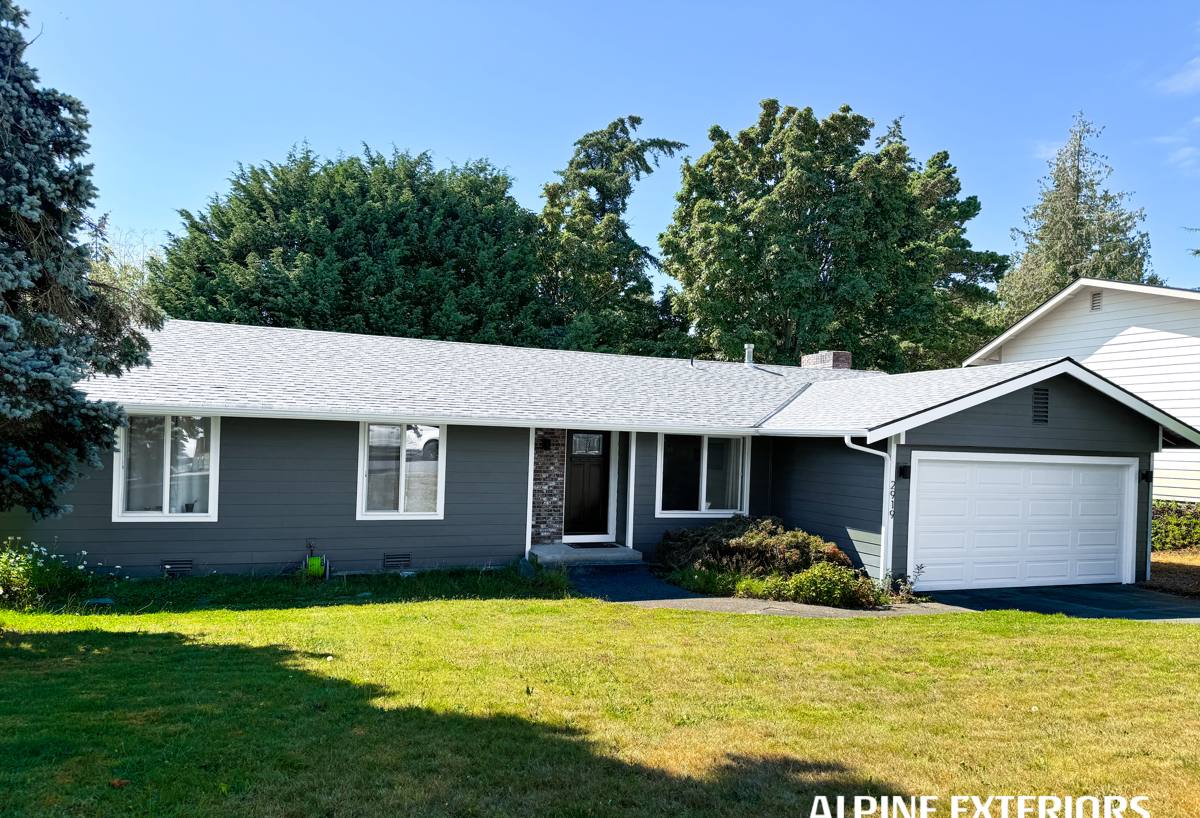
What Local Weather Does to Vertical Siding Over Time
Salt Air and Fastener Corrosion
Salt in the air accelerates corrosion on anything metal - nail heads, screws, flashing, and staples. On a board and batten wall, the fasteners are often more exposed than on lap siding because battens are face-nailed or blind-nailed through narrow strips of material. Cheap or under-spec fasteners streak and stain the siding as they corrode, and eventually they lose their grip, which is when battens start to bow or pull away at the edges.
Driving Rain and Water Behind the Battens
Wind-driven rain doesn't just run down a wall, it gets pushed sideways and upward into every gap. On a board and batten assembly, the vertical joint between the underlying boards and the batten covering it is the single most important seam on the house. If that joint isn't detailed with the right gap, backing, and drainage path, water works its way behind the cladding during the county's wetter months and stays there, because vertical board and batten doesn't dry out as fast as horizontal lap when it's holding moisture.
The Long Moss Season
Shaded walls, tree cover, and the persistent dampness common to inland Whatcom County communities like Nooksack create ideal conditions for moss and algae growth for much of the year. On a wood-based product, moss holds moisture against the surface and accelerates rot. On the vertical battens especially, where debris and organic buildup can collect at horizontal trim and window heads, that sustained dampness is exactly what shortens the life of a siding system that isn't built to shed water and resist moisture absorption in the first place.
What a Correct Board & Batten Job Actually Involves
A board and batten wall looks simple from the street, but there's more happening behind the surface than most homeowners realize. Skipping any of the following is how a good-looking install turns into a callback three or five years later.
Weather-Resistive Barrier and Drainage Plane
Everything starts with a continuous weather-resistive barrier, taped and lapped correctly at every seam, window, and penetration. In a climate with this much driving rain, we also build in a drainage gap - typically a rainscreen furring strip - so that any moisture that does get past the cladding has somewhere to go instead of sitting against the sheathing.
Batten Spacing, Fastening, and Panel Layout
Batten spacing needs to be consistent and planned around window and door openings before the first piece goes up, not adjusted on the fly. Fasteners have to be corrosion-resistant, sized correctly for the material thickness, and driven at the manufacturer's specified pattern - not just "enough to hold it up." Over-driven or under-driven fasteners are one of the most common defects we find when we're called out to look at another contractor's board and batten work.
Flashing, Trim, and Joint Details
Every horizontal transition - window heads, water tables, roof-to-wall intersections - needs proper flashing that directs water out and away from the wall assembly, not down behind the siding. Vertical joints between panels need backer strips and a gap that allows the material to expand and contract without binding or cracking the caulk line. All of this is invisible once the job is finished, which is exactly why it matters who's doing the work.
Why We Only Install James Hardie Board & Batten
Board and batten is available in several materials, and we get asked regularly why we've standardized on James Hardie fiber cement instead of offering cedar, primed spruce, or engineered wood options. The honest answer is that in a climate with this much sustained moisture and moss pressure, the material choice matters as much as the installation quality.
Cedar and primed wood board and batten can look excellent when new, and we're not going to pretend otherwise. But wood is an organic material, and in a marine climate with a long damp season, it needs consistent maintenance - recoating, caulk inspection, and prompt repair of any moisture intrusion - to avoid rot, especially at the batten edges and lower courses where splash-back and moss collect. Engineered wood products have improved moisture resistance over solid wood, but they're still wood-based at the core, which means they carry some of the same swelling, checking, and edge-degradation risks if water gets past the finish, and installation has to be precise to keep warranty coverage intact.
James Hardie fiber cement doesn't have that vulnerability. It's non-combustible, it doesn't feed moss and mildew the way wood fiber does, and it holds its dimension in wet and dry cycles far better than wood-based alternatives. The ColorPlus factory finish is baked on and warranted against fading and peeling, which matters on a style like board and batten where the vertical battens catch weather from multiple directions. It's a harder material to install correctly - fiber cement demands the right blades, fasteners, and joint spacing - but installed to spec it's the material we're comfortable standing behind on homes in this climate.
| Factor | Cedar / Primed Wood | Engineered Wood | James Hardie Fiber Cement |
|---|---|---|---|
| Moisture resistance | Needs ongoing sealing and maintenance | Improved, but still wood-based | Engineered for wet climates |
| Moss / algae resistance | Feeds organic growth if damp | Better than solid wood, not immune | Does not feed organic growth |
| Finish durability | Recoat every few years | Factory-finished, moderate lifespan | ColorPlus factory finish, warranted |
| Fire resistance | Combustible | Combustible | Non-combustible core |
| Installation sensitivity | Moderate | Moderate to high | High - requires correct tools and technique |
Our Process for a Nooksack Board & Batten Project
- On-site assessment. We look at wall orientation, shade and moss exposure, existing sheathing condition, and drainage around the foundation before we talk product or price.
- Design and layout. Batten spacing is planned around your window and door openings and your home's proportions, not applied as an afterthought.
- Prep and drainage plane. Old siding removal (when needed), sheathing repair, weather-resistive barrier, and rainscreen furring go in before a single board is hung.
- Installation. Boards and battens are fastened to manufacturer spec, with flashing and trim detailed at every transition.
- Final inspection and walkthrough. We check joint gaps, fastener patterns, and flashing before we call the job done, and we walk it with you.
Board & Batten Cost Factors in Whatcom County
Every home is different, so we don't publish flat pricing - wall condition, home size, trim complexity, and access all move the number. The factors below are what actually drive cost on a board and batten project in this area.
| Cost Factor | Why It Matters |
|---|---|
| Existing wall condition | Rot or moisture damage found during tear-off adds sheathing repair before new siding can go up |
| Home size and wall complexity | More corners, gables, and window trim mean more cutting, flashing, and labor time |
| Batten spacing and pattern | Tighter batten spacing uses more material and more fastening labor per square foot |
| Access and site conditions | Steep grades, tree cover, or limited staging area affect scaffolding and crew efficiency |
| Trim and detail work | Window surrounds, corner boards, and water tables add material and installation time |
Maintaining Board & Batten Siding in This Climate
Fiber cement board and batten is low-maintenance compared to wood, but "low-maintenance" isn't "no-maintenance" in a climate with this much moss and moisture pressure. A short annual routine keeps the siding performing the way it's supposed to for decades:
- Rinse siding annually with a garden hose (not a pressure washer aimed directly at joints) to clear salt residue, pollen, and organic buildup
- Check shaded, north-facing walls for moss or algae growth and treat early rather than letting it establish
- Inspect caulk lines at trim, windows, and vertical joints once a year and re-caulk any that have cracked or pulled away
- Keep gutters and downspouts clear so roof runoff isn't dumping extra water onto siding and battens
- Trim back vegetation and tree limbs that hold moisture against the wall or keep a wall permanently shaded
- Watch for any soft spots, staining, or fastener corrosion and call a professional before a small issue becomes a repair
Why a Crew That Already Works in Nooksack Matters
Board and batten installation isn't complicated in theory, but the details that keep it watertight in this specific climate - drainage plane design, batten joint spacing, flashing at trim and window heads, fastener selection for salt-exposed air - are exactly the details that get skipped by crews who don't work this area regularly. A contractor based in Blaine and working throughout Whatcom County has already seen how driving rain and moss behave on homes in and around Nooksack across multiple seasons, not just on a single job. That local pattern recognition is what separates a board and batten wall that looks good for one summer from one that's still tight and clean a decade later.
If you're weighing board and batten for a home in the Nooksack area, we're happy to walk the property, talk through what your specific wall exposures need, and give you a straight answer on scope and cost - no pressure, no obligation. Reach out using the form below to schedule a free estimate.