 Blaine
 New-Construction Windows Are a Different Job Than Replacement
New-construction windows have a nailing fin and are installed before the siding goes on, which means the window becomes part of the wall's water management system rather than sitting inside an existing opening. That's a real advantage on a new build or a full re-side in Bellingham, because it lets us integrate the window flashing directly with the weather-resistive barrier and the siding detail instead of working around what's already there. It also means there's zero margin for error — once siding closes over a bad flashing job, nobody sees the mistake until there's a stain on the drywall two winters later.
This page is specifically about new-construction window installation for homes in the Bellingham area of Whatcom County. If you're replacing windows in a home that's already sided, that's a different scope with different trade-offs, and we're happy to talk through which situation you're in.
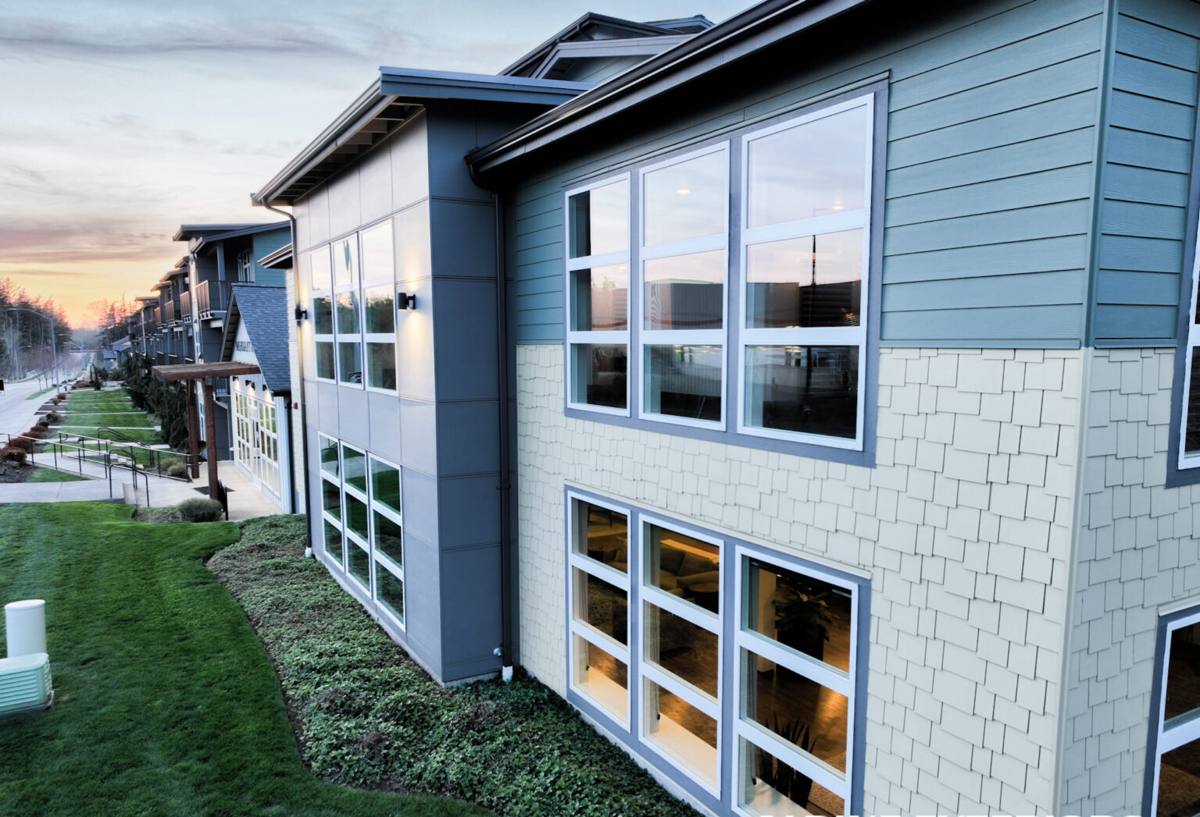
What Bellingham's Climate Actually Demands From a Window Install
Bellingham sits close enough to the water that salt-laden air is a factor on hardware and finishes, and the marine weather pattern brings long stretches of wind-driven rain rather than just straight-down rainfall. Add a moss season that runs long on north- and west-facing walls, and you've got three separate stresses working on the same opening: corrosion, water intrusion under pressure, and organic growth that holds moisture against the building longer than it should sit there.
- Wind-driven rain pushes water sideways and upward against the wall, so flashing has to shed water outward at every lap, not just downward.
- Salt air off the Sound accelerates corrosion on the wrong fasteners, hinges, and cladding-to-frame connections over the life of the window.
- Extended damp/moss season means any spot where water can pool or organic debris can collect against the frame stays wet for weeks at a time, not hours.
None of that is exotic — it's just what this stretch of Whatcom County does every year. The window and the install method both need to be chosen with that in mind, not with a generic Pacific Northwest assumption that treats Bellingham the same as a drier inland climate.
Getting the Flashing and Water Management Right
Sill Pan First, Always
Before a window goes into the rough opening, the sill needs a sloped pan flashing that directs any water that gets past the window — and some always will, eventually — back out to the exterior instead of into the framing. On a driving-rain coast this isn't optional detailing; it's the difference between a window that stays dry for thirty years and one that rots the sill plate from the inside where nobody can see it.
Shingle-Lap Sequencing
Every layer of flashing tape, housewrap, and the window's own flange has to overlap in the correct order — bottom pieces under, top pieces over — so water is always directed onto the layer below it and out, never trapped behind a layer above it. We follow this sequence the same way on every opening because it's the one part of the job that can't be corrected later without pulling siding.
Integration With the Weather-Resistive Barrier
The window flange needs to be taped into the WRB with a proper head flashing and end dams, not just caulked at the edges. Caulk is a backup seal, not the primary defense — it degrades, especially with UV and salt exposure, while a properly lapped flashing assembly keeps working even after the sealant ages out.
Choosing the Right Window for This Climate
Frame material and hardware grade matter more here than in a drier, inland climate because you're combining moisture exposure with salt air. There's no single "best" window for every budget, but there are real trade-offs worth understanding before you sign a spec sheet.
| Frame Material | How It Handles Salt Air & Moisture | Maintenance | Typical Fit |
|---|---|---|---|
| Vinyl | Won't corrode or rot; seams and welded corners are the weak point if not fabricated well | Low — occasional cleaning | Budget-conscious builds, rentals, additions |
| Fiberglass | Dimensionally stable, resists moisture and salt corrosion very well | Low | Homes wanting durability without wood upkeep |
| Wood-clad | Exterior cladding protects from weather, but any breach at joints lets moisture into the wood core | Higher — cladding seams need periodic inspection | Owners prioritizing interior wood aesthetic |
| Aluminum | Conducts cold and can pit or corrode over time near salt air unless properly finished | Moderate | Less common as a primary choice on this coast |
Hardware matters as much as frame material. Stainless steel or marine-rated fasteners and hinges cost more up front but hold up against salt air that will visibly corrode standard-grade hardware within a few years on an exposed wall. We spec hardware for the exposure the wall actually gets, not a one-size-fits-all default.
Glazing Considerations
Double-pane, low-E glass is the practical minimum for the Bellingham area's mix of cool, wet winters and increasingly warm summer stretches. Argon-filled units perform better against the temperature swings a marine climate produces day to night. We can talk through triple-pane if noise or a particularly exposed elevation is a concern, but it's a real cost step up and not always necessary on every wall of a house.
Our Process for New-Construction Window Installation
- Rough opening check — verify dimensions, square, and structural framing before any window arrives on site.
- Sill pan flashing — sloped pan installed and tested for drainage path before the window sets.
- Dry-fit and set — window set plumb, level, and square, shimmed correctly so the frame isn't stressed.
- Flange fastening — fastened per manufacturer schedule to keep the warranty intact.
- Flashing sequence — side flanges taped, then head flashing installed last, lapped over everything below it.
- WRB integration — housewrap or building paper lapped and taped into the flashing assembly with no gaps.
- Interior and exterior seal check — walkthrough before siding closes the opening for good.
That last step matters more than it sounds like it should. Once siding goes up, that opening is closed for the life of the wall assembly. We treat the pre-siding inspection as a hard checkpoint, not a formality.
Common Mistakes We See — and Build Our Process to Avoid
- Skipping or shortcutting the sill pan because "the caulk will handle it" — caulk alone fails on a driving-rain coast.
- Flashing tape applied out of sequence, so water gets funneled behind the housewrap instead of over it.
- Standard-grade fasteners and hinges used on salt-exposed elevations, leading to premature corrosion and stuck or failing hardware.
- Foam or caulk used to "fill" gaps around the frame instead of proper shimming, which distorts the frame and causes operational problems.
- Head flashing omitted or undersized, leaving the single most water-loaded part of the opening under-protected.
- No pre-siding inspection, so a flashing error gets buried and doesn't surface until there's interior damage.
Cost Factors on a New-Construction Window Job
| Factor | Why It Moves the Price |
|---|---|
| Number and size of openings | More or larger windows mean more material and more flashing labor per opening |
| Frame material chosen | Vinyl, fiberglass, and wood-clad carry different unit costs before labor |
| Glazing package | Double-pane low-E vs. triple-pane vs. upgraded gas fill changes per-unit cost |
| Elevation exposure | Walls facing prevailing wind-driven rain warrant extra flashing detail and hardware grade |
| Access and building stage | Ground-level openings on a fresh frame cost less to work than upper-story or scaffolded walls |
| Coordination with siding sequence | Windows installed as part of a scheduled siding project reduce redundant setup trips |
We give a written estimate that breaks these out so you can see where the money is going, rather than a single lump number.
Why It Matters That We Already Work Bellingham
Whatcom County's marine exposure isn't uniform — a wall a few blocks off the water sees different wind-driven rain loading than one further inland, and moss pressure varies by tree cover and which direction a wall faces. A crew that installs windows across this area regularly develops a feel for which elevations need the extra hardware grade and which flashing details actually get tested by weather here, rather than applying a generic installation spec written for a different climate. That local pattern-recognition is part of what you're paying for on top of the labor itself.
We also stand behind the flashing and installation work specifically — not just the window unit's manufacturer warranty — because on a coastal build like this, installation quality is what determines whether that manufacturer warranty ever needs to be used.
If you're framing a new home or planning a full re-side in the Bellingham area and want new-construction windows installed correctly the first time, we're glad to walk the plans or the site with you and put together a clear, no-pressure estimate using the form below.