 Blaine
 Roof Replacement Built for Lynden's Climate
Lynden sits inland from the coast, but the weather that reaches it doesn't leave much behind. Marine air moving in off the Strait of Georgia and Puget Sound carries a fine load of salt with it, and that salt settles on every exposed surface in Whatcom County, roofs included. Add in months of driving rain pushed sideways by wind, and a moss season that can run from late fall well into spring, and you have a climate that is genuinely harder on a roof than most of the country ever sees. A roof replacement here isn't just about swapping old shingles for new ones. It's about building an assembly that can shed wind-driven rain, resist moss and algae growth, and hold up to slow, constant moisture exposure year after year.
We've replaced roofs across this part of the county long enough to know which failure points show up again and again on Lynden homes, and we build every replacement to address them directly rather than just meeting the minimum code requirement.
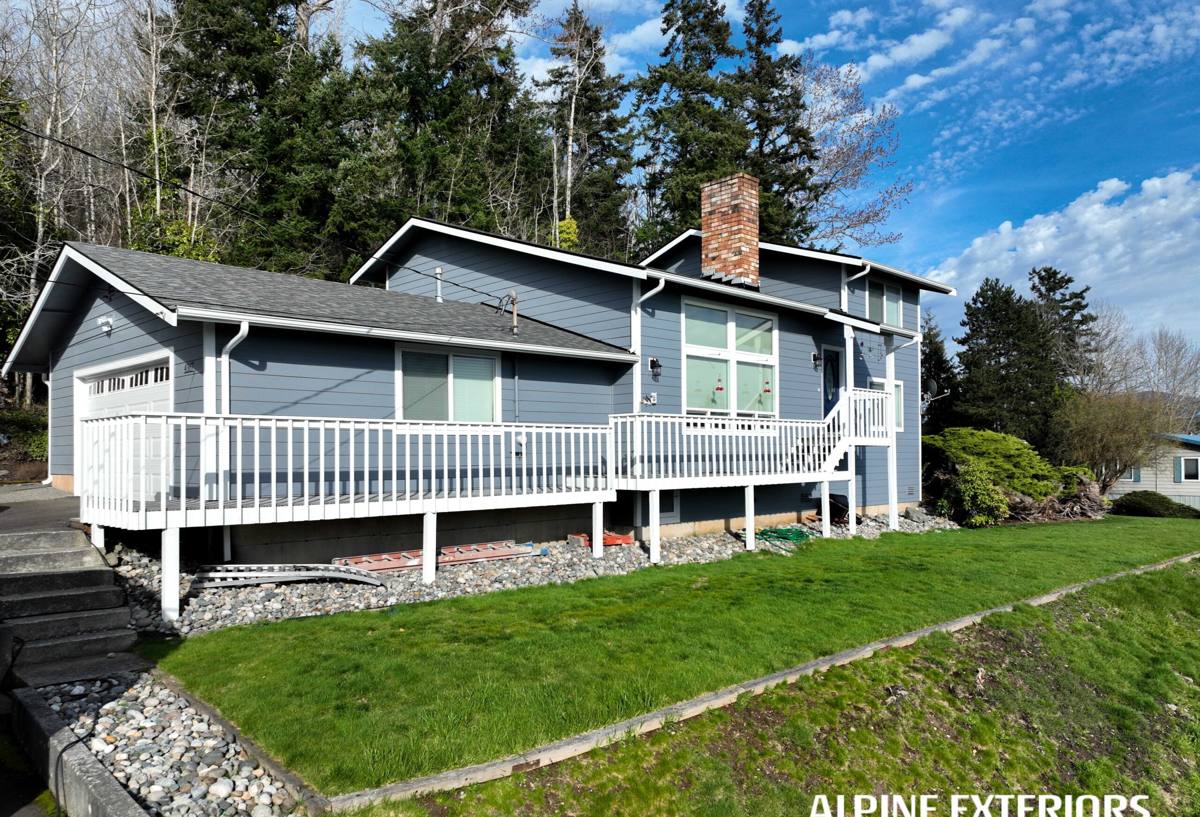
Why Lynden Roofs Wear Differently Than Roofs Inland or in Drier Climates
Three regional factors do most of the damage over time:
Salt-Tinged Air
Even well inland from the water, airborne salt accelerates corrosion on exposed metal fasteners, flashing, and vent components. Over years, untreated or lower-grade metal can pit and weaken faster than the roofing material around it, which is often where leaks actually start.
Driving Rain
Whatcom County storms rarely fall straight down. Wind pushes rain sideways and up under laps, edges, and flashing that would stay dry in a calmer climate. A roof detailed for occasional light rain will eventually leak here; a roof detailed for wind-driven rain won't.
Long Moss Season
Shaded roof planes, north-facing slopes, and homes with mature tree cover stay damp for extended stretches. That moisture holds moss spores, and once moss establishes itself it lifts shingle edges, traps water underneath, and shortens the life of the roofing material well before it would otherwise wear out.
Signs a Lynden Roof Needs Full Replacement, Not Another Repair
Not every roof problem calls for a full tear-off. But when several of the following show up together, patching becomes a short-term fix on a roof that's already failing underneath:
- Granule loss heavy enough to see bare, shiny patches on asphalt shingles
- Shingles that are cupping, curling at the edges, or cracking when touched
- Moss or algae mats that have been scraped off before but keep returning within a season or two
- Soft or spongy decking felt underfoot when walking the roof
- Daylight visible through the roof deck from inside the attic
- Repeated leaks in different spots after past patch repairs
- A roof approaching or past the manufacturer's expected service life for its material and exposure
- Visible sagging along the ridge or between rafters
If you're only seeing one or two of these, a targeted repair may still make sense. We'll tell you honestly which category your roof falls into during the estimate rather than pushing a replacement you don't need yet.
What a Correct Roof Replacement Actually Involves
A roof replacement is only as good as what happens underneath the visible layer. Here's what we consider non-negotiable on every full replacement.
Full Tear-Off and Deck Inspection
We remove the old roofing down to the deck rather than layering over it. That lets us actually see the plywood or OSB underneath, which is the only way to catch soft spots, rot, or old water damage before it's sealed under a new roof for another twenty-plus years. Any damaged decking gets replaced, not skipped.
Underlayment and Moisture Barriers
Given how much driving rain this region sees, we use a synthetic underlayment across the full deck rather than the thinner felt papers that were standard decades ago, and we install self-adhering ice-and-water membrane at eaves, valleys, and around every roof penetration. Those are the spots wind-driven rain finds first, and a membrane barrier there stops it before it ever reaches the deck.
Flashing Done Right
Flashing around chimneys, skylights, sidewalls, and vent pipes is where most roof leaks actually originate, not in the field of the shingles themselves. We use corrosion-resistant metal appropriate for salt-tinged air, and we replace flashing rather than reusing old pieces, since bent or corroded flashing rarely seals as well the second time around.
Ventilation That Matches the Home
A roof that traps heat and moisture in the attic ages faster from the inside out and creates the damp, dark conditions moss thrives in. We check intake and exhaust ventilation balance as part of every replacement and correct it when it's inadequate, rather than just matching what was there before.
Choosing a Roofing Material for Lynden's Weather
There's no single "best" roofing material for every home — it depends on your roof's pitch, sun and shade exposure, budget, and how long you plan to stay in the home. Here's how the common options compare for this specific climate.
| Material | Moss & Algae Resistance | Wind-Driven Rain Performance | Typical Lifespan Here |
|---|---|---|---|
| Standard 3-tab asphalt shingles | Lower without algae-resistant granules | Adequate with proper flashing | Shorter end of the range |
| Architectural (laminate) asphalt shingles | Better, especially with algae-resistant granules | Strong when properly nailed and sealed | Mid-to-long range |
| Standing-seam metal | Excellent — sheds moss and moisture readily | Very strong | Longest of the common options |
| Cedar shake | Requires ongoing maintenance to resist moss | Good when installed and maintained correctly | Variable, maintenance-dependent |
Most homeowners in Lynden land on architectural asphalt shingles with algae-resistant granules as the practical middle ground: meaningfully better moss resistance than basic 3-tab shingles, strong wind performance, and a cost that fits typical remodeling budgets. Metal roofing costs more upfront but asks for the least maintenance over time, which matters on shaded roof planes that fight moss every year. We'll walk through the real trade-offs for your specific roof rather than steering you toward whatever's easiest for us to install.
Our Roof Replacement Process, Start to Finish
- On-site estimate. We inspect the existing roof, attic ventilation, and any problem areas you've noticed, and walk you through condition and options in plain terms.
- Written scope and material selection. You'll get a clear, itemized proposal covering materials, warranty terms, and timeline before any work starts.
- Scheduling around the weather. Given how much rain this region gets, we plan tear-offs for stretches of workable weather and keep the roof protected if conditions shift mid-project.
- Tear-off and deck inspection. Old roofing comes off, the deck is inspected, and any needed repairs are made and documented.
- Underlayment, flashing, and material installation. Moisture barriers, flashing, and the new roofing go on in that order, with attention to every edge, valley, and penetration.
- Ventilation check and cleanup. We confirm attic ventilation is balanced, then do a full site cleanup, including a magnetic sweep for stray nails.
- Final walkthrough. We review the finished roof with you before considering the job done.
Living With Moss and Algae After Replacement
A new roof lowers the moss risk significantly, but it doesn't remove the underlying conditions that cause it in Whatcom County — shade, moisture, and mild winters that never fully dry a roof out. A few practices extend the life of a new roof meaningfully:
- Keep overhanging branches trimmed back to reduce shade and let roof planes dry faster
- Clear gutters at least twice a year so water isn't backing up under the roof edge
- Have zinc or copper control strips installed near the ridge if moss has historically been heavy on your roof
- Avoid pressure washing shingles, which can strip protective granules and shorten the roof's life
- Schedule a light inspection every couple of years rather than waiting for a visible problem
Permits and Timing Considerations for Lynden Homeowners
Most full roof replacements in Whatcom County require a building permit, and we handle that process as part of the job rather than leaving it to the homeowner. Timing matters here more than in drier climates — a roof torn off without a realistic weather window can end up exposed during a rain event, which is a risk we plan around rather than one we're willing to gamble on. Late spring through early fall tends to offer the most predictable stretches of dry weather, though we replace roofs outside that window too when the forecast allows and the job is planned carefully.
Why Hiring a Crew That Already Works in Lynden Matters
Roofing crews that mostly work drier or more sheltered areas sometimes underestimate what this climate does to a roof over time — how much flashing detail actually matters, how aggressively moss can take hold on a shaded north slope, or how far wind can drive rain sideways under an edge. Working steadily in and around Lynden and the rest of Whatcom County means we're not guessing at how local conditions affect a roof's long-term performance; we're building for exactly what shows up here year after year. That shows up in the small decisions — how much ice-and-water membrane goes down, what grade of flashing gets used, how ventilation gets balanced — that determine whether a roof is still performing well in fifteen or twenty years or starting to leak in five.
If you're weighing a repair against a full replacement, or just want an honest read on where your current roof stands, we're happy to take a look. Use the form below to request a free, no-pressure estimate for your Lynden home.