 Blaine
 Metal Roofing in Lynden: A Whatcom County Job, Done Right
Lynden sits inland in the Nooksack River valley, north Whatcom County, close enough to the coast that marine air still reaches it but far enough that homeowners here deal with a slightly different mix of weather than the towns right on Semiahmoo Bay. We're based in Blaine, and Lynden is regular territory for our crew — not an occasional drive-in job, but a town where we've put roofs on enough houses to know how this specific valley treats a roof over time. Salt air carried in off the water, driving rain that rarely falls straight down, and a moss season that can run most months of the year all show up in how a Lynden roof ages, and metal roofing is one of the few materials that handles all three without much drama.
This page is specifically about metal roofing for Lynden homes — what the climate demands of it, what a correctly installed metal roof actually involves, how our process runs from first look to finished job, and why it matters that the crew doing the work already knows this valley rather than learning it on your roof.
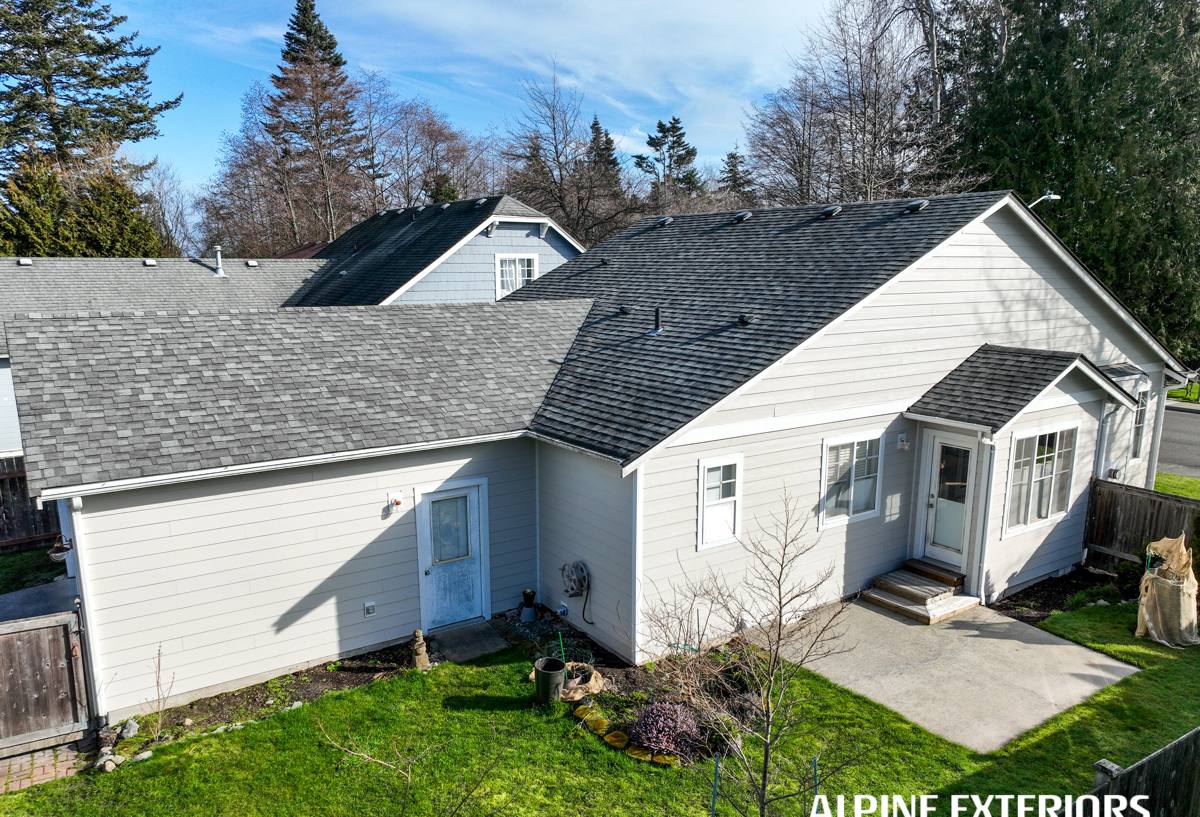
What Lynden's Climate Does to a Roof
Salt Air, Even This Far Inland
Lynden isn't waterfront, so it's easy to assume salt exposure is someone else's problem. It isn't. Marine air moves up the valley from Semiahmoo Bay and the Salish Sea and settles over this whole part of the county, and over years it works on fasteners, flashing, and any exposed metal that isn't rated for it. On a roof, that matters most at the fastener heads, ridge caps, and flashing details — the small components that hold the whole system together and are the first to show corrosion if they're the wrong grade for a marine climate.
Driving Rain, Not Just Rainfall Totals
Storms coming through this corner of Washington push rain sideways as much as they drop it straight down. On a roof, that means water gets forced into valleys, around vent pipes, and under any flashing lap that isn't sealed correctly, rather than simply running off a clean slope. A roofing system that only accounts for vertical rainfall is missing the load this valley actually puts on it.
A Long Moss Season
Mild, damp weather for most of the year gives moss and algae a long growing window, especially on shaded or north-facing roof planes and anywhere tree cover keeps a surface from drying out between storms. Moss doesn't just look bad — it holds moisture against the roofing material and can work into seams and fastener penetrations if it's allowed to spread unchecked for a few seasons.
Why Metal Roofing Fits This Climate Well
There's no single roofing material that's automatically right for every Lynden home, but metal has a specific set of properties that line up well with what this valley's weather does to a roof over decades, not just over one wet winter.
- A smooth, non-porous surface that sheds water fast and gives moss and algae far less to grip onto than a textured shingle surface
- Panel seams and fastening systems that, done correctly, shed wind-driven rain rather than letting it pool or work sideways under a lap
- A service life that typically runs two to three times longer than an asphalt shingle roof, which matters in a coastal-influenced climate that wears materials down faster than a dry inland region would
- Coated steel and aluminum options built specifically for corrosion resistance in marine-influenced air, when the right coating and fastener grade are specified
- Lighter weight than some alternatives, which is worth checking against your existing roof structure on a re-roof, especially over an older deck
None of that means metal is the automatic right call for every house. It's a higher upfront investment than asphalt shingles, and it's a different look. What it consistently delivers in a climate like Lynden's is lower long-term maintenance and a material that doesn't give moss and moisture the foothold that porous or textured roofing surfaces do.
Metal Roofing Systems: What We Actually Install
"Metal roofing" covers more than one system, and the differences matter more than most homeowners are told before they sign a contract.
| System | How It's Fastened | Moisture & Moss Behavior | Best Fit |
|---|---|---|---|
| Standing seam | Concealed clips, no exposed fasteners through the panel face | Excellent — no exposed penetrations for water or moss to work into over time | Homes prioritizing longevity and minimal long-term maintenance |
| Exposed-fastener panel | Screws driven through the panel face into the deck or purlins | Good if installed and maintained correctly, but fastener seals are the weak point and need periodic checking | Budget-conscious projects where upfront cost matters more than zero-maintenance fasteners |
| Metal shingle/shake panels | Interlocking panels designed to mimic shingle or shake appearance | Good moisture shedding with the visual profile of a traditional roof | Homeowners who want metal's durability without a modern standing-seam look |
We'll walk you through which system actually fits your roof's pitch, your budget, and how long you plan to be in the house, rather than defaulting to whichever one is easiest to install. A steep-pitch roof in an open, wind-exposed spot and a lower-pitch roof under mature trees don't call for identical answers.
What a Correctly Installed Metal Roof Involves
Most of the metal roofing problems we get called out to fix in this county didn't start with the panels themselves — they started with shortcuts underneath or around them that don't show up until a few winters later. On every metal roofing job, that means:
- An underlayment rated for sustained moisture exposure and compatible with metal's thermal movement, not a minimum-code product
- Proper panel layout and seaming so wind-driven rain sheds outward instead of finding a path under a lap
- Fasteners and clips matched to the panel material to avoid galvanic corrosion between dissimilar metals — a detail that gets skipped more often than it should
- Flashing at every valley, chimney, vent pipe, and roof-to-wall transition, formed and sealed for this specific climate rather than a generic detail
- Attic and roof deck ventilation sized correctly, since metal roofs still need airflow underneath to manage condensation
- Snow and ice retention planning at eaves where applicable, so panel-shed loads don't dump onto walkways or landscaping below
None of these steps add much to the overall cost of a metal roofing job relative to the panels themselves, but skipping any of them is what turns a fifty-year roof into one with an early, expensive leak.
Signs Your Lynden Roof Is a Candidate for Metal
- You're on your second or third asphalt shingle roof and want out of the replace-every-20-years cycle
- Moss keeps returning to shaded slopes no matter how often it's cleaned off
- You're planning to stay in the home long-term and want to stop budgeting for roof replacement
- The current roof shows granule loss, curling, or fastener corrosion from years of marine exposure
- You want a roof that sheds wind-driven rain and snow load more reliably than a shingle profile
None of these on their own means metal is required — plenty of well-installed shingle roofs serve Lynden homes just fine for their expected lifespan. But if several of these apply to your house, it's worth having the metal roofing conversation before your next re-roof decision rather than defaulting to whatever's already on the roof.
Our Process, Start to Finish
- On-site evaluation. We look at your existing roof's pitch, structure, ventilation, and any current moisture or moss issues before recommending a system.
- System and material selection. We walk through standing seam versus panel options, coating and gauge choices, and how each fits your budget and how long you plan to stay in the home.
- Written scope and estimate. You get a clear breakdown of the work, materials, and timeline before anything is scheduled — no verbal-only agreements.
- Tear-off and deck inspection. Once the old roofing is off, we check the deck itself for any hidden moisture damage before installing underlayment.
- Underlayment, flashing, and panel installation. Each layer goes in to spec, with flashing details built for this climate's wind-driven rain rather than a generic install.
- Final walkthrough. We go over the finished roof with you, including what routine maintenance — if any — the specific system you chose actually needs.
Cost Factors Worth Understanding Upfront
We don't publish fixed pricing because every roof is different, but the honest, general picture is this: metal roofing carries a higher upfront cost than asphalt shingles, often by a meaningful margin, and that gap is real and worth planning for. What tends to close that gap over time is metal's longer service life and lower ongoing maintenance in a climate that's hard on roofing materials generally.
| Factor | How It Affects Cost |
|---|---|
| Roof pitch and complexity | Steep, multi-plane roofs with lots of valleys and penetrations take more labor and material than a simple gable |
| System type | Standing seam typically costs more than exposed-fastener panel systems due to labor and material differences |
| Panel material and coating | Steel, aluminum, and coating grade all affect both price and long-term corrosion resistance in marine air |
| Deck condition | Existing moisture damage found during tear-off adds repair scope before new roofing goes on |
| Tear-off vs. overlay | A full tear-off costs more upfront than overlaying in some cases, but it's the only way to properly inspect and address deck issues |
We'll walk through these factors specific to your roof during the estimate, so you're deciding with real numbers for your house instead of guessing from a general range.
Why a Blaine-Based Crew That Works Lynden Matters
A crew that only shows up in Lynden occasionally learns the general theory of this county's weather. A crew that works here regularly learns the specifics — which roof orientations in this valley hold moss longest because of tree cover, how much wind-driven rain a given eave detail actually needs to handle, and which flashing shortcuts show up as callbacks two winters later instead of on install day. Being based in Blaine puts us close enough to Lynden that it's routine territory, not a special trip, and that familiarity shows up in the small decisions on every job — the ones that don't get noticed until they either hold up or don't.
Beyond the Roof
Roofing is the focus of this page, but the same climate that wears on a roof wears on the rest of a home's exterior too. We also handle siding, windows, and decks, and if a roofing project turns up moisture damage at a wall-to-roof transition or aging trim nearby, we can address it as part of the same project instead of sending you to find a second contractor for a problem our own crew already found.
Get a Free, No-Pressure Estimate
If you're weighing a metal roof for your Lynden home, or just want an honest read on whether your current roof still has good years left in it, we're glad to take a look. Reach out using the form below to schedule a free estimate — no pressure, no upsell script.