 Blaine
 Why Window Performance Matters More in Lynden Than It Looks On Paper
Lynden sits inland from the water, surrounded by farmland and the Nooksack Valley, so it's easy to assume the coast-driven weather concerns that hit Blaine and Birch Bay don't apply here. They do — just in a different form. The marine air that rolls off the Strait of Georgia and Puget Sound during our fall and winter storm cycles pushes well into the valley, carrying the same salt-tinged dampness and driving, sideways rain that older single-pane and early-generation dual-pane windows were never engineered to resist. Add Whatcom County's long, low-sun moss season — months where surfaces stay damp and shaded — and you get frames, sills, and seals that are under near-constant moisture stress for a big part of the year.
None of that shows up as an obvious problem overnight. It shows up as a slightly higher heating bill every winter, a cold draft near the window seat, condensation fogging the glass on cold mornings, and eventually, sashes that stick or won't latch because the frame has swelled or warped. Energy-efficient windows, installed correctly for this climate, solve both problems at once: they cut the energy loss and they hold up to the moisture that causes the rot, mold, and seal failure we see in older Lynden homes.
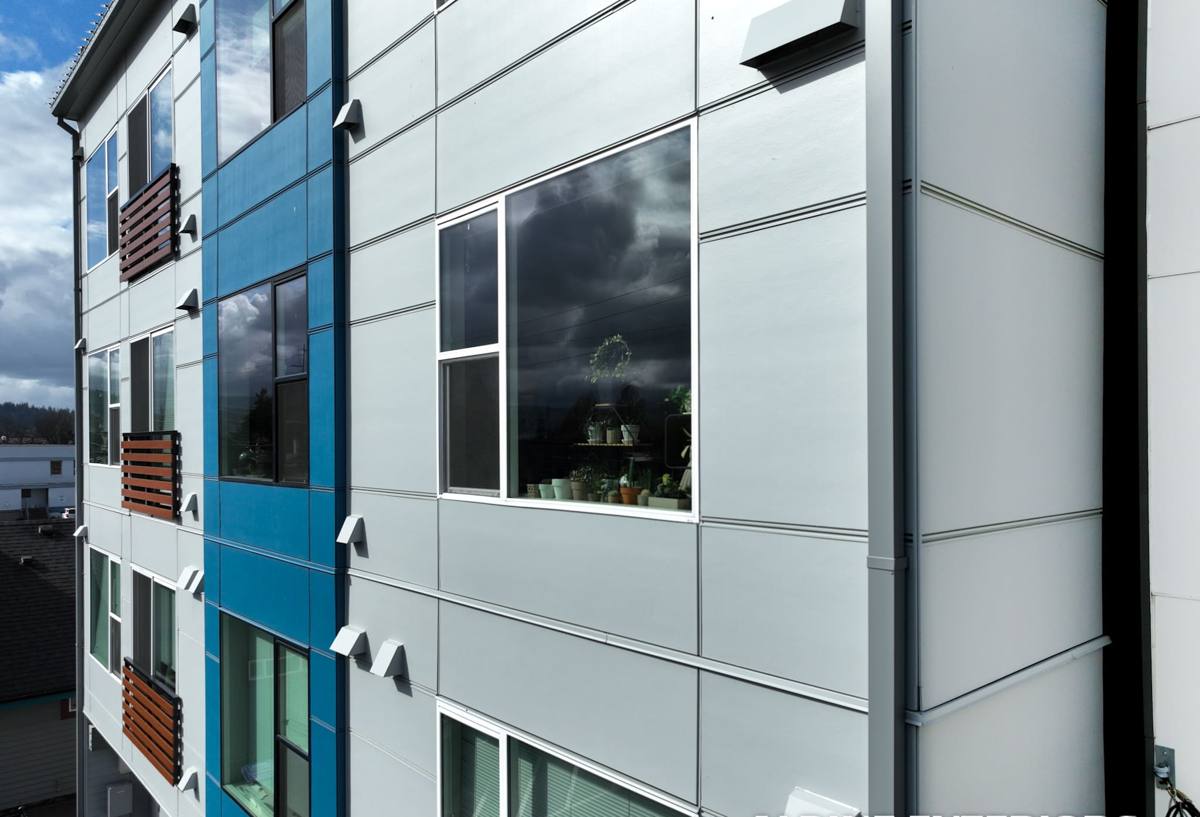
What "Energy-Efficient" Actually Means for a Window
"Energy-efficient" gets used loosely in this industry, so it's worth being specific about what actually determines whether a window performs. Every legitimate window comes with an NFRC (National Fenestration Rating Council) label, and three numbers on that label matter more than the marketing copy around them:
- U-factor — how well the window resists heat flow. Lower is better; this is the number that tells you how much heat escapes through the glass and frame in winter.
- SHGC (Solar Heat Gain Coefficient) — how much solar heat passes through the glass. In our cloudy, mild climate this matters less than in a sun-belt state, but it still affects comfort on the few bright days we get, especially on south- and west-facing walls.
- Air Leakage (AL) — how much air moves through the assembly when it's closed. This is the number most directly tied to that draft you feel sitting near an old window on a windy night.
For our climate zone (Northern/Marine), a window with a U-factor around 0.27–0.30 or lower and a tight air-leakage rating is a reasonable efficiency baseline for a standard double-pane, low-E, argon-filled unit. Anything sold without an NFRC label, or with vague "energy-efficient" claims and no numbers, isn't something we'll put our name behind.
Low-E Coatings and Gas Fills — What They're Actually For
Low-E (low-emissivity) coatings are a microscopically thin metallic layer on the glass that reflects heat back to its source — keeping furnace heat inside in winter and reducing solar heat gain in summer, without noticeably darkening the glass. Argon or krypton gas fill between the panes is a separate feature: it's a denser, less conductive gas than plain air, so it slows heat transfer through the airspace itself. You want both. A window with low-E glass but no gas fill, or gas fill with clear glass, is only doing half the job.
Choosing the Right Frame Material for This Climate
The glass package gets most of the attention, but the frame is just as important in a wet climate, because it's the frame — not the glass — that fails first when moisture gets involved. Here's how the common options actually compare for a Whatcom County home:
| Frame Material | Energy Performance | Moisture Tolerance | Maintenance | Typical Cost Tier |
|---|---|---|---|---|
| Vinyl | Good to very good; multi-chamber designs insulate well | Excellent — won't rot, doesn't need repainting | Low — occasional cleaning | Lowest to mid |
| Fiberglass | Very good to excellent; low expansion/contraction keeps seals tight | Excellent — very stable in wet, temperature-swinging conditions | Low | Mid to higher |
| Wood-clad | Good; depends heavily on quality of the exterior cladding | Fair — the wood core is only as good as its seal; cladding failure lets moisture in | Higher — cladding and interior wood need monitoring | Highest |
| Aluminum | Poor unless thermally broken — conducts heat and cold readily | Good structurally, but prone to condensation without a thermal break | Low | Low to mid |
For most Lynden homes, we steer people toward vinyl or fiberglass. Both handle the freeze-thaw and constant-damp conditions here without the maintenance burden of monitoring a wood-clad frame's exterior seal year after year — and if that seal does fail on a wood-clad unit, the repair is a lot more involved than it is on vinyl or fiberglass. This isn't a knock on wood-clad windows as a product; it's a maintenance and moisture-risk trade-off we're upfront about, especially on a home that isn't going to get inspected and re-caulked every year.
Signs Your Current Windows Are Already Costing You
Before recommending a full replacement, we look for the specific signs that a window has actually failed, versus one that's just older but still doing its job. Some of these you can check yourself:
- Visible fog, haze, or moisture trapped between the panes (the seal has failed and the gas fill is gone)
- A noticeable draft when you hold your hand near the frame or sash on a windy day
- Sashes that stick, won't stay open, or won't latch fully — often a sign of frame swelling from moisture
- Condensation forming on the inside of the glass regularly, not just on the coldest mornings
- Visible daylight or gaps around the frame where it meets the siding or trim
- Soft or discolored wood trim around the window, or paint that keeps failing in the same spot
- A room that's noticeably colder or draftier than the rest of the house near that window
One or two of these on a single window is often a repair or a reseal. Several of these across multiple windows, especially on the sides of the house that take the worst of our prevailing wet-season wind and rain, usually means it's a replacement conversation.
What a Correct Installation Actually Involves
The window unit itself is only part of the job. In a climate like ours, the installation details around the window matter as much as the product, because a well-rated window installed with sloppy flashing will leak water into the wall cavity regardless of its U-factor. A correct install includes:
Removal and Opening Prep
Careful removal of the old unit without tearing out more of the surrounding wall or trim than necessary, then inspecting the rough opening and sill for rot, soft framing, or existing water damage before anything new goes in. If we find damage here, we deal with it before installing — covering it up is how small problems become expensive ones.
Flashing and Water Management
This is the step that gets skipped by rushed installs and is the single biggest factor in whether a window stays dry over the next 15–20 years in this climate. Proper flashing — sill pan, side flashing, and head flashing integrated correctly with the house wrap or building paper — directs any water that gets past the window down and out, instead of into the wall. Given how much wind-driven rain this region sees in the wet months, this step isn't optional or cosmetic.
Air Sealing and Insulation
The gap between the window frame and the rough opening gets sealed and insulated correctly — not overpacked with expanding foam that can bow the frame, and not left with gaps that undercut the window's rated efficiency. This is where a lot of the energy savings actually come from; a great window in a poorly sealed opening still leaks air.
Interior and Exterior Finish
Trim, caulking, and paint or stain matched to the home, with attention to keeping exterior caulk joints intact — the first line of defense against the moisture this climate throws at a house for months at a time.
Our Process, Start to Finish
- Free on-site estimate — we look at your existing windows, note which ones show real wear versus cosmetic age, and talk through what's actually worth replacing now versus later.
- Product selection — we walk through frame material, glass package, and grille/style options based on your budget and the home's exposure to wind and rain.
- Accurate measurement and ordering — precise measurements matter for both fit and performance; a window that's shimmed too loosely to compensate for a bad measurement won't seal properly.
- Installation — removal, opening inspection and repair if needed, proper flashing, insulation, and finish work as outlined above.
- Walkthrough and cleanup — every window operated and checked with you before we consider the job done, site cleaned up, old units hauled away.
Double-Pane vs. Triple-Pane: What's Actually Worth It Here
Triple-pane windows get marketed heavily, and they do have a lower U-factor than double-pane units. But in our specific climate — mild winters by national standards, no extreme cold snaps like the interior Northwest or Midwest sees — the extra efficiency gain from triple-pane often doesn't pay back the added cost as quickly as people expect. A quality double-pane window with low-E coating and argon fill covers the vast majority of what a Lynden home actually needs. Triple-pane can make sense on a north-facing wall that takes constant wind, or for homeowners prioritizing sound reduction near a busier road, but we won't sell it as a blanket upgrade if the math doesn't support it for your situation.
Why It Matters That We Already Work in Lynden
Window performance claims are the same everywhere; how a window actually holds up depends on how it's installed against the specific conditions of the house and the area. Working across Whatcom County regularly means we've seen how the housing stock in and around Lynden — a mix of older farmhouses, mid-century homes, and newer construction — tends to age with our weather: where moisture typically finds its way in, which sides of a house take the worst of the wind-driven rain, and which older window and siding combinations are prone to hidden rot behind the trim. That's context you don't get from a crew that installs a handful of windows here a year between jobs elsewhere. It shows up in fewer surprises once we open up an old window opening, and in flashing and sealing details that are built for what this specific climate actually does to a house over a decade, not a generic install method used everywhere.
Getting an Honest Estimate
If you're not sure whether your windows need full replacement or just some maintenance, that's a normal starting point — we'd rather tell you honestly that a few windows can be resealed or repaired than sell you a full-house replacement you don't need yet. If you're ready to move forward, we'll walk the house, look at what your windows and their surrounding trim are actually telling us, and give you straight numbers with no pressure. Fill out the form below for a free estimate and we'll get in touch to schedule a look at your home.