 Blaine
 Roofing Built for Lynden's Weather, Not Just Its Look
Lynden sits inland from the coast, but that doesn't spare it from what Whatcom County weather does to a roof. Moist air moves in off the Strait of Georgia and Puget Sound for most of the year, driving rain comes in sideways more often than straight down, and the same damp, shaded conditions that make this farm country so green also make moss one of the biggest threats to a shingle roof's lifespan. A roof here doesn't fail because the shingles wore out on schedule. It fails because water found a way in through a detail that wasn't built for this climate, or because moss was left to work its way under the shingle tabs for a few too many winters.
This page is about one job in one place: asphalt shingle roofing for homes in Lynden. Not a general overview of roofing services, and not advice written for a dry climate that doesn't apply here. Everything below is about what actually holds up on a Whatcom County roof and what a correct installation looks like when it's done for this weather.
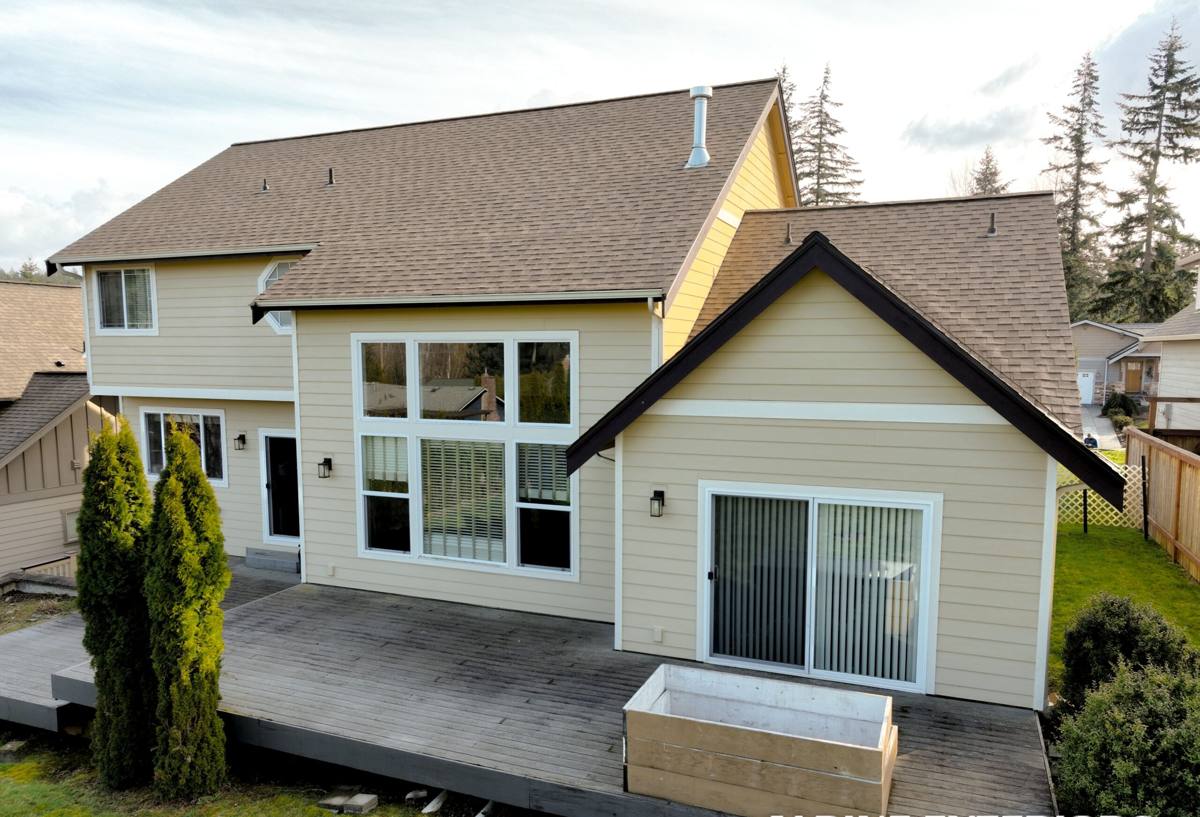
What Actually Wears Out Shingle Roofs Here
Moss and Algae
Moss doesn't just sit on top of shingles and look bad. It roots into the granule surface, holds moisture against the shingle mat, and lifts tabs enough for wind-driven rain to get underneath. North-facing slopes and roofs shaded by trees are the worst affected, and in Lynden that's a lot of roofs. Left unaddressed for several seasons, moss growth shortens a shingle roof's service life more than almost anything else in this region.
Wind-Driven Rain
Rain that comes in at an angle tests every flashing detail, seam, and fastener on a roof, not just the open field of shingles. Valleys, chimney flashing, sidewall step flashing, and pipe boots are where driving rain finds the weak points. A roof that would be fine in a calmer, drier climate can leak here if those details were installed to a minimum standard instead of a correct one.
Freeze-Thaw Cycling
Whatcom County doesn't get brutal winters, but it gets enough freeze-thaw swings, combined with sitting moisture from moss and shade, to stress shingles and fasteners over time. Combined with UV exposure in the drier summer stretches, this cycle is what eventually makes shingles brittle and prone to cracking at the tabs.
Signs a Lynden Roof Needs Attention
Most roof problems in this climate show up gradually. Homeowners usually notice one or two of these before anything dramatic happens, and catching them early is almost always cheaper than waiting.
- Dark streaking or green-black patches on north-facing or shaded slopes
- Moss visible along the shingle butt edges, even if it hasn't spread across the whole roof
- Granules collecting in gutters or at downspout outlets
- Shingle tabs that look curled, cupped, or lifted at the corners
- Soft or discolored spots on ceilings or in the attic after heavy rain
- Daylight visible through the roof deck from inside the attic
- Flashing around chimneys, vents, or skylights that looks rusted, separated, or caulked over repeatedly instead of properly resealed
None of these alone means a full replacement is needed. But they're worth a real inspection rather than a guess, especially before another wet season sets in.
What a Correct Installation Involves
An asphalt shingle roof is only as good as the layers underneath it, and in a climate like this, those layers matter more than the shingle brand printed on the wrapper.
Underlayment and Moisture Barriers
We install synthetic underlayment across the full deck as the primary water-resistive layer, with self-adhered ice-and-water shield at the eaves, valleys, and any roof-to-wall transitions where wind-driven rain is most likely to push water backward under the shingles. This is not an upgrade in our book — it's the baseline for a roof that has to handle this much moisture.
Flashing Done Right
Step flashing at sidewalls, counter-flashing at chimneys, and proper valley metal or woven valley construction are where most roof leaks in this region actually originate. We replace flashing rather than reuse it wherever the old material is worn, undersized, or was never installed correctly to begin with, and we don't rely on roofing cement as a substitute for a properly lapped and integrated flashing detail.
Ventilation
Balanced intake and exhaust ventilation keeps the attic temperature and moisture level in check, which matters for two reasons here: it reduces condensation buildup on the underside of the deck during our wet, cool stretches, and it helps the shingles themselves last longer by preventing heat and moisture from cooking them from underneath.
Fastening and Nailing Pattern
Shingles installed with the correct nail count, placement, and exposure hold up far better to the wind gusts that come with our storm systems. This is a detail that's invisible once the roof is finished, but it's one of the most common places a rushed install cuts corners.
Choosing the Right Shingle for Whatcom County
Not every shingle product is a good match for a climate with this much moisture and shade exposure. The table below is a general comparison to help frame the conversation — your specific roof, tree cover, and budget will shape the final recommendation.
| Shingle Type | Moss/Algae Resistance | Wind Rating | Best Fit For |
|---|---|---|---|
| Standard 3-tab | Lower unless algae-resistant granules are specified | Lower wind rating, lighter weight | Budget-conscious re-roofs on less-shaded slopes |
| Architectural (laminate) | Better mat structure resists moisture intrusion; algae-resistant options widely available | Higher wind rating than 3-tab | Most Lynden homes, especially shaded or north-facing roofs |
| Algae-resistant (AR) upgrade | Copper- or zinc-infused granules actively slow algae and moss growth | Same as base shingle line | Roofs with heavy tree cover or a history of moss problems |
| Impact-rated shingles | Same as architectural baseline | Reinforced mat resists wind and debris damage | Homes wanting extra durability against storm debris |
For most Lynden homes, we recommend an architectural shingle with algae-resistant granules as the baseline, not the upgrade. Given how much shade and moisture this area sees, the small cost difference over standard 3-tab shingles is one of the better dollars spent on a re-roof here.
Cost Factors on a Lynden Re-Roof
We don't publish fixed prices because every roof is different, but the factors that actually move the number are consistent from job to job. Broadly, homeowners in this area should expect a range that reflects roof size, pitch, and the condition of the deck underneath — a straightforward, single-layer tear-off on a simple roof shape costs meaningfully less than a steep, cut-up roof with multiple valleys, skylights, and chimney penetrations.
- Roof size and number of squares (100 sq ft = 1 square)
- Roof pitch and accessibility for crews and equipment
- Number of valleys, penetrations, and flashing details
- Condition of the existing deck (plywood or plank repair/replacement)
- Whether tear-off reveals moss or moisture damage that needs addressing
- Shingle tier selected (standard vs. architectural vs. algae-resistant)
- Ventilation upgrades needed to bring the attic system up to standard
We walk every roof and give a written estimate before any work starts, and we flag anything we find during tear-off — like soft decking or hidden moisture damage — before we proceed, not after.
Our Process, Start to Finish
- Inspection and estimate. We walk the roof, check the attic for ventilation and moisture issues, and give you a clear, written scope and price.
- Scheduling around the weather. We plan installs for windows with a realistic chance of staying dry, and we don't leave a roof exposed longer than necessary.
- Tear-off and deck inspection. Old material comes off down to the deck so we can actually see what condition it's in, not guess from the surface.
- Underlayment, flashing, and ventilation installed correctly. This is where a roof's real lifespan gets decided, before a single shingle goes down.
- Shingle installation to manufacturer spec. Correct nailing pattern, exposure, and fastening for the wind and moisture this area sees.
- Cleanup and final walkthrough. Magnetic sweep for stray fasteners, gutter check, and a walkthrough so you know what was done and why.
Why a Crew That Already Works in Lynden Matters
Roofing crews who mostly work drier climates tend to under-build for what this region actually throws at a roof — lighter underlayment, minimal flashing, no real plan for moss. A crew that works Whatcom County regularly knows which slopes need the most attention for shade and moss, how to schedule around a wet forecast instead of gambling on it, and what level of flashing and underlayment is actually appropriate here versus what's just a sales upsell elsewhere. That local pattern recognition is worth more than a brand name on the shingle wrapper.
After Installation: Keeping a Lynden Roof Healthy
A correctly installed shingle roof still needs some basic upkeep in this climate to reach its full lifespan. Keeping gutters clear so water isn't backing up under the eaves, watching shaded and north-facing slopes for early moss regrowth, and having a soft wash or moss treatment done before growth gets established under the tabs all go a long way. None of this is complicated, but it's the difference between a roof that reaches the end of its rated life and one that needs early repairs because moss or trapped moisture got a head start.
If you're seeing moss, granule loss, or signs of a leak on a Lynden roof — or it's simply been a long time since it was last inspected — we're glad to take a look. There's a form below to request a free, no-pressure estimate, and we'll give you a straight answer about what your roof actually needs.