 Blaine
 Why Grandview Roofs Wear Differently Than Roofs Inland
Grandview homes sit in a stretch of Whatcom County where the roof over your head is doing more work than a roof in, say, Spokane or the Tri-Cities ever has to. Blaine's location right on the water means salt-laden air is a constant, low-grade stressor on fasteners, flashing, and any metal component that isn't rated for a marine environment. Add in driving rain that comes sideways off winter storms, and a moss season that can run eight or nine months out of the year in the shaded, moisture-heavy spots typical of this area, and you get a roofing environment that's genuinely tougher than most manufacturers' warranty testing accounts for.
None of that means a roof in Grandview is doomed to fail early. It means the roof has to be built and maintained with those three specific stressors in mind — salt, wind-driven rain, and moss — rather than installed the same generic way it would be on a dry-climate home. That's the difference between a roof that looks good for two years and one that actually protects the house for its full service life.
Signs a Grandview Roof Needs Replacement, Not Another Patch
A lot of roofs in this area get repaired past the point where repair still makes financial sense. Knowing the difference saves money either way — either by catching a full replacement before hidden damage spreads, or by confirming a repair really is enough.
- Granule loss heavy enough that you can see bare, shiny patches on multiple slopes, not just one wind-exposed corner
- Shingles that are cupping, curling, or cracking across large sections rather than a handful of spots
- Moss mats thick enough to hold water against the shingle surface for days after a rain, especially on north-facing or tree-shaded slopes
- Soft or spongy decking felt underfoot near valleys, chimneys, or the roof edge
- Daylight visible through the attic sheathing, or staining on attic rafters and insulation
- Flashing around vents, chimneys, and skylights that's rusted, lifted, or was never properly step-flashed to begin with
- A roof that's already 18-25+ years old on standard asphalt shingle, which is near or past typical service life in this climate even without visible damage
If you're seeing two or more of these at once, that's usually the point where continued repair costs start rivaling the cost of doing it right in one project.
What a Correct Roof Replacement Actually Involves
A roof replacement isn't just stripping old shingles and nailing down new ones. In a climate like Blaine's, several layers underneath the visible shingle are what actually keep water and moisture out — and they're the layers that get skipped when a crew is trying to move fast.
Full Tear-Off and Deck Inspection
We remove the existing roofing down to the deck rather than layering over it. That's the only way to actually see the plywood or plank sheathing underneath, check for soft spots or rot around penetrations, and replace any damaged sections before they're sealed under a new roof for another two decades.
Underlayment Built for Wind-Driven Rain
Standard felt underlayment is a minimum, not a standard, for a coastal property. We use synthetic or self-adhering underlayment in the areas most exposed to driving rain — eaves, valleys, and low-slope transitions — because those are the spots where wind can push water backward under a shingle edge during a real storm.
Flashing That's Actually Detailed, Not Just Present
Chimneys, skylights, sidewalls, and vent pipes fail more often at the flashing than at the shingle field. Proper step flashing, counter-flashing, and pipe boots — installed correctly and sealed with materials rated for the elements, not just caulked over — are what stop leaks in the exact spots most roofs actually leak.
Ventilation That Matches the Climate
A roof that can't breathe traps moisture in the attic, which shortens the life of the decking from underneath even if the shingles above look fine. We check that intake (soffit) and exhaust (ridge or roof vents) are balanced for the size of the attic, not just whatever vents happened to already be there.
Choosing the Right Material for a Salt-Air, Moss-Prone Climate
There's no single "best" roofing material for every home — the right choice depends on budget, roof pitch, how much shade the property gets, and how long the homeowner plans to stay. Here's how the common options actually perform under Blaine's specific conditions.
| Material | Moss & Algae Resistance | Salt Air Durability | Typical Lifespan Here | Maintenance Load |
|---|---|---|---|---|
| Standard asphalt composition shingle | Moderate — depends on shade exposure | Good with corrosion-rated fasteners and flashing | 20-25 years | Periodic moss treatment recommended |
| Algae-resistant (AR) composition shingle | Better — copper/zinc granules resist growth longer | Good with corrosion-rated fasteners and flashing | 25-30 years | Lower, but not maintenance-free |
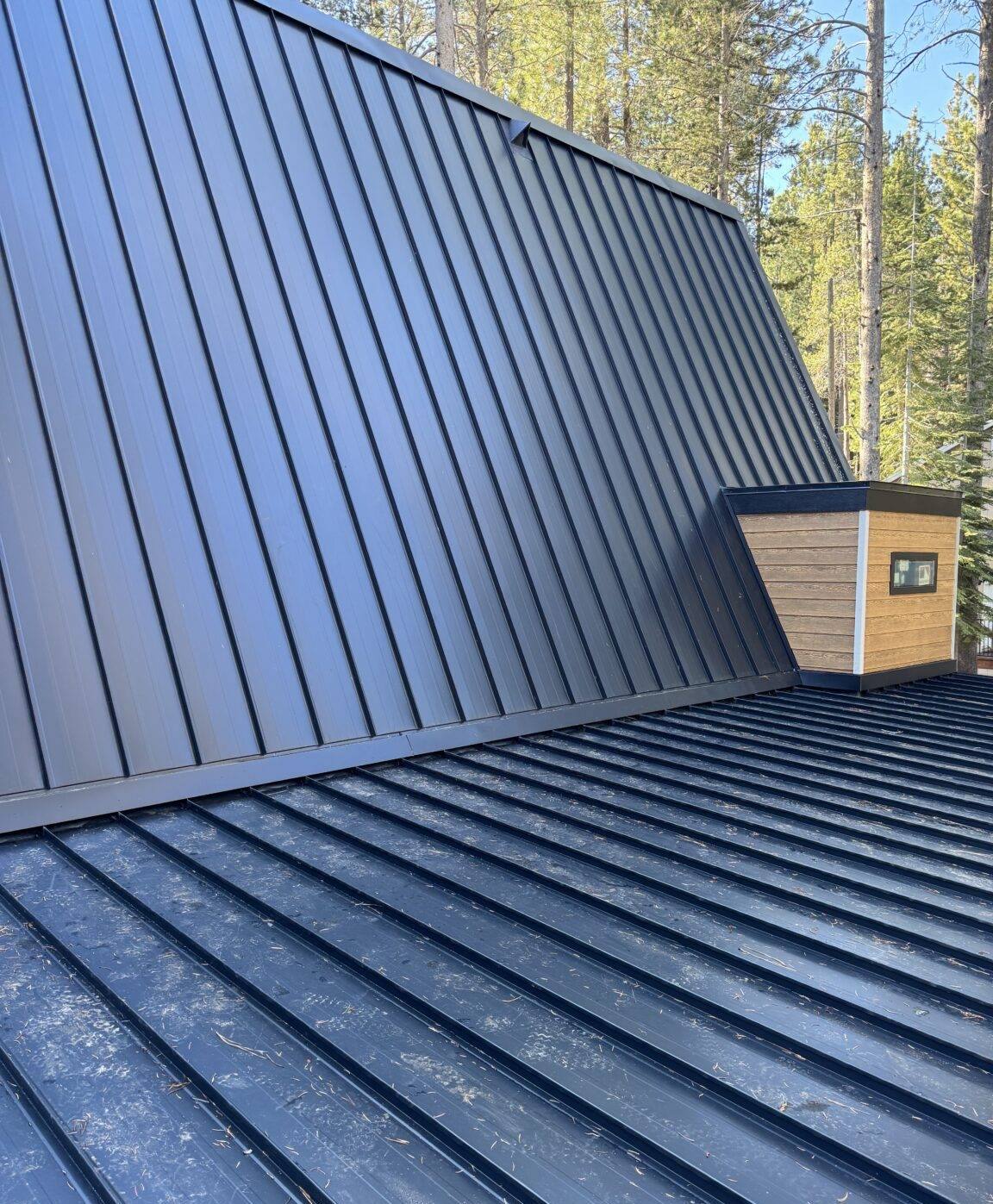
| Standing seam metal | High — smooth surface sheds moss more easily | Requires marine-grade or coated fasteners and panels | 40-50+ years | Low, but detailing at penetrations matters more |
| Synthetic/composite shake | Good on most products, varies by manufacturer | Good with proper flashing package | 30-40 years | Low to moderate |
For most Grandview homes, the practical choice comes down to algae-resistant asphalt shingle for the best balance of cost and performance, or standing seam metal for owners planning to stay long-term who want to largely stop thinking about moss and re-roofing for decades. We'll walk through the honest trade-offs for your specific roof rather than pushing whichever product has the best margin.
What Actually Affects the Cost of a Roof Replacement
Every roof is priced on its own specifics, but the variables that move the number are consistent. Understanding them ahead of time makes it easier to compare quotes apples-to-apples.
| Cost Factor | Why It Matters |
|---|---|
| Roof size and number of facets | More square footage and more valleys/hips mean more material and labor time |
| Pitch and access | Steep or hard-to-access roofs need more safety setup and take longer |
| Number of existing layers | Tear-off of two or more layers costs more in labor and disposal than one |
| Decking condition | Rotted or soft sheathing found during tear-off needs replacement before new roofing goes down |
| Material choice | Standard shingle, AR shingle, and metal carry meaningfully different material costs |
| Flashing and penetration count | Chimneys, skylights, multiple vent stacks all add flashing labor |
| Permit and disposal fees | Set by the local jurisdiction and haul-away volume, not by us |
We give a written estimate that breaks these out so you can see exactly what you're paying for, not a single lump number.
Our Roof Replacement Process, Start to Finish
- On-site inspection. We get on the roof, check the attic, and look at flashing, decking, and ventilation — not just a drive-by estimate.
- Written proposal. Material options, scope of work, and pricing broken out so you know what's included before you sign anything.
- Scheduling around weather. We plan tear-offs for stretches of dry forecast where possible, and we dry-in any exposed decking the same day if weather turns.
- Full tear-off and deck repair. Old roofing removed down to the sheathing; any damaged decking replaced before anything new goes down.
- Underlayment, flashing, and ventilation installed. Built for wind-driven rain and balanced attic airflow, not just code minimum.
- New roofing installed to manufacturer spec. Correct nailing pattern, exposure, and fastening for the wind and moisture conditions here.
- Cleanup and magnetic sweep. Yard and driveway cleared of debris and stray fasteners before we call the job done.
- Final walkthrough. We go over the finished roof with you and answer questions before we consider the project complete.
Moss, Algae, and Keeping a Grandview Roof Healthy Long-Term
Moss isn't just a cosmetic problem — it holds moisture against the shingle surface, works its way under tabs and edges, and accelerates granule loss. In a climate with as much shaded, damp weather as Whatcom County sees, moss will come back on almost any roof eventually; the goal is managing it, not expecting to eliminate it permanently.
Simple habits extend a roof's life significantly: keeping gutters clear so water isn't sitting at the eaves, trimming back overhanging branches that keep a slope shaded and damp, and having moss physically removed (not just chemically killed and left in place) every couple of years on the shadiest slopes. We're happy to point out which sections of your roof are the highest risk during an inspection, whether or not you're ready for a full replacement yet.
Why Hiring a Crew That Already Works in Grandview Matters
A roofing crew that mainly works dry, inland climates tends to build to a lower standard than this area actually needs — because it's never had to answer for what wind-driven coastal rain or a full moss season does to a roof over time. A crew that regularly works Grandview and the surrounding Blaine area already knows which details matter here: corrosion-rated fasteners instead of standard, underlayment upgrades at the eaves and valleys, and flashing packages sized for actual storm exposure rather than the bare code minimum.
That local pattern-recognition also shows up in permitting, in knowing which manufacturers' warranties actually hold up in a marine climate, and in scheduling around this area's weather rather than working off a generic calendar. It's the difference between a roof that's technically installed correctly and one that's installed correctly for where it actually sits.
Questions Worth Asking Any Roofing Contractor Before You Hire
- Do you remove old roofing down to the deck, or do you install over existing layers?
- What underlayment do you use at eaves and valleys specifically?
- Are your fasteners and flashing rated for coastal/salt-air exposure?
- How do you handle rotted decking found during tear-off — is it included or billed separately?
- What's your plan if weather turns mid-project and the deck is exposed?
- Is the manufacturer warranty transferable, and does your installation qualify for the extended workmanship coverage?
- Do you carry current liability insurance and workers' comp, and can you provide proof?
Any established local contractor should answer these without hesitation. Vague or evasive answers on decking, underlayment, or insurance are the clearest red flags in this trade.
Get a Straight Answer on Your Roof
If your Grandview roof is showing its age, or you just want an honest read on how many years it has left, we'll come take a look and give you a straightforward assessment — no pressure, no inflated urgency. Request a free estimate using the form below and we'll walk the roof, check the attic, and tell you exactly where things stand.