 Blaine
 Why Grandview Siding Has to Work Harder Than Most
Grandview sits close enough to the water and the border that its homes take on a specific mix of punishment: salt-laden air drifting off Semiahmoo Bay and the Strait of Georgia, driving rain that comes in sideways during winter storms, and a moss season that can stretch from October through April in a wet year. None of these on their own is unusual for Whatcom County. Together, aimed at the same wall assembly for decades, they expose every weak point in a siding job — the caulk joint that was skipped, the butt seam that wasn't back-primed, the fastener that was overdriven.
Salt air is corrosive to exposed metal fasteners and trim, and it accelerates the breakdown of coatings that aren't rated for coastal exposure. Driving rain doesn't just wet the siding surface — it tests whether water is actually shedding away from the wall or finding a path behind it through gaps, laps, and penetrations. And a long moss season means anything that stays damp for extended stretches — wood siding, poorly ventilated rain screens, north-facing walls shaded by trees — becomes a growth surface. A siding choice and installation method that shrugs off all three of these conditions at once is the baseline for a Grandview home, not an upgrade.
What Fiber Cement Actually Solves
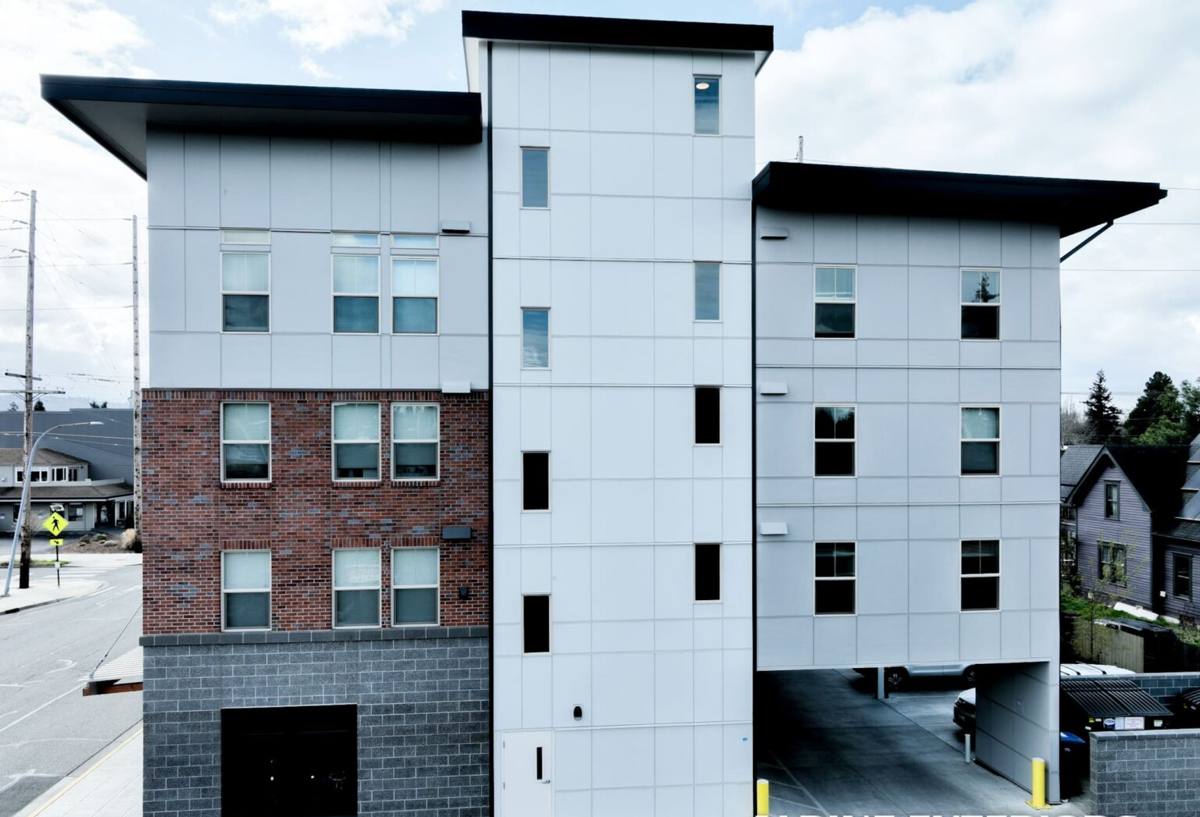
Fiber cement is cement, sand, and cellulose fiber formed under pressure into a dense, dimensionally stable board. That composition is what makes it a good match for this stretch of coastline. It doesn't absorb water the way wood does, so it isn't prone to the swelling, cupping, and rot that wet-dry cycling causes in cedar. It doesn't expand and contract with temperature the way vinyl does, so seams and fastener holes stay tighter over the years. And it's non-combustible, which matters in a region where wildfire smoke and dry-season fire risk have become a bigger part of the conversation even west of the Cascades.
It's not a maintenance-free material — nothing that lives outside on a coastal wall is — but the maintenance it asks for is realistic: periodic washing, repainting or recaulking on a normal cycle, and keeping an eye on grade and drainage around the foundation. That's a different conversation than the sanding, sealing, and rot-chasing that wood siding requires, or the fading and impact-cracking that shows up on vinyl after enough seasons in salt air and UV.
Why We Only Install James Hardie
Fiber cement is a category, not a single product, and the difference between brands shows up over time, not on installation day. We standardized on James Hardie for a few concrete reasons that matter specifically in a climate like this one:
- ColorPlus factory finish — baked-on color that resists fading and chipping better than field-applied paint, which matters when salt air and UV are both working against a painted surface year-round.
- HZ5 engineering — Hardie's HZ5 product line is formulated for the freeze-thaw and moisture cycling typical of the Pacific Northwest, rather than a one-size-fits-all national formula.
- A warranty that's actually transferable — useful for resale, and backed by a manufacturer with decades of track record rather than a newer entrant to the category.
- Consistent supply and support — we're not troubleshooting inconsistent batches or hunting down manufacturer support on a product with thinner distribution in this region.
We don't install LP SmartSide, vinyl, Cemplank, Allura, or bare cedar, and we're upfront about why on our other pages — this page is about what correct fiber cement installation looks like once you've decided that's the direction, using the product line we trust enough to put our name behind.
What a Correct Installation Actually Involves
Water Management Before the First Board Goes Up
Most siding failures in this climate aren't siding failures — they're water-management failures that siding gets blamed for. A correct job starts with a properly lapped weather-resistant barrier, flashed window and door openings, and a drainage plane that gives any incidental moisture a way out instead of trapping it against the sheathing. Skipping or rushing this step is the single most common source of hidden rot behind fiber cement siding.
Fastening and Spacing
Hardie boards have specific fastener-type, spacing, and penetration requirements, and they change slightly by product line and exposure. Overdriven or corrosive fasteners are a slow-motion problem in salt air — they can bleed rust streaks and eventually lose holding power. We use fasteners rated for the exposure and set them to the manufacturer's spec, not just "tight enough."
Joints, Caulking, and Trim
Butt joints, corners, and trim intersections are where driving rain finds its way in if they're not detailed correctly. That means proper joint treatment at butt seams, quality sealant at penetrations, and trim details that shed water outward rather than channeling it toward a seam. This is also where a rushed crew cuts the most corners, because it's the least visible part of the job once paint goes on.
Rain Screen Considerations
On walls with heavier rain exposure or limited eave protection — common on Grandview homes facing open water or prevailing weather — a vented rain screen gap behind the siding gives any moisture that does get past the cladding a way to drain and dry instead of sitting against the sheathing. It's an extra step, but it's the kind of detail that separates a job built for this coastline from a generic installation.
How Fiber Cement Stacks Up for a Home Like This
| Factor | James Hardie Fiber Cement | Vinyl | Untreated Wood/Cedar |
|---|---|---|---|
| Salt air resistance | Strong — cementitious, factory finish holds color | Moderate — can chalk and fade faster near salt spray | Weak — accelerates weathering and finish breakdown |
| Moisture/rot resistance | Strong — non-organic core, engineered for wet climates | Not organic, but seams can trap moisture behind it | Weak — prone to swelling, cupping, rot |
| Moss/mildew resistance | Good with normal cleaning cycle | Good, but surface can stay damp in shaded areas | Poor without frequent treatment |
| Impact durability | High | Low to moderate — can crack in cold, dent easily | Moderate — dents and splits over time |
| Typical repaint/refinish cycle | Long — ColorPlus finish extends interval well beyond field paint | Doesn't repaint well; color is baked into the panel | Frequent — every few years in this climate |
| Upfront cost | Mid-to-higher | Lower | Mid |
Vinyl and wood both have a place in some projects, but neither holds up to this specific combination of salt exposure, driving rain, and long damp seasons as consistently as properly installed fiber cement.
Our Process for a Grandview Project
- On-site assessment — we walk the home, check existing siding and sheathing condition, note drainage issues, sun/shade exposure, and any areas showing past moisture damage.
- Written scope and product selection — HZ5 product line, profile, and ColorPlus color selected for the home, with the reasoning explained, not just a line-item quote.
- Tear-off and substrate inspection — old siding comes off, sheathing is checked for hidden rot before anything new goes up. Problems get fixed here, not covered over.
- Weather barrier and flashing — house wrap, window/door flashing, and drainage plane installed to spec before any siding is hung.
- Installation to manufacturer spec — correct fasteners, spacing, joint treatment, and trim details for the specific exposure of each wall.
- Final walkthrough — caulking, paint touch-up at cut edges, and a walk of the exterior with the homeowner before we call it done.
Maintenance in Whatcom County Conditions
Even the right product installed correctly still needs basic upkeep. A realistic maintenance rhythm for a Grandview home looks like:
- Rinse the exterior once or twice a year to clear salt residue, pollen, and early moss growth before it takes hold.
- Keep gutters clear and downspouts directed away from the foundation so wall-level water exposure stays manageable.
- Trim back vegetation and tree cover that keeps north- or shade-facing walls damp longer than the rest of the house.
- Inspect caulking at trim and penetrations every couple of years and touch up before gaps open.
- Watch for any color change or texture change near ground level, which can signal splash-back moisture rather than a siding problem.
What to Look for When Hiring for This Kind of Job
Because so much of what determines whether siding lasts on this coastline happens under the surface, the contractor matters as much as the product. Before hiring anyone for a fiber cement job near Grandview, it's worth checking:
- Do they specify a weather-resistant barrier and proper flashing as part of the scope, or just "siding installation"?
- Can they explain fastener type and spacing requirements for the specific product line, not just "we use nails"?
- Do they talk about rain screen or drainage gap details for exposed walls, or skip straight to the finish?
- Are they familiar with local permitting and typical wind/rain exposure for homes in this part of Whatcom County?
- Will they show you the tear-off and sheathing condition before covering it back up?
A crew that already works in this area has usually already run into the specific problems Grandview homes present — salt-affected trim, moss-prone shade lines, wind-driven rain on exposed elevations — and builds around them instead of finding out the hard way.
Ready to Talk Through Your Home
If you're weighing a siding replacement on a Grandview home, we're happy to walk the exterior with you, look at what's driving the decision — age, damage, moisture, or just wanting something built for the long run — and talk through what a correct James Hardie installation would look like for your specific walls and exposure. Fill out the form below for a free, no-pressure estimate.