 Blaine
 Deck Repair Built for Grandview's Climate
Homes in the Grandview area of Blaine sit close to Semiahmoo Bay and Drayton Harbor, which means decks here deal with a combination most inland Whatcom County properties don't: salt-laden air, wind-driven rain off the water, and a moss season that can stretch from October well into April. That combination is hard on fasteners, hard on wood fiber, and hard on any finish that isn't maintained on schedule. A deck that would last two decades in a drier, inland climate can start showing real structural problems in Grandview in half that time if it wasn't built or maintained with these conditions in mind.
This page covers what deck repair actually involves for homes in this part of Blaine — what typically fails first, how we diagnose repair versus replacement, and what our process looks like when we come out to your property.
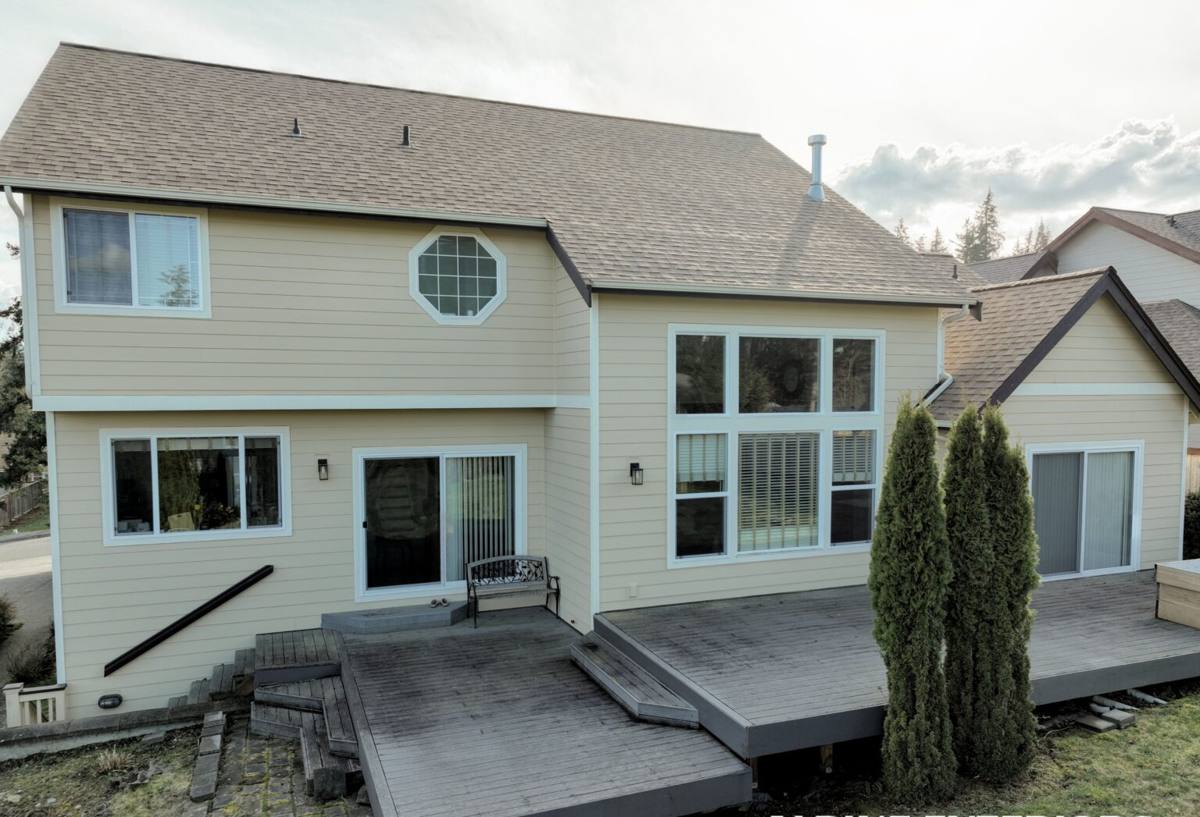
Why Salt Air, Rain, and Moss Hit Decks Harder Here
Salt Air and Metal Fatigue
Salt in the air accelerates corrosion on anything metal — nails, screws, joist hangers, railing brackets, and structural post connectors. Once a fastener starts to rust, it loses holding strength long before the rust is visible from the surface. This is one of the most common reasons a deck that "looks fine" turns out to have a loose or failing structural connection underneath.
Driving Rain and Water Intrusion
Rain coming off the water in this part of Blaine tends to arrive at an angle, not straight down. That means water gets pushed into places a standard rain event wouldn't reach — under railing caps, behind fascia boards, and into the ledger board connection where the deck attaches to the house. Ledger board rot is one of the more serious repairs we see, because it affects how the entire deck is anchored.
Extended Moss Season
Whatcom County's wet season gives moss and algae a long window to establish on deck boards, especially in shaded corners or areas that don't get much sun or airflow. Beyond looking bad, moss holds moisture against the wood surface for months at a time, which speeds up rot and makes boards slippery and unsafe underfoot.
Signs Your Deck Needs Repair
Most deck problems don't start as emergencies — they start small and get worse every wet season they're left alone. Here's what we tell Grandview homeowners to watch for:
- Boards that feel spongy, springy, or soft when you walk on them
- Visible gaps, cracking, or splintering along board edges
- Rust streaks running down from screws or nail heads
- A railing or post that wobbles or flexes under hand pressure
- Green or black buildup that comes back within weeks of cleaning
- Gaps or separation where the deck meets the house siding
- Stair stringers that feel uneven or make cracking sounds under weight
- Standing water that doesn't drain within an hour or two after rain
Any one of these on its own might be a minor fix. Several at once, or anything involving the ledger board or main support posts, is worth a proper inspection before it becomes a safety issue.
Common Deck Problems We Fix in Grandview
Ledger Board and Structural Rot
The ledger board — where the deck bolts to the house framing — is the single most important structural connection on most decks, and it's also the piece most exposed to water running off the house. When flashing is missing, undersized, or was never installed correctly to begin with, water works its way behind the board and rot sets in from the inside out. We check this connection on every repair call, even when it wasn't the reason for the visit.
Fastener and Hardware Corrosion
In a salt-air environment, standard galvanized fasteners corrode faster than they would inland. We replace failing hardware with fasteners rated for coastal exposure, and we check joist hangers and post connectors for rust-through, not just surface staining.
Warped, Cupped, or Split Boards
Repeated wet-dry cycling causes wood decking to cup, crown, or split along the grain. Composite boards can also show fastener pop or edge swelling if they weren't installed with proper gapping for expansion. We replace individual boards where possible rather than resurfacing the whole deck, which keeps repair costs proportional to the actual damage.
Railing and Stair Repairs
Railings take direct wind and rain exposure and see constant hand contact, which speeds up both moisture damage and general wear. Loose posts, failing balusters, and stair stringers that have started to rot at ground contact points are common repairs we handle separately from full deck resurfacing work.
Moss, Algae, and Surface Staining
Surface treatment alone doesn't fix an underlying moisture or drainage problem — it just buys time. We treat moss and algae as part of a repair when there's no structural damage, but if boards have gone soft underneath the growth, that's a sign the moisture has already done more than cosmetic harm.
Repair or Replace? What Actually Decides It
Homeowners in Grandview often ask whether it's worth repairing an older deck versus starting over. The honest answer depends on what's happening at the structural level, not how the surface looks.
| Factor | Repair Is Usually Enough | Replacement Is Usually Smarter |
|---|---|---|
| Ledger board condition | Solid, no rot at the house connection | Soft, rotted, or improperly flashed |
| Support posts & footings | Sound, properly anchored | Rotted at ground contact or undersized for current code |
| Percentage of boards affected | Isolated boards or sections | Widespread cupping, splitting, or rot across the deck |
| Age of the structure | Under 15–20 years, built to a solid original spec | Older structure with outdated framing or connections |
| Railing & stair framing | Stable, minor cosmetic wear | Loose, flexing, or failing under normal use |
In most cases, a deck that's structurally sound but showing surface-level wear from salt air and moss is a strong repair candidate. A deck with rot at the ledger board, posts, or footings is a safety question first and a cost question second.
Our Deck Repair Process
1. On-Site Inspection
We walk the full deck — surface, underside, railings, stairs, and the ledger connection — and check moisture levels in areas that look or feel suspect. This is where we catch problems that aren't visible from the top.
2. Straightforward Assessment
You get a clear explanation of what's failing, why, and what your realistic options are. If repair genuinely makes more sense than replacement, we'll tell you that directly.
3. Written Repair Plan
We scope exactly what's being replaced or reinforced, what hardware and materials we're using, and why — no vague line items.
4. The Repair Work
Rotted framing and boards come out, structural connections get reinforced or replaced with coastal-rated hardware, and new material is matched to your existing deck as closely as possible.
5. Moisture and Moss Prevention
Where drainage or airflow is contributing to the problem, we address it as part of the repair — not as an upsell after the fact — so you're not dealing with the same issue again in a year or two.
Materials That Hold Up in a Coastal Climate
What we use depends on your existing deck, your budget, and how much long-term maintenance you want to take on:
- Pressure-treated lumber — the most common repair material for framing and structural members; cost-effective but needs regular sealing in this climate
- Cedar — naturally rot-resistant and a good match for older decks, but still benefits from periodic finish maintenance near the water
- Composite decking — higher upfront cost but far less susceptible to moss staining and moisture absorption on the wearing surface, which matters a lot in a long wet season
- Stainless or coated coastal-rated fasteners — standard on every repair we do here, since standard galvanized hardware corrodes noticeably faster this close to salt water
We don't push composite decking on every job — for framing and structural repairs, dimensional lumber is still the standard, and it's what most decks are built with. Composite comes into the conversation mainly for wearing-surface boards on decks where moss and moisture staining have been a recurring problem.
Maintaining a Repaired Deck in Grandview
A repair only holds up as long as the deck is maintained afterward. This is especially true here, where the wet season doesn't really let up for months at a time.
- Rinse or sweep debris and organic buildup off the deck surface regularly through fall and winter
- Clean moss and algae as soon as it appears rather than waiting for it to spread
- Check and reseal wood decking on the manufacturer's recommended schedule, typically every one to two years in this climate
- Keep gutters and downspouts clear so runoff isn't draining directly onto or under the deck
- Inspect railings and stair connections once a year for looseness or corrosion
- Trim back vegetation that's shading the deck and keeping it damp longer than it should be
Why Local Experience in Blaine Matters
A deck repair crew that already works in Grandview and the surrounding Blaine area knows what to check first — the ledger board flashing, the fastener condition, the drainage — because they've seen the same failure patterns on other homes in this exact climate. That means a faster, more accurate diagnosis instead of guesswork, and repair recommendations that actually account for what Whatcom County's coastal weather does to a deck over time, not a generic checklist written for a drier region.
If your deck in Grandview is showing soft spots, rust streaks, stubborn moss, or just feels less solid than it used to, we're happy to come take a look. We offer free, no-pressure estimates — you'll get a straight answer on whether it's a repair, and what that would involve, before any work is scheduled.