 Blaine
 Grandview's Weather Doesn't Leave Much Room for Error
Homes in Grandview sit close enough to the water that salt air is just part of daily life, and it's harder on exterior materials than most homeowners realize. Add Whatcom County's long stretch of driving rain each fall and winter, plus a moss season that can run most of the year in shaded, north-facing yards, and you've got a combination that punishes any siding product installed with shortcuts. Board and batten siding, done right, can handle all of it. Done wrong — or installed in a product that was never engineered for this kind of exposure — it becomes a five-to-ten-year problem instead of a forty-year exterior.
This page is specifically about board and batten siding for Grandview homes, not a generic overview of the style. The salt exposure, the rain direction, and the moss pressure in this part of Blaine change what "correct installation" actually means here.
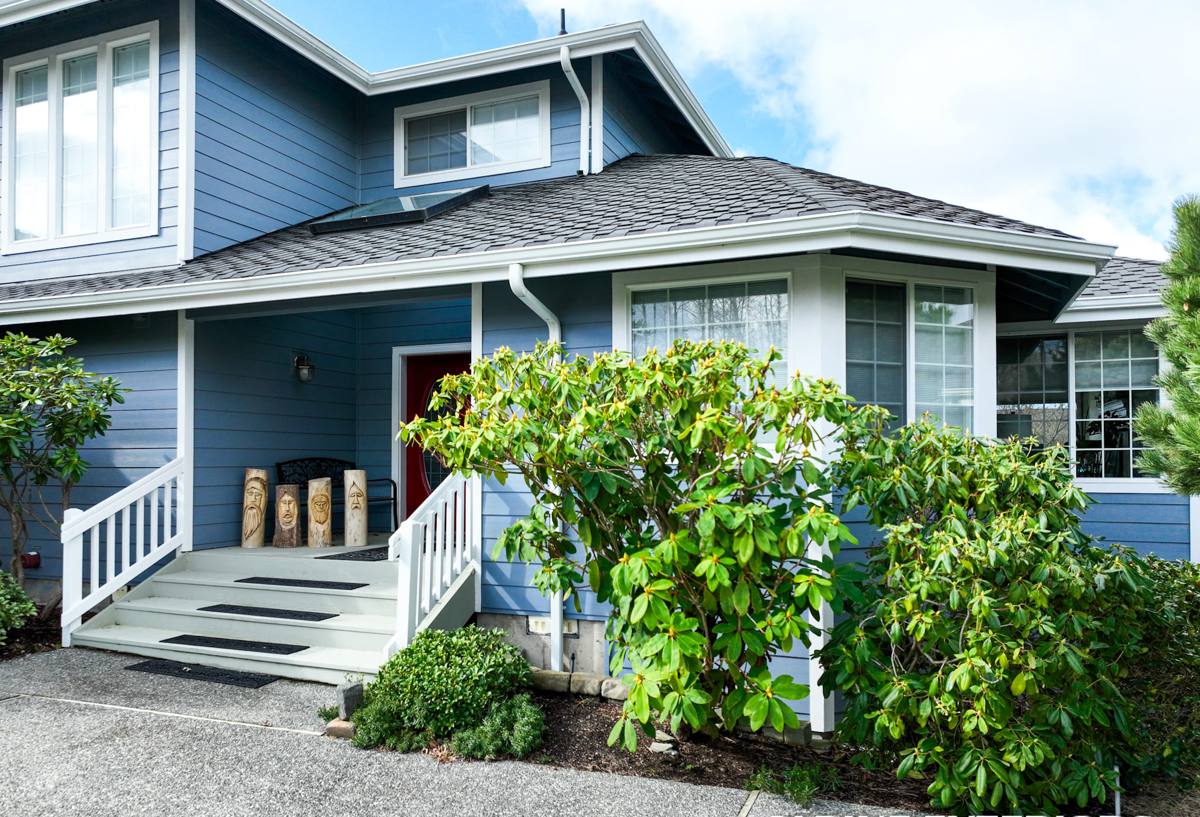
Why Board & Batten Works for This Kind of Exposure
Board and batten is a vertical siding profile — wide boards with narrower battens covering the seams between them — and it's become a popular look for craftsman, farmhouse, and coastal-style homes throughout the area. Beyond the look, the vertical orientation has a real functional advantage in a climate like this one: water runs straight down the face of the boards instead of collecting on the horizontal ledges that lap siding creates. In a spot where driving rain regularly comes in at an angle off the water, that difference matters. Less standing moisture on the surface means less opportunity for it to work its way behind the cladding.
That said, board and batten isn't automatically low-maintenance just because it's vertical. The seams under each batten still need a correct water management system behind them, and the battens themselves need to be spaced, fastened, and finished properly. Get that part wrong and you've traded one moisture problem for another.
What a Correct Board & Batten Installation Actually Involves
The Weather-Resistive Barrier and Drainage Plane
Everything under the boards matters more than the boards themselves. A correctly installed board and batten system starts with a weather-resistive barrier over the sheathing, properly lapped and sealed at every penetration, and a drainage gap that lets any moisture that does get behind the cladding drain and dry out instead of sitting against the wall. In a climate with this much sustained wet-season rainfall, skipping or shortcutting the drainage plane is the single most common reason siding fails early — and it's invisible once the boards go up, which is exactly why it has to be done right the first time.
Layout, Fastening, and Panel Selection
Board width, batten spacing, and fastener pattern all affect how the system performs, not just how it looks. Panels need to be fastened per the manufacturer's engineering — not "close enough" — because incorrect fastening is one of the fastest ways to void a warranty and let water find a path in through an oversized or misplaced nail hole.
Trim, Corners, and Batten Joints
Corners, window and door trim, and butt joints between boards are where board and batten installations most often go wrong. Each of those transitions needs proper flashing and clearances, not just caulk covering a gap. Caulk is a maintenance item, not a waterproofing strategy — it dries out, cracks, and needs to be renewed. A well-detailed installation minimizes how much of the system's long-term performance depends on caulk holding up.
Board & Batten Material Options for Grandview Homes
Homeowners comparing quotes often see very different products all labeled "board and batten." The material underneath the profile is what determines how it holds up to salt air, rain, and moss over the next twenty years.
| Material | Salt Air Resistance | Moss / Moisture Behavior | Maintenance Over Time |
|---|---|---|---|
| James Hardie fiber cement | Non-combustible, dimensionally stable, does not corrode | Doesn't rot or swell if drainage plane is correct; factory finish resists moss staining better than raw wood | Repainting cycle is long due to factory ColorPlus finish; occasional wash-down |
| Vinyl board and batten | Can become brittle and fade faster in coastal UV and salt exposure | Won't rot, but seams and channels can trap moisture and grow moss/algae behind panels | Low upfront maintenance, but panels can warp, crack, or need full replacement sections |
| Primed wood or cedar | Attractive but vulnerable; salt-laden moisture accelerates checking and rot | Highly prone to moss growth and moisture absorption without constant upkeep | Frequent repainting and caulk maintenance; shortest realistic lifespan in this climate |
| LP SmartSide (engineered wood) | Treated wood strand product; edge and cut-end sealing is critical near salt air | Manufacturer requires strict field-cut sealing to prevent swelling; more installer-dependent | Moderate; performance depends heavily on installation discipline |
This is exactly why we standardized on one product line rather than offering all of them. A siding crew that installs whatever a homeowner picks off a sample board isn't in a position to tell you honestly which of those materials will actually hold up two streets from the water in Blaine.
Why We Only Install James Hardie Board & Batten
We install James Hardie fiber cement exclusively — HardiePanel vertical siding with HardieTrim battens — and we don't install LP SmartSide, vinyl, Cemplank, Allura, or raw wood board and batten. That's not a marketing position; it's a decision based on what actually survives in this climate without turning into a maintenance project every couple of years.
Fiber cement doesn't absorb moisture the way wood-based products do, so it isn't dimensionally moving with every wet-dry cycle the way engineered wood can. It's non-combustible, which matters given how many homes in this area back onto trees and brush. Hardie's ColorPlus factory finish is baked on under controlled conditions rather than field-painted, which means better adhesion and a much longer repainting cycle than site-applied paint on wood or primed panels — a real advantage when salt air is actively working against any painted finish. And Hardie's product lines are climate-engineered for regions like the Pacific Northwest, where sustained moisture exposure is the norm rather than the exception.
None of that replaces correct installation — even the best siding product fails if the drainage plane and flashing details behind it are wrong — but it gives us a material that rewards good workmanship instead of working against it.
Our Process for Grandview Board & Batten Projects
We start with an on-site walk of the home, looking specifically at the sides most exposed to wind-driven rain and at shaded areas where moss has been holding moisture against the existing siding or trim. If there's evidence of trapped moisture or sheathing damage from a prior installation, we address that before anything new goes up — covering a moisture problem with new siding just delays it.
From there we install the weather-resistive barrier and drainage plane, get flashing correct at every window, door, and roofline transition, then install the HardiePanel boards and HardieTrim battens to spec — proper fastener placement, proper clearances, proper joint detailing. We finish with a walk-through so you know exactly what was done and what maintenance, if any, to expect going forward.
Why a Crew That Already Works Grandview Matters
Siding performance in this climate isn't uniform across a house — it's driven by which walls take the worst of the wind-driven rain, how much shade a wall gets and how long it stays damp, and how close a given property sits to salt air exposure. A crew that already works in and around Grandview has seen how these patterns actually play out on homes in this specific part of Blaine, not just in a manufacturer's general climate guidance. That local pattern recognition shows up in small decisions — where to add extra flashing attention, which elevations need the most careful drainage detailing — that a crew unfamiliar with the area might not think to prioritize. It also means straightforward familiarity with Whatcom County permitting and inspection expectations, so the project moves without avoidable delays.
Maintaining Board & Batten Siding in Blaine's Climate
A correct Hardie board and batten installation is genuinely low-maintenance, but "low" isn't "none." A short seasonal routine keeps it performing the way it's designed to:
- Rinse the siding once or twice a year, especially on shaded and north-facing walls where moss and algae take hold fastest
- Keep gutters clear so overflow isn't running down the face of the siding during heavy rain
- Trim back vegetation and tree cover that keeps a wall shaded and damp longer than it needs to be
- Walk the exterior after major storms and check caulked joints at trim and penetrations for cracking
- Watch for any soft spots, staining, or discoloration near the base of the walls, which can signal a drainage issue worth addressing early
None of this requires a specialist visit in most years — it's the kind of upkeep any homeowner can do in an afternoon, and it's a fraction of what wood or vinyl siding typically demands in this same environment.
Get a Straight Answer for Your Home
If you're weighing board and batten siding for a home in Grandview, we're happy to take a look, walk you through what your specific walls and exposure actually need, and give you an honest, no-pressure estimate — no upsell to a product we don't stand behind. The form below gets that conversation started.