 Blaine
 Windows Built for a Peninsula Climate
Point Roberts sits on its own little peninsula, cut off from the rest of Whatcom County by the US-Canada border and surrounded almost entirely by water. That geography is part of what makes it a great place to live, but it's also exactly why windows fail faster here than they do a few miles inland. Salt-laden air off the Strait of Georgia works on hardware and finishes year-round. Wind-driven rain hits west and south-facing walls at an angle, not straight down, which finds every gap a straight-down rain would never reach. And the long gray stretch from fall through spring keeps humidity high enough that moss and algae get a foothold on anything that stays damp too long, including window sills, trim, and the caulk lines around glass.
None of that means Point Roberts needs exotic window technology. It means the basics — flashing, sealing, frame material, and glass package — have to be done correctly for this specific exposure, not just installed to a generic spec sheet. That's the difference between windows that perform for 20-plus years and windows that start showing fog, drafts, or rot around the frame in five.
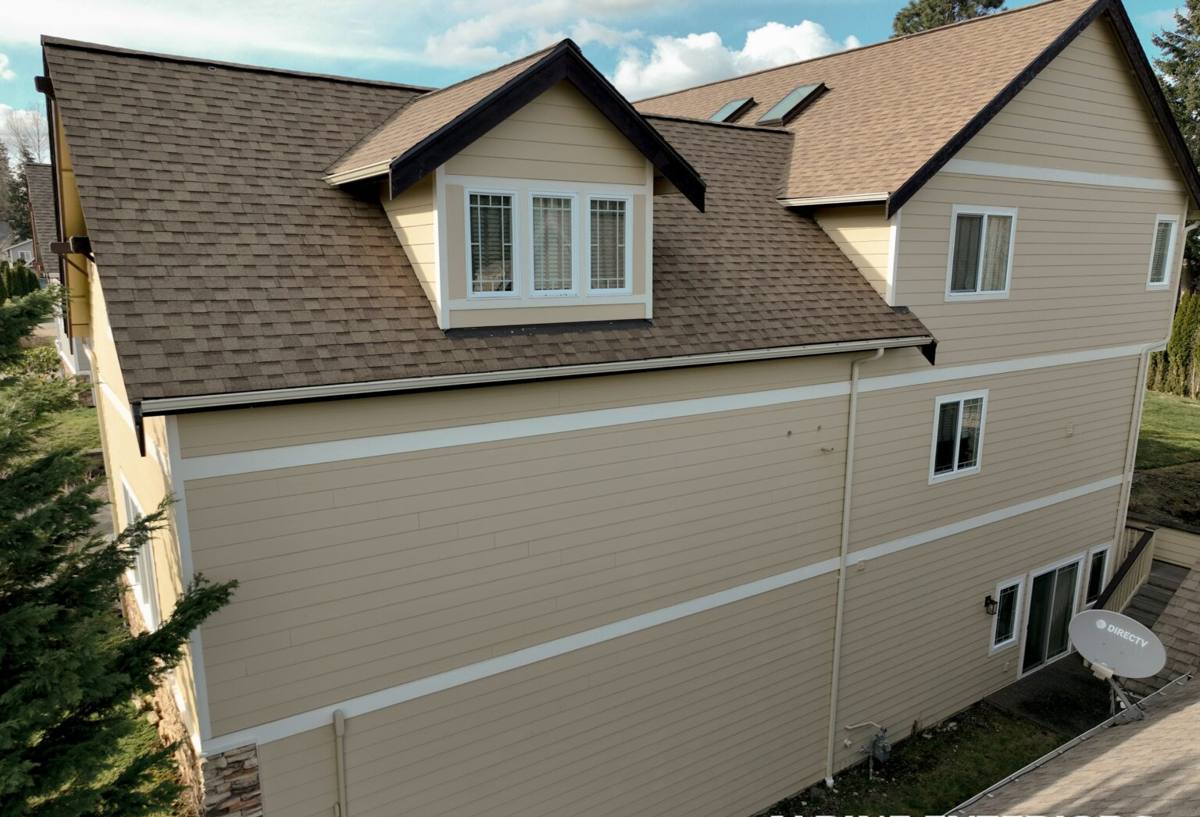
What Local Homes Actually Need From a Window
Moisture Management First, Efficiency Second
Homeowners usually call us asking about efficiency — lower heating bills, less draft, a warmer room in January. That's a legitimate goal and a good energy-rated window will absolutely deliver it. But on this peninsula, efficiency is the second problem. The first problem is keeping water out of the wall assembly in the first place. A window with excellent U-factor and a poor installation will still let water track behind the trim during a hard southwest storm, and once that happens, the insulation value stops mattering — you've got a rot problem instead of a heating-bill problem.
That's why we treat flashing and sealing as the non-negotiable part of the job and the glass package as the part we tune to the homeowner's budget and goals. Get the water management right and a mid-tier window will outlast a premium window installed carelessly.
Salt Air and Hardware
Cranks, locks, hinges, and screens all take more abuse near saltwater than they would inland. We steer clients toward corrosion-resistant hardware finishes and vinyl or fiberglass frames over bare aluminum, which pits and corrodes faster in this environment without a quality clad or thermally broken system. Wood windows can work here too, but only with a serious commitment to exterior maintenance — we'll walk through that trade-off honestly rather than talk anyone into upkeep they don't want.
Frame Materials: What Holds Up Here
| Frame Material | How It Handles This Climate | Maintenance | Typical Fit |
|---|---|---|---|
| Vinyl | Good moisture and salt resistance, no repainting needed | Low — occasional cleaning | Most Point Roberts remodels and replacements |
| Fiberglass | Excellent stability in temperature and humidity swings, holds paint well if painted | Low | Higher-end replacements, larger openings |
| Aluminum-clad wood | Good exterior protection with wood's interior warmth, but clad seams need attention | Moderate | Homeowners who want a wood interior look |
| Bare wood | Handsome but vulnerable to the moss-and-moisture cycle here without diligent upkeep | High — regular repainting/sealing | Historic or character homes where the look matters most |
| Bare aluminum | Prone to pitting and condensation in salt air; we generally don't recommend it for this location | Low, but performance degrades over time | Rarely the right call this close to the water |
Glass Packages: Matching the Window to the Room
Whatcom County's climate doesn't demand the most extreme glass package on the market, but it rewards a well-chosen one. For most Point Roberts homes we're looking at double-pane, low-E coated glass with argon fill as the baseline for good performance, with upgrades depending on the room:
- West and south exposures: a low-E coating tuned to cut solar heat gain in summer while still holding warmth in winter
- North-facing rooms and shaded lots: a coating that prioritizes heat retention since solar gain isn't doing much work for you anyway
- Rooms with condensation history: warm-edge spacers, which reduce the cold bridge at the glass edge where fog and frost tend to start
- Waterfront or highly exposed walls: triple-pane where budget allows, mainly for the extra sound and draft control rather than a dramatic bill difference
We size the glass package to the wall it's going in rather than selling one spec for the whole house — a north bedroom and a west-facing living room don't have the same job to do.
What a Correct Installation Involves
Before the Old Window Comes Out
We check the rough opening for existing water damage, soft framing, or prior flashing mistakes before we ever pull a window. On a peninsula this exposed to weather, it's common to find that a past installation skipped or shortcut the flashing, and that's usually the real reason a "good" window has been performing poorly.
The Flashing and Sealing Sequence
- Remove old window and inspect/repair the rough opening and sheathing
- Install sill pan flashing so any water that does get past the window sheds outward, not into the wall
- Set the window plumb, level, and square with proper shimming so the frame isn't stressed
- Integrate side and head flashing with the house's existing weather-resistive barrier, lapped correctly — not just caulked over
- Apply low-expansion foam or backer rod and sealant around the frame for air sealing, without over-filling and bowing the frame
- Finish exterior trim and caulk lines with a sealant rated for marine/coastal exposure
Step four is the one that separates a durable job from a callback. Caulk is a backup, not a strategy — flashing is what actually manages water long-term, and it's invisible once the trim goes back on, which is exactly why it's the step that gets skipped by crews in a hurry.
After Installation
We test operation, check for square and smooth function, and walk the homeowner through hardware care — what to expect from a coastal-air environment and simple maintenance that extends the life of the seals and finish.
Signs Your Current Windows Are Already Losing the Fight
- Fogging or moisture between the panes (failed seal — the insulating gas is gone)
- Soft or discolored trim and sill wood, especially on west- or south-facing walls
- Visible moss or dark streaking on the sill or trim that keeps coming back after cleaning
- Drafts you can feel with a hand near the frame on a windy day
- Windows that are hard to open, stick, or don't latch flush anymore
- A noticeable jump in heating costs without a clear cause elsewhere
Any one of these on its own isn't an emergency. Several together, especially paired with visible wood damage, usually means the window and possibly the surrounding wall assembly need attention before it gets more expensive.
Cost Factors Homeowners Should Understand
We don't quote sight unseen, but the honest range for a project depends on a handful of factors that matter more here than in a drier inland climate:
| Factor | Why It Moves the Price |
|---|---|
| Extent of existing water damage | Rotten sheathing or framing found during removal adds repair scope before the new window even goes in |
| Frame material chosen | Vinyl is typically the most economical; fiberglass and clad-wood cost more upfront |
| Glass package | Triple-pane and specialty coatings add cost for marginal but real gains in comfort and sound |
| Wall exposure | West- and south-facing openings often need more thorough flashing work given driving-rain exposure |
| Number and size of openings | Larger or unusual-sized windows may require custom sizing rather than stock units |
| Access | Second-story or hard-to-reach windows take longer and add labor |
We'd rather walk a property, look at the actual condition of the openings, and give a number based on what's really there than throw out a per-window price that doesn't hold up once we start.
Why Local Experience on This Peninsula Matters
Point Roberts is a small, distinct community, and its building conditions aren't quite the same as mainland Blaine or the rest of Whatcom County. A crew that mainly works inland jobs may not think twice about flashing details that are optional there but essential here, or may spec a frame material that's fine in a drier microclimate but a poor fit two hundred yards from saltwater. Working this area regularly means we've seen how these specific homes age — where moss actually takes hold, which exposures fail first, what a rushed install from years back tends to look like once it's opened up.
We also know the practical side of working on the peninsula — coordinating material deliveries, scheduling around ferry or border logistics for supplies, and planning installs around the wetter stretches of the year so a window opening isn't sitting open during a storm system. That's not glamorous, but it's the kind of planning that keeps a project from turning into a bigger problem than it needed to be.
Get a Straightforward, No-Pressure Estimate
If your windows are drafty, fogged, showing wood damage, or just old enough that you're wondering whether it's time, we're happy to take a look. We'll give you an honest read on what's actually going on — whether that's a full replacement, a repair, or just some maintenance to buy you more years — and a clear estimate with no pressure attached. Use the form below to request your free estimate.