 Blaine
 Point Roberts Decks Work Harder Than Most
Point Roberts sits out on its own point of land along Boundary Bay, surrounded by salt water on three sides. That's a beautiful spot to have a deck, but it's also one of the tougher spots in Whatcom County to keep one in good shape. Between the salt-laden air coming off the water, the driving rain that blows in sideways during fall and winter storms, and a moss season that can run half the year under the right conditions, a deck out here ages differently than one fifteen miles inland. We repair decks in Point Roberts on a regular basis, and the damage we find is pretty consistent from property to property — it's the marine climate, not bad luck or bad workmanship, that's usually the culprit.
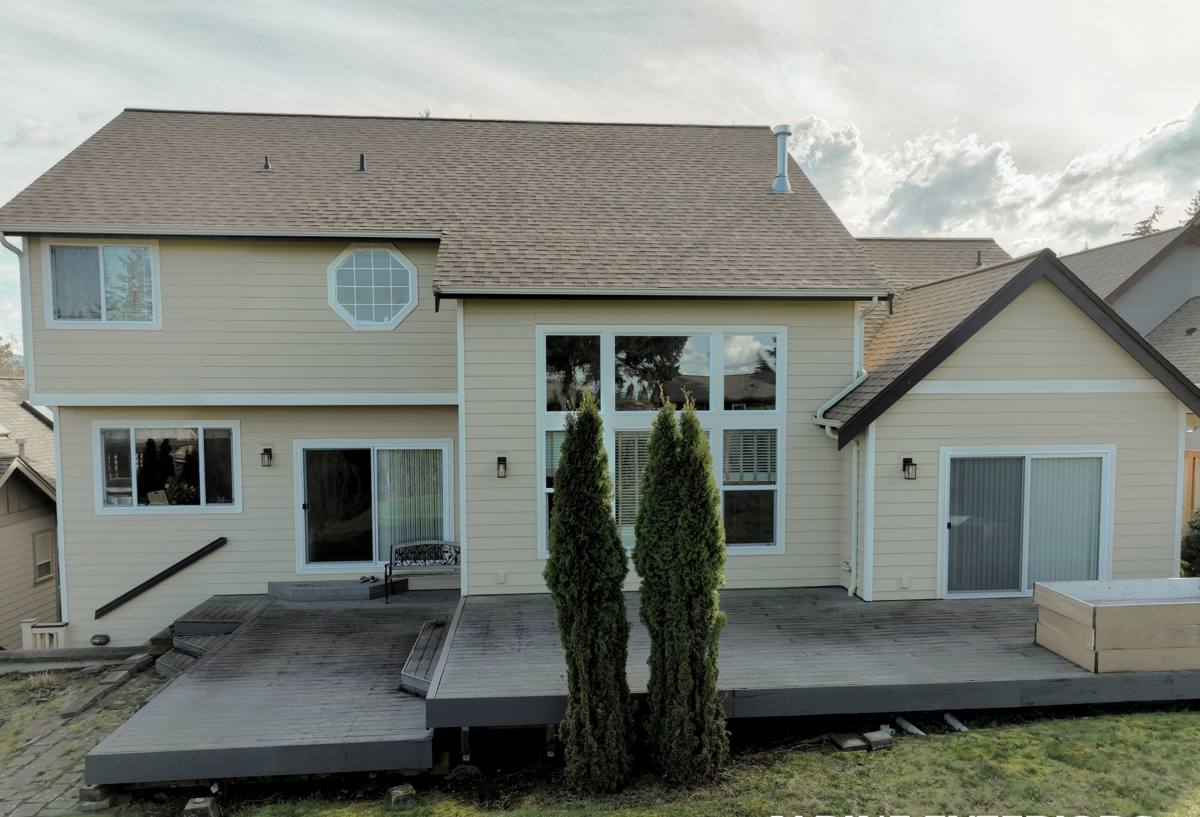
Why Point Roberts Decks Fail Faster Than People Expect
Salt Air and Metal Fasteners
Airborne salt is corrosive to standard fasteners and hardware. Nails, screws, and joist hangers that would last decades in a drier, inland part of Whatcom County can start rusting within a few years out here, especially on decks with any water view or exposure toward the bay. Once fasteners weaken, the deck's structural connections weaken with them — even if the boards on top still look fine.
Driving Rain and Ledger Board Rot
Storms coming off the water don't fall straight down — they drive sideways into the house, and the ledger board (the framing member that bolts the deck to the structure) takes the brunt of it. Water works its way behind flashing that's cracked, missing, or was never properly installed in the first place, and it sits against the ledger and the rim joist. This is where we find the most serious rot, and it's almost always hidden under the decking boards where a homeowner can't see it without pulling something apart.
Moss, Algae, and Trapped Moisture
Shaded decks, north-facing decks, and decks under trees hold onto moisture longer here than they would in a sunnier climate, and moss and algae take hold on top of that dampness. Beyond being slippery and unattractive, a moss mat acts like a sponge — it keeps the wood underneath wet far longer than bare boards would, which accelerates rot in the decking itself and in the framing below.
Signs Your Deck Needs Repair, Not Just a Cleaning
Some deck problems are obvious. Others hide in plain sight until someone puts a screwdriver to the wood. Here's what we tell Point Roberts homeowners to check for:
- Soft, spongy, or bouncy spots when you walk across the deck
- Boards that stay damp or dark long after the rest of the deck has dried
- Rust streaks running down from screws, nails, or metal connectors
- Gaps, cracks, or visible daylight where the deck meets the house
- A guardrail or post that moves or flexes when you push on it
- Moss or green growth that returns within weeks of being cleaned off
- Stair stringers that feel uneven or have visible splitting at the cuts
- Any wood you can press a screwdriver tip into more than a quarter inch
If you're seeing more than one or two of these, it's worth having someone look at the framing underneath, not just the surface.
What a Correct Deck Repair Actually Involves
Structural Framing Comes First
Before anything cosmetic happens, we check the ledger connection, the joists, the beam, and the posts. Surface boards are the easy part — a repair that replaces pretty decking on top of rotted or under-fastened framing isn't a repair, it's a cover-up that fails again in a season or two. On a Point Roberts deck, we pay particular attention to the ledger flashing and the framing directly behind it, since that's where driving rain does its damage.
Hardware Rated for the Exposure
Given the salt air here, we don't use bargain-grade fasteners or connectors on a repair. Stainless steel or high-grade coated hardware rated for coastal and treated-lumber contact costs more up front but doesn't hand you the same repair again in five years. This is a place where cutting corners on hardware shows up fast.
Board Replacement That Matches
Whether your deck is pressure-treated lumber, cedar, or composite, replacement boards need to match the existing material's behavior — moisture movement, fastener spacing, and finish — or you end up with boards that cup, gap unevenly, or weather differently than the rest of the deck. We match species and profile wherever the original product is still available, and give you an honest heads-up when it isn't.
Guardrails and Code
Guardrail height, baluster spacing, and post attachment are code items, not style choices, and they're one of the most common things we find out of spec on older decks. Any repair that touches the rail system gets brought up to current code, both for safety and because it matters if you ever sell the house.
Repair or Replace? What Actually Drives That Decision
Not every deck problem calls for a full rebuild, and not every deck is worth patching. The honest answer depends on a handful of factors:
| Factor | Leans Toward Repair | Leans Toward Replacement |
|---|---|---|
| Framing condition | Solid, dry, sound to the touch | Soft or rotted at multiple joists/beams |
| Ledger connection | Flashing intact, one localized issue | Long-term water intrusion, widespread rot |
| Deck age | Under 15-20 years | Original build decades old, outdated hardware |
| Extent of damage | Isolated boards or one section | Damage spread across the whole structure |
| Code compliance | Rail/stair system already meets code | Guardrails, spacing, or footings out of spec |
Cost ranges vary widely depending on square footage, board material, and how much framing is involved, so we'd rather give you a number after actually looking at the deck than throw out a figure that doesn't hold up.
How We Handle a Deck Repair in Point Roberts
- On-site assessment — we walk the deck, check the framing from underneath where possible, and probe any soft spots or suspect boards
- Straight explanation of what's failing and why, in plain terms, with photos of anything hidden under the decking
- A written estimate that separates structural work from cosmetic work, so you know what you're paying for
- Repair, starting with framing and the ledger connection, then hardware, then decking and rail work
- Final walk-through and cleanup, including hauling off old material
Why a Crew That Already Works Point Roberts Matters Here
Point Roberts is geographically cut off from the rest of Whatcom County and Washington by land — getting here means crossing an international border, both ways. That's not a minor detail for a construction crew. It affects how materials get delivered, how a crew schedules a job around border wait times, and how quickly someone can get back out if a repair needs a follow-up visit. A crew that doesn't already account for that logistics reality can end up stretching a simple repair over weeks, or padding the bill for the extra trips.
There's also a familiarity factor that matters more than people expect. A contractor who's repaired a handful of decks along the Blaine and Point Roberts waterfront already knows which fastener grades hold up here, which framing details tend to fail first, and how aggressive the moss and algae problem gets on shaded, water-facing decks. That's knowledge you don't get from a single job — it comes from doing this work repeatedly in this specific stretch of Whatcom County.
Permitting is another piece worth knowing up front. Point Roberts falls under Whatcom County jurisdiction, and structural deck repairs — anything touching framing, footings, or guardrails — can require a permit depending on scope. A crew familiar with the area will tell you honestly when a repair needs one and won't try to talk you out of it to save time.
Keeping Moss and Moisture From Coming Back
A repair is only worth doing if it lasts, so once the structural and cosmetic work is done, a little seasonal maintenance goes a long way in this climate:
- Clear leaves and debris out of gaps between boards before fall rains set in
- Rinse off moss and algae growth as soon as it appears rather than letting it establish
- Check that ledger flashing and any deck-to-house seals stay intact year to year
- Re-seal or re-stain wood decking on the schedule the product calls for — salt air shortens the interval
- Keep gutters and downspouts near the deck clear so runoff isn't draining onto it
None of this takes more than an afternoon a couple of times a year, but skipping it is exactly how small, cheap fixes turn into full rebuilds.
Get an Honest Look at Your Deck
If your Point Roberts deck has soft spots, rust streaks, stubborn moss, or just feels different underfoot than it used to, it's worth having someone check the framing before the damage spreads. We're happy to come take a look, tell you plainly what we find, and put together a straightforward estimate — no pressure, no upsell. Fill out the form below to get started.