 Blaine
 Why Ferndale Roofs Wear Out Faster Than the Brochure Says
Ferndale sits close enough to Bellingham Bay and the Strait of Georgia that salt-laden air is a real factor in how roofing materials age here, not just a talking point. Add in Whatcom County's long stretch of driving rain from fall through spring, and a moss and algae season that can run eight months or more in shaded, north-facing sections of a roof, and you have a climate that punishes roofs installed to a generic, one-size-fits-all spec. A roof that would hold up fine in a dry inland climate can start showing granule loss, moss colonies, and soft decking years earlier out here if it wasn't built for this specific combination of moisture and salt exposure.
That's the starting point for any honest conversation about a new roof installation in Ferndale: the goal isn't just to put new material on the house, it's to put the right materials on in the right sequence so the roof is actually built for the environment it has to survive.
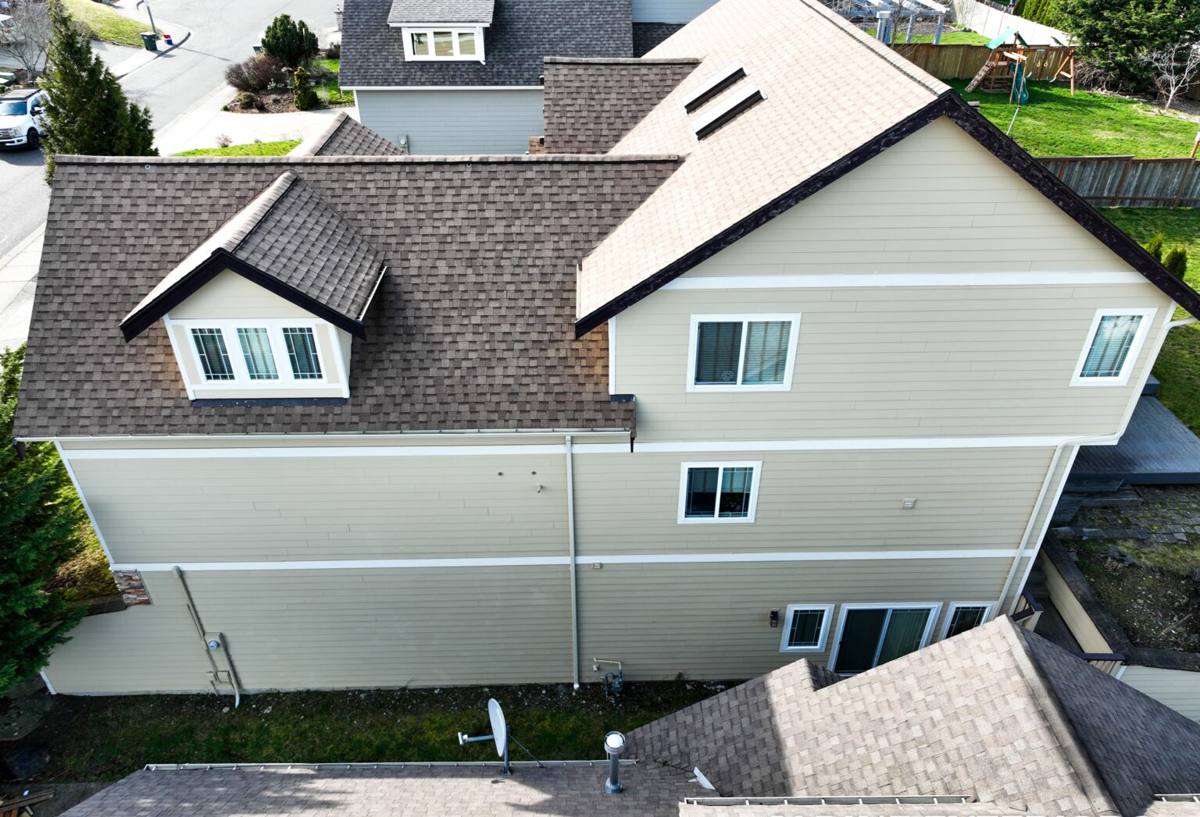
What a Correct New Roof Installation Actually Includes
A full roof replacement is more than swapping old shingles for new ones. The parts you can't see once the job is done are usually the parts that determine whether the roof lasts 15 years or 30.
Tear-Off and Deck Inspection
We remove the old roofing down to the deck rather than layering over it. That's the only way to actually see the plywood or plank sheathing underneath. In this climate, it's common to find soft or delaminated decking around old vent boots, chimney flashing, and valleys where water has been finding its way in slowly for years without an obvious leak showing up inside the house yet. Any compromised decking gets replaced before anything new goes down — installing new roofing over a soft deck just hides the problem for a future owner to find.
Underlayment and Rain Protection
Underlayment is the roof's backup layer, and in a region that sees sustained, wind-driven rain rather than short bursts, it matters more than it does in drier parts of the country. We use synthetic underlayment across the field of the roof for its tear resistance and consistent water-shedding, and self-adhered ice-and-water membrane at the vulnerable spots — eaves, valleys, and around every roof penetration — where wind-driven rain is most likely to work its way sideways under the shingles.
Flashing and Ventilation
Flashing around chimneys, skylights, and sidewalls is where most roof leaks actually start, not in the open field of shingles. We install new metal flashing rather than reusing old pieces, and we pay close attention to how flashing integrates with siding and trim so water is directed out and away from the wall assembly. Proper attic ventilation — balanced intake at the eaves and exhaust at the ridge — also matters here specifically because it controls the moisture buildup that feeds moss growth and interior condensation during our wetter months.
Choosing a Roofing Material for This Climate
There's no single "best" roofing material — the right choice depends on budget, roof pitch, and how much long-term maintenance a homeowner wants to take on. Here's how the common options actually perform in a coastal Whatcom County setting.
| Material | Moss/Algae Resistance | Salt Air Durability | Typical Lifespan Here |
|---|---|---|---|
| 3-tab asphalt shingle | Lower — needs treated granules or added protection | Fair with proper fasteners | 15-20 years |
| Architectural (dimensional) shingle | Better, especially algae-resistant lines | Good with coated fasteners and flashing | 25-30 years |
| Standing seam metal | Very good — sheds moss growth medium | Requires marine-grade or coated fasteners near the water | 40-50+ years |
| Cedar shake | Poor without regular maintenance — moisture-retentive by nature | Fair, but finish maintenance increases near salt air | 20-30 years with upkeep |
Most Ferndale homeowners land on architectural asphalt shingles with algae-resistant granules as the best balance of upfront cost, appearance, and how well they hold up to our wet season. Metal roofing costs more up front but makes sense on steeper pitches, homes closer to the water, or for owners planning to stay long-term and wanting to minimize maintenance calls.
Moss and Algae: The Long Wet Season Problem
Moss doesn't just look bad — it holds moisture directly against the roofing material, lifts shingle edges as it grows, and accelerates granule loss. In shaded areas or under overhanging trees, it can take hold within a couple of seasons on an untreated roof. A correct new roof installation should address this from day one rather than leaving it as a maintenance problem for later:
- Zinc or copper strips installed near the ridge, which release trace metal ions that wash down the roof with rain and inhibit moss and algae growth over time
- Algae-resistant shingle granules on the material itself, which is standard on most quality architectural shingle lines now
- Balanced attic ventilation, since a warmer, poorly ventilated attic contributes to the surface condensation that helps moss establish itself
- Trimming back overhanging branches where practical, since shade and falling debris are the two biggest drivers of moss growth we see on Ferndale roofs
None of these steps eliminate moss forever in a climate this wet, but together they buy years of extra life and cut down on how often a roof needs to be cleaned.
Cost Factors for a New Roof in Ferndale
We're not going to throw out a number here that doesn't mean anything without seeing the actual roof — pitch, square footage, layers of existing roofing, and decking condition all move the price. What we can tell you honestly is what drives cost up or down on most jobs in this area:
- Roof pitch and complexity — a steep roof or one with lots of valleys, dormers, and penetrations takes more labor than a simple gable roof of the same square footage
- Number of existing layers — tearing off two layers of old shingles costs more in labor and disposal than tearing off one
- Decking replacement — this is often the biggest variable, and it's usually impossible to know the full extent until tear-off is underway
- Material choice — the table above gives a rough sense of where different materials fall relative to each other
- Access — steep sites, limited driveway access, or a roof that requires extra staging adds time
A written estimate should break these out clearly so you know what you're actually paying for, not just a single lump number.
Our Installation Process
- On-site inspection and estimate — we walk the roof (or use a ground and attic inspection where access is limited), check decking condition from the attic side where possible, and give you a written scope and price
- Material selection — we go over the options that make sense for your roof's pitch, exposure, and budget, including the moss and algae protection details covered above
- Tear-off and deck repair — old roofing comes off, decking is inspected and any compromised sections are replaced before we move forward
- Underlayment, flashing, and ventilation — the protective layers go in first, with extra attention at valleys, penetrations, and eaves
- Roofing installation — shingles or panels go on to manufacturer spec, including proper nailing patterns and exposure, which matters for both warranty coverage and wind performance
- Final inspection and cleanup — we walk the finished roof, check flashing and ridge details, and do a magnetic sweep of the yard for stray nails before we consider the job done
Why Hiring a Blaine-Based Crew Matters for Ferndale Homes
Ferndale sits close enough to our home base in Blaine that we're not treating it as a stretch job squeezed in between other territory. We already know the weather pattern that comes off the water into this part of Whatcom County, and we've priced and built enough roofs in these conditions to know where corners tend to get cut on jobs that don't hold up — usually flashing details and underlayment coverage, since both are invisible once the roofing is on.
Being local also means faster response if a storm causes damage after the fact, straightforward warranty follow-up since we're not a crew that flew in from out of the area, and a crew that's already familiar with the permitting expectations that apply to roofing work in this county. None of that replaces a good written contract and a clear scope of work, but it does mean fewer surprises during the job.
Before You Sign: A Ferndale Homeowner's Checklist
- Get a written estimate that breaks out tear-off, decking, underlayment, and material costs separately
- Confirm the contractor is licensed and bonded to work in Washington, and ask to see current insurance
- Ask specifically what underlayment and ice-and-water protection will be used at eaves and valleys
- Ask whether moss/algae protection (zinc strips, algae-resistant shingles) is included or optional
- Confirm who pulls the permit and handles inspection, if one is required for your project
- Get the manufacturer warranty terms in writing, along with the contractor's own workmanship warranty
- Ask how decking replacement, if needed, will be priced — by the sheet is standard and should be spelled out ahead of time
If you're weighing a new roof for a Ferndale home, we're happy to take a look and give you a straight, written estimate — no pressure, no inflated scare tactics about damage that isn't there. Use the form below to get a free estimate started.