 Blaine
 Ferndale's Climate Is Harder on Siding Than Most Homeowners Realize
Ferndale sits close enough to the water and far enough into Whatcom County's marine weather pattern that its homes take a beating most siding products were never engineered to handle. Salt-laden air drifts in off the coast, driving rain gets pushed sideways into walls during winter storms, and shaded lots hold enough moisture long enough each year to grow a stubborn coat of moss and algae on anything that isn't built to shed water fast. None of that is unusual for this part of Washington. What's unusual is how few siding materials are actually engineered for it.
This page is about one job, done right, in one place: installing James Hardie fiber cement siding on Ferndale homes. Not a general overview of siding — the specific climate stresses this area creates, what a correct installation needs to account for, and why a crew that already works this stretch of Whatcom County catches problems that an out-of-town installer won't.
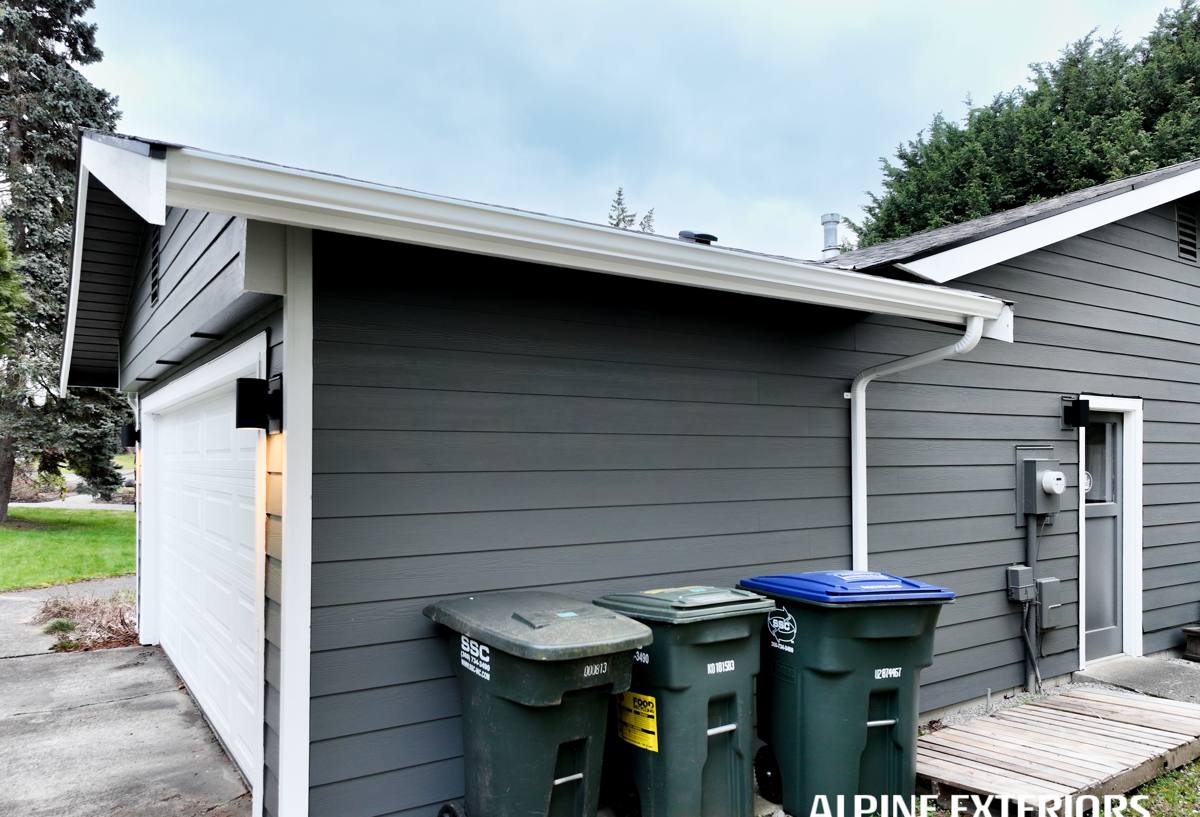
What Salt Air, Rain, and Moss Actually Do to a Wall System
Salt-Laden Air and Corrosion
Coastal air carries fine salt particles that settle on siding, trim, and especially fasteners. Over years, that accelerates corrosion in anything less than a properly rated fastener, and it dulls or degrades finishes that weren't formulated to resist it. It's a slow process, which is exactly why it gets ignored until a wall starts showing rust streaks or a paint film starts chalking early.
Wind-Driven Rain and Wall Moisture
Whatcom County doesn't just get a lot of rain — it gets rain pushed horizontally into exterior walls during winter fronts. Siding that relies on a tight, gapless seal to keep water out eventually loses that battle at a seam, a fastener hole, or a trim joint. Once moisture gets behind the cladding, the material and the assembly behind it determine whether that's a non-issue or the start of rot.
Moss, Algae, and Shaded North Walls
Between tree cover and long stretches of overcast, damp weather, north-facing and shaded walls here stay wet longer than they do in drier climates. That's ideal growing conditions for moss and algae, and it means the surface finish on your siding needs to hold up to being damp for days at a stretch, not just get rained on occasionally.
Why James Hardie Is the Right Match for This Climate
Fiber Cement vs. Wood-Based Products
James Hardie siding is fiber cement — sand, cement, and cellulose fiber, not wood fiber. That matters here specifically because wood-based siding products (including engineered wood options like LP SmartSide) depend on a factory treatment and an intact paint film to keep moisture out of a material that will swell, delaminate, or rot if that seal fails. Fiber cement doesn't have wood's appetite for water in the first place, which removes the single biggest failure point in a climate that stays damp as long as this one does.
The ColorPlus Factory Finish
James Hardie's ColorPlus finish is baked on at the factory in multiple coats, under controlled conditions, rather than brushed or sprayed on site after installation. That gives it better adhesion and UV resistance than field-applied paint, and it's backed by its own finish warranty separate from the substrate warranty. In a climate where salt air and constant damp both work against paint longevity, starting with a factory finish instead of a job-site paint job is a meaningful advantage, not a marketing detail.
Engineered for This Climate Zone
James Hardie manufactures different product formulations for different climate zones — a version engineered for colder, wetter regions and a version engineered for hot, humid ones. The Pacific Northwest falls under the cooler, wetter engineering standard, which is the version specified for jobs in this area. Installing the wrong regional formulation is one of the quieter mistakes an inexperienced crew can make, and it's not something a homeowner can spot just by looking at a sample board.
What a Correct Installation Actually Involves
Fiber cement siding only performs the way it's supposed to if it's installed to spec. Most of the siding failures we get called out to inspect on other manufacturers' — or even Hardie's own — products trace back to installation shortcuts, not the material itself.
Drainage Plane and Rain Screen Gap
Behind the siding, there needs to be a weather-resistive barrier and, ideally, a drainage gap that lets any moisture that does get past the cladding drain back out instead of sitting against the sheathing. In a wind-driven-rain climate like this one, skipping or shortcutting this layer is asking for trouble years down the road, even though it's invisible on the finished wall.
Fastening, Clearances, and Joints
James Hardie specifies exact fastener types, spacing, and penetration depth, plus minimum clearances from grade, roof lines, and decks. Those clearances exist to keep splash-back and standing water away from the bottom edge of the board. Butt joints and trim seams need to be treated correctly too — caulked and flashed where the manufacturer calls for it, left to drain where it doesn't.
Flashing at Windows, Doors, and Trim
Every penetration in a wall — every window, door, hose bib, and light fixture — is a place water can find its way in if the flashing detail is wrong. This is the part of the job that separates a crew that's done hundreds of these installs from one that's done a handful, and it's exactly where driving rain finds the weak point first.
Comparing Your Siding Options for a Ferndale Home
| Factor | James Hardie Fiber Cement | Vinyl | LP SmartSide / Engineered Wood | Cedar |
|---|---|---|---|---|
| Moisture behavior in wet climates | Doesn't absorb or swell; dimensionally stable wet or dry | Sheds water but can trap moisture behind it if installed poorly | Wood-based core can swell or delaminate if the finish fails | Absorbs moisture; needs consistent finish maintenance |
| Salt air / coastal exposure | Not affected by salt; fasteners are the only concern | Can chalk and become brittle over time | Finish wears faster under salt exposure | Weathers and grays quickly; needs more frequent treatment |
| Moss and algae resistance | ColorPlus finish resists staining better than field-applied paint | Can develop surface algae; hard to repaint if it does | Field finish is vulnerable to prolonged damp exposure | Prone to moss and mildew without regular treatment |
| Fire resistance | Non-combustible | Combustible; can melt or deform near heat | Combustible | Combustible |
| Long-term maintenance | Occasional wash; no repainting on ColorPlus finish for years | Low maintenance but can crack, fade, or warp | Repainting and caulking on a regular cycle | Regular staining/sealing required |
Our Process, Start to Finish
We keep this straightforward because homeowners deserve to know exactly what's happening to their house and when.
- Assessment. We look at the existing siding, sheathing condition, trim, flashing, and any signs of past moisture intrusion before quoting anything.
- Product selection. We spec the correct Hardie product line, profile, and color for the home and its exposure — not a one-size-fits-all board.
- Prep and drainage plane. Old siding comes off, sheathing gets repaired where needed, and the weather-resistive barrier and drainage gap go in correctly.
- Installation to spec. Fastening, clearances, joints, and flashing follow James Hardie's published installation instructions — not shortcuts that only show up as problems later.
- Final walkthrough. We go over the finished job with you, including warranty paperwork and basic care.
Why a Crew That Already Works Ferndale Matters
We're based in Blaine and work this part of Whatcom County regularly, which means we're not learning this climate on your house. We already know which walls in this area tend to hold moisture longest, which exposures take the worst of the driving rain, and how local permitting and inspection tend to go. That local familiarity shows up in small decisions throughout a job — where to add extra flashing attention, which side of the house needs the most careful joint work — that a crew passing through for a single project has no reason to know.
It also means we're still around after the job is done. If a question comes up two years from now about a joint, a warranty claim, or how the siding is holding up through a wet winter, you're calling a local crew that installed it, not chasing down a company that's moved on to the next region.
Keeping Hardie Siding Looking Right in This Climate
Fiber cement is low-maintenance, not no-maintenance. In a salt-air, high-rainfall, high-moss environment, a little routine care goes a long way toward getting the full lifespan out of the material.
- Rinse siding with a garden hose once or twice a year to clear salt residue and organic buildup, especially on shaded or north-facing walls.
- Avoid pressure washing directly at joints and seams — it can force water where it shouldn't go.
- Keep gutters clear and downspouts directed away from the foundation to reduce splash-back onto lower courses of siding.
- Trim back vegetation and tree cover that keeps a wall shaded and damp longer than it needs to be.
- Have caulking at trim and joints checked periodically — it's the one maintenance item that actually needs occasional attention.
- Address any moss or algae growth early with a gentle wash rather than letting it establish.
Let's Look at Your Home
If you're weighing a siding replacement in Ferndale, we're happy to come take a look, walk you through what your home's exposure actually calls for, and give you a straightforward, no-pressure estimate. Use the form below to get started.